I Thought a National Monument Was Small — Then I Saw Escalante
What Grand Staircase–Escalante National Monument actually is and why it feels so different from Utah’s national parks.
Words by Michele Underwood | Photos by Michele
I had heard of Grand Staircase–Escalante, but never really thought about it. It was just on the map.
Then I drove through it on the way to Bryce and kept pulling over, getting out, looking around… and realized I didn’t actually know what I was in.
So I looked it up.
I also thought a national monument was something small. Like a landmark. Not something this big.
What Is Grand Staircase–Escalante National Monument?
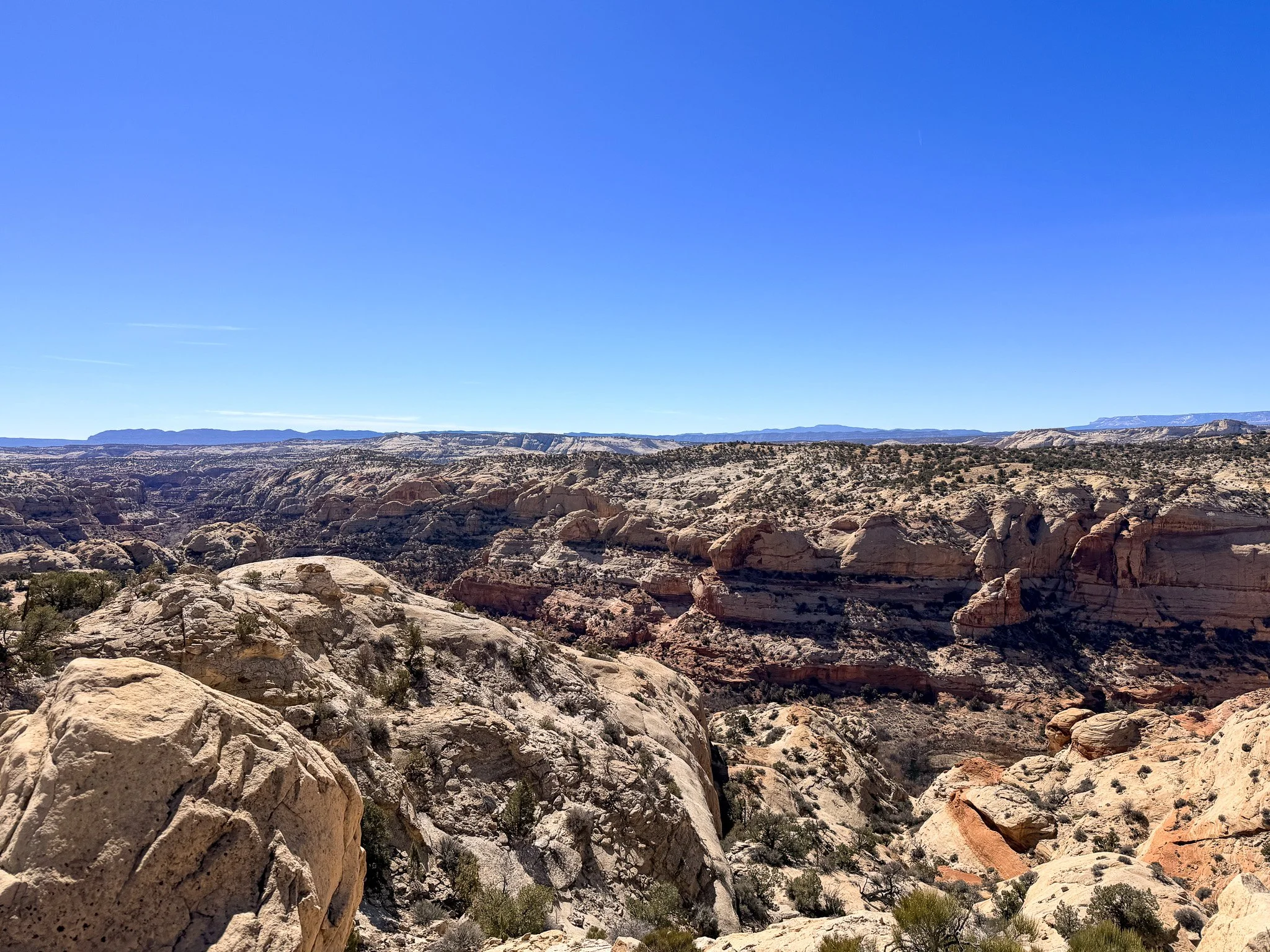
The scale of Grand Staircase–Escalante becomes clear when you step back — layers of sandstone stretching across the landscape.
What I didn’t realize at first is that Grand Staircase–Escalante isn’t a single place you go to. It’s not like a national park where you pull in, park, and start exploring from one main area.
It’s a massive stretch of protected public land — nearly two million acres — and I was already in it while I was driving through without even knowing. That’s why it felt confusing at first. There wasn’t a clear entrance or moment where I arrived — it just kept going. The more I drove, the more I started to realize how big it actually was.
It’s protected because of what’s out there. The landscape is part of it — the canyons, cliffs, all the layers of rock — but also what’s been found in the ground. There are fossils here, including dinosaur discoveries, along with archaeological sites that are still being studied.
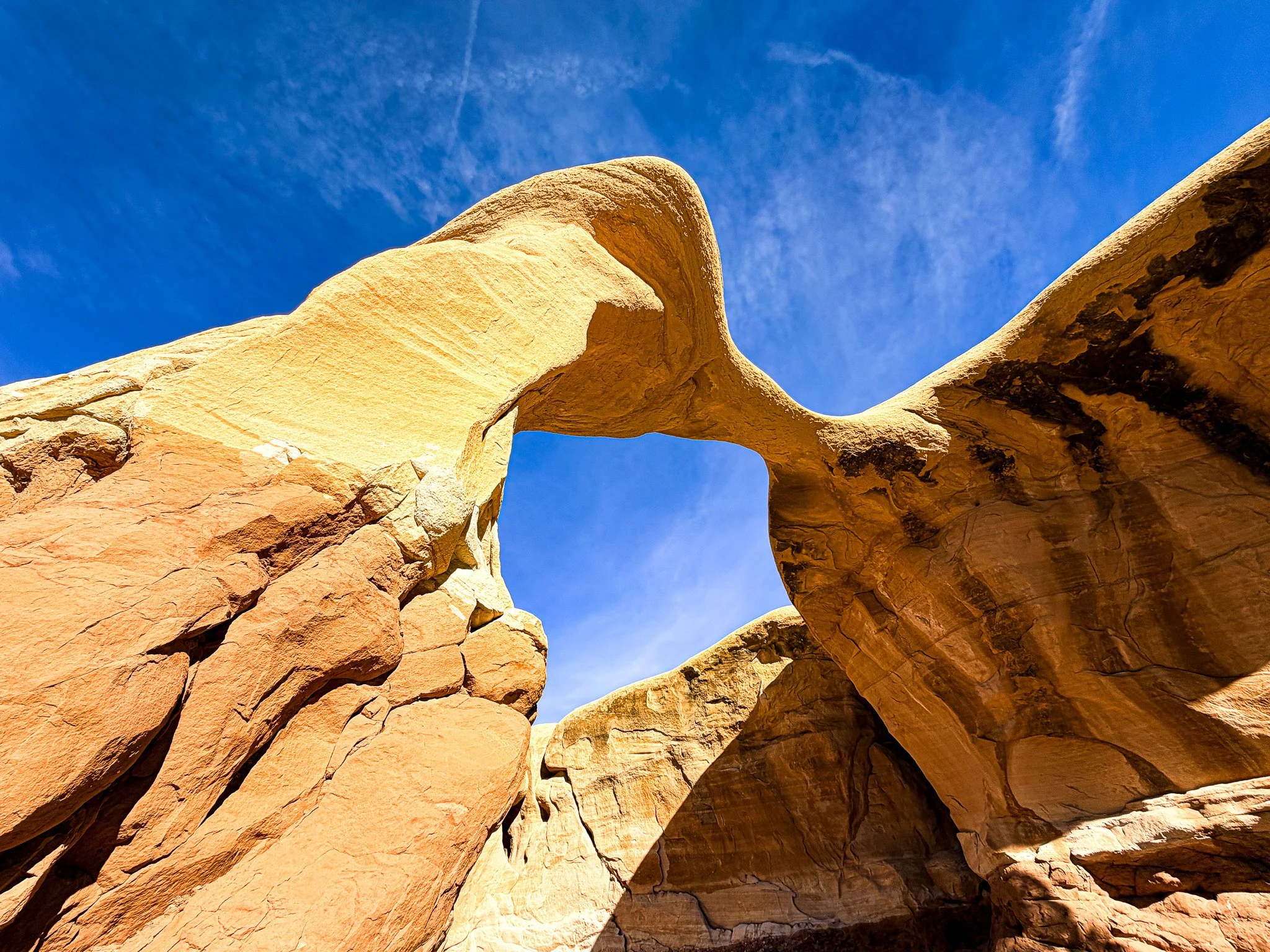
A natural sandstone bridge in Devils Garden, where erosion shapes the rock into arches, bridges, and unusual formations.
A lot of what you’re seeing out there is layers of sandstone, including that white slickrock that shows up in big open sections of the landscape. It’s not just one type of terrain either. The area includes canyons, cliffs, plateaus, and wide desert valleys, which is part of why it keeps changing as you move through it.
It also explains why you can drive for a while and feel like you’re not seeing much, and then suddenly you’re somewhere completely different.
What Has Been Discovered in Escalante
One of the things I didn’t know before coming here is how important this area is for discoveries.
Grand Staircase–Escalante has become one of the most significant places in the country for dinosaur fossils. New species have been found here, and research is still ongoing, which is kind of wild to think about while you’re out there hiking or driving through it.
There are also archaeological sites throughout the region connected to Indigenous cultures that lived in this landscape long before modern roads or towns existed.
It adds another layer to the place. You’re not just looking at the landscape — you’re in an area that’s still revealing pieces of its history.
Why Grand Staircase–Escalante Is a National Monument (Not a National Park)
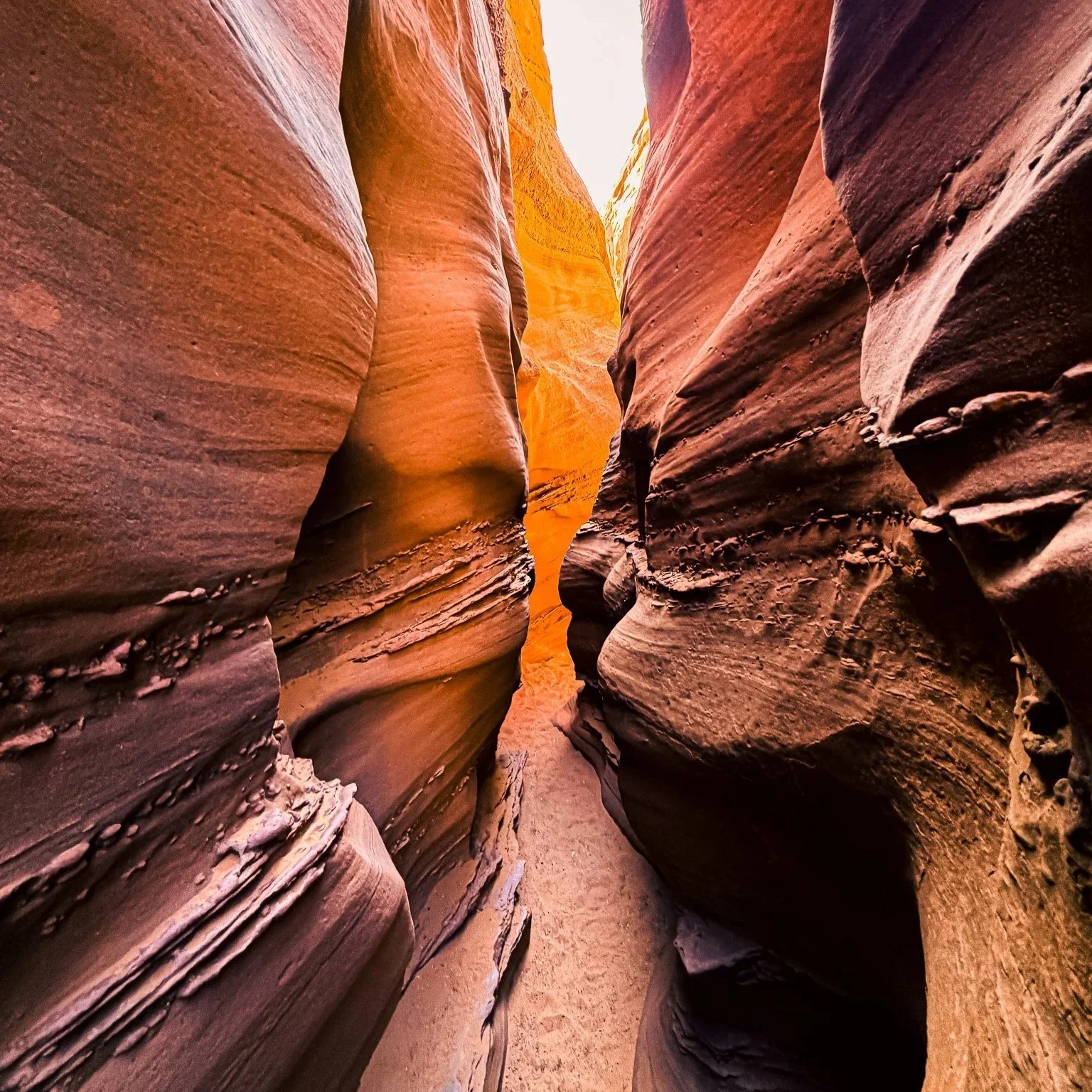
Narrow slot canyons like Peek-a-Boo and Spooky Gulch twist through the sandstone, creating tight, winding passages.
I usually think of national monuments as quick stops — something you pull over for, walk around, and move on.
Escalante didn’t feel like that at all. It’s so big that it feels more like a national park.
The difference comes down to how it’s designated and managed. National monuments can be created to protect large areas of land without the same level of development you see in national parks.
Grand Staircase–Escalante was designated in 1996 to protect the land, not to build it up, so it’s intentionally less developed.
You don’t get the same structure or infrastructure you find in a national park. Most of the places I went required driving down long dirt roads, and there wasn’t always a clear starting point.
It felt more like you were just out in the landscape, figuring it out as you go instead of following a set path.
Why Grand Staircase–Escalante Feels So Different From Utah’s National Parks
This was the part that stuck with me the most. Compared to the other parks I visited on this trip, this place felt less defined.
There’s one main road that runs through the area — Highway 12 — but it mostly skirts along the edge. To really get into it, you have to turn off onto dirt and gravel roads, and some of them require 4×4. It feels more raw and untouched. That’s where most of what I did was.
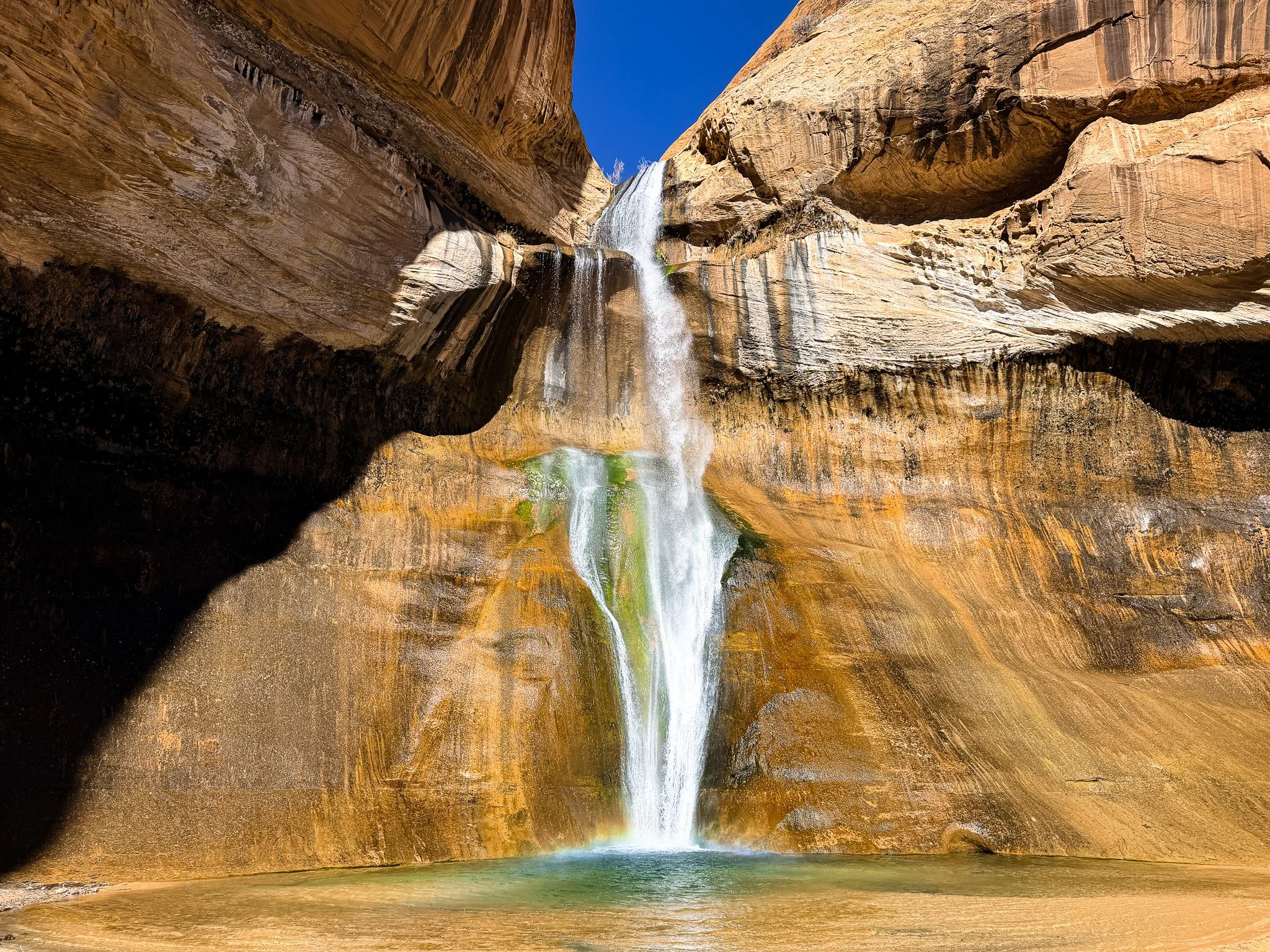
Lower Calf Creek Falls is a 126-foot waterfall hidden in the desert, one of the most unexpected landscapes in Grand Staircase–Escalante.
You’re not really moving from one main attraction to another in a structured way. You might drive for a while without seeing much, and then suddenly you’re at a trailhead, a canyon, or something completely unexpected.
That mix of space and unpredictability is what made it feel different from anywhere else I went in Utah. It’s less about checking off specific stops and more about being out in the landscape and seeing what you come across.
What “Grand Staircase” Actually Means
The “Grand Staircase” refers to the way the land rises in layers across southern Utah. If you move through the region — from Bryce Canyon down toward Escalante and beyond — the landscape steps down in elevation like a series of giant natural stairs.
At first, I literally thought I was going to be hiking something like Angel’s Landing in Zion, but it actually refers to the region as a whole.
I didn’t fully understand that while I was there, but you can start to see it in the way the terrain changes as you drive. The colors shift, the rock formations change, and the scale of everything keeps expanding the farther you go.
It’s not something you experience from one viewpoint. It’s something you notice over time as you move through the area.
Why It Ended Up Being One of My Favorite Places in Utah
I didn’t plan to spend time here, and that’s probably part of why it stood out so much.
It felt different from the other parks I visited — less structured, less crowded, and more open. I wasn’t following a set route or trying to hit specific stops. I was just moving through it, stopping when something caught my attention.
That’s what made it memorable.
It’s the kind of place where you don’t always know exactly what you’re going to see, and that’s the point.
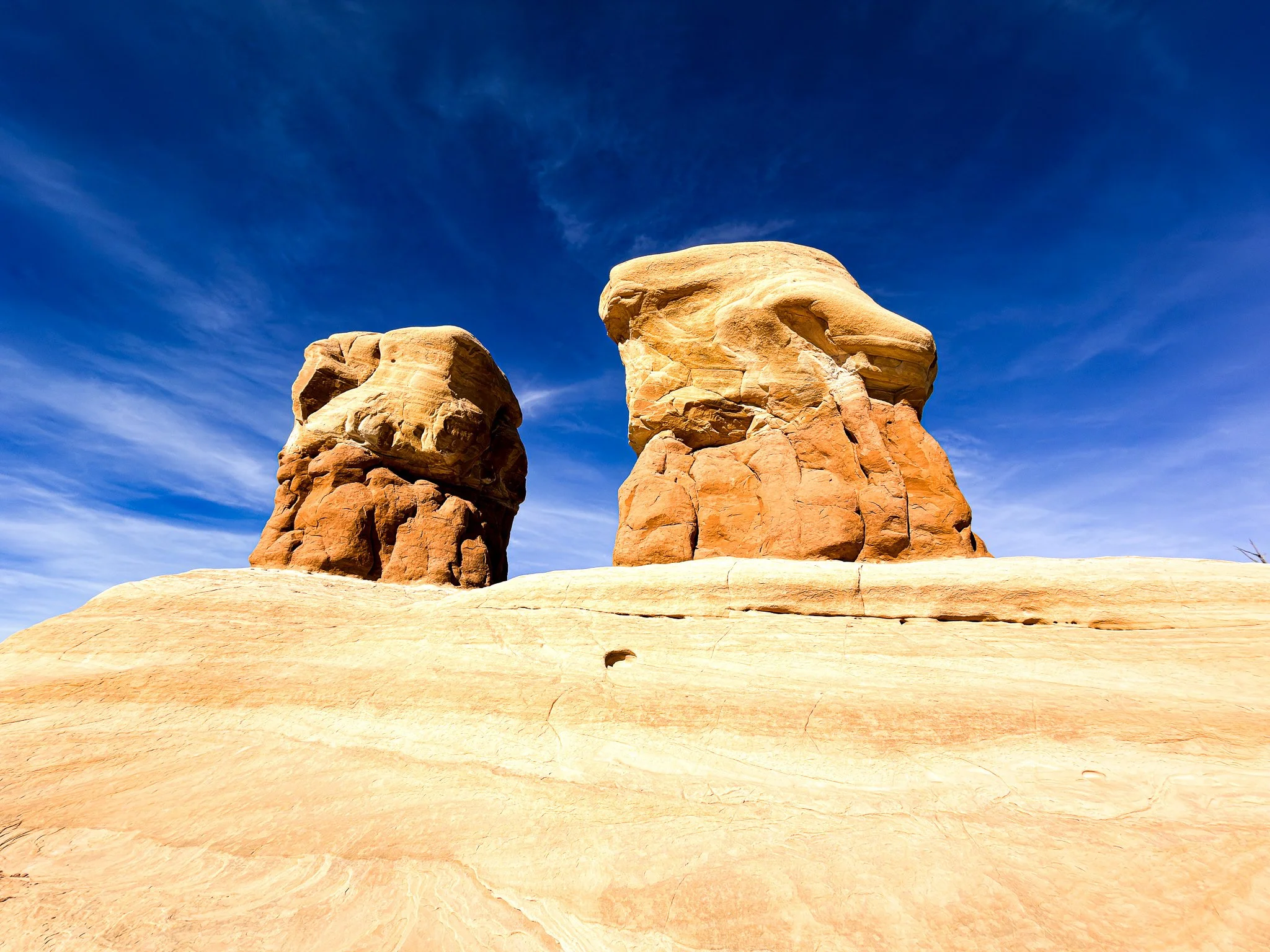
Rock formations in Devils Garden rise out of the desert, shaped by wind and erosion over time.
My favorite spots: Peek-a-Boo and Spooky, Calf Creek Campground and the Calf Creek Trail, Devil’s Garden, and the town of Escalante.
Each one is linked above if you want to read more.
Explore More in Escalante
If you’re planning a trip through the area, I put together a guide with the places I explored, including slot canyons, waterfalls, and stops in Escalante and Boulder.
Grand Staircase–Escalante National Monument: My Favorite Hikes and Places to Explore
National Park Passport Stamps: How to Collect Them at Every National Park
Calf Creek Falls & Campground: One of the Best Stops I Made in Grand Staircase–Escalante National Monument
Devil’s Garden in Grand Staircase–Escalante National Monument
Michele Underwood writes Overland Girl, where she shares firsthand travel experiences across the American West — from desert landscapes and national parks to small towns layered with history. Her work blends movement, place, and the stories that shape them.

Some posts may include affiliate links to products or services she uses on the road. If you choose to purchase through those links, she may earn a small commission at no additional cost to you. It helps support continued travel and storytelling. She only links to items she personally uses or would use herself.