What it’s like to walk through hoodoos and sandstone formations in Grand Staircase–Escalante.
Words by Michele Underwood | Photos by Michele
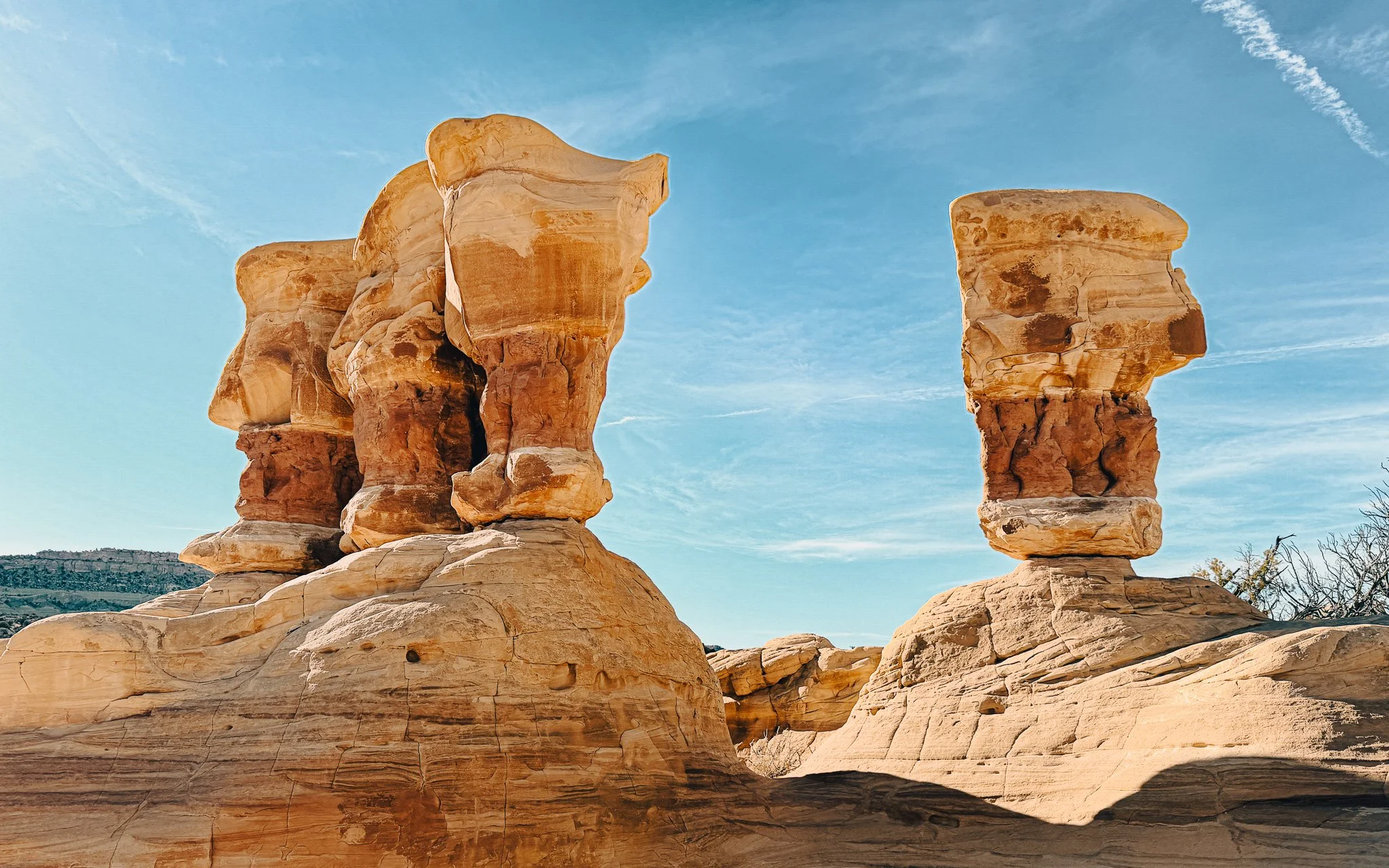
Hoodoos clustered together at Devil’s Garden in Grand Staircase–Escalante National Monument
While I was hiking Peek-a-Boo and Spooky, I met a couple who asked if I had been to Devil’s Garden. I hadn’t even heard of it. They said it was a must-stop and a pretty awesome place.
On my way back, I saw the pull-off.
So I pulled in.
As soon as you round the bend, you start to see these formations — layered colors that almost look like a layered cake.
Instead of needing a long hike or driving deeper into the backcountry, everything is right there. You park, step out, and you’re immediately walking among these sandstone formations that feel completely out of place in the middle of an otherwise open landscape.
It ended up being one of the easiest stops I made — and one of the most memorable.
Where Devil’s Garden Is Located
Devil’s Garden is located within Grand Staircase–Escalante National Monument in southern Utah, just off Hole-in-the-Rock Road.
It’s about 12 miles down the dirt road from Scenic Byway 12. The road is usually passable in dry conditions, but it has some of the worst washboard I’ve driven.
You don’t have to go far off Hole-in-the-Rock Road to reach the parking area. There’s a small lot, and from there, you’re right in it.
Once you arrive, you’ll immediately see the formations — just open access to the landscape.
Devil’s Garden
Grand Staircase–Escalante National Monument
37.4356, -111.5569
What Devil’s Garden Actually Is
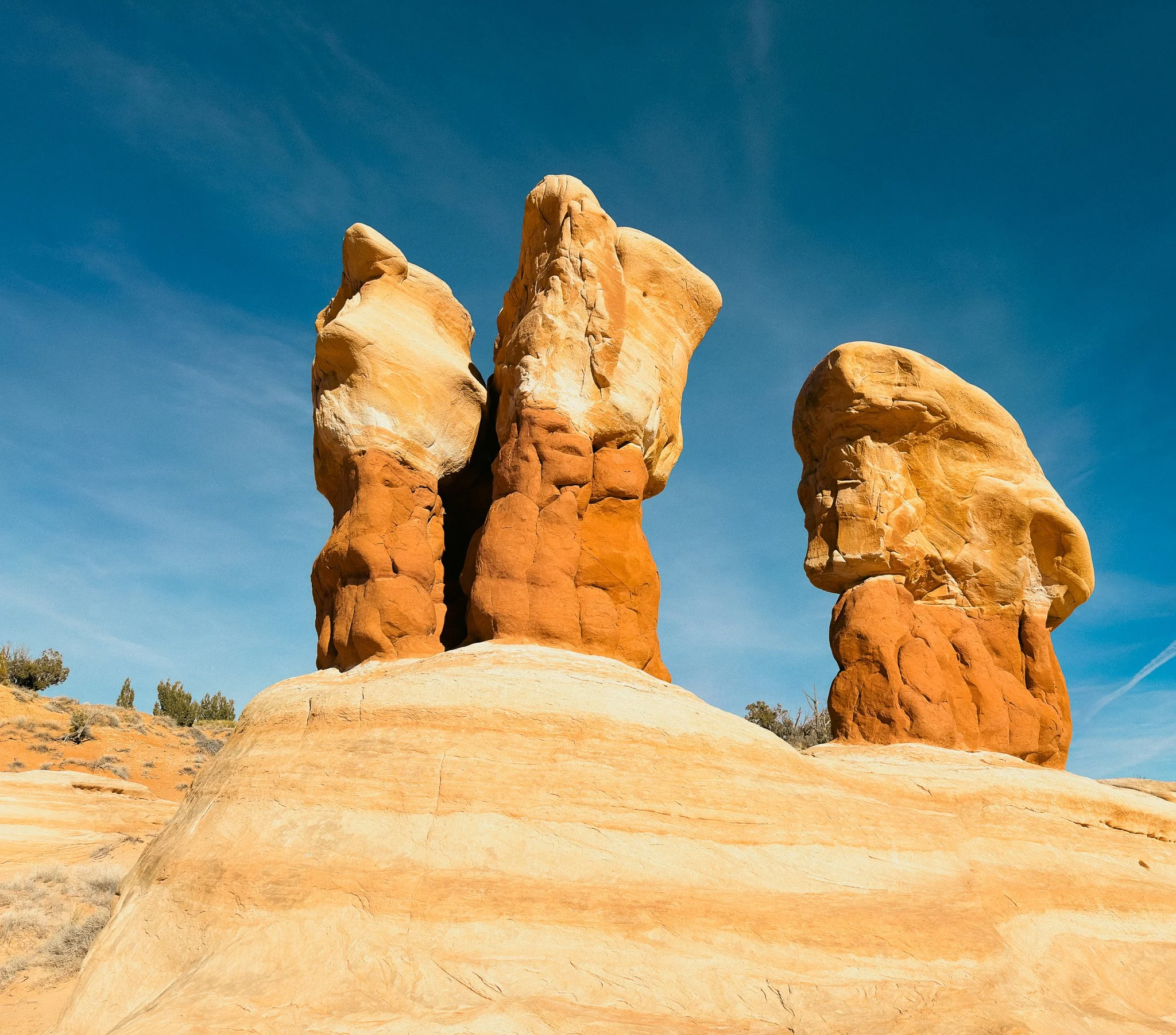
Layered sandstone formations that give Devil’s Garden its “layered” look
Devil’s Garden is a small cluster of sandstone formations shaped by erosion over time, but it feels different from other places in southern Utah.
Instead of one main feature, it’s a mix of hoodoos, layered sandstone formations, and small openings in the rock, all grouped into one relatively small area.
The hoodoos are the taller formations that look stacked or almost sculpted. They form when softer rock erodes away faster than the harder rock sitting on top, leaving behind these vertical shapes.
The colors and layers come from different periods of sediment being deposited over time. As wind and water wear the rock down, those layers become more visible, giving the formations their “layered” look.
There is a named feature here called Metate Arch, a thin sandstone arch that sits higher up in the formation, but most of what you see at Devil’s Garden are these smaller formations and openings in the rock.
What stood out to me is how concentrated everything is.
In most parts of Grand Staircase–Escalante National Monument, the landscape is spread out. You’ll see cliffs, canyons, and rock formations, but they’re usually more dispersed.
Here, it’s all packed into one spot.
You don’t have to hike miles to see it or look out across a distance. You’re walking directly through it, surrounded by these formations.
It’s not a huge area, but it doesn’t feel small once you’re in it.
What It’s Like to Walk Through It
Walking through Deveils' Garden is not a hike. It is almost like a maze, but not that either. You just walk around and on top of these formations. There is no path. You are free to roam the garden.
So, when you are there, just roam and explore. You’re not following a defined trail the entire time. You’re moving around the formations, climbing onto rock, walking between them, and figuring out where you want to go next.
It’s easy to spend more time here than you expect because there’s no set route pulling you forward.
You just keep finding new angles, new shapes, and different ways to move through the space.

Metate Arch — one of the few named features at Devil’s Garden
Why It Stood Out
This was one of the easiest places I stopped — and one of the most unexpected.
It’s one of those places that just appears out of nowhere. It’s been shaped over time into something you don’t expect to see all in one spot.
What makes it different is how approachable it is. Most formations like this are something you look at from a distance. Here, you can walk right up to them, touch them, and look up at them.
After spending time driving through wide, open desert, stepping into a concentrated area like this felt different.
It’s compact, but it doesn’t feel small.
Final Thoughts
Devil’s Garden is one of those places that doesn’t take much effort to get to, but still leaves an impression.
It’s not about one main feature. It’s about the collection of everything in one place — the shapes, the textures, and the way the rock has been carved over time.
If you’re driving through Grand Staircase–Escalante National Monument along Hole-in-the-Rock Road, this is an easy stop that’s worth pulling over for.
Michele Underwood writes Overland Girl, where she shares firsthand travel experiences across the American West — from desert landscapes and national parks to small towns layered with history. Her work blends movement, place, and the stories that shape them.

Some posts may include affiliate links to products or services she uses on the road. If you choose to purchase through those links, she may earn a small commission at no additional cost to you. It helps support continued travel and storytelling. She only links to items she personally uses or would use herself.