National Park Passport Stamps: How to Collect Them at Every National Park
A simple guide to collecting official passport stamps at national parks across the United States.
Words by Michele Underwood | Photos by Michele
Let’s talk about something cool I discovered on a trip to Yellowstone National Park — the Passport To Your National Parks Book.
This isn’t your average travel keepsake. It’s like a diary for all the national parks you visit. Each passport stamp you collect marks another park you’ve explored.
What started as a simple souvenir quickly became something I bring with me on every national park visit.
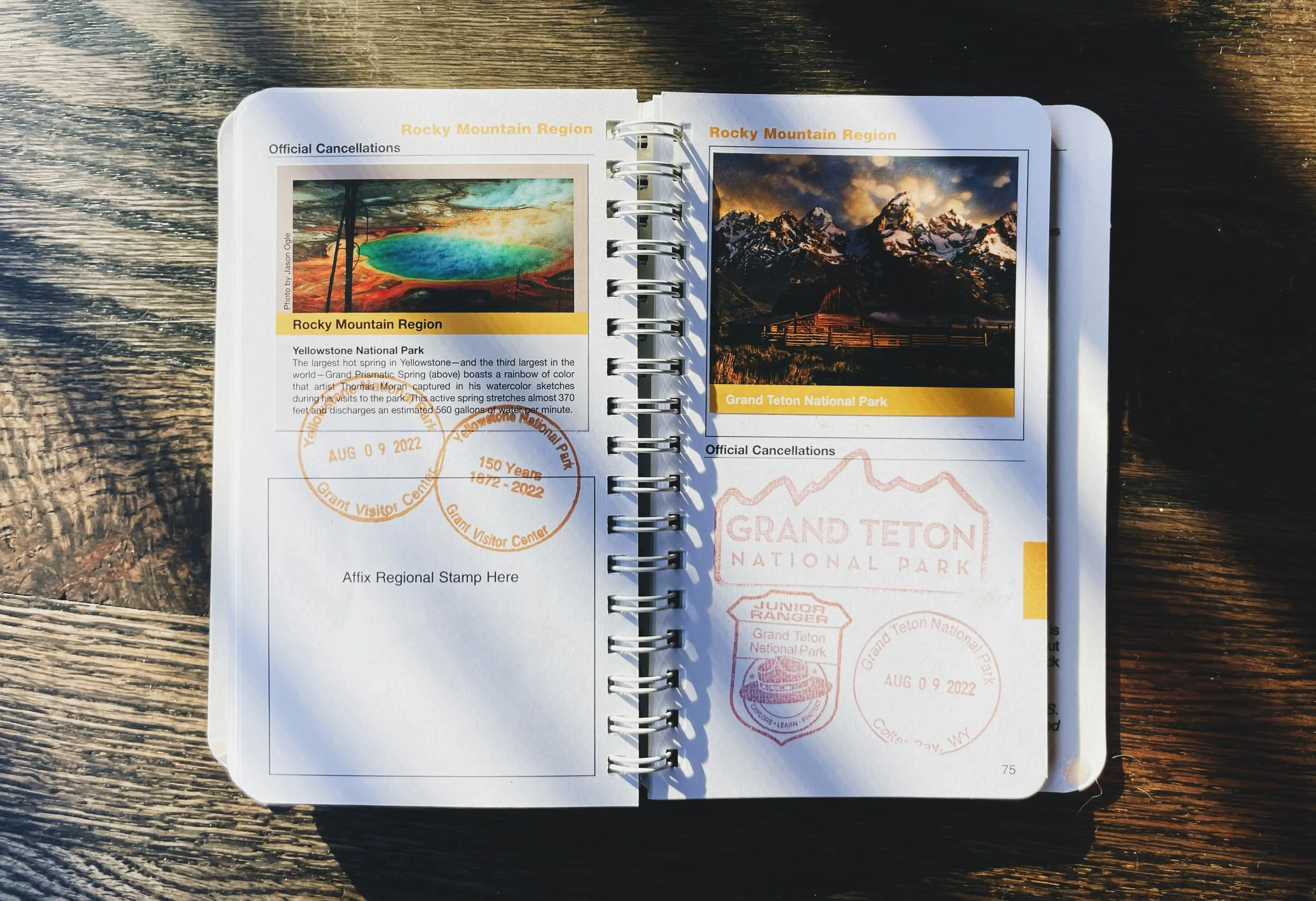
Passport To Your National Parks book showing cancellation stamps from Yellowstone and Grand Teton National Parks.
What Are National Park Passport Stamps?
If you’ve ever visited a national park and noticed a stamping station inside the visitor center, you’ve seen the National Park passport stamp program.
The Passport To Your National Parks® book allows visitors to collect official passport-style stamps from national parks across the United States. Each stamp records the park name and the date of your visit, turning the book into a personal record of the parks you’ve explored.
Every time you visit a new park, you can add another stamp to your book.
For many visitors, collecting these stamps becomes part of the tradition of visiting national parks.
The History of the Passport to Your National Parks Book
The Passport To Your National Parks program began in 1986.
Created by Eastern National in partnership with the National Park Service, the book allows visitors to track their travels through the national park system. Since then, it has become one of the most popular collectibles sold at national park visitor centers.
The book organizes parks by region and includes space for stamps from hundreds of national park sites across the United States.
Why I Started Using the Passport Book
I discovered the Passport To Your National Parks Book during a trip to Yellowstone.
What started as a simple souvenir quickly turned into something I bring with me on every national park visit. Each stamp marks a place I’ve explored and reminds me of the trip.
Over time, the book becomes a record of your national park travels.
How to Collect National Park Passport Stamps
The official stamp collected in the passport book is called a cancellation.
What Is a Cancellation?
A cancellation is a rubber stamp placed in the passport book that includes:
• the name of the national park
• the location of the stamping station
• the date of your visit
Each national park has its own cancellation stamp.
These stamps are typically located inside visitor centers or park gift shops.
Don’t Confuse the Stamp With the Sticker
Don’t confuse the official passport stamp with the park stickers that look like postage stamps. The passport stamp itself is a rectangular ink stamp placed in your book at the visitor center.
The sticker is optional and is placed in the book first, with the stamp placed over it.
I mixed these up when I first started collecting them, and a park ranger recently told me that visitors do this all the time.
Where to Find Passport Stamp Stations
Most stamping stations are located inside the visitor center, usually near the gift shop or ranger desk.
Some parks also have stamping stations at additional visitor centers within the park.
Cost
The passport stamps themselves are free.
However, the passport book and park stickers are sold separately.
The Sticker System
Many national parks also sell optional park stickers for each park.
The correct process works like this:
Place the park sticker in the designated space in the passport book.
Stamp the cancellation directly on top of the sticker.
This records your visit and completes that park entry.
Where to Buy the Passport To Your National Parks Book
You can purchase the Passport To Your National Parks Book before your trip so it’s ready when you arrive at your first park.
Buying the book in advance means you won’t miss collecting your first stamp when you reach a visitor center.
Passport To Your National Parks Classic Edition
Product Details:
• 6" x 4"
• Softcover spiral binding
• 112 pages
• Organized by region
• Includes a map of national park sites
Price: $14.95
Passport Park Stickers
Many national parks sell park stickers in their gift shops. These are optional but designed to be placed in the passport book before stamping.
Price: $2.95
Purchase
Every Purchase Supports National Parks
When you purchase a Passport To Your National Parks Book, a portion of the proceeds supports national park programs.
Funds generated from the program help support educational and interpretive programs at sites managed by the National Park Service.
In other words, collecting passport stamps also helps support the parks themselves.
Why I Love the National Park Passport Book
I keep my passport book in the van so I always have it when I stop at a visitor center.
It’s a simple tradition, but it adds something extra to each visit. Every stamp records a place I’ve explored and the memories made along the way. I still get excited — even as an adult — when I add a new one.
For anyone who enjoys visiting national parks, the Passport To Your National Parks Book is a fun way to document those trips.
Each stamp becomes part of the story of where you’ve been.
Final Thoughts
Whether you're visiting your first national park or have already explored several, collecting passport stamps is an easy way to remember where you’ve been.
Over time, the book becomes more than just a souvenir — it becomes a record of your travels through some of the most beautiful places in the country.
For me, it’s one of the small traditions that makes every national park visit a little more memorable.
Michele Underwood writes Overland Girl, where she shares firsthand travel experiences across the American West — from desert landscapes and national parks to small towns layered with history. Her work blends movement, place, and the stories that shape them.

Some posts may include affiliate links to products or services she uses on the road. If you choose to purchase through those links, she may earn a small commission at no additional cost to you. It helps support continued travel and storytelling. She only links to items she personally uses or would use herself.