Fruita, Colorado: A Base for Riding, Desert Landscapes, and Dinosaur Sites
Why Fruita Is Worth
a Stop in Western Colorado
Words by Michele Underwood | Photos by Michele
I rolled into Fruita planning to stay a few days and ended up lingering longer than expected. It’s the kind of town that doesn’t announce itself loudly — low buildings, wide skies, quiet streets — but the second you look past the main drag, you realize how much is stacked around it.
Red rock cliffs rise just outside town at Colorado National Monument. Trail systems fan out across nearby mesas. And scattered across the desert are reminders that dinosaurs once roamed this same landscape. It’s an unusual mix for a place this small, and part of what made Fruita such an easy spot to slow down and use as a base.
I came here primarily to ride — places like 18 Road and Kokopelli had been on my list for a long time — but the longer I stayed, the more the town itself became part of the experience. Morning errands, short drives to trailheads, conversations with locals, and quick detours to fossil sites all folded into the same days.
This post is about Fruita as a town — what it feels like to stay here for a bit, how it fits into a Western Colorado loop, and why it kept pulling me back after I thought I’d already seen what I came for.
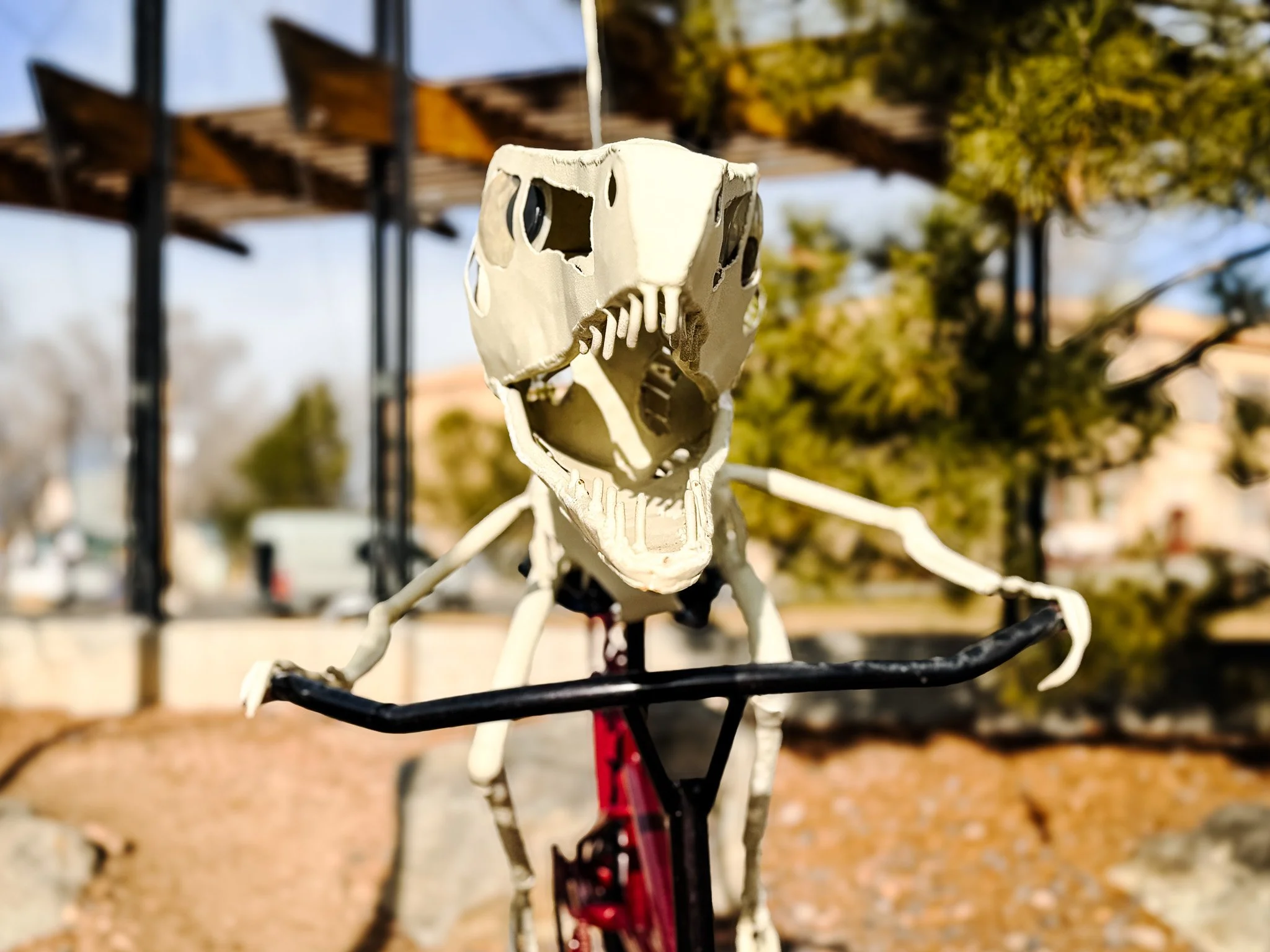
Dinosaur riding a bike in downtown Fruita along Aspen Street.
Where Fruita Is
Fruita sits in western Colorado at the edge of the Grand Valley, right along the Colorado River corridor and just off Interstate 70. It’s a small town with big terrain stacked close around it — desert mesas to the north, canyon country to the south, and wide-open views stretching toward Utah.
Grand Junction is only about 15 minutes east, which makes Fruita feel quieter and more laid‑back by comparison, but still close to groceries, gear shops, and regional services. The two towns blur together geographically, but they have very different personalities.
Colorado National Monument rises directly south of town, and Fruita is one of the main access points to the park via Rim Rock Drive’s western entrance. That proximity is a big part of why so many riders, hikers, and road‑trippers base here — you can be climbing onto canyon rims within minutes of leaving downtown.
A Short History of Fruita
Fruita sits along the Colorado River in a stretch of valley that drew settlers in the late 1800s because of water and fertile soil in an otherwise dry landscape. Early homesteaders built irrigation systems that turned parts of the Grand Valley into productive farmland, and orchards soon became a defining feature of the area.
The town’s name does come from those early fruit‑growing years — orchards of peaches, apples, and other crops shaped both the local economy and daily life in the Grand Valley. Agriculture remained central for decades, even as rail lines and later highways tied the valley more closely to Grand Junction and the rest of western Colorado.
By the mid‑twentieth century, Fruita had settled into the rhythm of a small farming town on the edge of big desert country. In more recent years, outdoor recreation has become part of that identity too — mountain biking trails on nearby mesas, hiking routes in Colorado National Monument, and dinosaur sites scattered around the desert have brought in a steady stream of travelers.
What’s interesting is how all of that overlaps. Working farms still line parts of the valley, while trailheads, fossil sites, and canyon rims sit just minutes away. Fruita feels shaped as much by the land as by any single industry, which makes it a natural base for getting outside in this corner of Colorado.
What Fruita Feels Like
Fruita is small compared to Grand Junction. The downtown is compact, local shops are along main street, and you can always see the mesa style mountains of the Grand Valley.
The setting shapes everything. The locals are friendly. It doesn’t feel polished or resort‑like — more working town than outdoor hub, which is part of the appeal. It is a super chill place. There is a huge passion for the desert and all the mesa’s.
Mountain Biking in Fruita
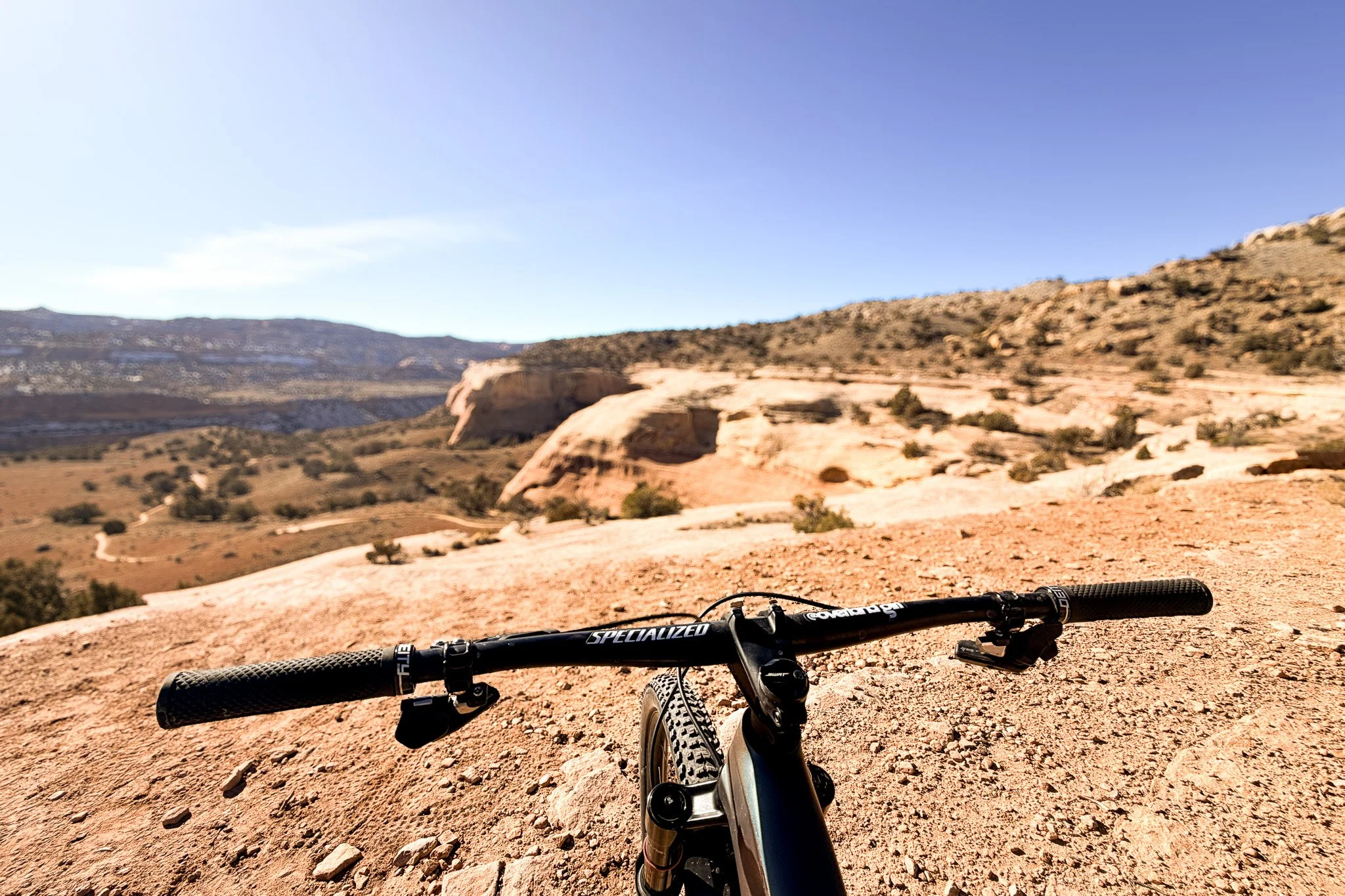
View from Mary’s Trail in the Kokopelli trail system near Fruita, Colorado.
Mountain biking is one of the main reasons people visit Fruita. Fruita has a nationwide presence in the mountain bike scene. Trailheads sit just outside town, drives are short, and you can stack big desert rides into a single day.
The two names you hear most are 18 Road and the Kokopelli Trails. Both sit north of town on the open mesas and deliver fast‑rolling desert singletrack, ledgy climbs, and long stretches where you can cover serious ground. The terrain is dry and rocky, views stretch forever, and the riding feels very different from alpine Colorado or anywhere I have ridden.
What makes Fruita especially easy is how simple the routine becomes: coffee in town, drive ten or fifteen minutes, ride until you’re cooked (which is about 10 miles for me), and be back in time for food or sunset light on the cliffs. Finding trailheads and parking is straightforward.
Even if riding isn’t your only goal here, the bike culture is hard to miss. The tiny town has two bike shops, which is crazy for its size, but for Fruita, I get it. Racks on nearly every truck, art installations of bikes, all hint at how central biking is to daily life around town.
A Bike Shop to Stop Into
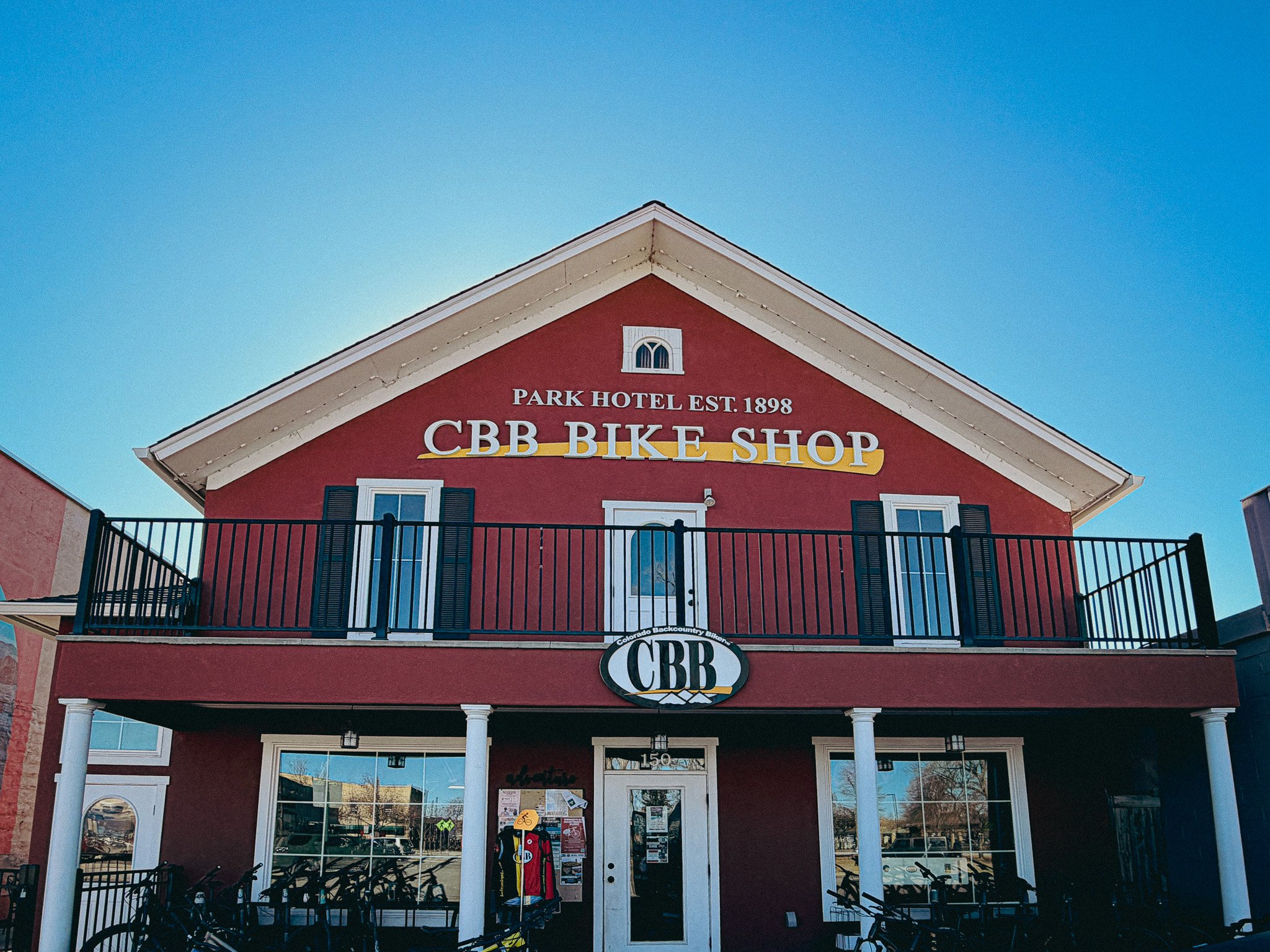
Colorado Backcountry Biker bike shop in downtown Fruita, Colorado.
One spot I really liked while I was in town was Colorado Backcountry Biker. The staff was super friendly, and it was an easy place to pop in for trail info, quick fixes, or just to see what locals were riding.
Visit Colorado Backcountry Biker ➜
Also, be sure to check out my articles on the two trail systems mentioned above.
Read my Kokopelli Trails ride guide ➜ (link coming soon)
Read my 18 Road trail guide ➜ (link coming soon)
Dinosaur Sites Around Town
One of the surprises for me in Fruita was how much dinosaur history is packed into the area. Sites sit right outside town, scattered across the same desert mesas people come for riding and hiking.
Dinosaur Hill is the easiest place to start — a short paved walk with signs explaining what was found in the rock layers and why this slope mattered to early researchers. It’s an approachable way to see fossils in place without needing a long hike or special access.
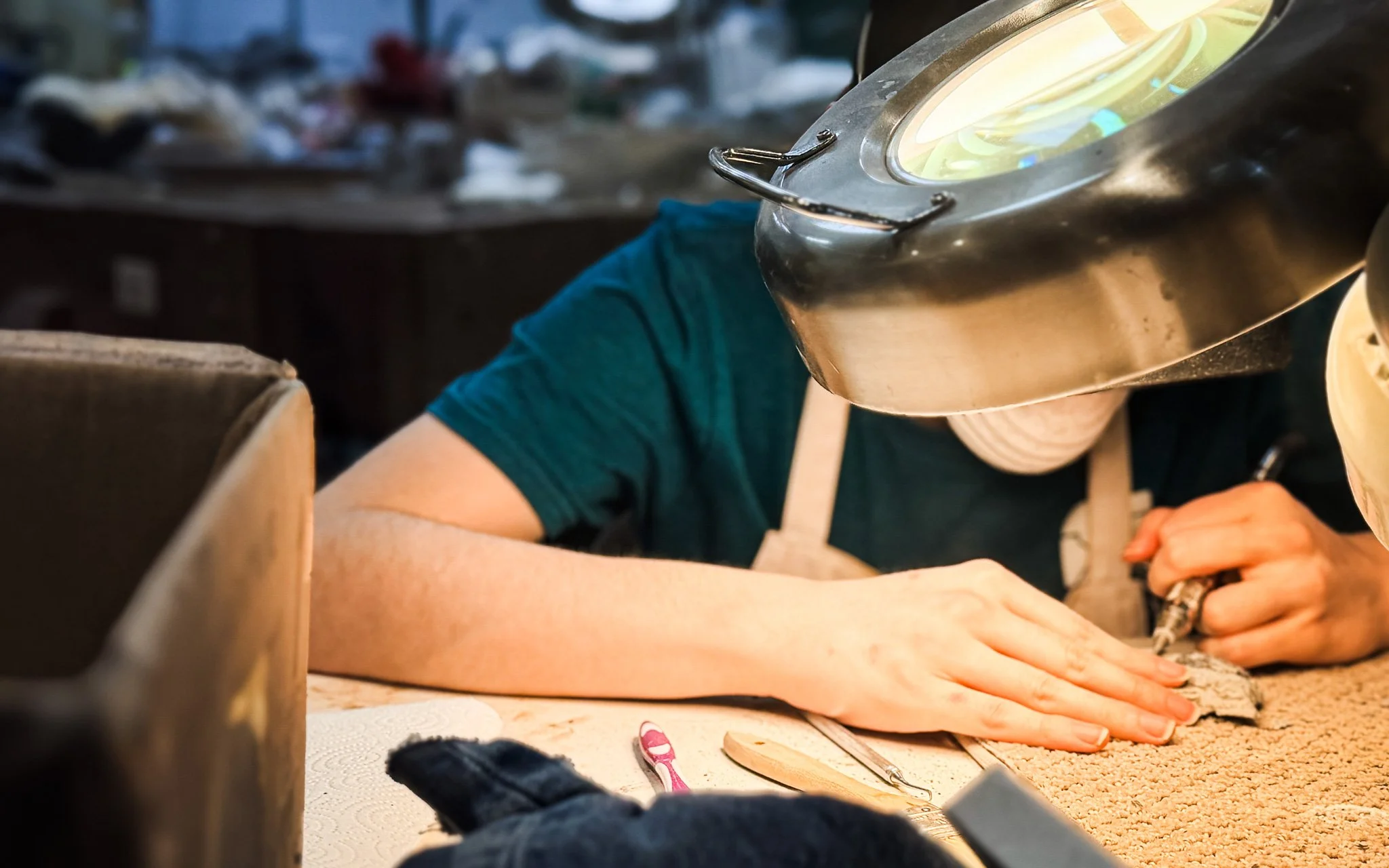
Fossil preparation lab inside the Dinosaur Journey Museum in Fruita, Colorado.
There’s also a small dinosaur museum in town that’s worth popping into, especially if you like talking to people who really know the area. It adds context for what you’ll see out in the field and how the different sites around Fruita connect.
Farther out, the Fruita Paleontological Area protects multiple fossil‑rich locations across BLM land north of town. Access is controlled, and visiting usually means sticking to specific routes and rules, but it’s an important reason Fruita shows up so often in paleontological history.
This post links out to deeper guides for each of these places as they go live, so you can dig into individual stops depending on how much time you want to spend on the dinosaur side of a Fruita visit.
Read my article on the dinosaur sites around Fruita, Dinosaur Sites Around Fruita, Colorado: Tracks, Fossils & Where to See Them.
Food and Coffee in Fruita
I got a few tips on where to get good food. The one tip I got was for really good pizza — Hot Tomato. I’m a plain Jane when it comes to pizza and will always order just cheese. What I liked about this spot is that they sell slices and serve NYC‑style pizza. That’s perfect when you’re solo and don’t want to commit to a whole pie. The slices were great.
In town, there’s also a small grocery that feels more boutique — kind of like if Whole Foods went small‑town. It is called Skips Farm to Market. They have a great selection of meats, fresh veggies, and just a lot of great stuff. In the back, they make sandwiches, soups, and other grab‑and‑go meals. You can also buy containers of egg salad and chicken salad. Both are good, but the egg salad was the best I’ve had.
For coffee, there are two spots in town. Best Slope Coffee Company roasts its beans in‑house and has a nice outdoor seating area.
Visit Best Slope Coffee Company ➜
The other is Aspen Street Coffee Co. They make great breakfast sandwiches — I kept ordering their egg‑and‑cheese bagel. Whatever seasoning they use isn’t what you expect, but it sure makes the sandwich so good.
How It Fits Into a Western Colorado Trip
Colorado National Monument is minutes south of town, which makes it easy to pair a morning ride with an afternoon drive along Rim Rock Drive or a short hike along the canyon rim.
Read my article on Colorado National Monument, Rim Rock Drive at Colorado National Monument.
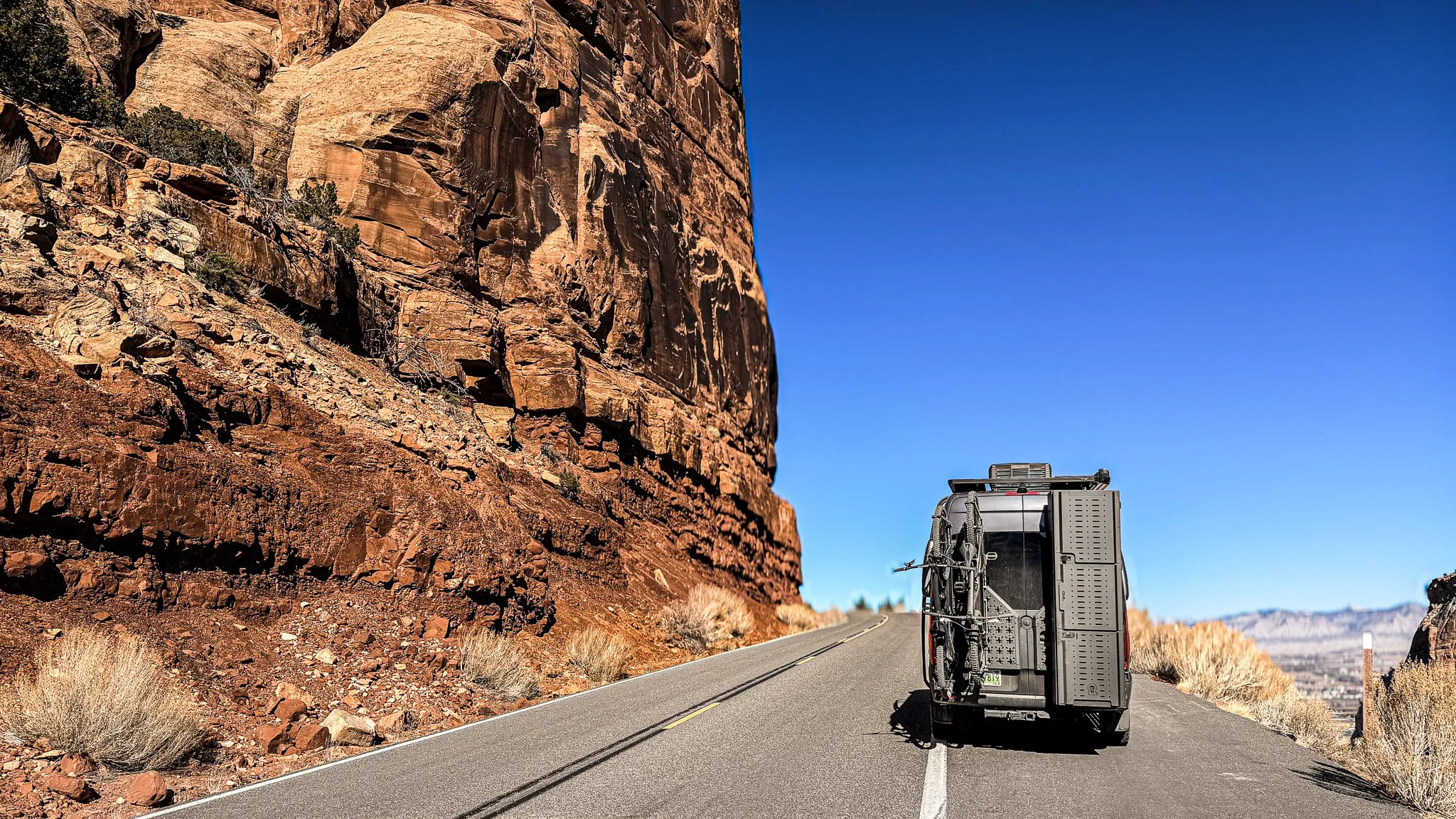
My van climbing Rim Rock Drive inside Colorado National Monument.
Grand Junction is close enough to feel like part of the same orbit — easy for errands, extra food options, or linking up other trail systems — but Fruita stays quieter at night, which I liked after long days outside.
From here, it’s also simple to build bigger loops: west toward Rabbit Valley and Utah‑side desert, east into the Book Cliffs, or north across open mesas for long ride days. You can move between riding, hiking, scenic drives, and fossil sites without spending half your trip in the car, which is what made Fruita such an efficient place to base for a stretch.
I stayed at James M. Robb–Colorado River State Park (Fruita Section), which sits right along the river and made a great home base between ride days. It was clean, quiet, and an easy in-and-out for town and trailheads. Sites can fill quickly in peak seasons, so it’s worth reserving ahead of time — you can book through Colorado Parks and Wildlife here.
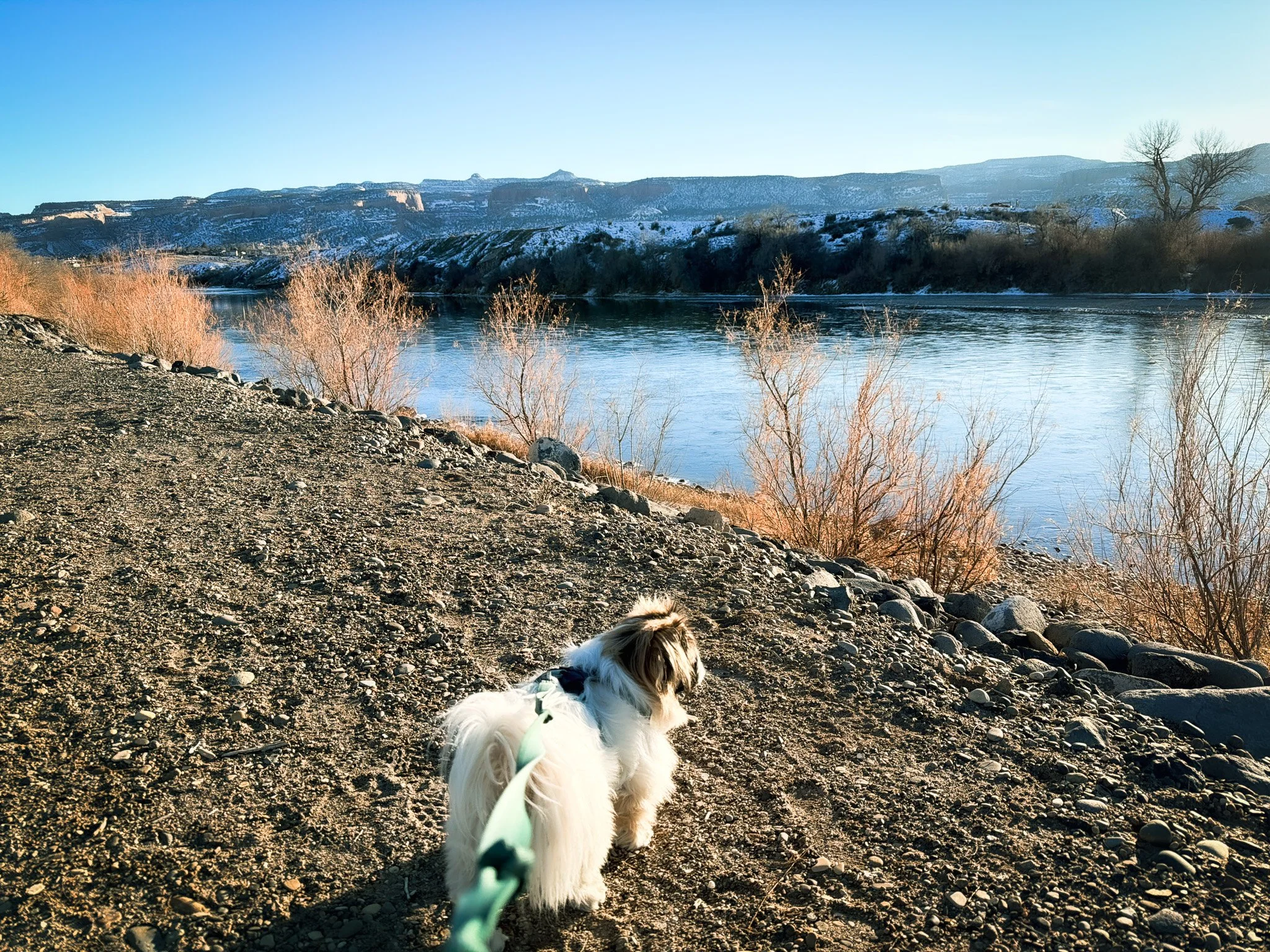
Walking Chloe along the Colorado River at James M. Robb–Colorado River State Park near Fruita.
Why Fruita stood out
Fruita has been on my radar for a long time because of the riding. That part was expected. What surprised me was the people.
I come from the South, where kindness and manners are just part of everyday life, and Fruita felt similar — not polished or forced, just easy and genuine. Being here, and seeing what the area offers, it starts to make sense why people seem content.
In every direction from town, mesas stretch across the horizon. Riders, hikers, trail runners — everyone seems focused on getting outside. That rhythm shows up everywhere.
The trails absolutely lived up to the hype, but I didn’t expect the town itself to stick with me the way it did. Fruita caught me off guard in a good way.
See More Articles and YouTube Videos from This Part of Colorado
Dinosaur Sites Around Fruita, Colorado: Tracks, Fossils & Where to See Them
Rim Rock Drive at Colorado National Monument
Dinosaur Hill in Fruita, Colorado: Fossils, Discovery & Ridge Walk
Michele Underwood writes Overland Girl, where she shares gear she uses on trips — from the Northwoods of Wisconsin to the Ozarks. She values quality and craftsmanship in everything she buys, from outdoor gear to everyday clothes and furniture. Her choices may seem expensive to some, but she believes in buying less and buying better. Longevity matters, both in terms of function and style. Her couch is five years old and still sold at Design Within Reach — that’s the kind of timelessness she looks for.Some of the links in this review are affiliate links, which means she may earn a small commission if you buy through them. It doesn’t cost you anything extra, and it helps support her work. She only recommends gear she’d bring herself.