Dinosaur Sites Around Fruita, Colorado: Tracks, Fossils & Where to See Them
History, Footprints, and
Where to See Them Today
Words by Michele Underwood | Photos by Michele
I found out dinosaurs were a thing in Fruita because of my best friend, Susan. When I told her I was heading there to mountain bike, she stopped me and said something like, “Wait — dinosaurs are there.” That was enough. I immediately thought, okay, I have to see this.
Fruita sits in a stretch of western Colorado where dinosaur history is written straight into the rock. Hillsides around town hold dinosaur footprints and fossil layers from a time when rivers braided across wide floodplains and huge animals walked through soft mud.
While I was walking around the area the other day, I couldn’t stop thinking about the fact that dinosaurs once walked right where I was standing. It was a little bone‑chilling and also pretty incredible at the same time. Being in the actual place where they lived feels completely different from learning about them in museums.
This post is meant to be a starting point — a way to understand why so much dinosaur evidence shows up here and where you can see it today. From here, you can click into deeper guides for individual sites like Dinosaur Hill and others around town.
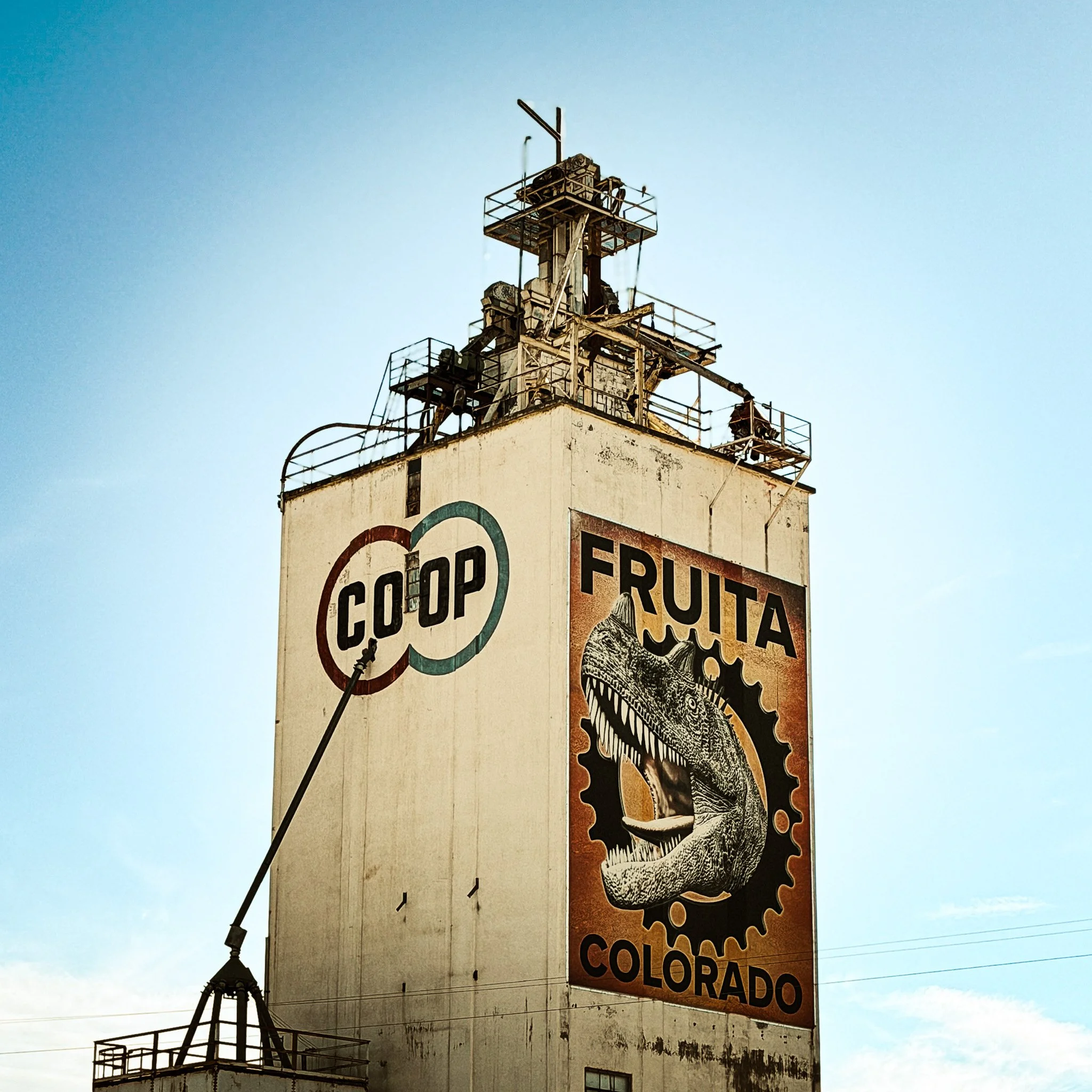
Dinosaur mural on the Fruita Co‑op grain elevator in downtown Fruita, Colorado.
Why This Area Is Full of Dinosaur Fossils and Footprints
Most of the dinosaur evidence around Fruita comes from sedimentary layers laid down millions of years ago in rock layers that formed when rivers spread across wide floodplains. Back then, this area wasn’t desert. It was wetter and flatter, with rivers shifting across broad plains and leaving behind mud that hardened into stone.
Tracks form when animals walk across soft ground and the impressions get buried before they erode away. Bones usually tell a different story — animals that died near water or were quickly covered by sediment. Over time, erosion peeled back those layers, which is why tracks and fossils are visible right at the surface today.
A Brief History of Dinosaur Discoveries Near Fruita, Colorado
Interest in dinosaurs around Fruita goes back to the early 1900s, when paleontologists began documenting bones and track sites across western Colorado and eastern Utah. As more discoveries were made, land agencies and local groups started working to protect sensitive areas so people could visit without damaging them.
Some sites are now carefully managed with signs, walkways, and clear rules about where you can go. Others remain quieter and less developed, but still monitored so the tracks and rock layers don’t disappear under foot traffic or collecting.
Main Dinosaur Sites Around Fruita, Colorado
Dinosaur Hill
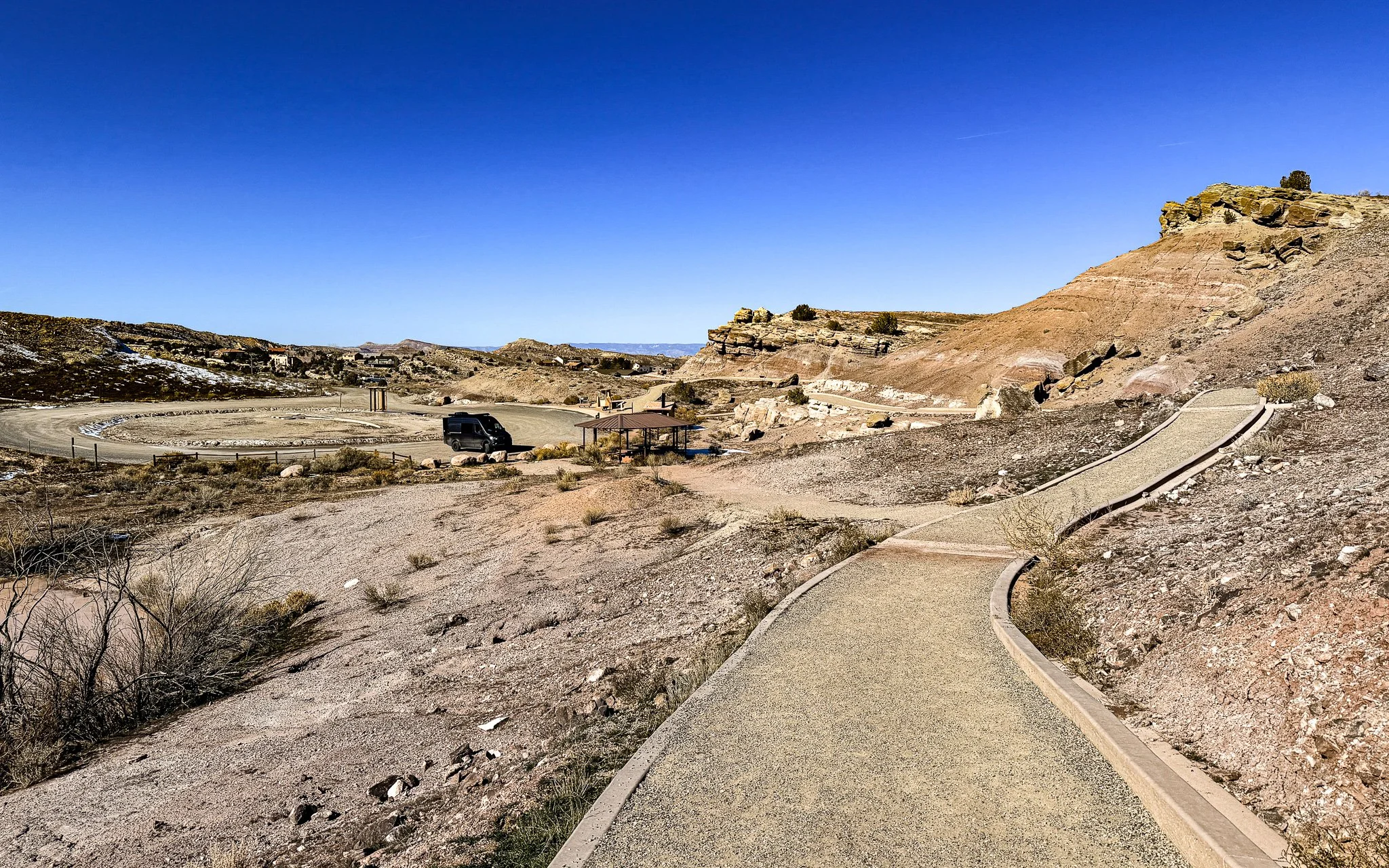
Paved walking trail through the fossil slopes at Dinosaur Hill in Fruita, Colorado.
Dinosaur Hill is one of the most accessible places near Fruita to see dinosaur fossils in place. A short paved path winds past exposed rock layers where bones were discovered, with signs explaining what was found here and why the hillside matters. Benches shaped like bones line the route, and the whole setup makes it easy to slow down and actually take in what you’re looking at instead of just glancing and moving on.
Location: East side of Fruita near the Dinosaur Journey Museum, just off Highway 340.
Parking: Signed lot at the trailhead.
Coordinates: 39.1695° N, 108.7312° W
Fruita Paleontological Area
The Fruita Paleontological Area is managed by the Bureau of Land Management and protects several fossil-rich spots spread across the desert north of town. These aren’t casual roadside pullouts — access is controlled, and visiting usually means following specific routes and rules.
What you’ll find depends on where you go, but the area is known for important discoveries and ongoing research.
Location: Desert north of Fruita in a cluster of BLM-managed parcels.
Access: Controlled—follow posted routes and regulations.
Coordinates: Vary by site; search specific trailheads in maps before driving.
Riggs Hill
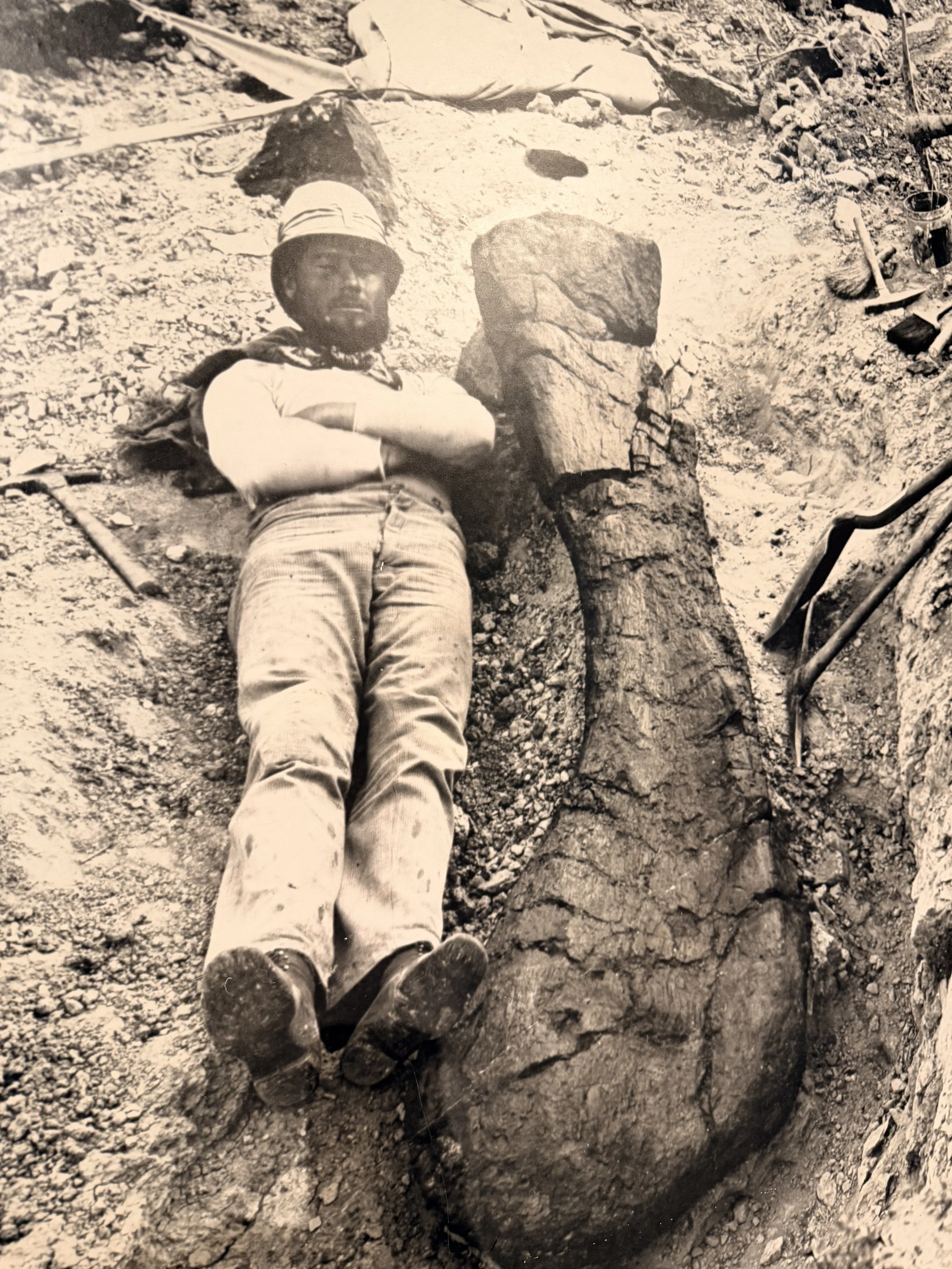
Historic photo of paleontologist Elmer Riggs beside a large dinosaur leg fossil during early excavations near Fruita, Colorado.
Riggs Hill is another fossil site near Fruita that played a role in early dinosaur discoveries in western Colorado. The name comes from paleontologist Elmer Riggs, who worked in the region in the early 1900s. Fossils from the area included long‑necked sauropods — the giant plant‑eaters — tied to that first wave of research. It’s part of the broader story of how this area first drew attention from paleontologists.
It’s not set up like a big roadside attraction, but it’s an important name you’ll see come up when you start reading about Fruita’s dinosaur history — and it helps connect modern-day sites to the first wave of research here.
Location: Northeast of Fruita near the base of the Book Cliffs.
Access: Limited public visitation; primarily referenced for historical context.
Coordinates: Often cited near Fruita/Book Cliffs area rather than a developed trailhead.
Dinosaur Museum in Fruita

Fossil preparation lab visible inside the Dinosaur Journey Museum in Fruita.
There’s also a small dinosaur museum in town that I stopped at while I was here. It’s not huge, but it’s worth going in — especially to talk with the people behind the desk. They know the area well and are generous with context on the local sites and what makes Fruita such an interesting pocket for dinosaur history.
See the Dinosaur Journey Museum website
Location: East side of Fruita near Dinosaur Hill, just off Highway 340 on 550 Jurassic Court.
Parking: Small lot at the museum.
Coordinates: 39.1640° N, 108.7200° W
Dinosaur Footprints You Can Actually See Near Fruita
If you’re specifically after preserved footprints rather than bones, there are only a few places near Fruita where tracks are visible to the public.
Rabbit Valley Dinosaur Tracksite (BLM)
This is the closest well‑known footprint site to Fruita. Set in open desert west of town near the Utah border, the Rabbit Valley area contains multiple exposed dinosaur track surfaces preserved in sandstone slabs.
Short trails lead to fenced viewing areas where you can look down at prints left by large animals crossing muddy ground millions of years ago. Signs explain what you’re seeing and why the tracks are protected. You can view a map of their locations here.
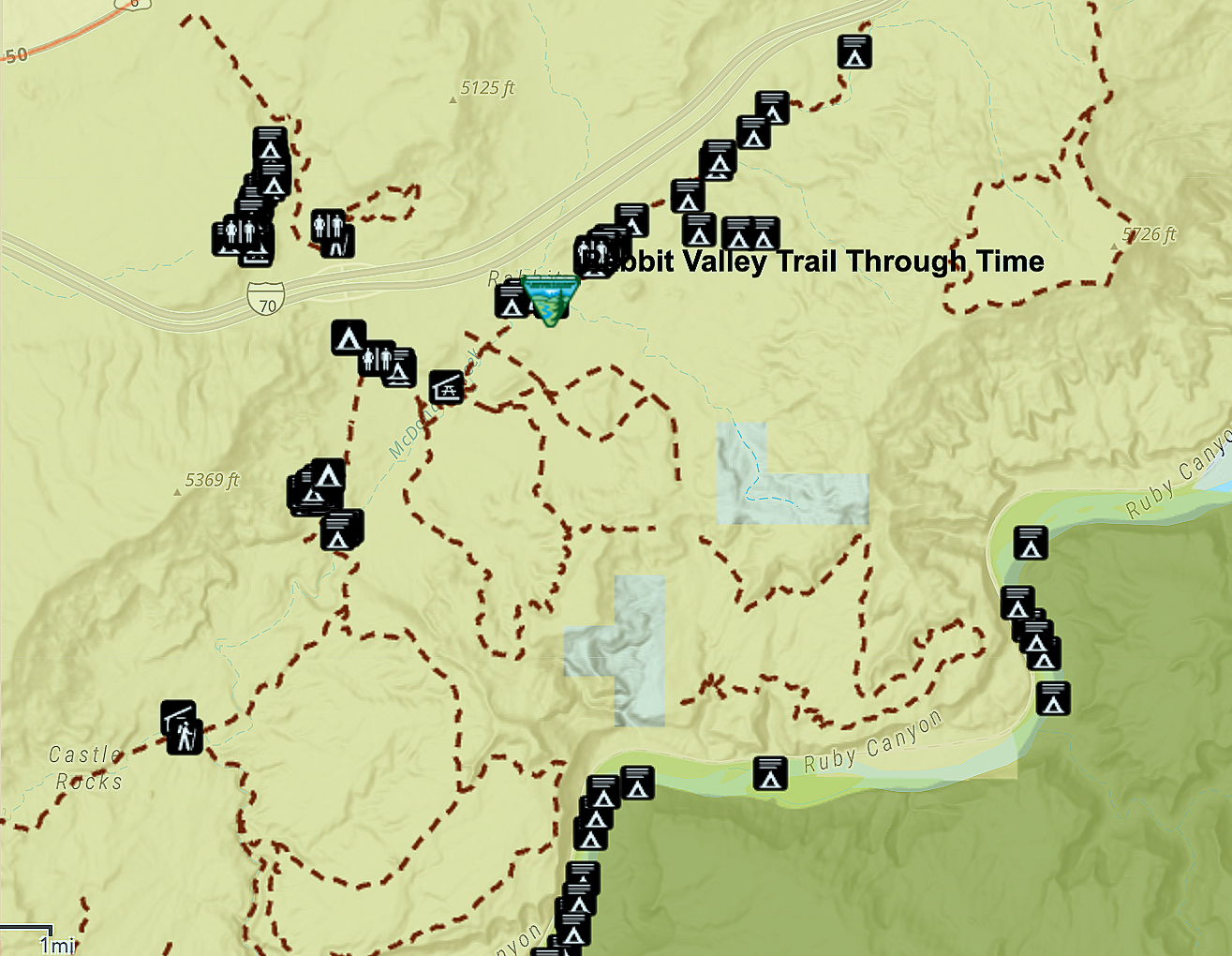
Map showing hiking trails, viewpoints, and dinosaur tracksite locations in Rabbit Valley west of Fruita, Colorado.
Location: West of Fruita along I‑70 near the Colorado–Utah border.
Parking: Signed BLM pullouts along Rabbit Valley Road.
Coordinates: approx. 39.1800° N, 109.0500° W
How to Visit the Sites Responsibly
These places are protected for a reason. Stay on marked paths, don’t touch or trace tracks with your hands, and never remove rock or fossils. Even small damage adds up fast.
If a site has gates, signs, or permits required, follow them. It’s the only way these areas stay open to the public.
Best Time of Year to Visit Fruita Dinosaur Sites
Spring and fall are usually the easiest times to be outside — cooler temperatures and less extreme heat. Summer can be brutally hot, especially away from shade, and wind is common year-round.
Winter can work well if roads are dry. Cooler air and low crowds make wandering around track sites more comfortable, and low sun angles can sometimes make impressions in the rock easier to spot.
How These Sites Fit Into a Fruita Trip
Dinosaur stops pair easily with a day in Colorado National Monument or a ride or hike nearby. Some locations take less than an hour to walk through, while others work better as half‑day outings if you like reading signs and wandering.
Read my article: Rim Rock Drive at Colorado National Monument
They’re easy to stack into a Western Colorado loop — a few hours with ancient footprints in the morning, canyon views in the afternoon.
Final Thoughts
What stuck with me about Fruita was how easy it was to forget you were standing in the middle of something ancient until you looked up at the red rocks or down at the ground where a dinosaur once walked. One minute you’re walking around town or driving between trailheads, and the next you’re staring at the same ground dinosaurs crossed.
Being out there hits differently than seeing fossils in a case or on the History Channel. It’s pretty unreal to be in the exact place they once roamed.
See More Articles and YouTube Videos About Fruita and Western Colorado
Rim Rock Drive at Colorado National Monument
Fruita, Colorado: A Base for Riding, Desert Landscapes, and Dinosaur Sites
Dinosaur Hill in Fruita, Colorado: Fossils, Discovery & Ridge Walk
Follow my YouTube channel for upcoming dinosaur stops and new Western Colorado videos →
Michele Underwood writes Overland Girl, where she shares gear she uses on trips — from the Northwoods of Wisconsin to the Ozarks. She values quality and craftsmanship in everything she buys, from outdoor gear to everyday clothes and furniture. Her choices may seem expensive to some, but she believes in buying less and buying better. Longevity matters, both in terms of function and style. Her couch is five years old and still sold at Design Within Reach — that’s the kind of timelessness she looks for.Some of the links in this review are affiliate links, which means she may earn a small commission if you buy through them. It doesn’t cost you anything extra, and it helps support her work. She only recommends gear she’d bring herself.