Dinosaur Hill in Fruita, Colorado: Fossils, Discovery & Ridge Walk
What it’s like to walk one of
Fruita’s most important fossil sites
Words by Michele Underwood | Photos by Michele
I added Dinosaur Hill to my Fruita plans because I kept hearing about the dinosaur history around town and wanted to see where I could find it. I think it’s interesting that right here in this spot, dinosaurs once walked — the terrain and landscape were different — and that one dinosaur that stood here is now displayed at the Field Museum in Chicago.
I wandered the ridge, read every sign, and kept stopping to look out over the Grand Valley. You’re standing on a strip of rock that once held moving animals, and now it doubles as a quiet overlook above town.
If you’re in Fruita for riding, hiking, or a drive through Colorado National Monument, Dinosaur Hill slides neatly into the day. It works as a short stop between bigger plans, or a slow wander if you feel like taking your time.
Where Dinosaur Hill Is Located
Dinosaur Hill sits on the east side of Fruita, just beyond town and a few minutes from the Dinosaur Journey Museum. After passing the James M. Robb–Colorado River State Park (Fruita Section), look for a small brown sign reading "Dinosaur Hill" — it can be easy to miss.
A short drive up a dirt road leads to a signed parking area at the base of the ridge. From there, the walking path heads uphill toward the fossil-bearing slopes, loops along the top, and eventually drops back toward the parking area.
Coordinates (parking area): 39.1700° N, 108.7310° W
Parking is straightforward, and the site is clearly marked once you arrive.
Fossils and Geology: What You’ll See
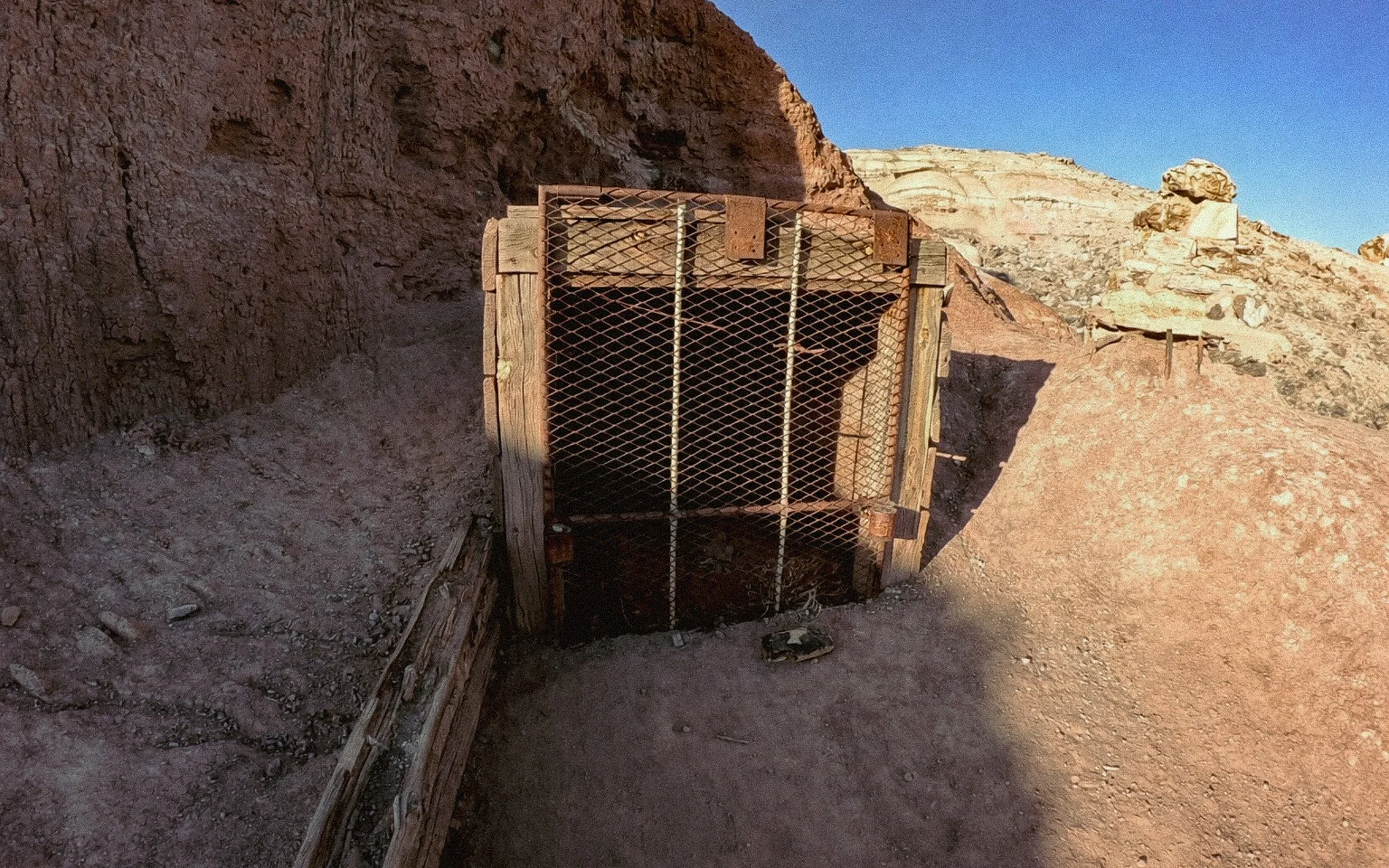
Protected excavation pit from Elmer Riggs’s 1901 dinosaur dig at Dinosaur Hill.
The focus at Dinosaur Hill is on real fossils and the geological context rather than dramatic footprint slabs. The hill lies within the Morrison Formation, which built up during the Late Jurassic when rivers spread across broad floodplains and buried plants and animals in layers of sediment that later hardened into rock capable of preserving bones and other traces of prehistoric life.
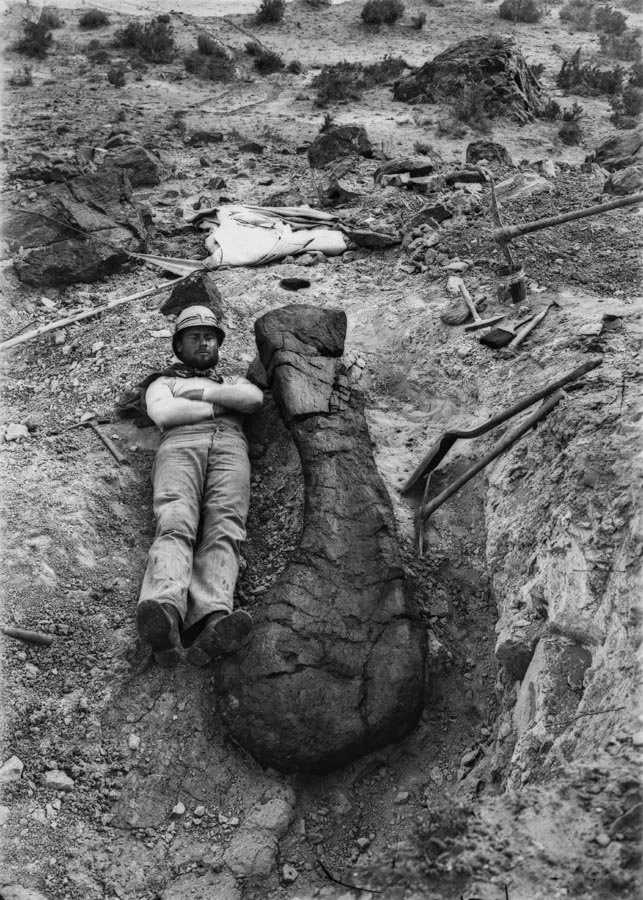
Historic photograph of paleontologist Elmer Riggs with a large dinosaur bone uncovered during early excavations near Fruita.
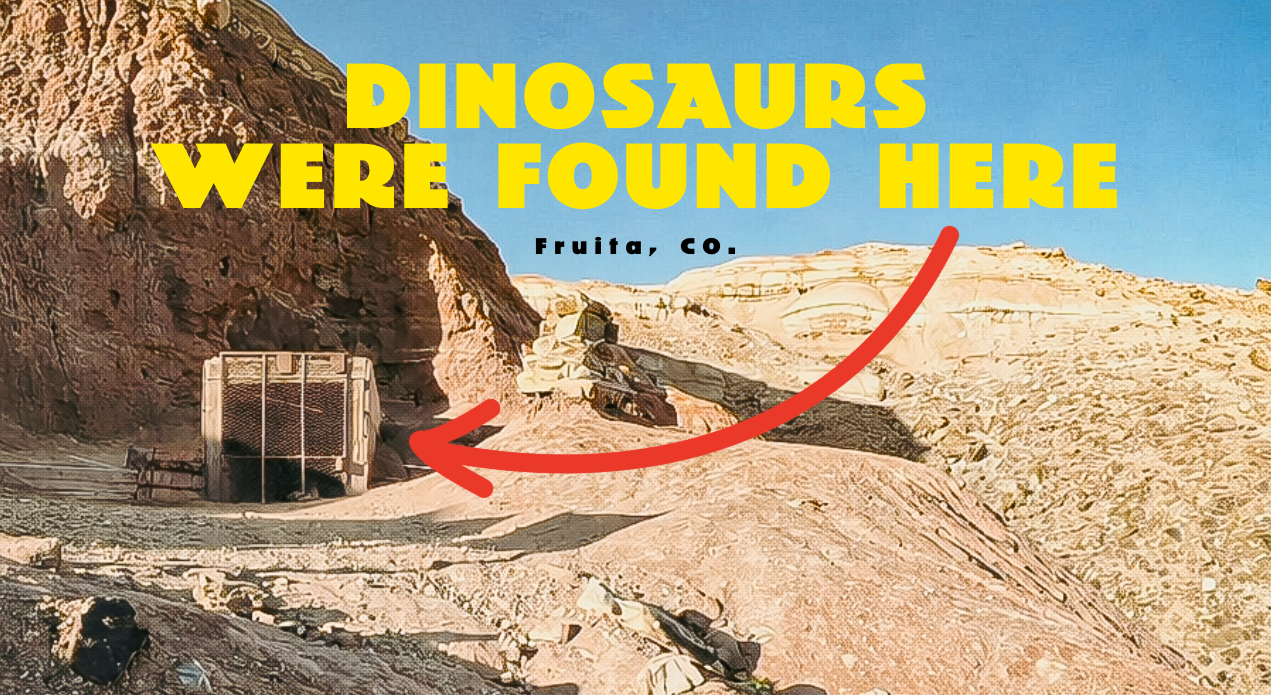
In 1901, paleontologist Elmer Riggs uncovered a very large portion of an Apatosaurus skeleton at this site — one of the most complete finds of its kind at the time — which helped scientists better understand how these animals lived and how they were preserved in these rocks. As a paleontologist, that had to be a pretty wild moment.
Today, you won’t find large bones sticking out of the hillside, but interpretive signs explain what kinds of creatures lived here and how the rock and sediment tell that story. You’ll see exposed rock layers, labeled areas where significant finds were made, and notes on how erosion and geology have exposed those layers. One of the focal points is the area tied to Riggs’s excavation, which helps ground the history in a specific place.
If you move slowly and read the displays, the hill starts to feel like a cross-section through deep time — a place where ancient floodplains, rivers, and the animals that roamed them left marks that are still readable today.
The Dinosaur Elmer Riggs Helped Bring to Light
Riggs’s work near Fruita became famous because of the size and quality of the sauropod remains his crew uncovered. The skeleton recovered here was substantial but not complete, which was common for early fossil digs — erosion, shifting sediments, and time often scatter bones before they are buried.
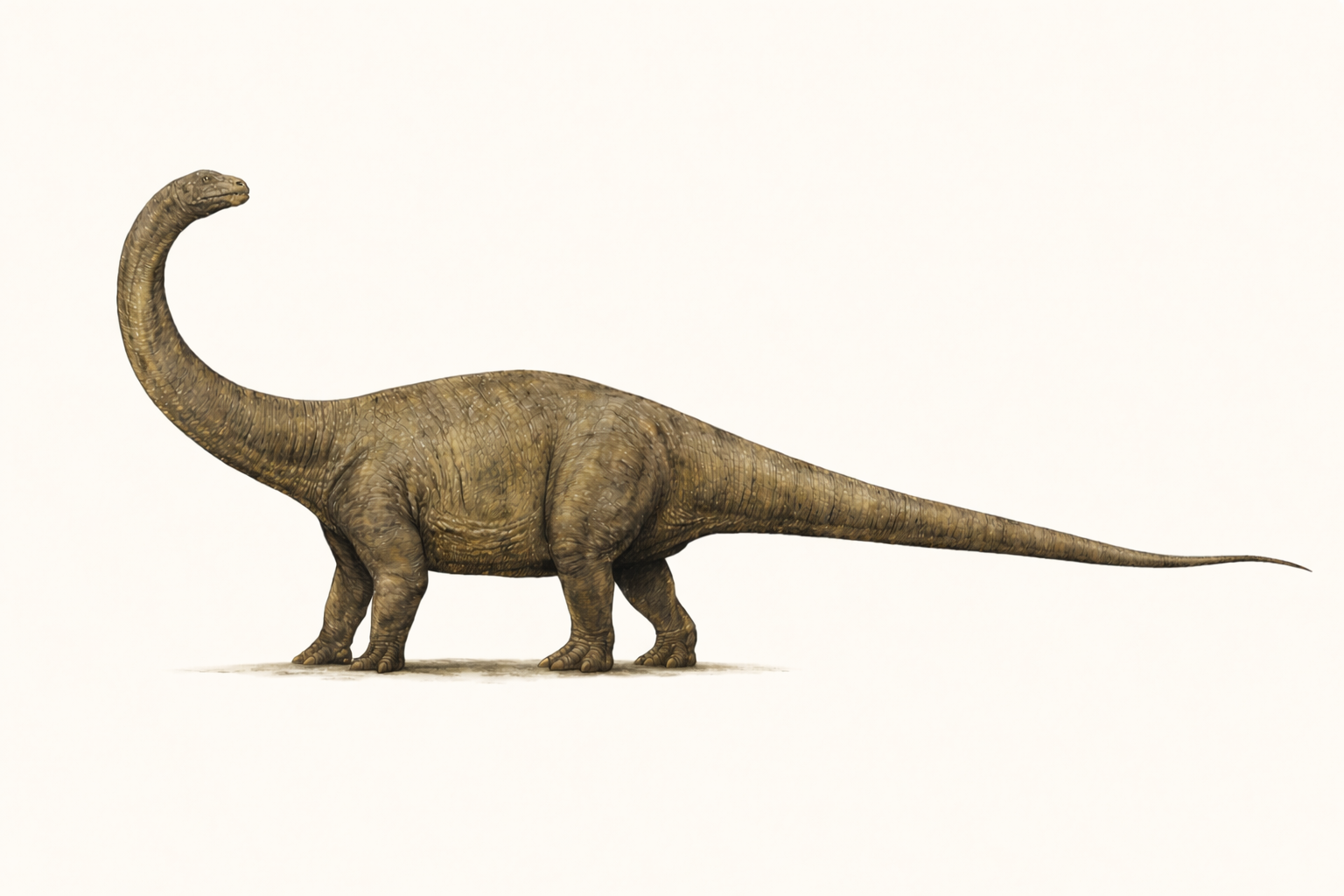
Illustration of a long-necked sauropod dinosaur similar to the Apatosaurus discovered near Fruita.
To create a full museum mount, paleontologists typically compare multiple specimens from the same species and time period, filling in missing parts with casts or bones from other discoveries. That approach helped scientists better understand the animal’s full anatomy and allowed museums to display what a complete sauropod would have looked like in life.
The specimen tied to Riggs’s Fruita work eventually became part of the collections at the Field Museum in Chicago, linking this quiet ridge outside town to one of the country’s major natural history institutions.
Walking the Ridge
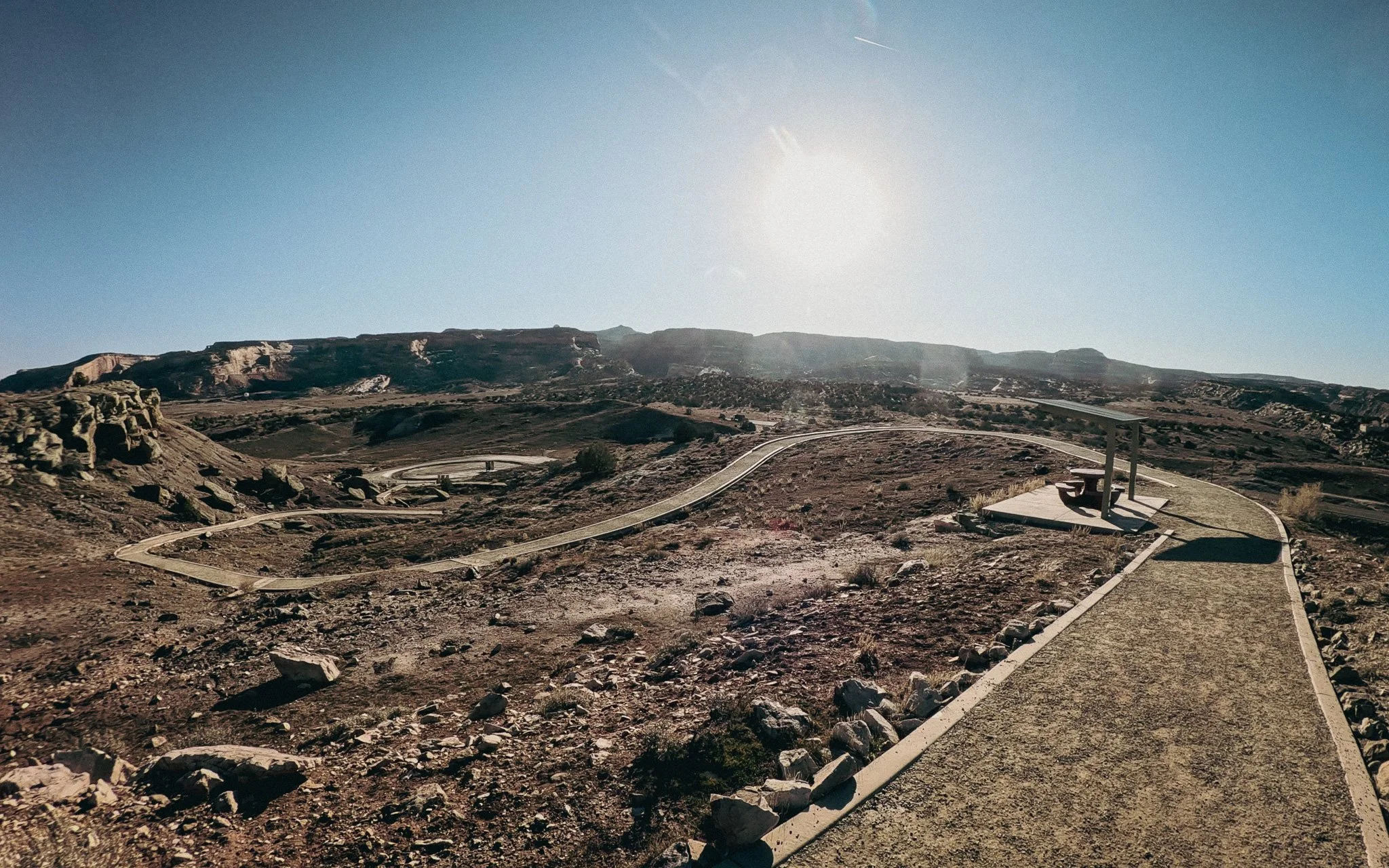
Paved interpretive trail winding across the ridge at Dinosaur Hill in Fruita, Colorado.
A paved path winds from the parking area up onto the ridge and along the fossil slopes. It isn’t long, but there’s enough elevation gain to give you a new angle on town and the river corridor below. The pavement does break briefly near the excavation area, then picks back up again a short distance later.
Benches shaped like bones sit near the start, and benches and covered tables appear along parts of the route, which makes it easy to stop, sit, and take in the view. From the top, the Grand Valley spreads out in wide layers of mesas, farms, and Colorado National Monument.
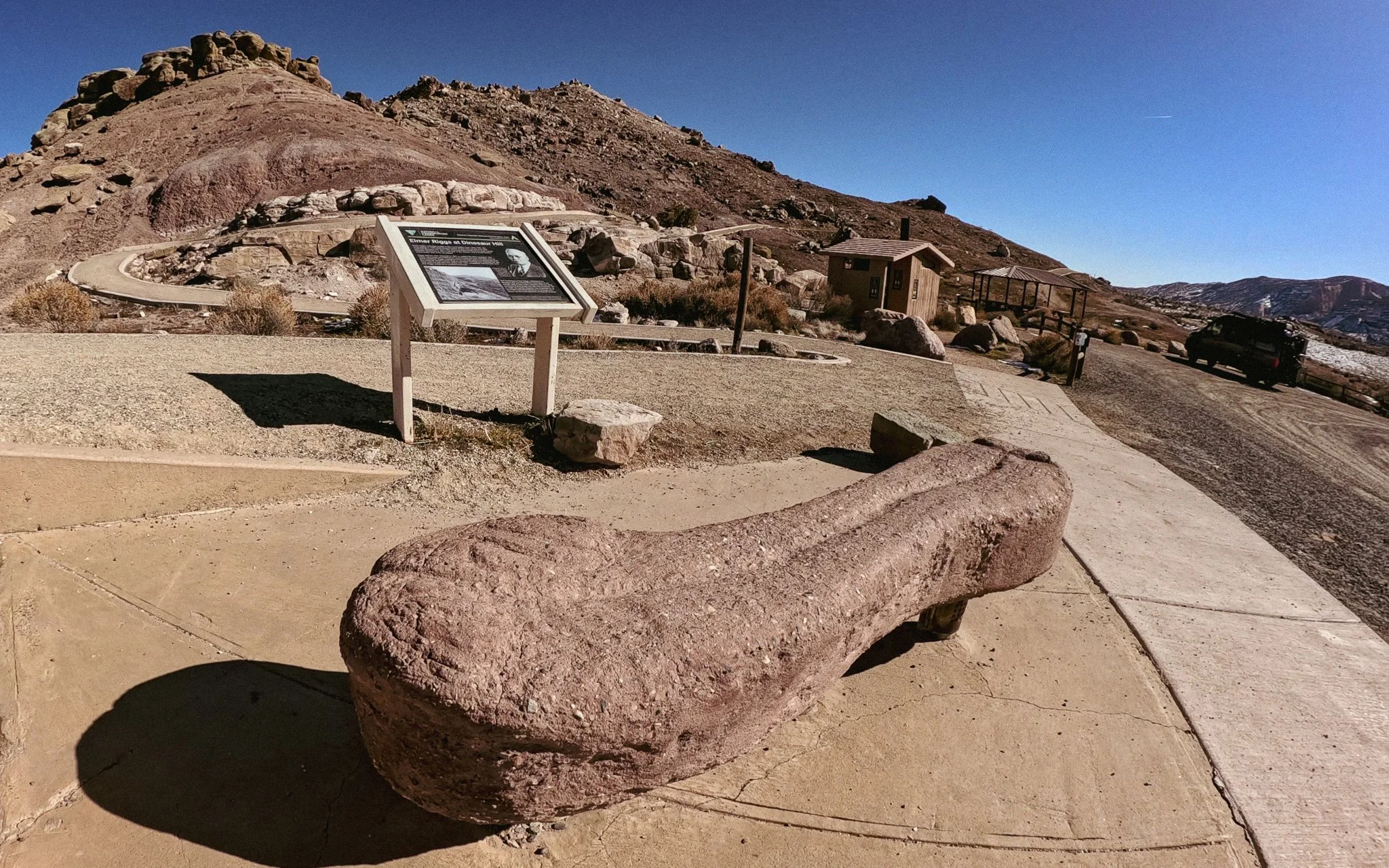
Bone-shaped bench and trailhead at the Dinosaur Hill interpretive site in Fruita.
The walking is mostly mellow and approachable, but take care through the unpaved section — it’s rougher underfoot. The exposure at the top makes the walk feel bigger than the distance suggests.
Best Time to Visit
Spring and fall are ideal for Dinosaur Hill, when temperatures are cooler and the wind is usually manageable. Winter days can be crisp but pleasant in the sun, while summer heat makes midday walks feel much longer than they are.
Morning and late afternoon light bring out more contrast in the rock layers and make the views off the ridge especially good.
If it’s windy in town, expect it to be stronger once you’re up on the hill.
Visitor Basics & Hours
Dinosaur Hill is free to visit and open to the public.
There are no staffed facilities at the hill itself, so bring water, sun protection, and whatever you need for a short walk.
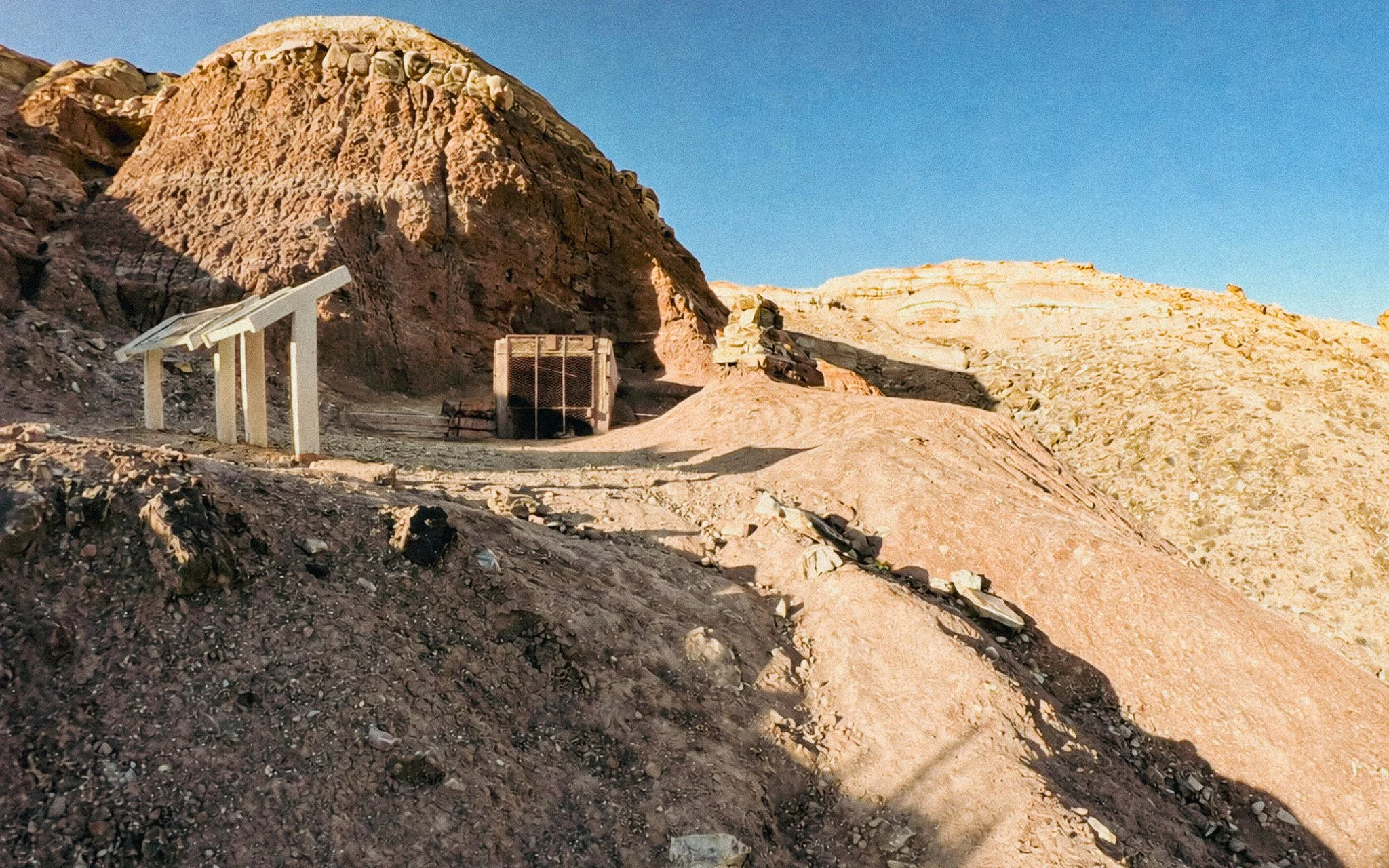
The protected quarry site on Dinosaur Hill where Elmer Riggs excavated major fossil remains in 1901.
Parking is at the base of the site, and cell service can be spotty once you leave downtown.
Stay on the paved paths and respect the fencing and signage — the fossil layers here are protected.
Because it’s an open, self-guided site, access is generally limited to daylight hours.
Conditions can change with the weather — after heavy rain or snowmelt, the dirt road and parking area can be muddy.
If you’re unsure about current conditions, it’s worth checking in at the nearby Dinosaur Journey Museum or the Fruita Visitor Center before heading up.
Watch: Dinosaur Hill on YouTube below: Dinosaur Hill in Fruita, Colorado | Jurassic Fossil Discovery Site
How It Fits into a Fruita Stop
Dinosaur Hill is easy to pair with other stops around Fruita. It’s minutes from town, close to the Dinosaur Journey Museum, and simple to stack with a ride day, grocery run, or coffee stop.
It works as a quick twenty-minute wander or a longer pause if you like reading every sign and soaking in the view from the top.
If you’re building a loop through western Colorado, this is the kind of place that adds texture to the trip without demanding a big chunk of time.
Final Thoughts
Dinosaur Hill is simple: a ridge, some stone, a story that runs millions of years deep, and a wide view across the valley.
I enjoyed visiting this site, and it pushed me to start learning more about the Dinosaur Diamond region as they call it — western Colorado and Utah hold an unbelievable amount of history going back roughly 150 million years.
For how close it is to town, it adds a surprising amount of perspective to a Fruita visit.
Watch my Dinosaur Hill video → (coming soon)
See More Articles and YouTube Videos from This Part of Colorado
Dinosaur Sites Around Fruita, Colorado: Tracks, Fossils & Where to See Them
Rim Rock Drive at Colorado National Monument
Fruita, Colorado: A Base for Riding, Desert Landscapes, and Dinosaur Sites
Michele Underwood writes Overland Girl, where she shares gear she uses on trips — from the Northwoods of Wisconsin to the Ozarks. She values quality and craftsmanship in everything she buys, from outdoor gear to everyday clothes and furniture. Her choices may seem expensive to some, but she believes in buying less and buying better. Longevity matters, both in terms of function and style. Her couch is five years old and still sold at Design Within Reach — that’s the kind of timelessness she looks for.Some of the links in this review are affiliate links, which means she may earn a small commission if you buy through them. It doesn’t cost you anything extra, and it helps support her work. She only recommends gear she’d bring herself.