Escalante, Utah Travel Guide: Where to Stay, Eat, and Explore Grand Staircase–Escalante
A small desert town that works as the basecamp for everything in Escalante
Words by Michele Underwood | Photos by Michele
Escalante isn’t the destination—it’s the place that makes everything around it possible. This is where you stop before heading down Hole-in-the-Rock Road, and where you come back at the end of the day—dusty, tired, and already thinking about the next route.
There’s not much here. But what’s here matters.
Where Escalante Is Located
Escalante sits along Utah State Route 12, one of Utah's most scenic drives, between Capitol Reef National Park and Bryce Canyon National Park. It’s also the closest town to Grand Staircase–Escalante National Monument, which makes it the main access point for everything in the area.
Escalante, Utah
37.7703° N, 111.6021° W
If you’re heading toward Hole-in-the-Rock Road, this is where it starts.
But the story of how Escalante ended up here goes back much further.
A Bit of History: How Escalante Got Here
Escalante takes its name from Silvestre Vélez de Escalante, a Spanish missionary who passed through this region in 1776 while searching for a route between Santa Fe and California.
Long before that, this area was home to Indigenous cultures who lived across what is now southern Utah. You still see traces of that history in the landscape—petroglyphs, markings, and sites that sit quietly off the road if you know where to look.
Modern Escalante didn’t take shape until much later. Mormon settlers moved into the area in the late 1800s, drawn by the Escalante River and the possibility of farming in a place that doesn’t make it easy.
Even then, it remained isolated.
That isolation is tied directly to the terrain. This part of southern Utah sits within Grand Staircase–Escalante National Monument, where layers of rock step upward across the landscape—from lower elevations near the Grand Canyon to higher plateaus closer to Bryce Canyon.
Those layers aren’t just visual—they’re the reason travel here has always been difficult.
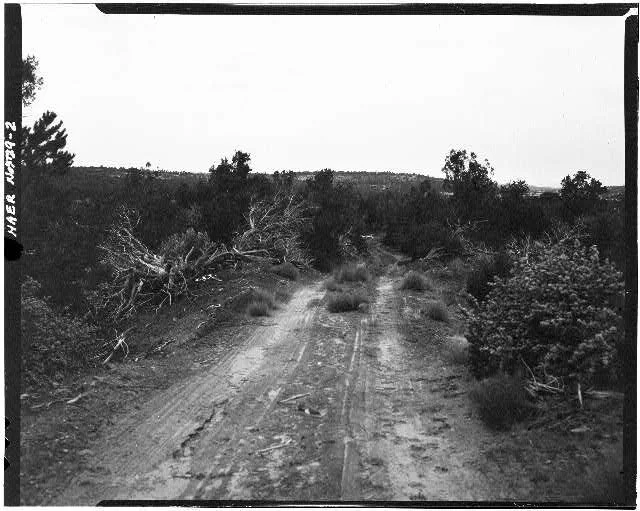
Part of the original Hole-in-the-Rock Trail, where pioneers cut a route through the desert in 1879–1880
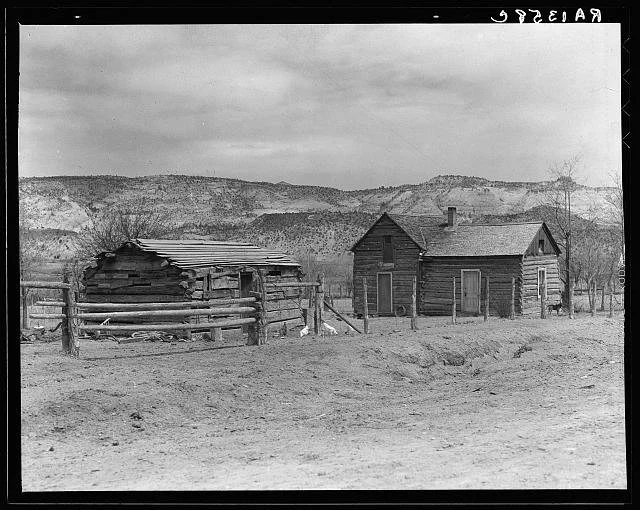
An early homestead in Escalante, built in the typical “Utah pattern” used by Mormon settlers navigating this landscape in the late 1800s
One of the most well-known routes tied to that history is Hole-in-the-Rock, a rugged passage carved into the cliffs near Lake Powell. In 1879–1880, Mormon pioneers cut a route through this terrain to reach what is now southeastern Utah.
It’s still hard to imagine doing that today.
Escalante sits in the middle of all of it—shaped by the land, and still defined by how remote it is.
Why Escalante Is a Great Basecamp for Exploring Southern Utah
Escalante works as a basecamp because you don’t have to move around to see a lot. You can stay in one place and still reach a mix of landscapes—desert canyons, higher elevation forests, and national parks—without packing up each day.
It sits in a spot that makes it easy to move in multiple directions, whether you’re heading deeper into Grand Staircase–Escalante National Monument or branching out to other parts of southern Utah.
What’s Nearby: Distances from Escalante
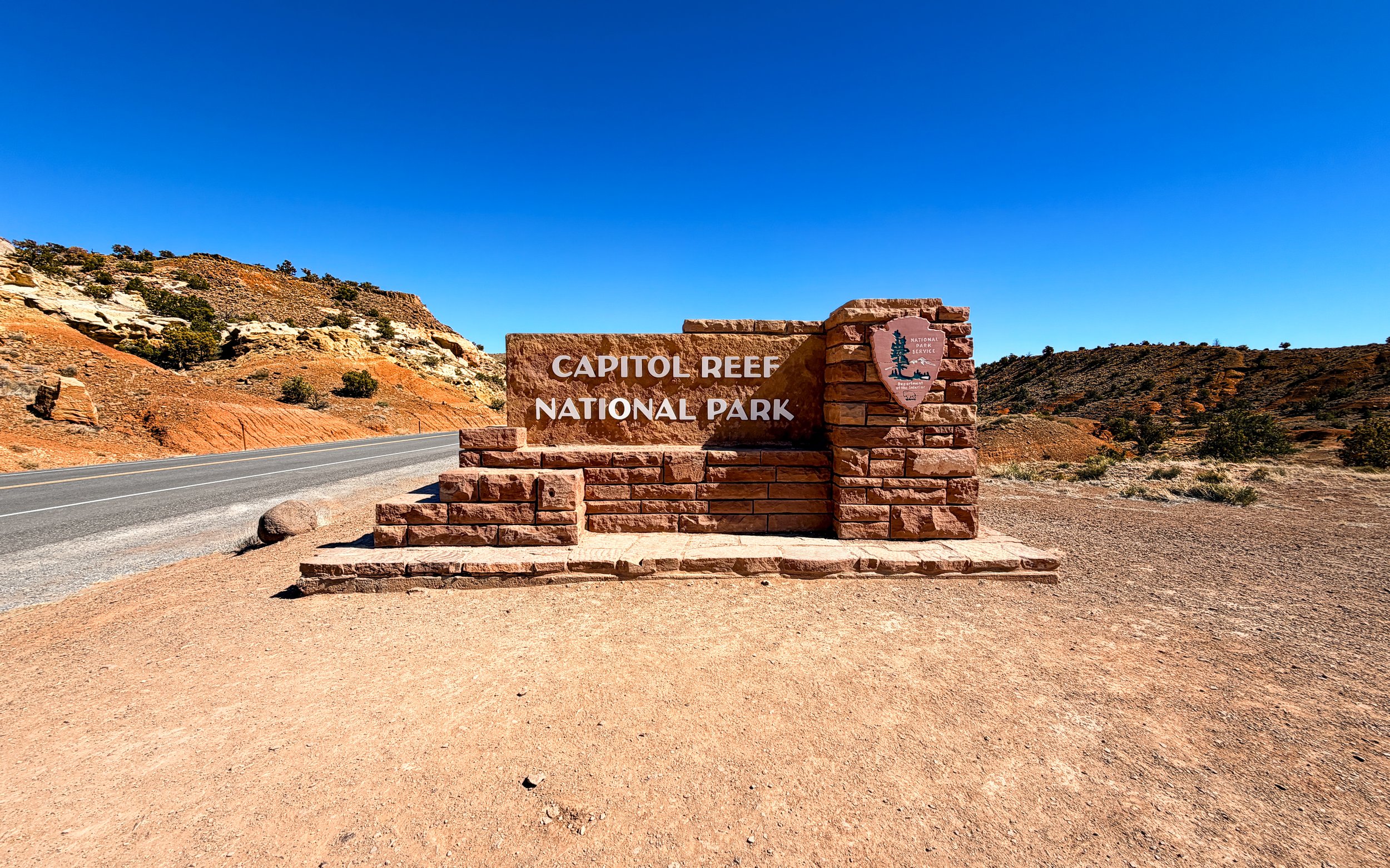
Entrance sign at Capitol Reef National Park in Utah, located along Scenic Byway 24 near Torrey
Bryce Canyon National Park — about 1 hour west
Escalante Petrified Forest State Park — about 10 minutes from town
Dixie National Forest — access points within 30–60 minutes
Capitol Reef National Park — about 1 hour 30 minutes east
It’s one of the few places in Utah where you can shift landscapes this quickly without changing your base.
Why Escalante Matters
The scale out here is different, and it becomes obvious quickly. Distances that look short on a map take time once you’re on dirt roads, dealing with washboard conditions, and heading toward trailheads that sit far off the main route.
Escalante is where you adjust to that.
You fill up on gas. You check conditions. You think through how far you’re going and how long you’ll be out. Once you leave town, there are no services and no easy resets.
This is the last place where you might find the modern conveniences and good food you are used to.
Gas, Supplies, and What to Know Before You Go
Gas is available in Escalante, but it’s limited, and it’s not something to skip. If you’re heading into the monument, filling up here becomes part of the routine every time you pass through.
There are a few small markets and convenience stores that cover the basics—water, snacks, and simple supplies. If you need anything more specific, it’s better to plan ahead and bring it with you.
Cell service drops quickly once you leave town.
Download maps. Check the weather. Know your route before you head out.
Where to Eat, Grab Coffee, and Reset
Food in Escalante is simple, but after a full day outside, it’s exactly what you want.
Escalante Outfitters Cafe: One of the standouts. This spot is amazing. Their restaurant serves up some of the best food I have had—I’m talking Chicago-quality food. I had a meatball sandwich that I would give 5 stars. Then I went back another day and tried the pizza, which was just as good. Another 5 stars.
They also have a small shop attached where you can pick up gear from brands like Patagonia, prAna, and more. It’s an easy stop before heading out into the desert.
Kiva Koffeehouse: Just outside of town, this is worth the stop for the setting alone. It’s one of the few places where you slow down and take in the landscape instead of rushing through. When I went through the area, it wasn’t open yet, but it’s still worth knowing about.
Escalante Mercantile: A small grocery store, but the selection is surprisingly good. The owner has done a great job curating high-quality foods, including organic items similar to what you’d find at places like Sprouts or Whole Foods. There are also grab-and-go options and a small patio out front for sitting and eating.
Pro tip: The homemade hummus is amazing.
Blue Crow Gear & Coffee: This was my latte spot—and I ended up buying gear too. It’s one of those places you notice right away. The pink building makes it hard to miss, and it serves some of the best coffee in town. It also doubles as a gear shop. I picked up a number of Gregory items for the van here, along with a few more Snow Peak spoons.
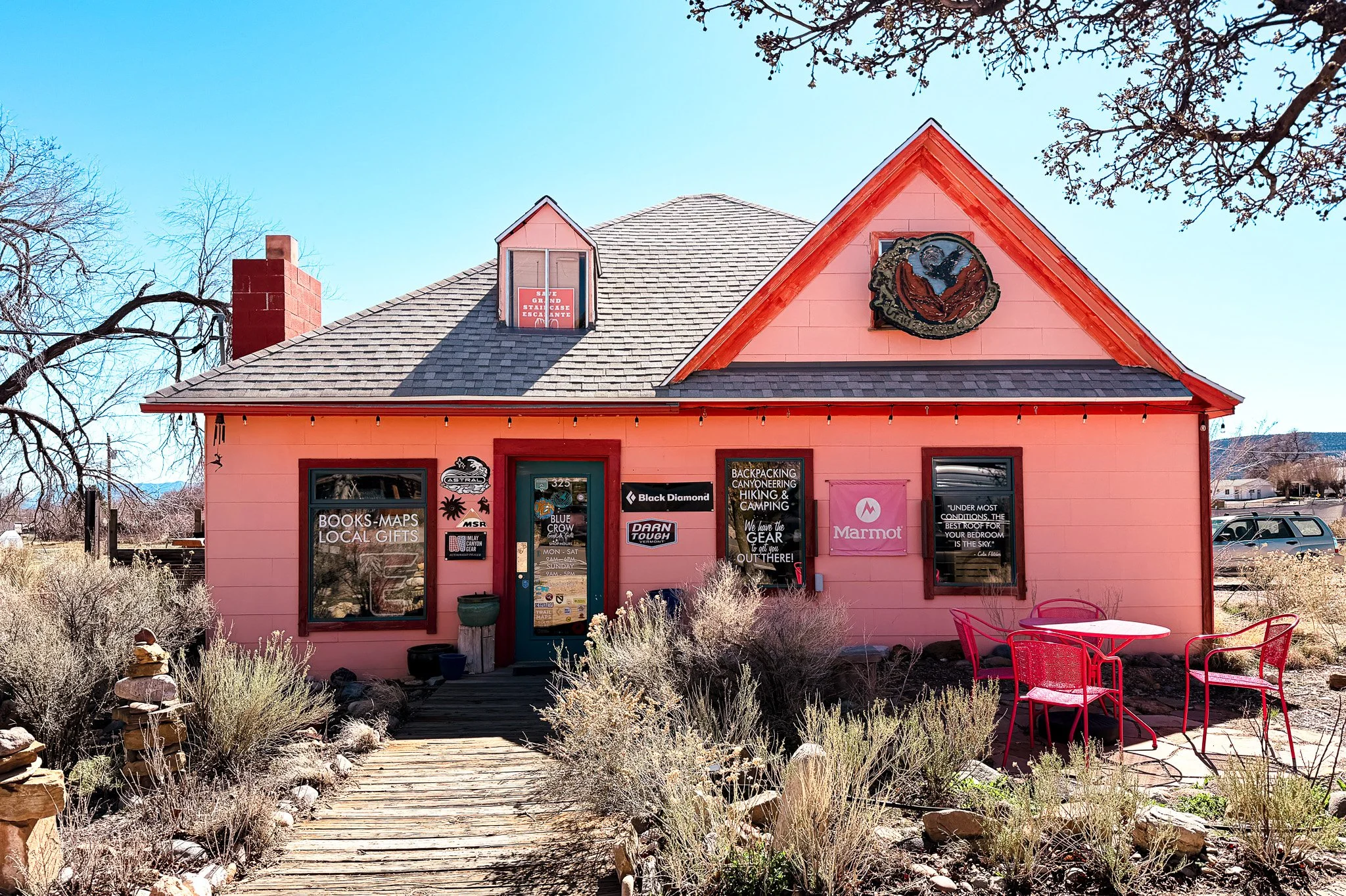
Blue Crow Gear & Coffee in Escalante—a small outdoor shop and coffee stop along Scenic Byway 12
Visitor Center and Local Context
The Escalante Interagency Visitor Center is right in town and worth a stop.
This is where I first learned about Peek-a-Boo and Spooky Gulch. It’s also one of the easiest ways to understand how everything in the area connects—from trailheads to road access to what’s actually worth your time.
They also have dinosaur displays, including preserved remains with skin still visible on the fossil, which is wild to see in person and ties back to the geology of the region.
Spending a little time here adds context to everything you’re about to head out and explore.
Where to Stay
Escalante has a mix of small motels, cabins, campgrounds, and dispersed camping just outside of town. It’s not built around high-end stays, but it works well for the kind of trip this area demands.
One night, I stayed at a dispersed camping spot off Hole-in-the-Rock Road. It was quiet, open, and exactly what I wanted after a long day out in the desert.
Another night, I stayed at Escalante Grand Resort: a great RV spot with full hookups and more structure if you want something easier for a night. It’s a good balance to mix in, especially if you’ve been off-grid for a few days.
If you’re traveling in a van or camping setup, the surrounding area gives you plenty of space to find a quiet place to stay. For anything more structured, booking ahead during busy months helps since options are limited.
Access to Hole-in-the-Rock Road and Beyond
Everything in Escalante connects back to Hole-in-the-Rock Road.
From town, it’s a short drive to the start, but once you’re on it, distances stretch out quickly. Even places that look close on a map take time to reach.
Devil’s Garden, Peek-a-Boo and Spooky Gulch, Dry Fork, and Reflection Canyon all branch off from this road, and none of them are quick stops.
Escalante is what makes those days possible.
But it’s not just about Hole-in-the-Rock.
Escalante also gives you access to Hell’s Backbone Road, a high, narrow dirt road that runs between Escalante and Boulder. It’s known for its exposed ridgelines and views, and it’s one of those drives I’ve heard about enough times to know it’s worth coming back for.
How Escalante Fits Into a Utah Road Trip
Escalante sits between Capitol Reef National Park and Bryce Canyon National Park, making it an easy stop on a Utah road trip.
Most people pass through.
Staying here—even for a night—changes the pace. It gives you access to a part of Utah that feels quieter, less structured, and a little more remote.
Final Thoughts
Escalante isn’t trying to be anything more than it is. The people are great and the community is tight.
It’s a small desert town that gives you just enough to go further.
Explore More in Grand Staircase–Escalante
Grand Staircase–Escalante National Monument: My Favorite Hikes and Places to Explore
I Thought a National Monument Was Small — Then I Saw Escalante
Calf Creek Falls & Campground: One of the Best Stops I Made
Devil’s Garden in Grand Staircase–Escalante National Monument
Peek-a-Boo and Spooky Slot Canyons in Grand Staircase–Escalante National Monument
Michele Underwood writes Overland Girl, where she shares firsthand travel experiences across the American West — from desert landscapes and national parks to small towns layered with history. Her work blends movement, place, and the stories that shape them.

Some posts may include affiliate links to products or services she uses on the road. If you choose to purchase through those links, she may earn a small commission at no additional cost to you. It helps support continued travel and storytelling. She only links to items she personally uses or would use herself.