Why Delicate Arch Lived Up to the Hype
Words by Michele Underwood | Photos by Michele
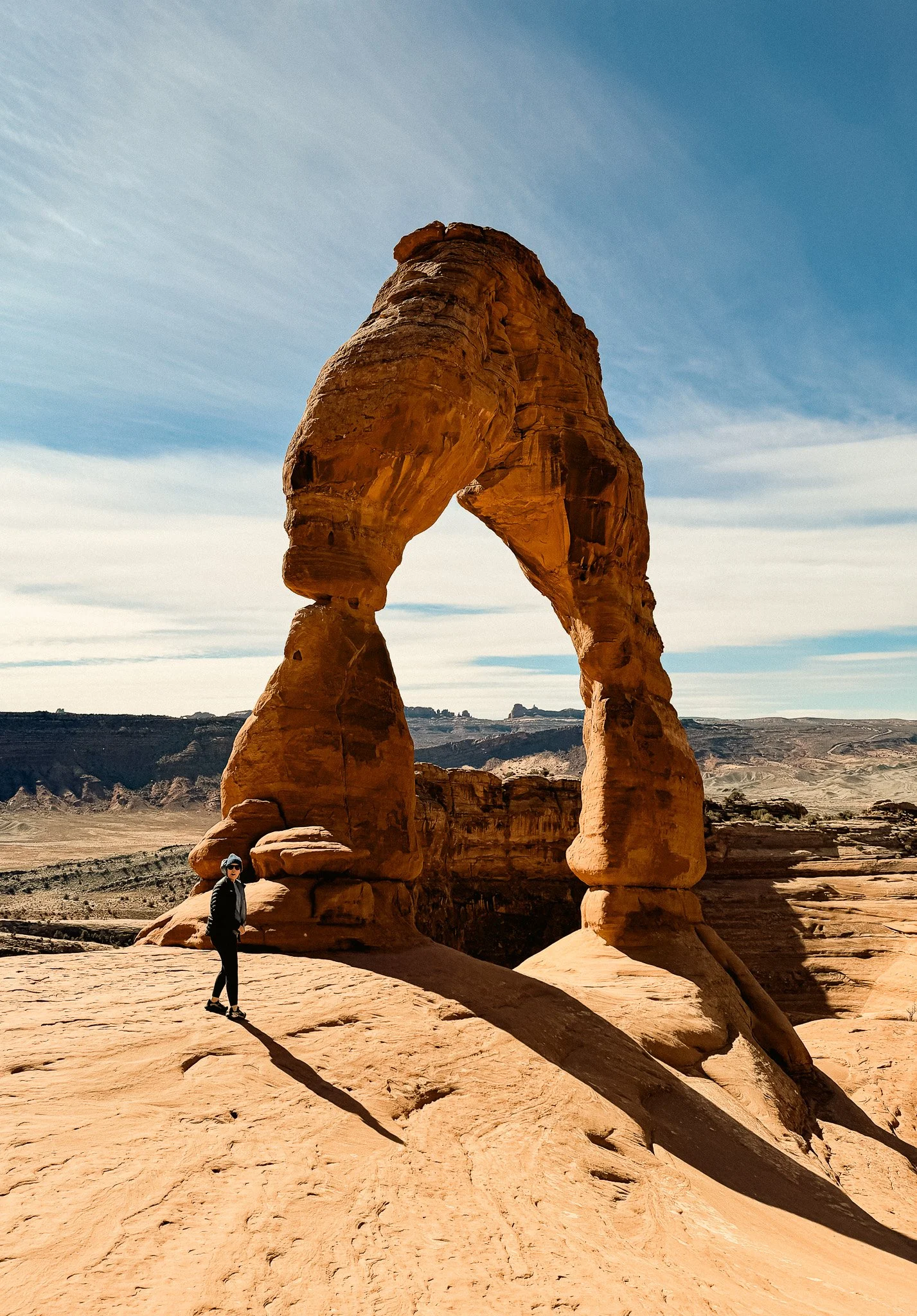
Walking toward Delicate Arch for the first time.
Some famous places lose something after you finally see them in person. When I saw Old Faithful faithfully erupt, I remember thinking, is that it?
You spend years looking at the photos online, seeing them in travel ads, watching videos, and building expectations in your head. By the time you finally arrive, it can almost feel too familiar already. At the same time, nothing is quite the same as seeing something in person.
That was part of what I expected as I walked toward Delicate Arch.
It is probably the most photographed feature in Utah. It is on postcards, license plates, tourism campaigns, and social media feeds everywhere. At a certain point, places that famous can start feeling more like symbols than real places.
But when I turned the corner and saw Delicate Arch for the first time, I gasped. No other feature at any other national park struck me as much as this one.
What struck me most was how unreal it felt in person and how much larger it was than I expected. The details in the shape of the arch and the landscape surrounding it also stood out in a way photos never captured. But more than anything, it is the way Delicate Arch stands there holding onto the edge of the landscape that feels breathtaking.
Photos flatten the landscape around it. Standing there, the slickrock rolls down into the massive bowl in front of the arch while the terrain behind it falls away into the desert beyond. It feels like the entire formation is somehow still hanging onto the edge of the landscape.
The scale also changes once people start walking beneath it. Something that already feels improbable becomes even harder to comprehend. The arch looks delicate from a distance, but standing near it makes you realize how massive the formation really is.
I think part of what makes Delicate Arch different from other famous landmarks is how isolated it feels. Many arches throughout the Southwest blend into canyon walls or larger rock formations. Delicate Arch stands completely alone against the sky, almost like a sculpture placed in the middle of the desert.
That feeling becomes stranger once you understand what created it. Long before it became an arch, the formation started as a sandstone fin formed within Entrada Sandstone, the smooth orange-red rock layer found throughout Arches National Park. Over millions of years, erosion slowly widened openings within the fin until the freestanding arch remained.
What makes it harder to comprehend is that the process is still happening. Erosion never stopped shaping Delicate Arch. The arch exists in a temporary moment of geological time, and one day the same natural forces that created it will bring it down.
I visited Delicate Arch in the off-season too. In February, the temperatures were not bad, but what stood out most was how few people were there. I had the chance to really interact with the arch instead of standing in a crowd looking at it for a few minutes.
It was just me and Delicate Arch. I had my time with it. Not shared.
And when I was done, the next person came down for theirs.
I could walk around it, touch the sandstone, and study it from different angles without people constantly surrounding it. I spent time taking photos of myself pushing against it, crawling around the slickrock nearby, and capturing tighter shots looking up at the arch from below.
The more time I spent around it, the more the details in its shape started standing out — the curves, the texture in the sandstone, and how different it looked depending on the angle and light.
In the end, I realized this was not one of those places where the internet ruined the experience. If anything, photos never fully captured it for me.
If I had driven all the way to Arches and only seen Delicate Arch, it still would have felt like a successful trip.
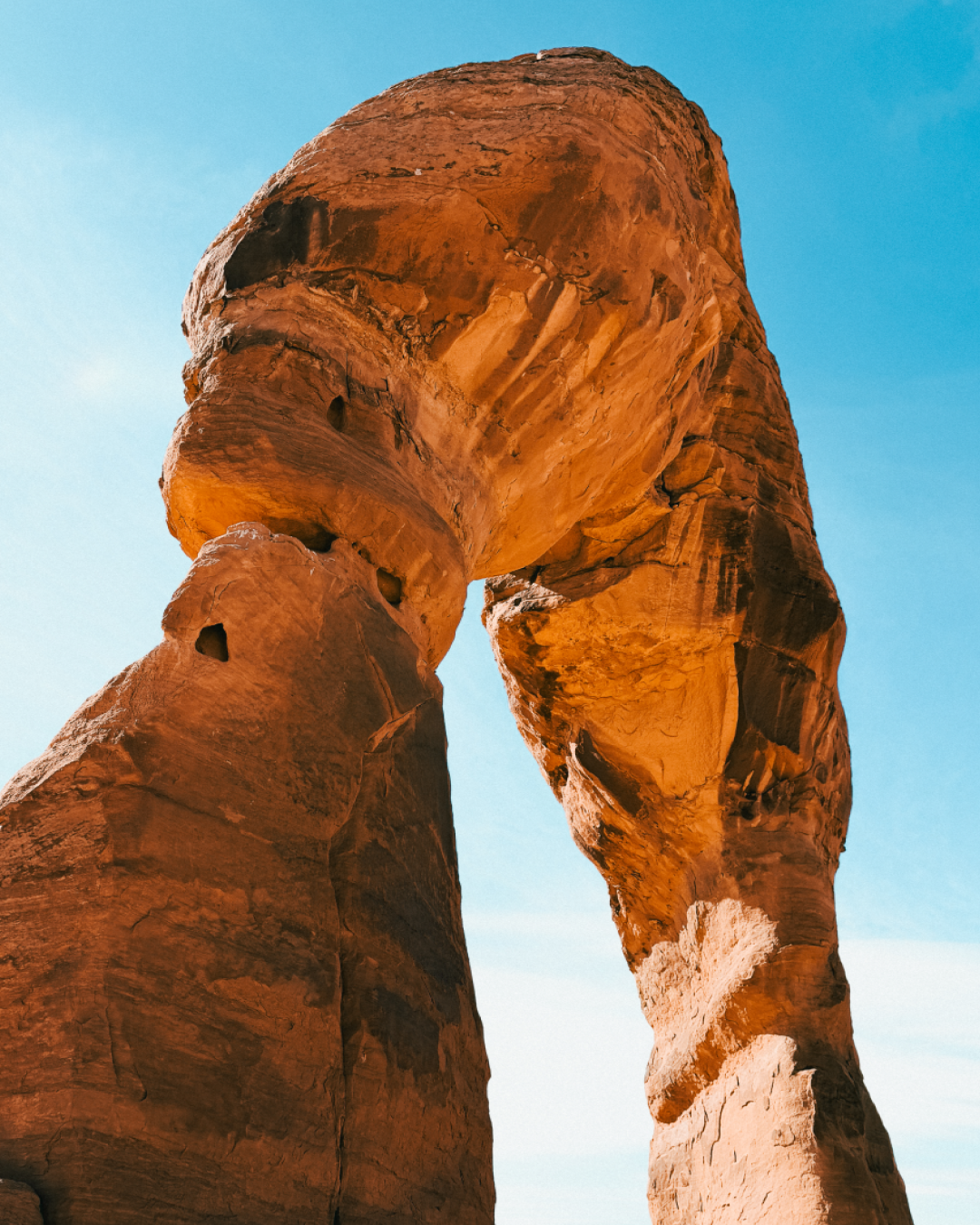
The sandstone details stood out more up close.
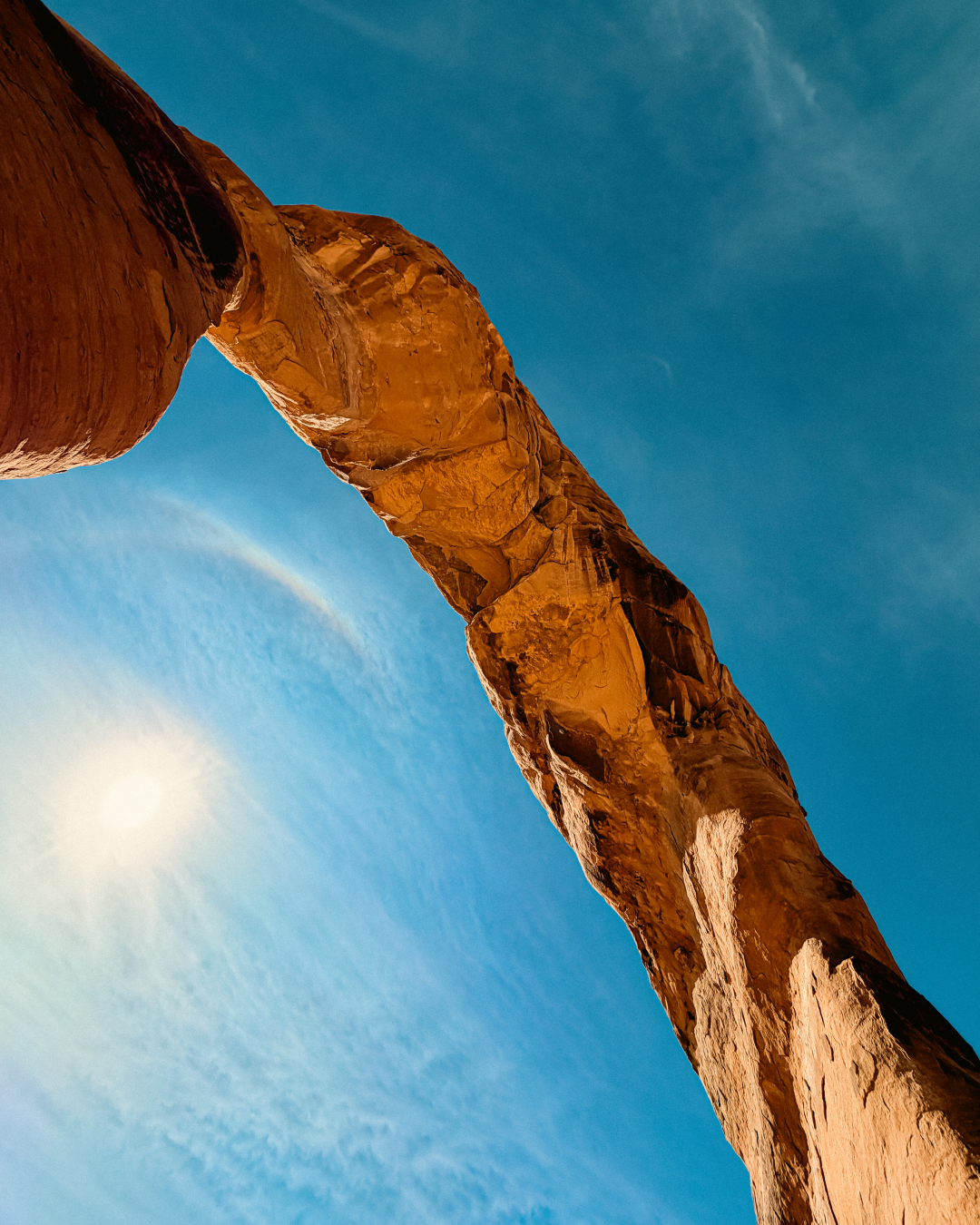
Looking up beneath the arch.
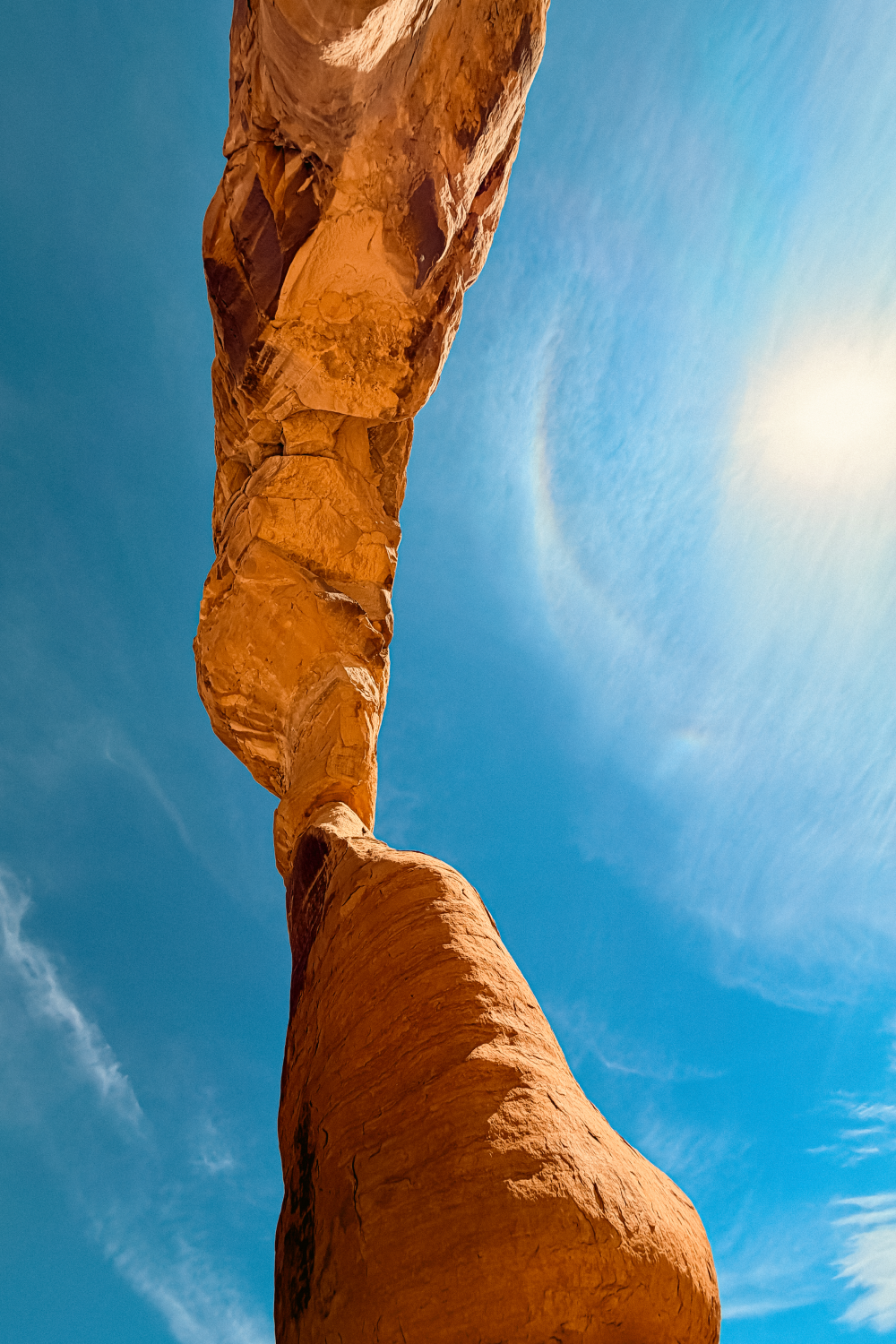
Underneath the arch felt completely different.
The more time I spent around it, the more the details in its shape started standing out — the curves, the texture in the sandstone, and how different it looked depending on the angle and light.
In the end, I realized this was not one of those places where the internet ruined the experience. If anything, photos never fully captured it for me.
If I had driven all the way to Arches and only seen Delicate Arch, it still would have felt like a successful trip.
Want to know why this arch became Utah's most iconic landmark? Read: Why Delicate Arch Became the Symbol of Utah.
Michele Underwood writes Overland Girl, where she shares firsthand travel experiences across the American West — from desert landscapes and national parks to small towns layered with history. Her work blends movement, place, and the stories that shape them.Some posts may include affiliate links to products or services she uses on the road. If you choose to purchase through those links, she may earn a small commission at no additional cost to you. It helps support continued travel and storytelling. She only links to items she personally uses or would use herself.