Words by Michele Underwood | Photos by Michele
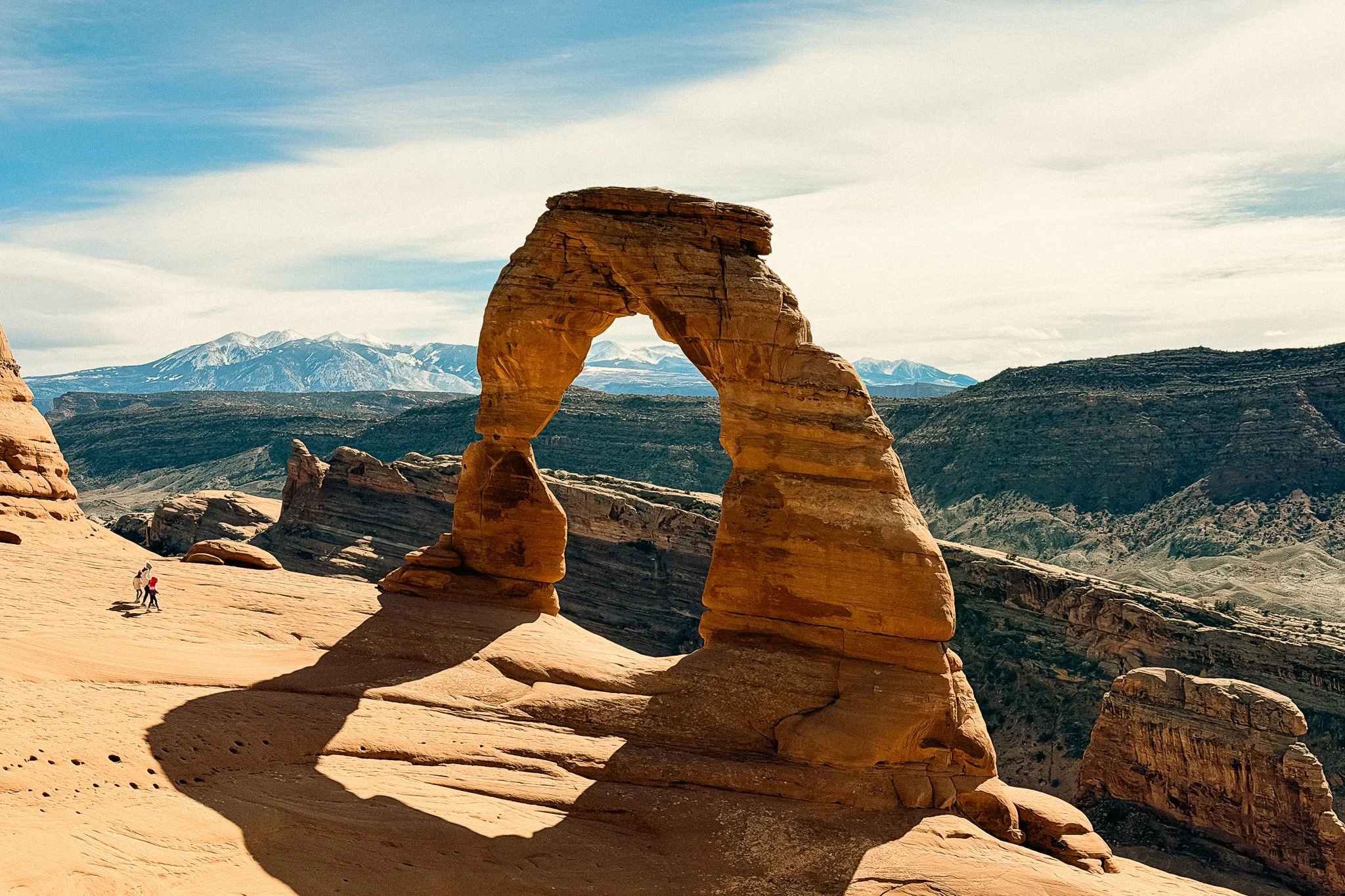
Before Utah as we know it existed, this landscape looked completely different. Massive sand dunes once covered this part of the Southwest, layer after layer eventually compressing into sandstone over millions of years. Long before people stood beneath Delicate Arch taking photographs, water, wind, freezing temperatures, and time slowly carved away at the rock until this freestanding arch remained.
You start hearing versions of this story often as you travel throughout Utah. Ancient oceans. Sand dunes turned to stone. Massive geological shifts that shaped the cliffs, canyons, arches, and layers of red rock across the state. But standing in front of Delicate Arch, it feels different because you are looking at all of that time distilled into one formation that almost does not seem possible.
When I turned the corner and saw Delicate Arch for the first time, I was in awe. No other feature at any other national park struck me as much as this one.
After seeing endless photos of it over the years, I expected it to feel overhyped in person. Instead, it felt even more unbelievable standing beneath it. Maybe it is because it stands completely alone against the sky, rather than blending into cliffs or canyon walls like many other arches throughout Utah. It almost looks sculpted instead of naturally formed.
That is part of what makes it feel so special. Millions of years of erosion created it, and one day erosion will take it away. People are only seeing a brief moment of its existence.
How This Formation Became What It Is
What makes Delicate Arch feel so improbable is not just the arch itself, but where it sits. Perched above a massive slickrock bowl with open sky surrounding it, the formation almost looks detached from the landscape entirely.
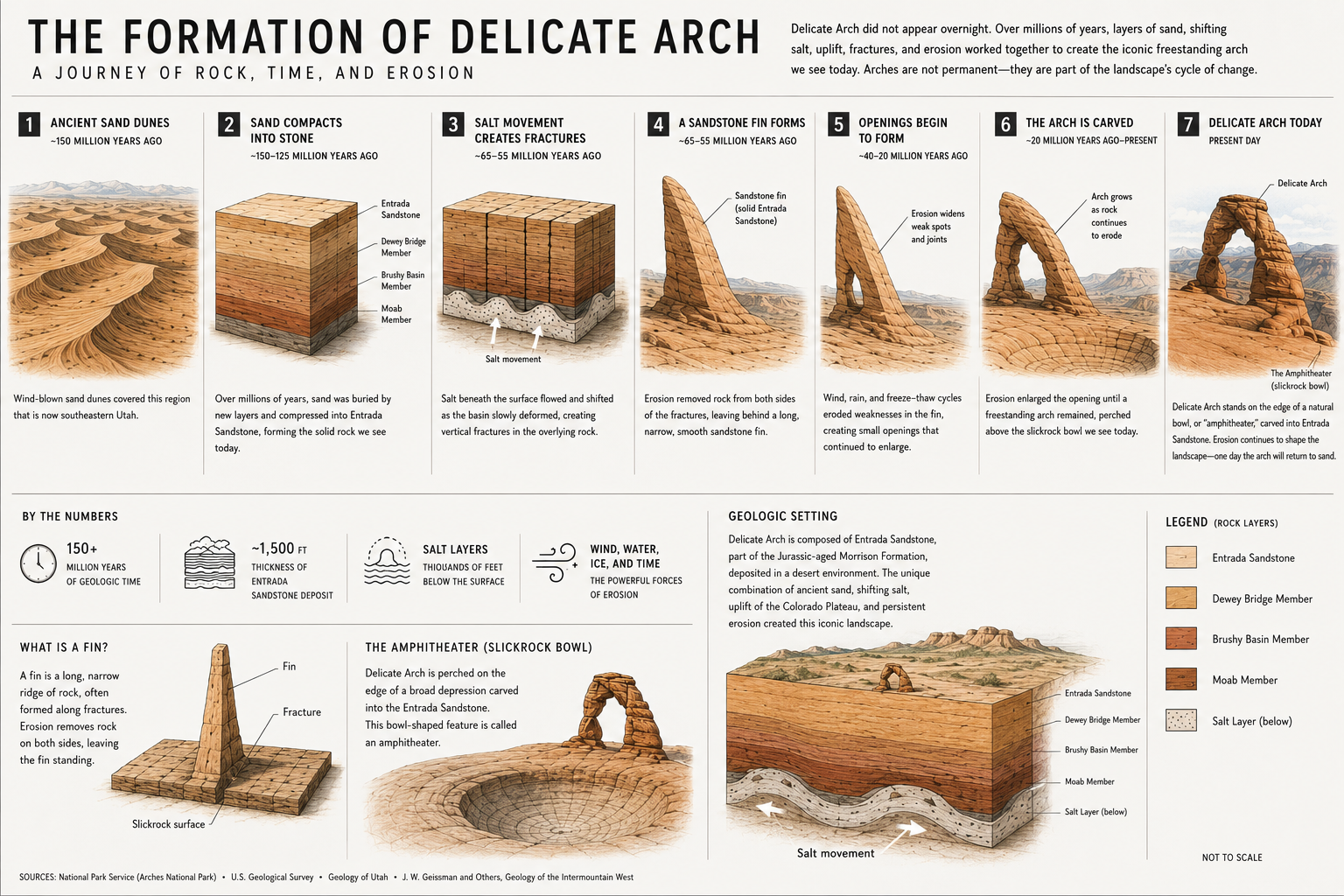
Long before it became an arch, this formation started as a sandstone fin — a long, thin vertical wall of rock that almost looks like a giant stone blade rising from the earth. The fin formed within Entrada Sandstone, the smooth orange-red rock layer that defines much of the landscape throughout Arches National Park.
Eventually, small openings began forming within the fin. Rain, wind, and freezing temperatures slowly expanded those openings over thousands of years until the arch people see today remained standing above the sandstone basin below.
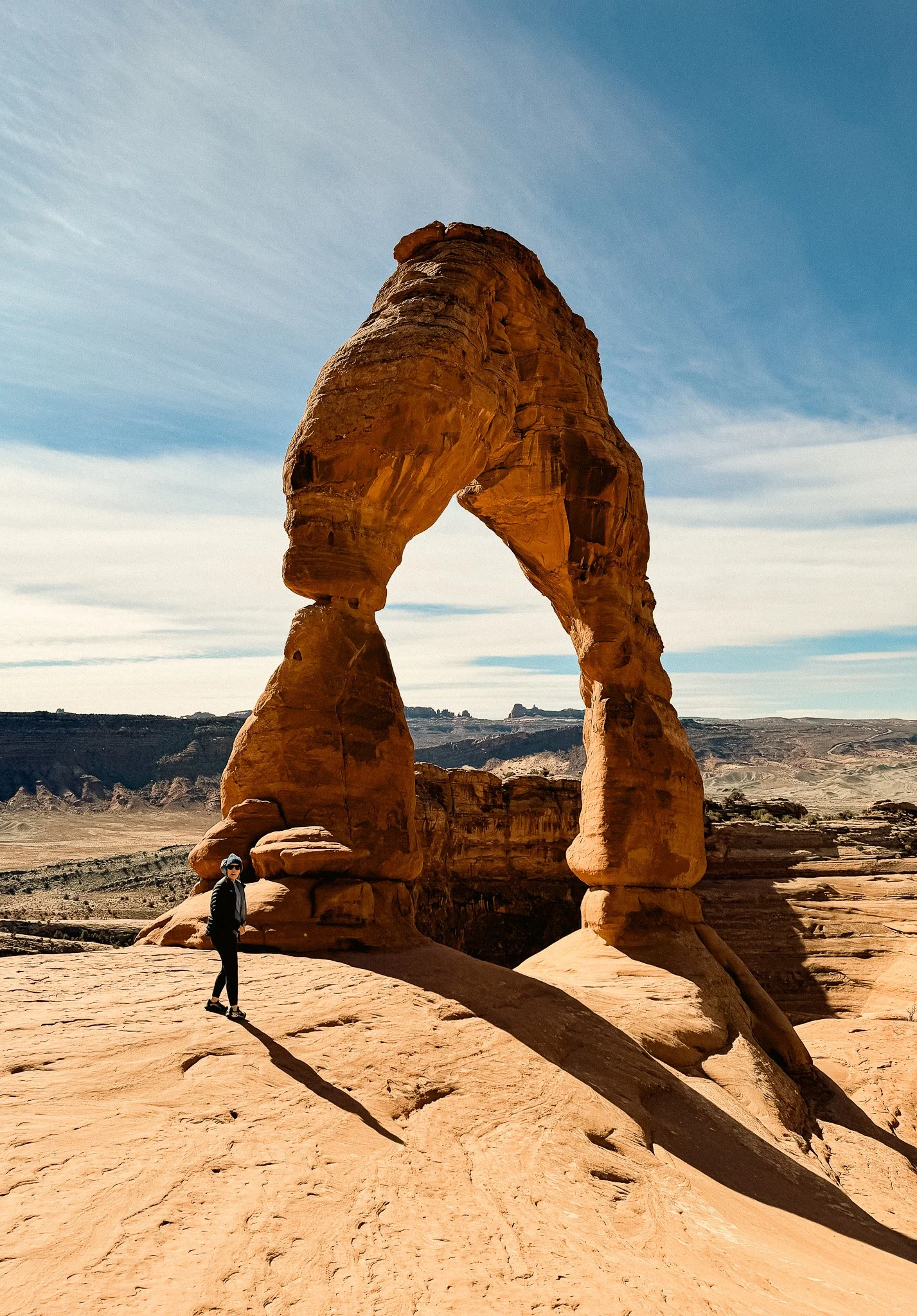
Walking toward Delicate Arch for the first time. What photos never fully captured for me was how exposed the arch feels standing on the edge of the slickrock landscape above the desert below.
What photos never fully captured for me was how exposed Delicate Arch feels in person. The slickrock drops into the massive bowl in front of it while the landscape behind the arch falls away into the desert beyond. It feels like the entire formation is somehow still hanging onto the edge of the landscape.
What makes it even harder to comprehend is that the process is still happening. Erosion never stopped shaping Delicate Arch. The arch exists in a temporary moment of geological time, and one day the same natural forces that created it will bring it down.
Why Delicate Arch Became the Symbol of Utah
Utah has bigger landscapes than Delicate Arch. Bigger cliffs, deeper canyons, and taller rock formations spread across the state. But somehow this freestanding arch became the image most people associate with Utah.
Part of that comes from how visually isolated it feels. Unlike many arches throughout the Southwest that blend into canyon walls or larger rock formations, Delicate Arch stands completely alone against the sky. Even in silhouette, it is instantly recognizable.
Over the years, the arch became more than just a geological feature. It appeared on Utah license plates, postcards, tourism campaigns, and during the 2002 Winter Olympics torch relay. Its shape became shorthand for the state itself.
But I think part of the reason people connect with it goes beyond branding or tourism. There is something about seeing it in person that photographs will never capture. The scale, the exposure, and the improbability of it all standing there above the sandstone bowl make it feel less like scenery and more like a natural sculpture shaped over millions of years.
If I Only Saw Delicate Arch, the Trip Still Would Have Been Worth It
In the end, I decided Arches National Park already has enough blogs written about it. There are endless guides covering the hikes, viewpoints, and top things to do throughout the park. So instead, I wanted to write about the one feature that stood out to me more than anything else — Delicate Arch.
Like many national parks, Arches has a lot to see. There are overlooks, rock formations, trails, and landscapes spread throughout the park. But for me, Delicate Arch is the thing to see. Everything else was cool, but nothing hit me the same way as standing beneath that arch for the first time.
If I had driven all the way to Arches and only seen Delicate Arch, it still would have felt like a successful trip.
Curious what it's actually like to stand in front of it? Read: Why Delicate Arch Lived Up to the Hype.
Delicate Arch is located inside Arches National Park near Moab, Utah.
GPS Coordinates: 38.7436, -109.4993
Michele Underwood writes Overland Girl, where she shares firsthand travel experiences across the American West — from desert landscapes and national parks to small towns layered with history. Her work blends movement, place, and the stories that shape them.
Some posts may include affiliate links to products or services she uses on the road. If you choose to purchase through those links, she may earn a small commission at no additional cost to you. It helps support continued travel and storytelling. She only links to items she personally uses or would use herself.