Is Mesa Verde National Park Worth Visiting? My Take After Exploring It
Cliff dwellings, scenic drives, and one of the most underrated national parks in the Southwest.
Words by Michele Underwood | Photos by Michele

The entrance to Mesa Verde National Park in southern Colorado.
I had never heard of Mesa Verde National Park until I got deeper into the Southwest toward Arizona and Utah.
After Monument Valley, I headed across the top of Arizona toward Zion National Park. Along the way, I stopped at Navajo National Monument, which gave me insight into something I had no idea existed in this part of the country.
Cliff dwellings.
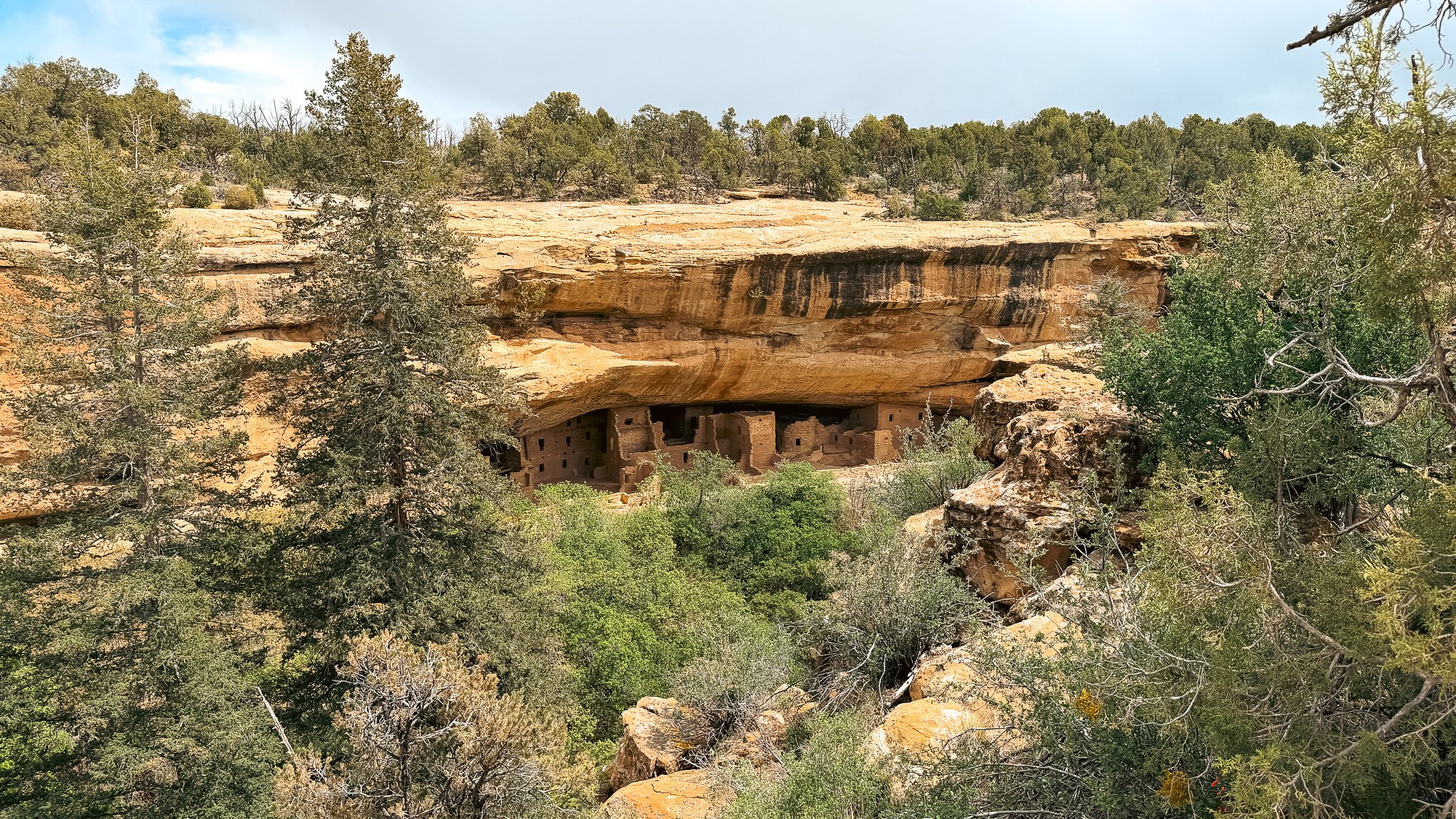
Looking across the canyon toward Spruce Tree House at Mesa Verde National Park.
Standing there looking at ancient structures built directly into the rock completely changed how I viewed the landscape around me. That stop sent me down a rabbit hole, looking at maps to see what else was nearby.
That is when I found Mesa Verde National Park in southern Colorado.
You do not come here for towering mountain peaks or massive canyon hikes. You come here to stand in front of ancient cliff dwellings built directly into sandstone walls and try to process how people once lived here centuries ago.
And somehow, despite being one of the most historically important national parks in the country, Mesa Verde still feels overlooked compared to places like Zion, Arches, or Yellowstone.
Driving through Mesa Verde National Park feels different than many of the bigger-name parks across the Southwest. The roads wind up the mountain through long switchbacks, climbing past areas where fires have shaped forests over time, with overlooks, mesas, and canyon views. Then, suddenly, at the top, history feels as if it stands still as entire stone communities appear hidden within the cliffs.
The History of Mesa Verde National Park
Before visiting Mesa Verde National Park, I did not realize how much history was tied not only to the cliff dwellings themselves, but also to the people who fought to protect them.
By the late 1800s, outsiders were exploring the Southwest and many archaeological sites throughout the region were being damaged by looting, excavation, and artifact removal.
One of the people determined to preserve Mesa Verde was Virginia McClurg, a journalist, activist, and early preservation leader from Colorado.
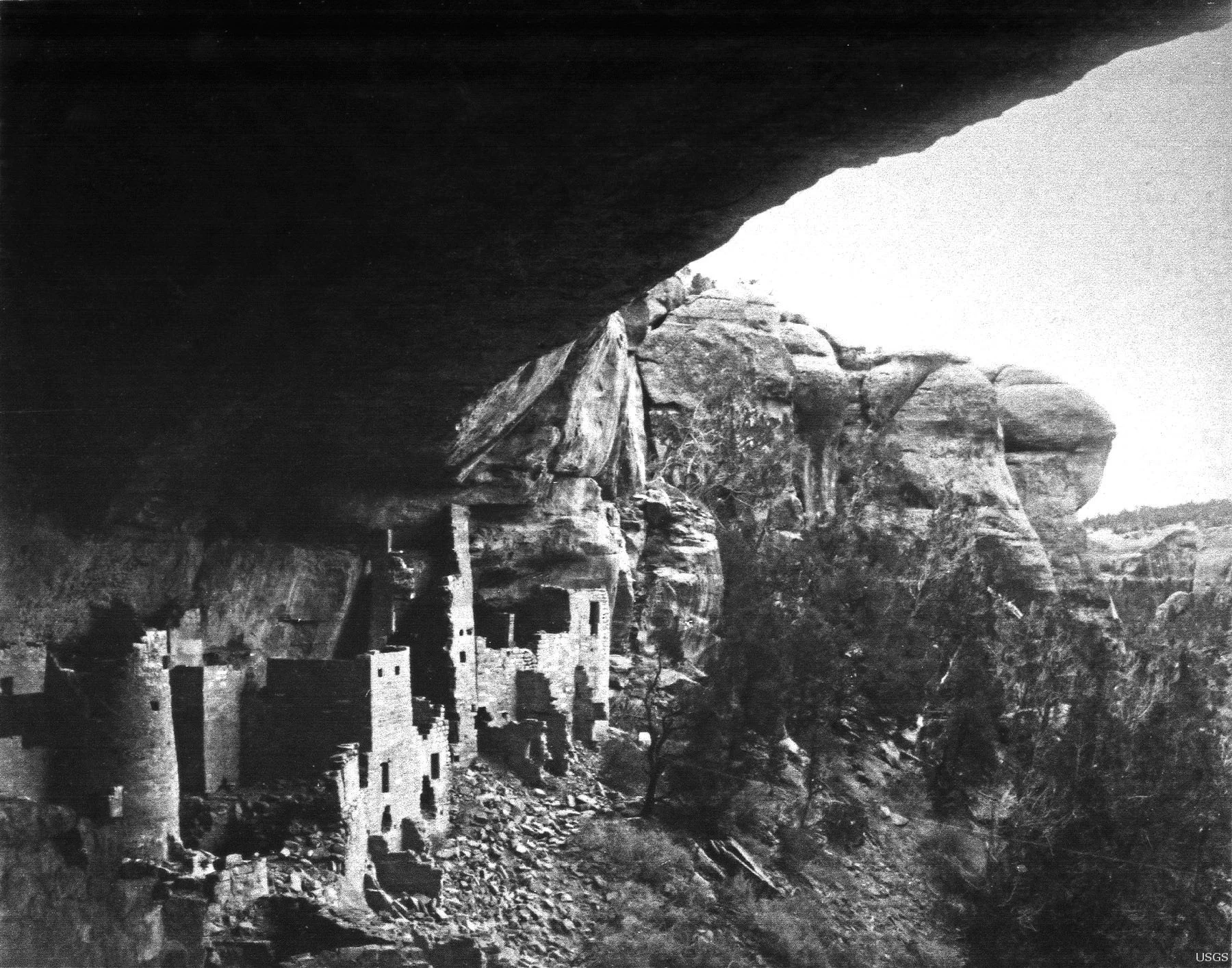
An 1891 photograph of Cliff Palace before major excavation and preservation work began at Mesa Verde National Park.
She helped found the Colorado Cliff Dwellings Association, a women-led organization that pushed for federal protection of the area before more history disappeared.
At a time when women had little national political power, the group worked to draw attention to the cliff dwellings and advocate for preserving the site as protected land.
Their efforts helped lead to Mesa Verde becoming a national park in 1906.
For a park that still feels overlooked today, Mesa Verde is also one of the oldest national parks in the country. Established in 1906, it became the ninth national park in the United States and the first created to preserve cultural history and archaeology instead of scenery alone.
Driving the Mesa Tops and Seeing the Cliff Dwellings
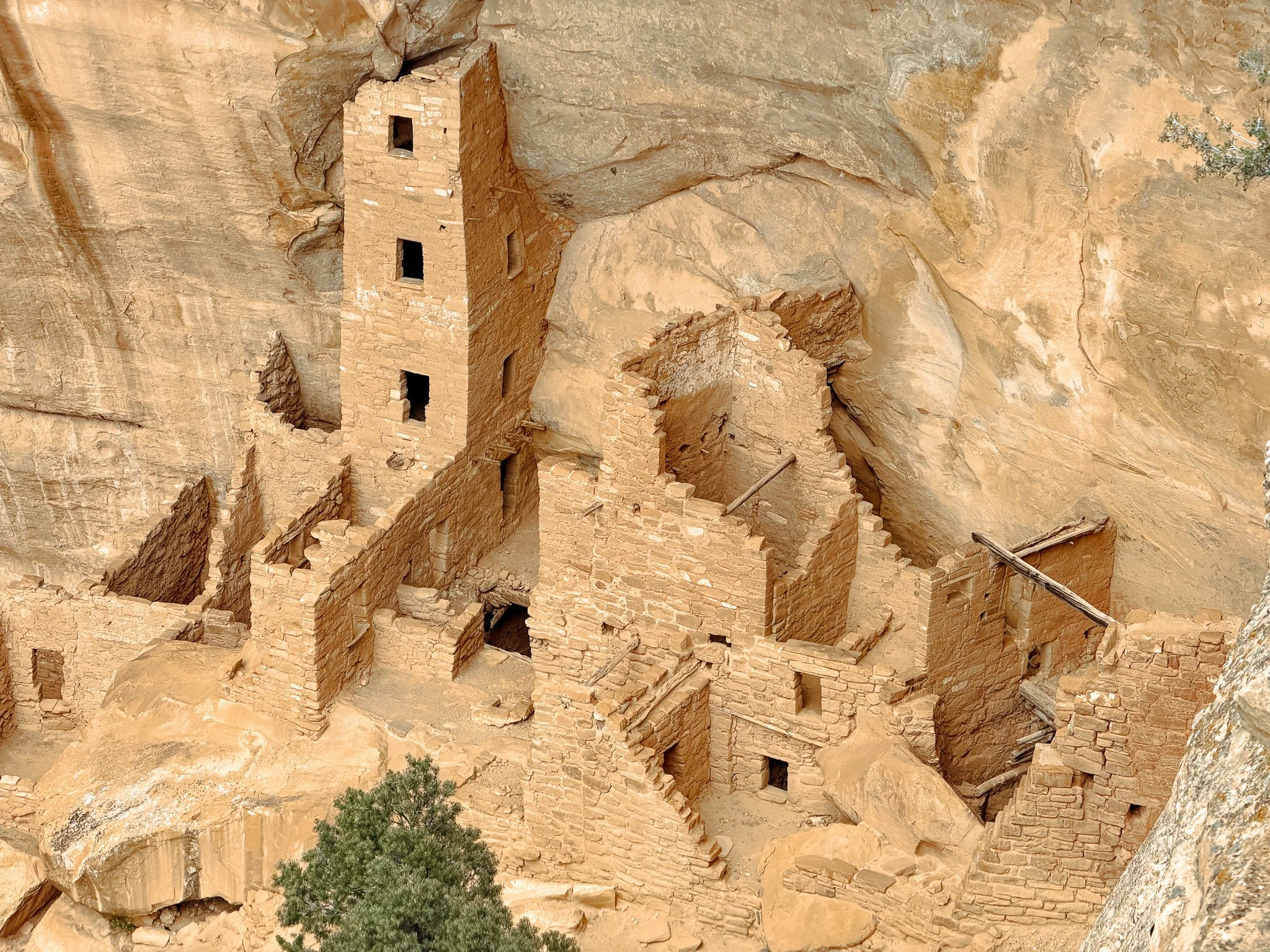
A closer look at Square Tower House and its stone tower built into the cliffs at Mesa Verde National Park.
Once you reach the top of Mesa Verde National Park, the park branches into scenic loop drives that take you across the mesa tops and along canyon overlooks where cliff dwellings appear hidden within the sandstone walls below.
The two main drives most visitors explore are the Mesa Top Loop Road and the Cliff Palace Loop Road, both filled with pull-offs, overlooks, archaeological sites, and short walks to viewpoints throughout the park.
What makes Mesa Verde feel different is that the cliff dwellings are not concentrated in one area. They are spread throughout canyon systems across the park, tucked beneath rock overhangs and hidden within alcoves carved into the cliffs.
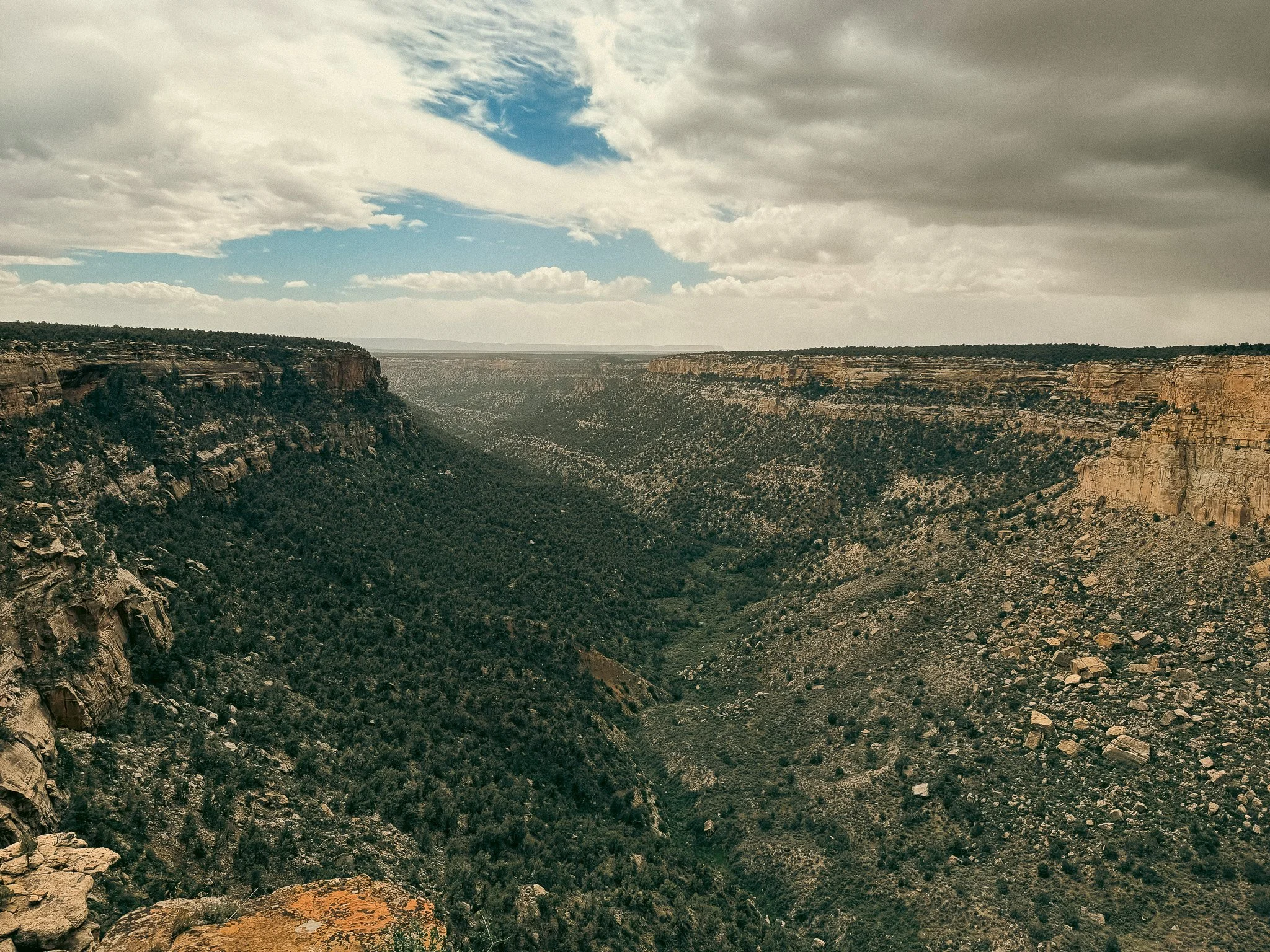
Looking out across one of the canyon systems carved through Mesa Verde National Park in southern Colorado.
Each stop along the drive is well marked with signs explaining the site's history, what archaeologists discovered there, and how the structures connect to the broader story of the Ancestral Pueblo people.
Some of the best-known sites visitors can see throughout Mesa Verde National Park include:
Cliff Palace
Balcony House
Square Tower House
Spruce Tree House
Long House
Sun Temple
Far View Sites
Oak Tree House
And even with all of these preserved and excavated sites, archaeologists believe there are still many more structures throughout Mesa Verde that remain unexcavated or only partially studied.
As you look across the canyon walls from the overlooks, it is hard not to think about how much history is still hidden within the landscape itself.
Things to See at Mesa Verde National Park
One of the things that surprised me most about Mesa Verde National Park is how much is spread throughout the park once you reach the mesa tops. I stopped at most of the exhibits and overlooks, and most do not take long to visit.
The cliff dwellings are not grouped together in one place. They are scattered throughout canyon walls across the park, with overlooks, archaeological sites, and short walks connecting many of them.
Some of the best-known places to visit in Mesa Verde National Park include Cliff Palace, Balcony House, Square Tower House, Spruce Tree House, Long House, and Sun Temple.
Cliff Palace is easily the most recognizable. Seeing it stretched across the sandstone alcove for the first time feels unreal because of its scale.
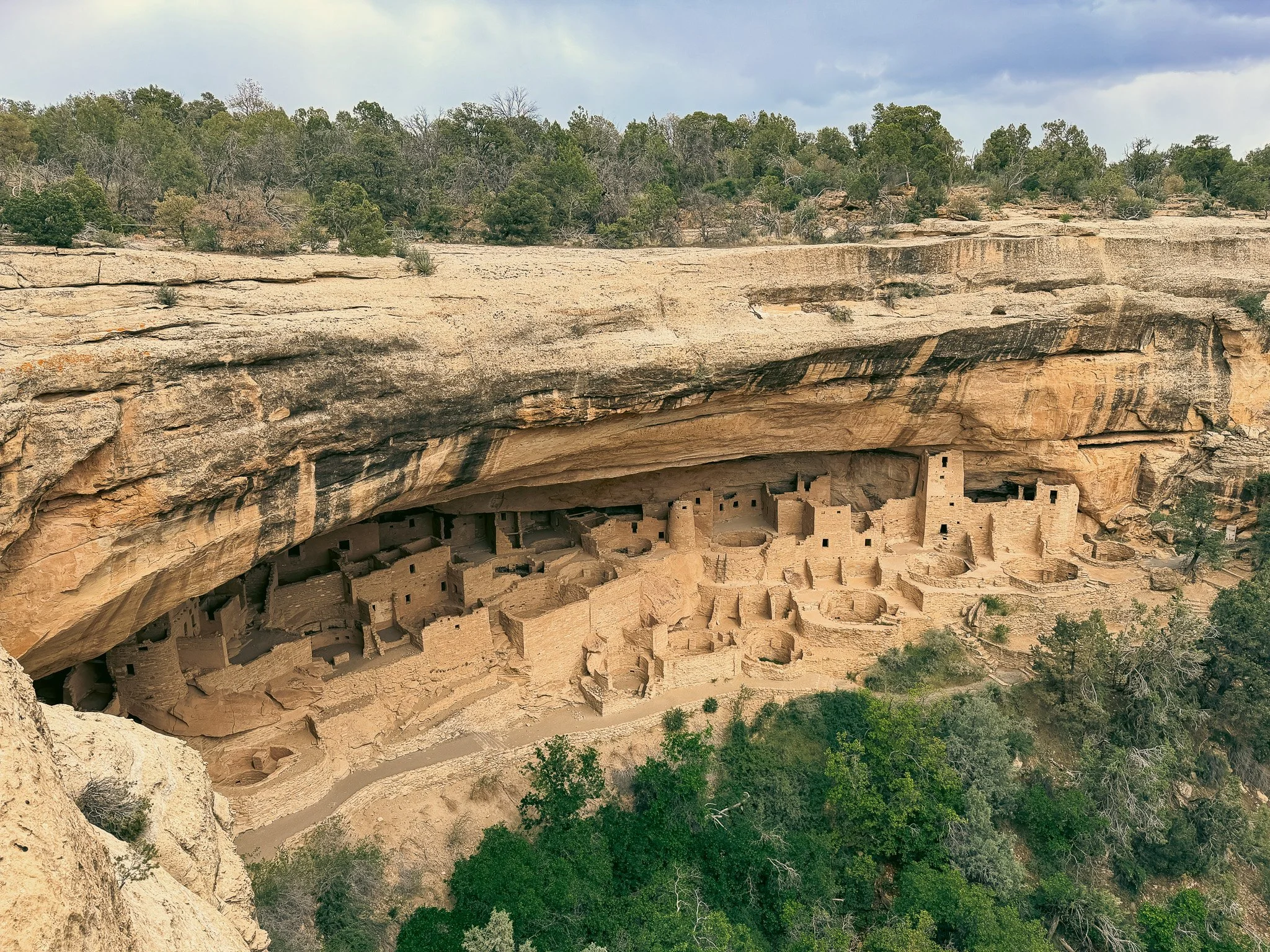
Cliff Palace at Mesa Verde National Park is the largest cliff dwelling in North America.
Balcony House looks dramatic, tucked high into the cliffs, and is known for its ladders and narrow passageways during ranger-led tours.
Square Tower House stands out for its tall tower rising from the canyon wall, while Sun Temple feels completely different from the cliff dwellings themselves, with its large ceremonial structure atop the mesa.
Far View Sites also give insight into what life looked like before many communities moved into the cliffs, with mesa-top villages and structures spread across the landscape.
What I liked most about exploring Mesa Verde was that the park never felt repetitive. One stop might overlook massive cliff dwellings hidden within the canyon walls, while the next offers a completely different perspective on how people once lived throughout this region.
And even with all of the sites’ visitors can see today, archaeologists believe there are still many more structures throughout Mesa Verde that remain unexcavated or only partially studied.
Pro Tip: Use GuideAlong While Driving Through Mesa Verde
One thing I always recommend in national parks now is using GuideAlong while driving through the park.
It is a self-guided audio tour app that uses GPS to explain the history, geology, and landscape around you as you drive.
Mesa Verde National Park is one of those places where it helps a lot because there is so much history tied to the overlooks, roads, cliff dwellings, and archaeological sites throughout the park that you would otherwise drive right past without fully understanding what you are looking at.
I use GuideAlong in every national park I visit because it helps explain things you would otherwise drive right past without fully understanding.
The Cliff Dwellings Feel Unreal in Person
Seeing Cliff Palace for the first time was one of the biggest surprises of my visit to Mesa Verde National Park.
Photos never fully capture its scale.
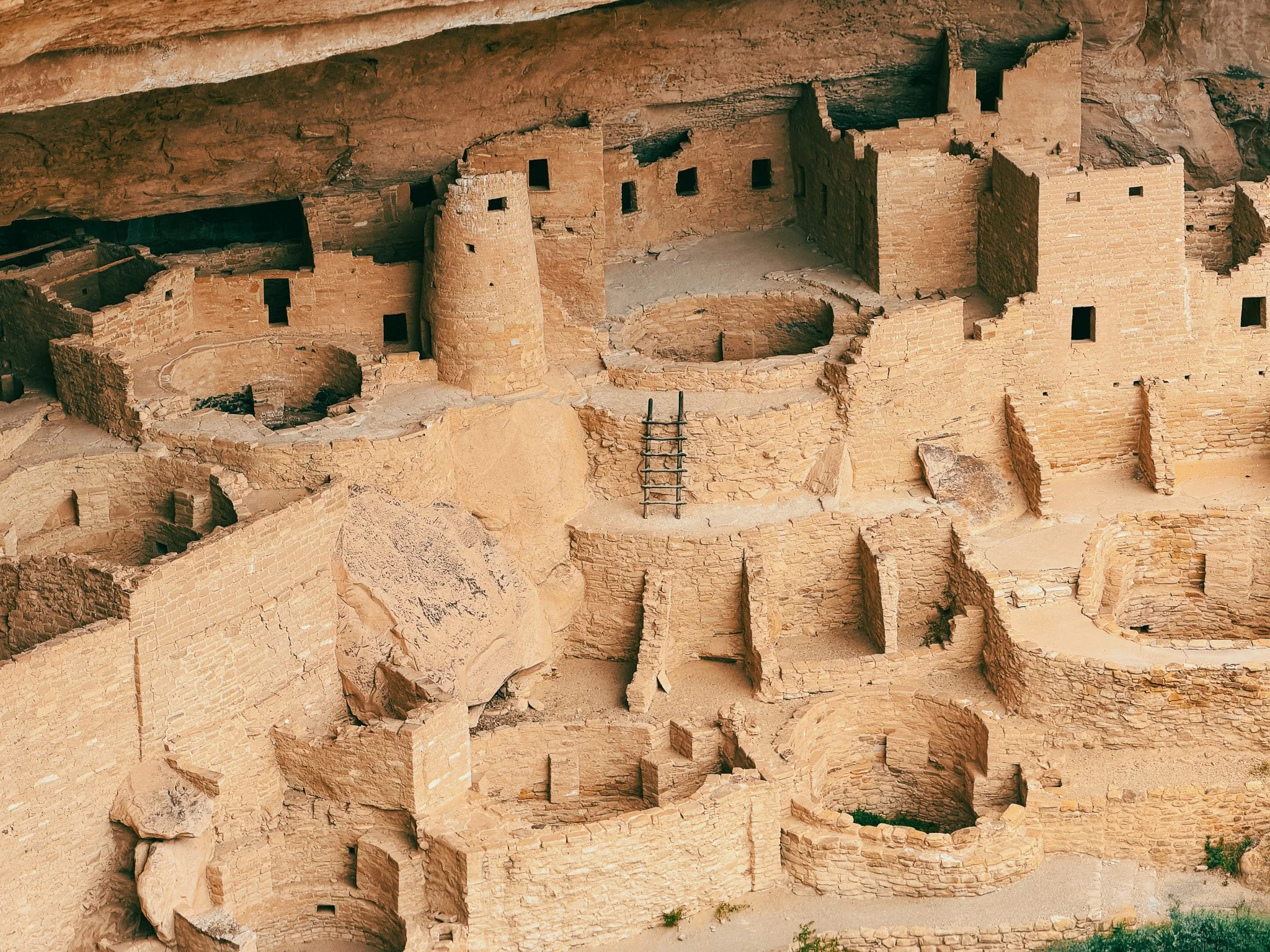
A closer look inside Cliff Palace at Mesa Verde National Park reveals towers, kivas, ladders, and interconnected stone rooms built beneath the sandstone alcove.
The stone structures stretch across massive sandstone alcoves with towers, rooms, storage spaces, and walls tucked beneath the cliff ceiling. Once you realize people built this by hand centuries ago, the entire landscape starts to feel different.
What surprised me most was how large the cliff dwellings actually are in person.
From a distance, they almost blend into the sandstone walls. Then your eyes slowly start picking out windows, doorways, towers, and connected sections of rooms hidden beneath the cliffs.
It feels less like looking at ruins and more like discovering entire communities built directly into the landscape.
At the time I visited Mesa Verde National Park, the ranger-led tours had not yet started for the season, so I experienced most of the dwellings from overlooks and viewing areas throughout the park.
But even from a distance, the scale and detail were impressive.
I already know I will go back to take some of the ranger-led tours to get closer to these places and experience them from inside the dwellings themselves.
And that is part of what makes Mesa Verde feel different from many national parks in the Southwest.
Who Built the Cliff Dwellings at Mesa Verde?
Standing in front of the cliff dwellings at Mesa Verde National Park, it is hard not to wonder who these people were and how they managed to build entire communities directly into the cliffs.
The dwellings were built by the Ancestral Pueblo people, who lived throughout the Four Corners region for centuries before Europeans arrived in the Southwest.
Long before the famous cliff dwellings were constructed, people here were already farming, building villages, and adapting to life across the mesas and canyons of this region.
Most of the cliff dwellings visitors see today were built between roughly 1190 and 1300 CE.
What surprised me most while learning about Mesa Verde was how advanced and intentional these communities were. The structures were not random shelters tucked into caves, but carefully planned communities with living spaces, storage rooms, towers, ceremonial spaces, and defensive advantages built directly into the sandstone alcoves.
From across the canyon, the dwellings almost blend into the cliffs until your eyes slowly start picking out windows, doorways, walls, and connected sections of rooms hidden beneath the rock overhangs.
Some historians and archaeologists believe moving into the cliffs may have provided protection, while others point to changing climate conditions, resource availability, and shifting social dynamics within the region.
Eventually, the communities at Mesa Verde were abandoned in the late 1200s, though descendants of the Ancestral Pueblo people still live throughout the Southwest today, particularly within modern Pueblo communities in New Mexico and Arizona.
Standing there looking across the canyon walls, it completely changes the idea that this part of the country was ever empty.
Mesa Verde Still Feels Connected to Its Past
One thing I did not expect at Mesa Verde National Park was how much of the park’s own history still feels preserved alongside the cliff dwellings themselves.
Even the drive into the park carries that feeling.
The original road climbing onto the mesa was considered dangerous when it first opened in the early 1900s, with steep grades and narrow turns carved into the mountain long before modern park engineering existed.
Once you reach the top, many of the buildings throughout Mesa Verde still reflect earlier eras of National Park design.
Stone buildings, overlooks, museums, walls, and trail structures throughout the park were built to feel connected to the landscape rather than stand apart from it. Many were constructed using local sandstone and materials designed to blend naturally into the mesa tops and canyon environment.
The influence of the Civilian Conservation Corps can still be felt throughout the park. CCC crews helped build roads, trails, overlooks, and infrastructure across Mesa Verde during the 1930s using the rustic National Park Service design style that defined many early parks across the country.
Then there is the visitor center itself, which feels completely different from the old stone structures scattered throughout the park.
The Mesa Verde Visitor and Research Center exhibits strong mid-century modern design influences associated with the National Park Service’s Mission 66 era, a major park modernization movement that reshaped visitor centers across the country during the 1950s and 1960s.
That combination of ancient cliff dwellings, rustic park architecture, CCC craftsmanship, and mid-century design gives Mesa Verde a layered feeling that makes the park itself feel historic beyond the archaeology alone.
National Parks Passport Stamps at Mesa Verde
One thing I always keep in the van now is my National Parks Passport Stamp Book.
If you have never seen one before, it is basically a small book where you collect official passport stamps from national parks, monuments, and historic sites across the country. Most visitor centers have a stamp station set up somewhere inside.
I stamped mine while visiting Mesa Verde National Park, and it has become one of my favorite small rituals while traveling through the Southwest.
Each stamp includes the park name and the date, turning the book into a running record of the places you have visited over time.
I originally thought these were mostly for kids, but honestly, I usually see more adults gathered around the stamp stations than children.
And places like Mesa Verde feel especially meaningful to include because the park is deeply tied to history and preservation.
Now I keep the passport book in the van so I can pull it out anytime I stop at a visitor center along the way.
Why Mesa Verde National Park Is Worth Visiting
Mesa Verde National Park ended up being one of the biggest surprises of my time traveling through the Southwest.
Not because it has the tallest mountains, biggest hikes, or most famous overlooks, but because it feels different from almost every other national park I have visited.
The deeper I explored the park, the more layered it became.
Ancient cliff dwellings hidden within canyon walls. Roads were carved into the mesas during the early days of the National Park Service. Stone buildings and overlooks are built to blend into the landscape. Stories of preservation led by women fighting to protect these places before more history disappeared.
And all of it sits quietly in southern Colorado while many travelers pass through the region without realizing what is here.
Where Is Mesa Verde National Park?
Mesa Verde National Park is located in southwestern Colorado near Cortez and the Four Corners region.
GPS Coordinates
37.2309° N, 108.4618° WMichele Underwood writes Overland Girl, where she shares firsthand travel experiences across the American West — from desert landscapes and national parks to small towns layered with history. Her work blends movement, place, and the stories that shape them.
Some posts may include affiliate links to products or services she uses on the road. If you choose to purchase through those links, she may earn a small commission at no additional cost to you. It helps support continued travel and storytelling. She only links to items she personally uses or would use herself.