Why the sandstone in Moab feels grippy instead of slippery
Words by Michele Underwood | Photos by Michele
Before Moab, I had never heard of slickrock — or maybe I had and just never paid attention to the term. But after riding it and understanding it, I love it.
Moab is known for mountain biking, 4x4 trails, red rock landscapes, and national parks. But if you spend any time riding here, you’ll hear one word constantly:
Slickrock.
The strange thing is that slickrock isn’t slick at all. It actually feels more like fine coarse sandpaper to the touch.
The sandstone around Moab has incredible traction. Tires grip it. Hiking shoes stick to it. Even steep slopes can feel surprisingly rideable.
So why is it called slickrock?
Where the Name "Slickrock" Came From
The name didn’t come from mountain bikers.
It came from early settlers and ranchers moving horses across the desert. When horses with iron horseshoes stepped onto the smooth sandstone surfaces, the metal could slip on the rock, especially if sand was covering it.
To them, the rock felt slick.
The name stuck.
Today the word slickrock refers to the broad sandstone surfaces around Moab, especially the Navajo Sandstone domes and fins that form the rolling rock landscape riders move across.
What Slickrock Actually Is
Most of the slickrock around Moab is Navajo Sandstone, a geologic formation created about 190 million years ago.
At that time, this region was covered by massive desert sand dunes — similar to the Sahara today.
Over millions of years, those dunes were buried, compressed, and cemented into solid rock.
In simple terms, slickrock is essentially petrified sand dunes.
That process preserved the sweeping shapes of ancient dunes. When erosion later exposed them, the landscape revealed smooth domes, fins, and rolling rock waves.
That’s the surface riders move across today.
Why Slickrock Has So Much Grip
Despite the name, slickrock provides excellent traction.
The sandstone surface is slightly rough and porous. Rubber tires and hiking shoes grip the tiny grains of sand locked into the rock.
This creates a surface where bikes can climb slopes that would feel impossible on dirt.
On dry rock, traction is almost unbelievable.
When it rains, however, the rock can become genuinely slick.
How Slickrock Became Famous for Mountain Biking
Moab’s slickrock riding gained national attention in the 1980s when riders began exploring the sandstone domes east of town.
The Slickrock Bike Trail, located in the Sand Flats Recreation Area, quickly became one of the most famous mountain bike trails in the world.
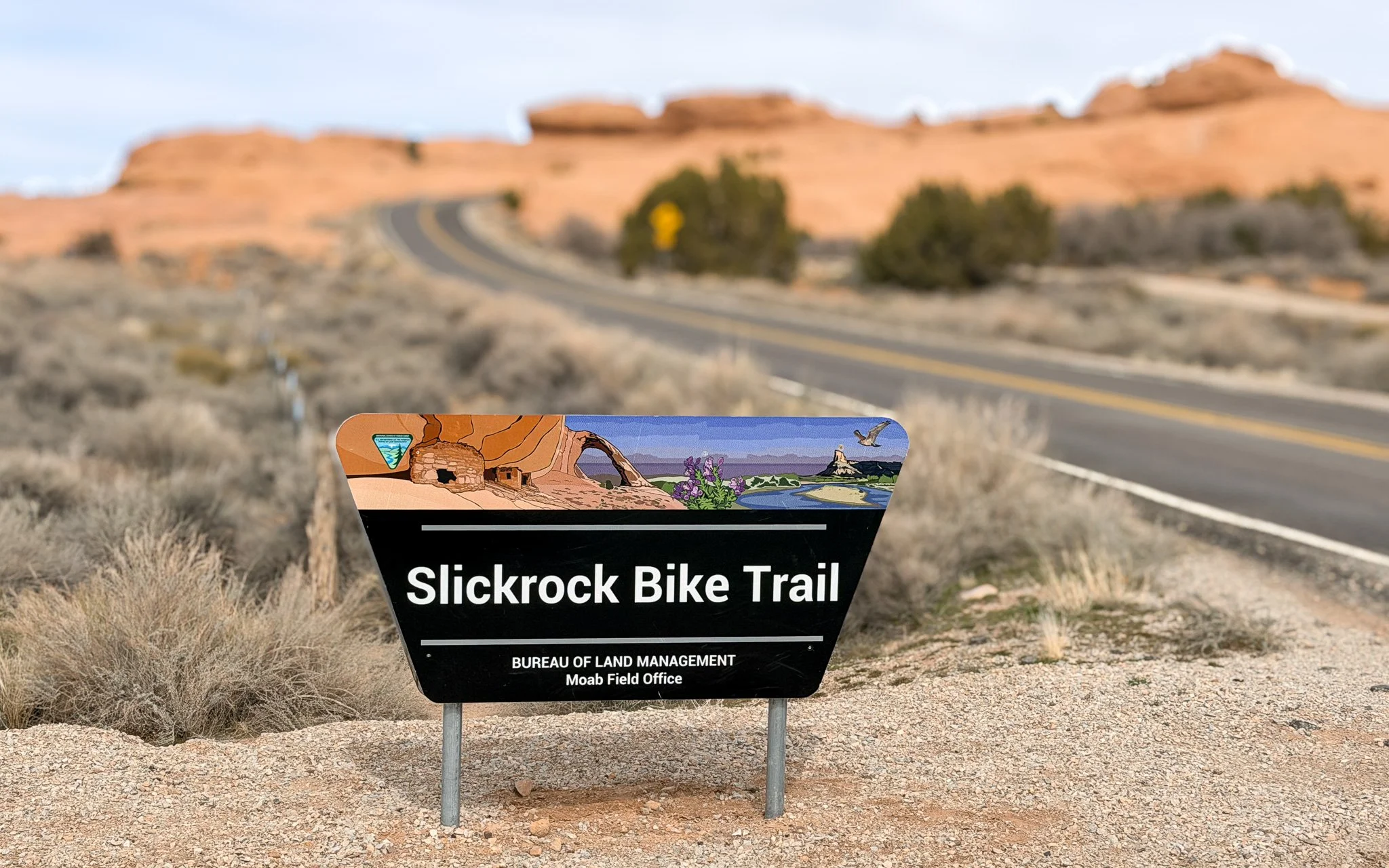
Sign for the Slickrock Bike Trail outside Moab, Utah — one of the most well-known mountain biking routes in the region.
Unlike traditional singletrack, the route follows painted white lines across rolling sandstone hills.
The riding feels different from almost anywhere else.
Instead of weaving through trees or dirt trails, you ride directly across the rock landscape itself.
What It Feels Like to Ride Slickrock
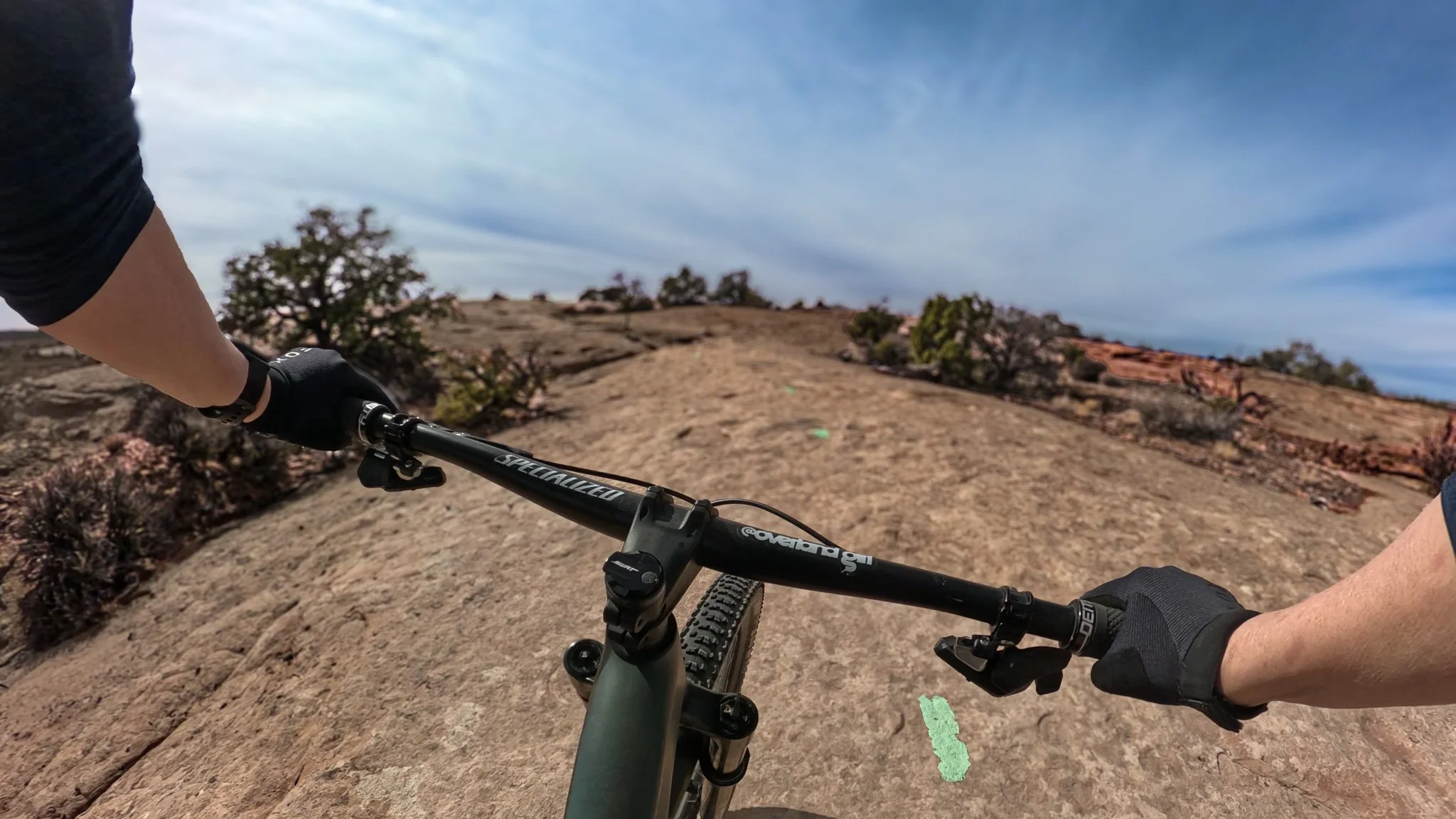
Riding slickrock on the Big Lonely section of the Navajo Rocks trail system near Moab, Utah.
It feels like riding on concrete that flows in giant waves. You’re constantly going up and down over rounded domes.
If you picture a sand dune — those rolling hills with punchy climbs and descents — slickrock is similar, just solid rock instead of sand.
Short, punchy climbs lead to steep drops and sweeping rock bowls. The traction lets you ride lines that would seem impossible elsewhere.
At the same time, slickrock riding can be physically demanding.
The constant climbing and descending works your legs in a different way than traditional trail riding. I love riding slickrock at Navajo Rocks, but the actual Slickrock Bike Trail is really hard. I rode it for a hot minute and thought, no thank you.
It’s one of the reasons Moab became a proving ground for mountain bikers.
Where You’ll See Slickrock in Moab
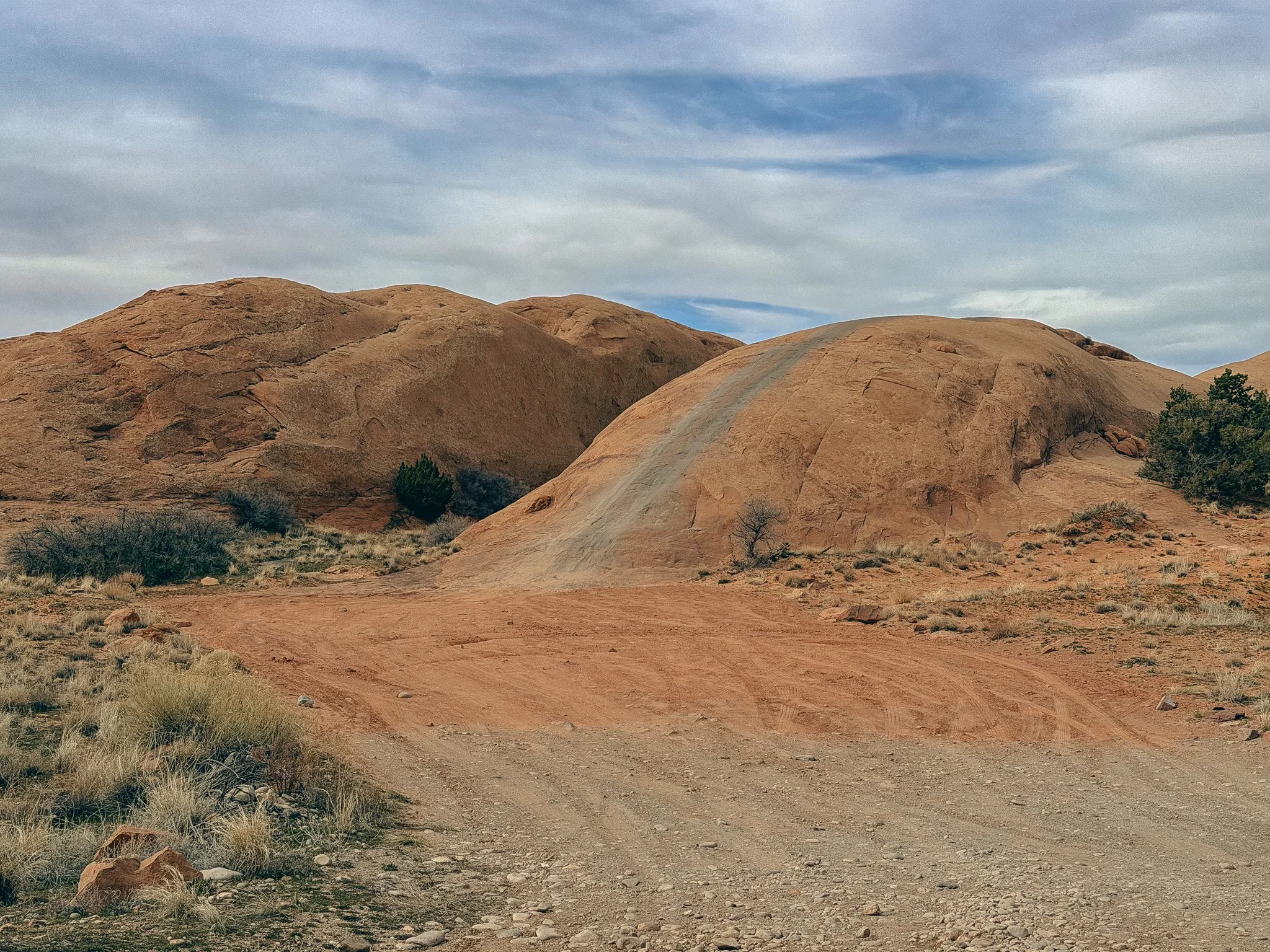
Hell’s Revenge slickrock in Moab, Utah, where 4x4 routes climb directly over Navajo sandstone domes. You can see the vehicle tracks worn into the rock surface.
Slickrock appears across much of the Moab area.
Some of the best-known places include:
Slickrock Bike Trail (Sand Flats Recreation Area)
Fins & Things
Hell’s Revenge
Porcupine Rim
Navajo sandstone domes throughout Arches National Park
You’ll find slickrock on many of the mountain bike trails around Moab. Navajo Rocks has a lot of it. Klondike Bluffs and the Bar‑M trails also run across sections of slickrock, mixed in with dirt singletrack and desert terrain.
Even many hiking trails and viewpoints cross the same rock surface.
Popular Slickrock Trails in Moab
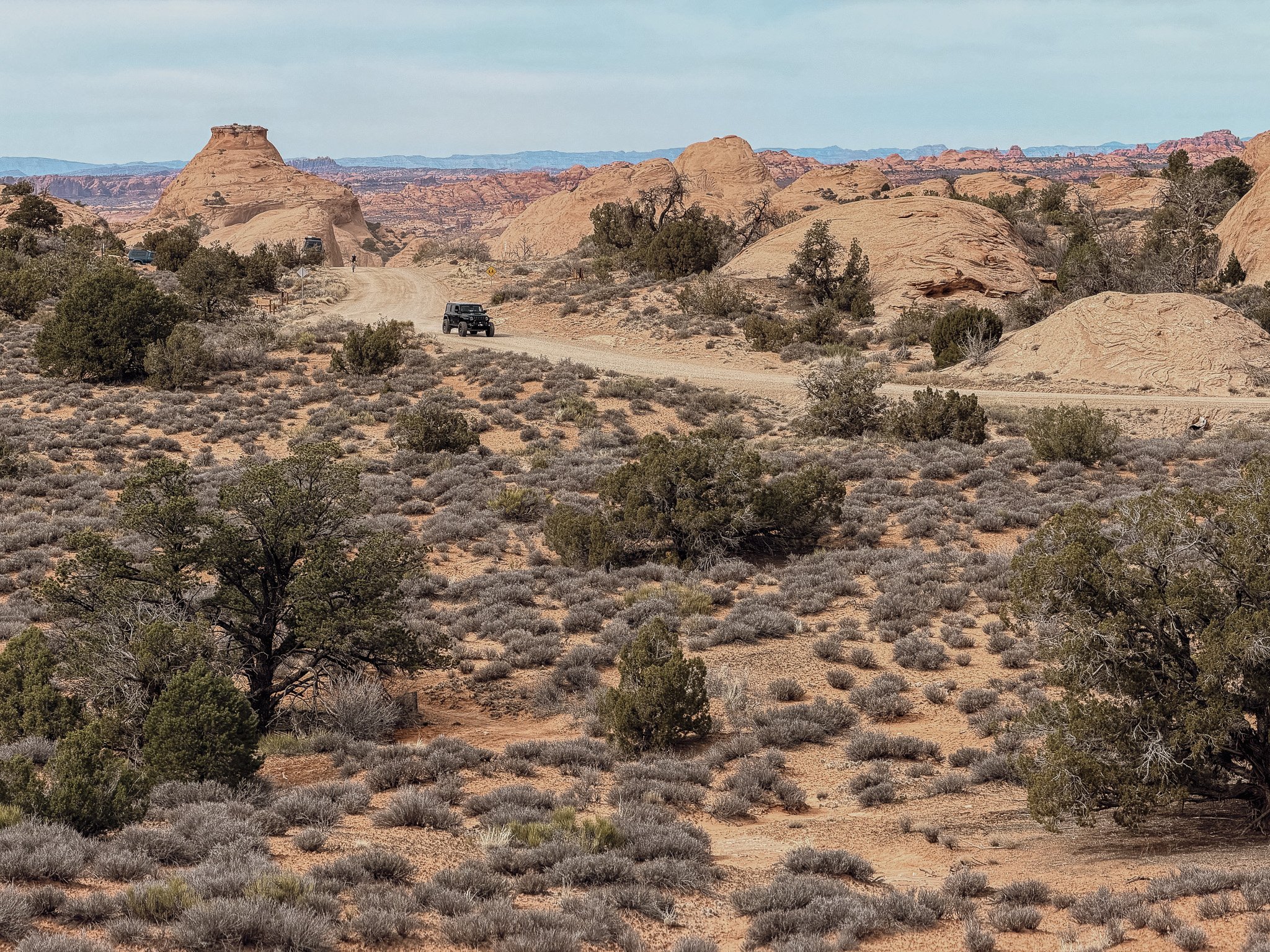
Jeep driving up Sand Flats Road outside Moab, Utah — a common access road for several off-road and recreation areas.
Slickrock isn’t limited to one trail. You’ll find it across riding routes, Jeep roads, and hiking areas throughout the Moab region. Here are a few of the most well‑known places where people experience slickrock firsthand.
Mountain Biking
Slickrock Bike Trail (Sand Flats Recreation Area) – The most famous slickrock ride in the world. White paint marks the route across rolling sandstone domes.
See the trail on Trailforks.
Porcupine Rim – Combines dirt singletrack and slickrock sections with huge views over the Colorado River.
See the trail on Trailforks.
Captain Ahab – Modern Moab riding with technical slickrock slabs and desert singletrack.
See the trail on Trailforks.
4x4 / Jeep Trails
Hell’s Revenge – One of the most famous Jeep routes in Moab, climbing steep slickrock fins and domes.
See the route on Trailforks.
Fins & Things – A mix of slickrock and sand with roller-coaster style climbs and descents.
See the route on Trailforks.
Hiking Areas
Arches National Park – Many trails cross slickrock surfaces, including routes to Delicate Arch and Landscape Arch.
Corona Arch Trail – A hike across sandstone slabs leading to one of the largest arches near Moab.
Watch my video: Hiking to Corona Arch & Bowtie Arch in Moab, Utah
Slickrock is part of everyday movement around Moab. Bikes, Jeeps, and hikers all use the same rock landscape.
Why Slickrock Defines Moab
Slickrock shapes the experience of being here. It influences how trails are built, how bikes move across the landscape, and how people explore the desert.
Without slickrock, Moab would still be beautiful. The red rock cliffs, the Colorado River, and the surrounding parks would still draw people in.
But slickrock is a big part of what made Moab a destination for people who like to move through the landscape — from 4x4s and motorcycles to, of course, mountain bikers.
Once you ride it, hike across it, or drive over it, you start to see the desert differently.
More in the Moab Series
This article is part of an ongoing Moab series exploring the landscape from multiple angles — history, geology, riding, and national parks.
The Moab You Didn’t Know About: Dinosaurs, Petroglyphs & the Desert Before the Bikes
Moab’s Uranium Boom: How the Atomic Age Reshaped the Desert Town
Potash Ponds Near Moab: What Those Bright Blue Pools Really Are
The Moab Fault: The Crack That Shaped the Desert
Petroglyphs Near Moab: Where to See Rock Art & What It Means
Dinosaur Tracks Near Moab: Walking Through the Morrison Formation
Michele Underwood writes Overland Girl, where she shares firsthand travel experiences across the American West — from desert landscapes and national parks to small towns layered with history. Her work blends movement, place, and the stories that shape them.

Some posts may include affiliate links to products or services she uses on the road. If you choose to purchase through those links, she may earn a small commission at no additional cost to you. It helps support continued travel and storytelling. She only links to items she personally uses or would use herself.