Why I Love the San Juan Mountains in Colorado
Ancient volcanoes, rugged peaks and wild country—the more I learn about these mountains, the more I understand why they feel so special.
Words by Michele Underwood | Photos by Michele

One of my favorite things about the San Juan Mountains is where the old 4x4 roads can take you. I found this spot at the end of one outside Silverton.
I loved the San Juan Mountains before I knew how they came to be.
I've spent time in plenty of beautiful mountains, but these felt different to me almost immediately. They're rugged and colorful, with steep peaks rising from deep valleys, waterfalls cascading down the mountainsides, and old mining roads and structures disappearing into places that seem almost unreachable. They have a rawness I haven't experienced anywhere else.
The more time I've spent exploring around Ouray, Silverton, Lake City, and Telluride, the more I've wanted to understand what I'm looking at. Why are these mountains so rugged? Where did all those colors come from? Why was there so much gold and silver here? And how have such large areas remained so wild?
Once I started learning about the San Juans, I realized that many of the things I love about them are connected. Enormous volcanoes shaped these mountains, glaciers altered them, minerals drew miners deep into the range, and places that remain largely undeveloped today protected them.
Knowing that makes me love them even more.
So this isn't a guide to the San Juan Mountains. It's about what makes these mountains so special—and why I can't seem to get enough of exploring them.
The San Juan Mountains span much of southwestern Colorado and are part of the southern Rocky Mountains. Ouray, Silverton, Telluride, and Lake City are all gateways into different parts of the range. This is high country. There are numerous peaks over 13,000 feet and several fourteeners, but elevation alone isn't what makes the San Juans stand out to me. It's how abruptly everything seems to rise.
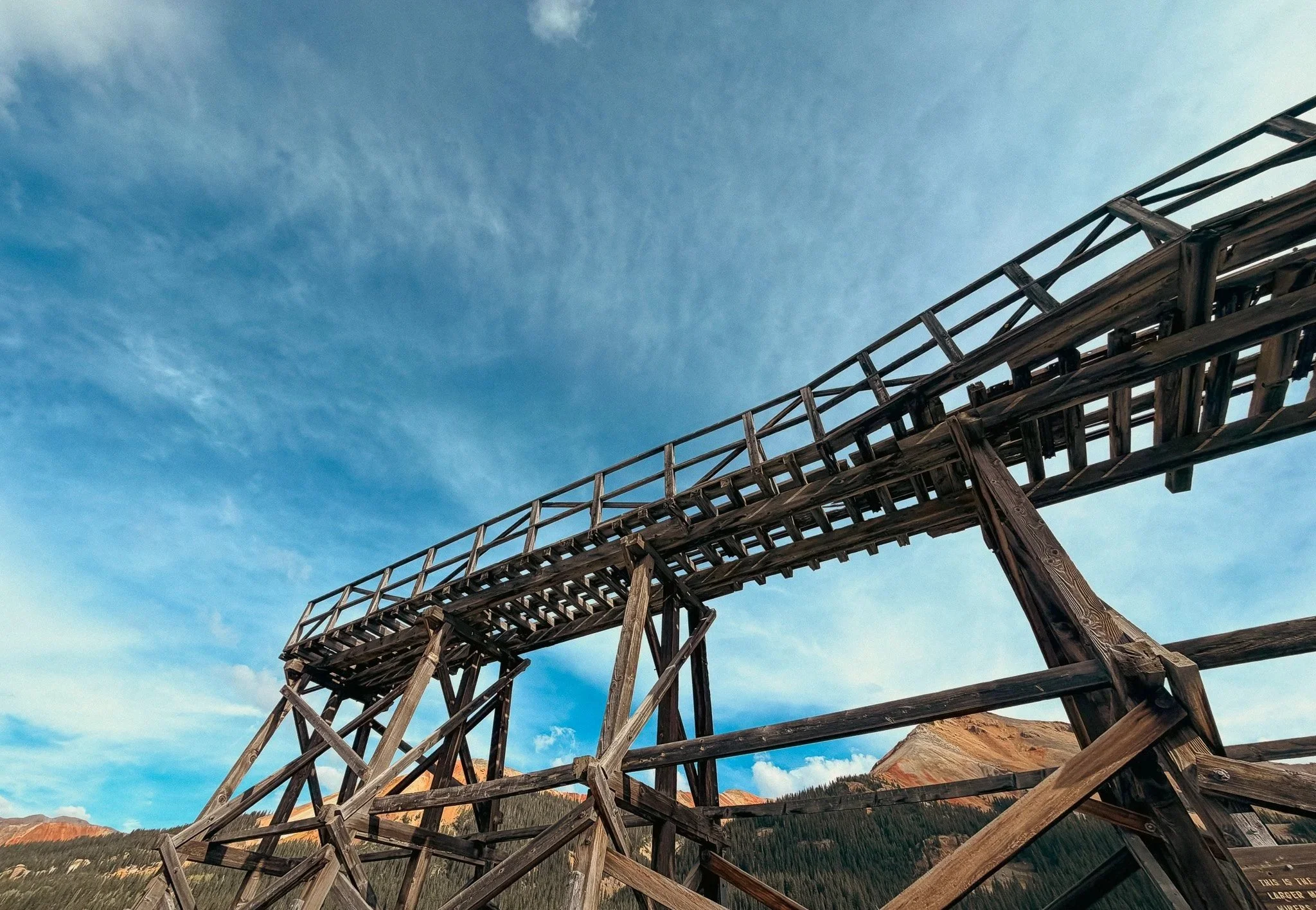
The old Yankee Girl Mine in the Red Mountain Mining District. Mining history is still very visible throughout the San Juan Mountains.
Ouray is probably one of the best examples. You can stand in town and feel surrounded by mountains. Drive toward Silverton on the Million Dollar Highway, and you're suddenly climbing through a landscape of exposed rock, waterfalls, old mines, and high mountain passes. I've driven this road several times and wrote a separate article about what it's like to drive the Million Dollar Highway from Ouray to Silverton. Telluride feels different, but you're still surrounded by that huge San Juan landscape. I've mountain biked and hiked there, and one thing I love is how quickly you can go from town into the mountains. The San Juans aren't just scenery sitting in the distance. When you're here, you feel like you're inside them.
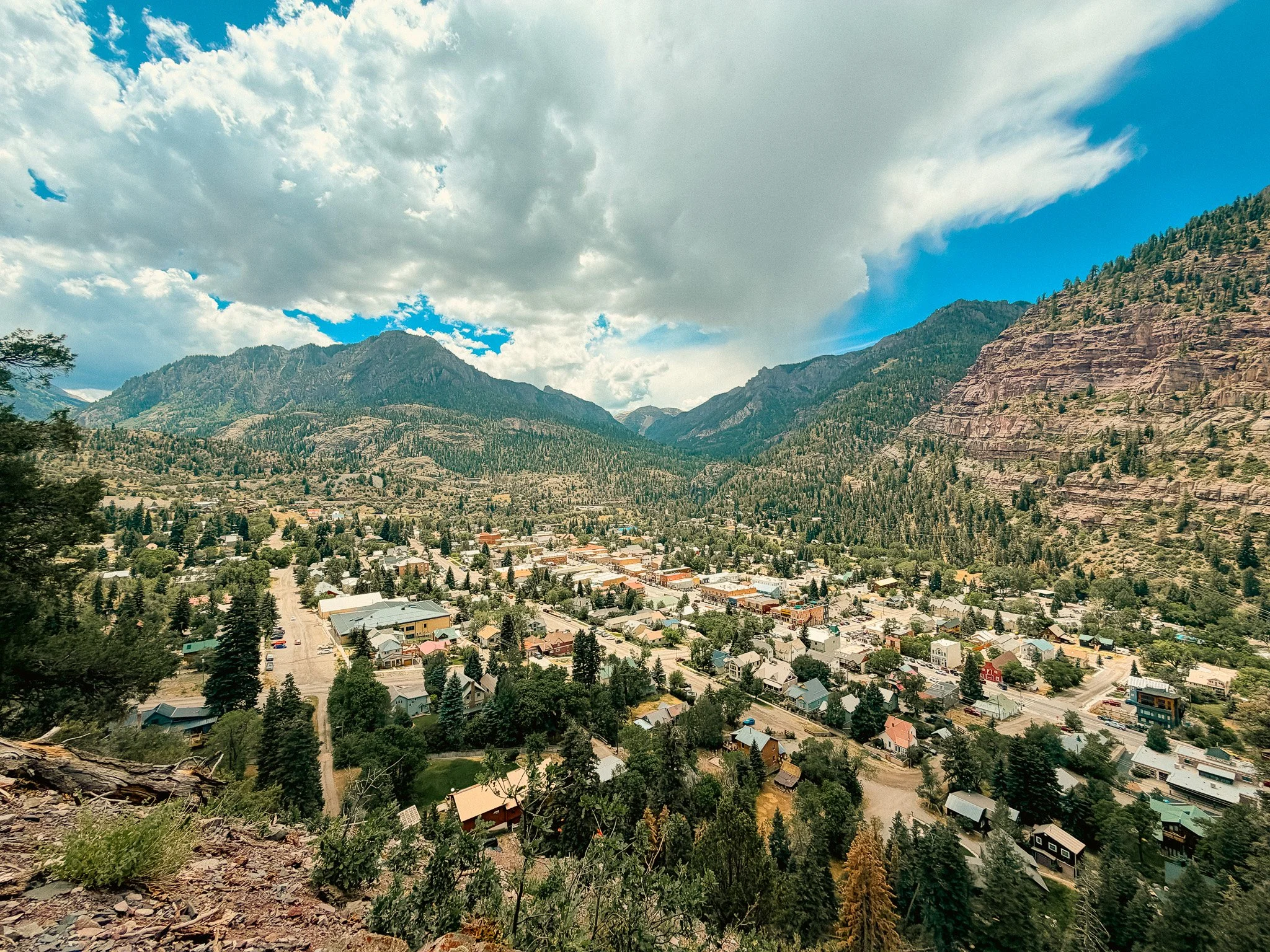
Looking down at Ouray makes it pretty clear just how tucked into the San Juan Mountains this little town really is.
How Volcanoes Shaped the San Juan Mountains
This was the part I didn't know when I first started exploring here. A huge amount of what I'm looking at is volcanic.
Beginning roughly 35 million years ago, enormous volcanic activity spread across this part of what is now Colorado. Volcanoes erupted lava and volcanic debris across the region. Later came a period of massive explosive eruptions that released huge amounts of volcanic ash and caused the ground above emptied magma chambers to collapse, creating enormous calderas. This wasn't one volcano erupting once. It happened repeatedly over millions of years, and the volcanic field was enormous — what remains in the San Juan Mountains today is considered the largest erosional remnant of that ancient volcanic field.
Some of the places I've been exploring sit among the remnants of these old volcanic systems. The western San Juans contain the San Juan, Uncompahgre and Silverton calderas, while other enormous calderas formed farther east within the range. We're talking about events that happened tens of millions of years ago, so you aren't looking at recognizable volcano cones today. Erosion has been working on this landscape ever since. But the rock they left behind is still here. I've been hiking, biking and driving through the remains of an enormous ancient volcanic landscape without realizing exactly what I was looking at.
The volcanoes created much of the rock, but they aren't solely responsible for the way the San Juans look today. Millions of years of uplift and erosion exposed and carved the volcanic landscape. During the Ice Ages, glaciers moved through the mountains and helped deepen valleys and carve basins into the high country. Water continued the work. You see it everywhere in the San Juans — creeks run through narrow valleys, waterfalls pour down steep mountainsides and rivers have cut deeply into the rock. Box Cañon in Ouray is one small but dramatic example of what water can do here. You walk into this narrow canyon with the water roaring through it and rock surrounding you. All of those processes helped create the steep, broken landscape that I love so much.
San Juan Mountains Colors and Mining History
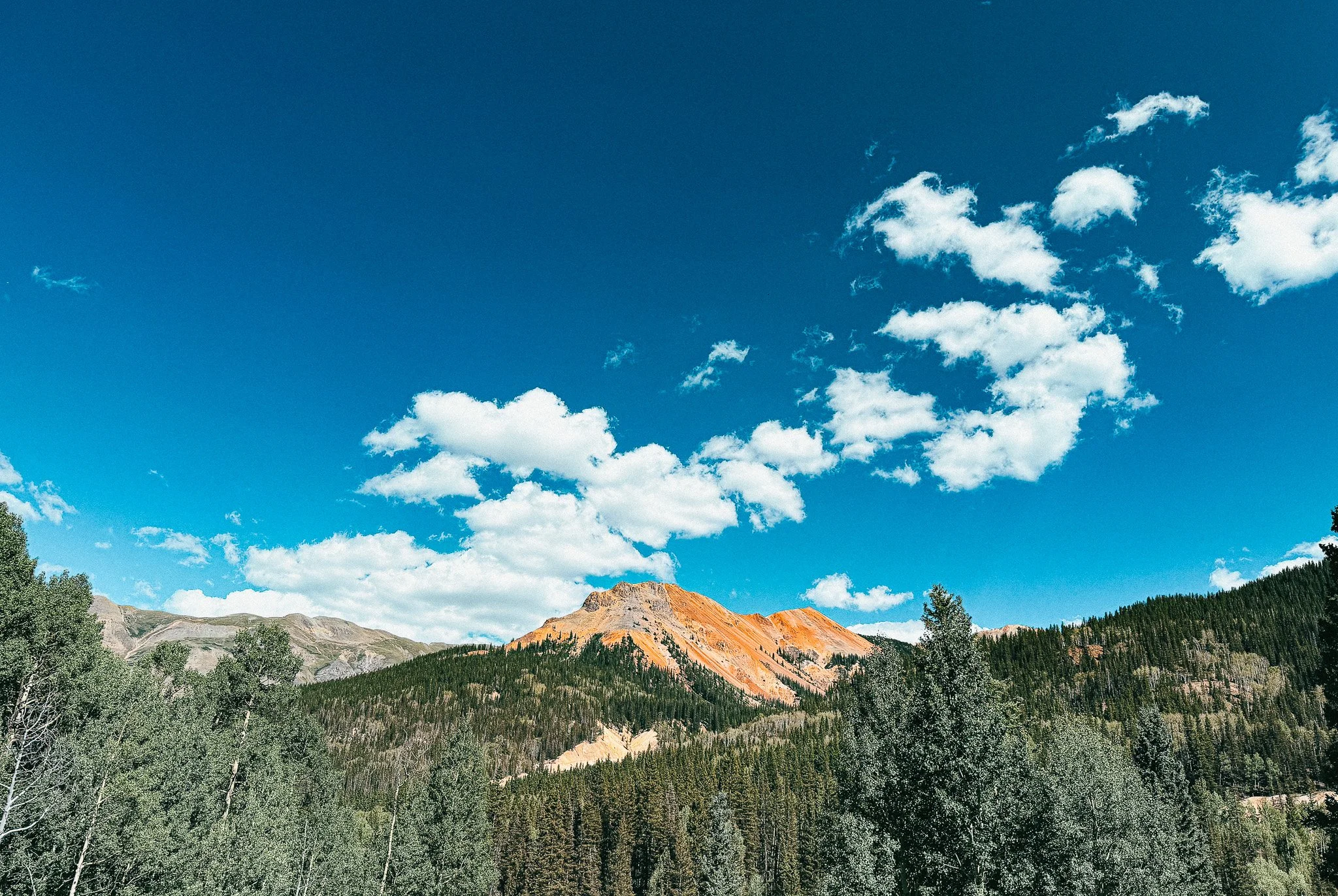
The red and orange mountains are one of the things that make this part of the San Juans so beautiful.
This is another thing that immediately stood out to me, especially around Red Mountain Pass. These mountains aren't one color. There are gray cliffs, dark volcanic rock and mountainsides covered in green, but then you get into areas where the rock turns red, orange and yellow. Driving the Million Dollar Highway between Ouray and Silverton, some of those colors are incredible.
There is geology behind that too. The volcanic activity didn't end with eruptions at the surface. Hot, mineral-rich fluids moved through fractures underground and altered the surrounding volcanic rock. Those hydrothermal systems concentrated metals and changed the chemistry of the rock. Iron-bearing minerals exposed near the surface oxidized over time, contributing to some of the reds, oranges and yellows you see in places like the Red Mountain area. Those same underground processes also helped create something else that would completely change the future of these mountains: gold and silver.
Once I understood the volcanic history, the mining history started making a lot more sense. The gold, silver and other metals miners eventually came looking for weren't randomly scattered through the San Juans — many of those mineral deposits were connected to the ancient volcanic and hydrothermal systems. That geology helped create the mining districts that eventually led to towns including Ouray, Silverton and Telluride.
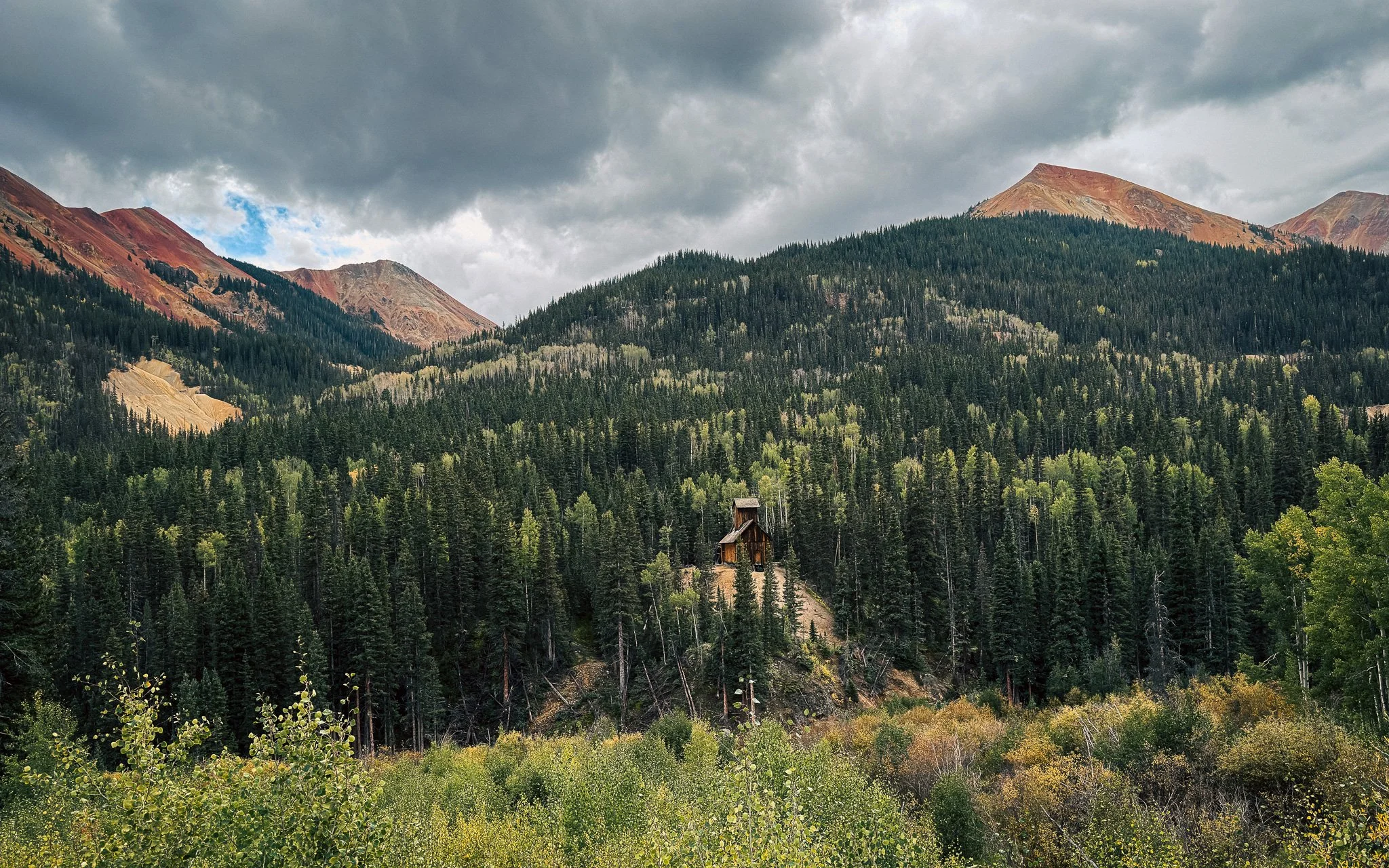
The Colorado Boy Mine tucked into the trees below the red mountains. I had seen this old mine from the Million Dollar Highway before I realized there was a trail that takes you right to it.
I've written a separate article about the mining history and old mines along the Million Dollar Highway because there is so much of it throughout this part of the San Juans. It is so cool to see. There is even an old ghost town right off the highway called Ironton, where you can walk through the townsite and see a few of the remaining buildings from what was once a town of more than 100 buildings.
You can look high onto a mountainside and see an old mine structure. Roads that were once used for mining are now 4x4 trails. Old mining settlements have disappeared or become ghost towns, while places like Ouray and Silverton survived. So many of the old mines seem to be tucked into the nooks and crannies of these mountains. I look up at some of them and wonder how anyone even got there, much less built a mine there.
Some of the trails and old routes through these mountains are tied to the mining era. You can be hiking for the scenery and suddenly find yourself looking at the remains of something built when people were coming into these mountains to work rather than recreate. I found that again on Mears Trail near Ouray, where the trail leads to the remains of the old Larson Brothers Mine. You can watch my Mears Trail hike to see the trail and the old mining remains I found at the end.
Why the San Juan Mountains Still Feel Wild
The more I've hiked and biked into the San Juan high country and backcountry, the more I keep thinking about how untouched it feels. It is so raw and wild, and that is one of the things I love most about the San Juans. Compared with other parts of Colorado I've spent time in, this area just feels different to me. It feels like real wilderness. You can get deep into these mountains where there are no towns, no houses, and very little around you other than the mountains themselves. There are places where I look around and think this probably doesn't feel all that different from what it felt like more than a hundred years ago.
People have been connected to this landscape for a very long time. The Ute people lived throughout this region long before mining towns appeared. Then miners, prospectors, and settlers changed parts of the mountains dramatically, beginning in the 1800s. Roads were cut into the slopes, forests were used for timber, mines went underground, and entire communities appeared around mineral discoveries. You can still see evidence of all of that today.
Part of what has kept so much of the San Juans wild is simply the terrain. These are high, steep, and difficult mountains. Winters can be severe, many roads climb over high passes, and there are places where building anything would be difficult. But protection of public land is also a huge part of the story. Large areas of the San Juans are within national forests, and portions have been designated as wilderness. The Weminuche Wilderness is the largest wilderness area in Colorado. There are also protected areas including the Uncompahgre, Mount Sneffels, Lizard Head, South San Juan, and Hermosa Creek wilderness areas.
I think that's part of why I can keep hiking or biking farther into these mountains and still find places that feel so remote. There are towns, roads, and plenty of people exploring the San Juans, but it doesn't take long to get away from all of that. That wildness is what I love about being here.
I'm Michele, and I write Overland Girl, where I share firsthand travel experiences across the American West — from desert landscapes and national parks to small towns layered with history. My work blends movement, place, and the stories that shape them.Some posts may include affiliate links to products or services I use on the road. If you choose to purchase through those links, I may earn a small commission at no additional cost to you. It helps support continued travel and storytelling. I only link to items I personally use or would use myself.