Utah Desert Plants and Wildflowers: What You’ll See Across the State
Words by Michele Underwood | Photos by Michele
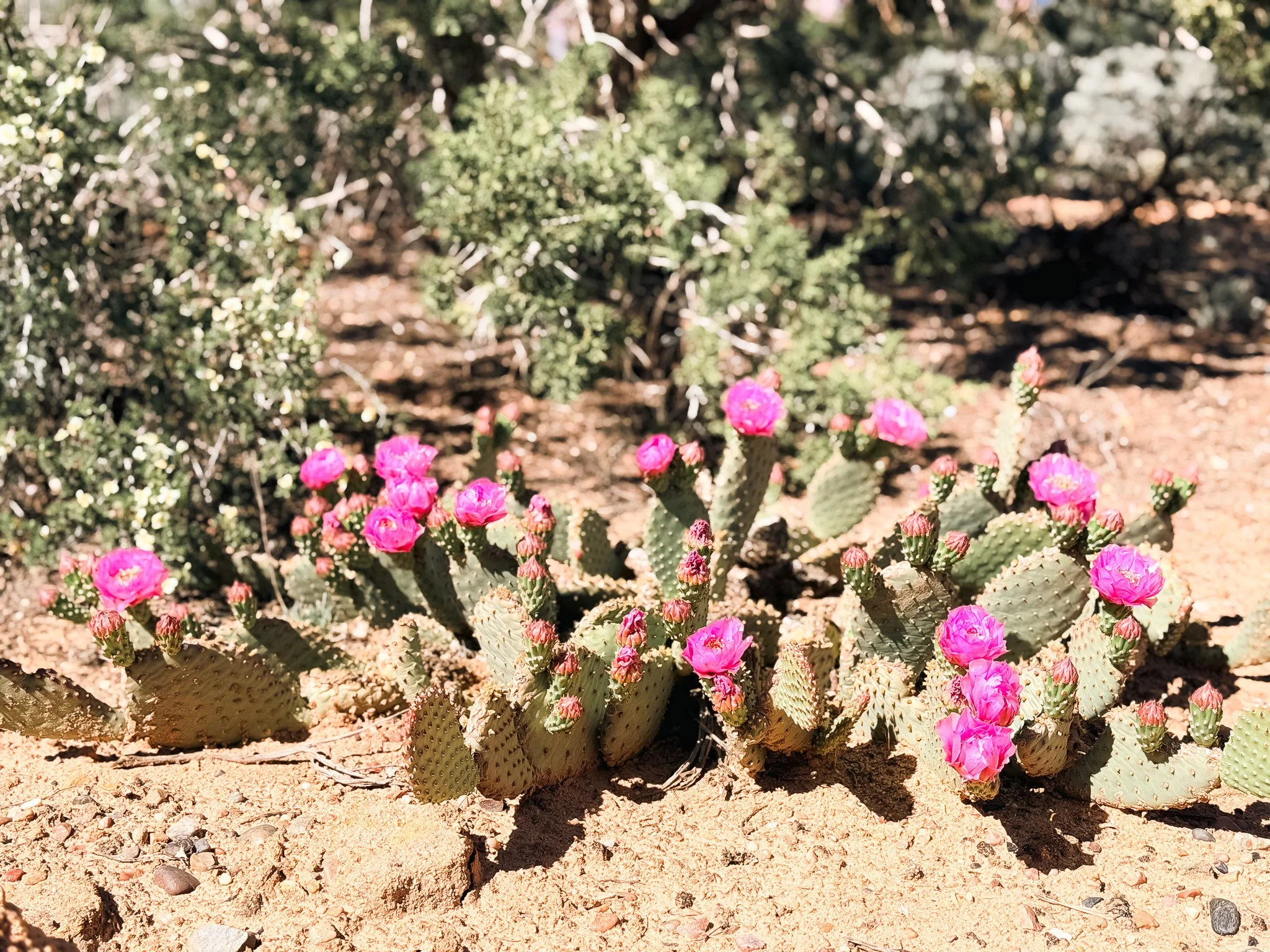
Prickly pear cactus in bloom across the Utah desert in spring.
From cactus blooms in red dirt to twisted junipers growing out of slickrock, these are some of the desert plants I kept noticing while hiking, mountain biking, and exploring Utah in spring.
I was in Utah from February through the end of April.
Spring came in while I was there, and little by little, the desert started changing. What looked dry and quiet in February started pushing out color by March and April—flowers growing from cracks in sandstone, cactus blooming in bright reds and pinks, and trees holding onto rock in places that didn’t seem possible.
At first, I was focused on the landscapes.
The arches. The cliffs. The domes. The canyons.
But after spending weeks hiking, riding trails, and stopping for photos all over places like Arches National Park, Dead Horse Point State Park, Colorado National Monument, and Grand Staircase–Escalante National Monument, I started noticing what was growing around me.
That became part of the adventure, too.
These are some of the desert plants I kept seeing across Utah in spring.
Utah Juniper
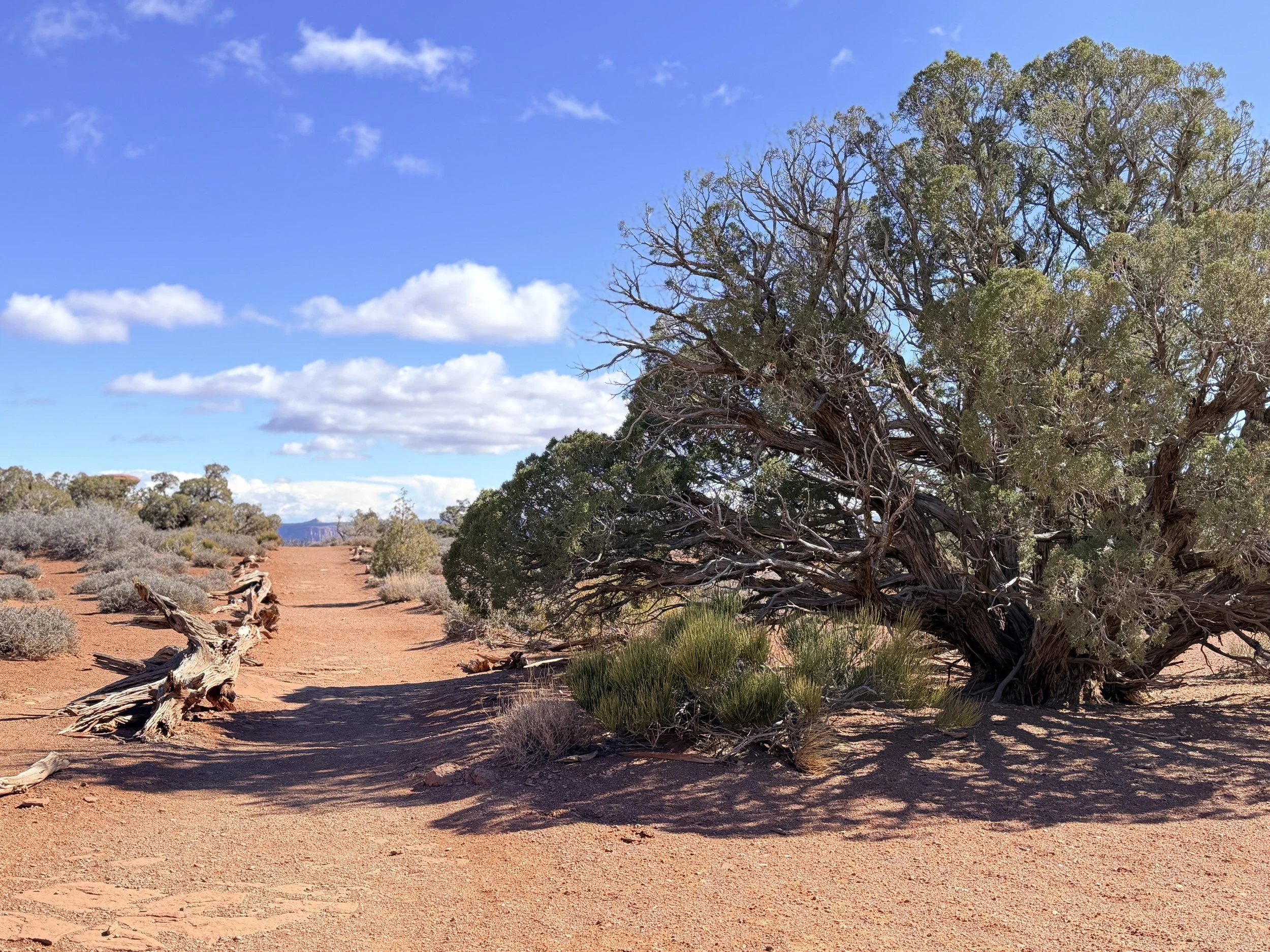
A weathered Utah juniper along a trail in Canyonlands National Park. Once you start noticing these twisted trees, you see them all over Utah’s high desert.
One of the first trees I started recognizing was the Utah juniper. Once you know what it looks like, you start seeing it everywhere—along slickrock trails, at canyon overlooks, beside dirt roads, and tucked into rocky hillsides all across southern Utah.
The trunks are twisted and weathered, almost sculptural, with bark that looks like it’s been shaped by wind for decades. In many places, I saw junipers growing directly from sandstone ledges, their roots gripping into cracks in the rock as if they had become part of the landscape itself.
If you mountain bike in Utah, you’ll ride around these trees a lot. And a quick heads-up—they’re not soft. Those branches are rough, stiff, and unforgiving. Brush one with your arm or leg on a tight trail, and you’ll know it.
It’s one of those trees that starts to define the desert once you notice it.
Pinyon Pine
Not every evergreen tree I saw out here was a juniper. Many were pinyon pines, often growing right alongside them in what’s known as pinyon-juniper woodland.
I started noticing them on higher elevation trails and while riding around Moab, especially in areas with a little more soil and slightly cooler air. They’re shorter and fuller than junipers, with dense needles that stand out against all the red rock.
These trees have been part of the Southwest for thousands of years, producing edible pine nuts and helping define much of Utah’s high desert ecosystem.
Once I learned the difference, I couldn’t stop seeing them.
Hedgehog Cactus
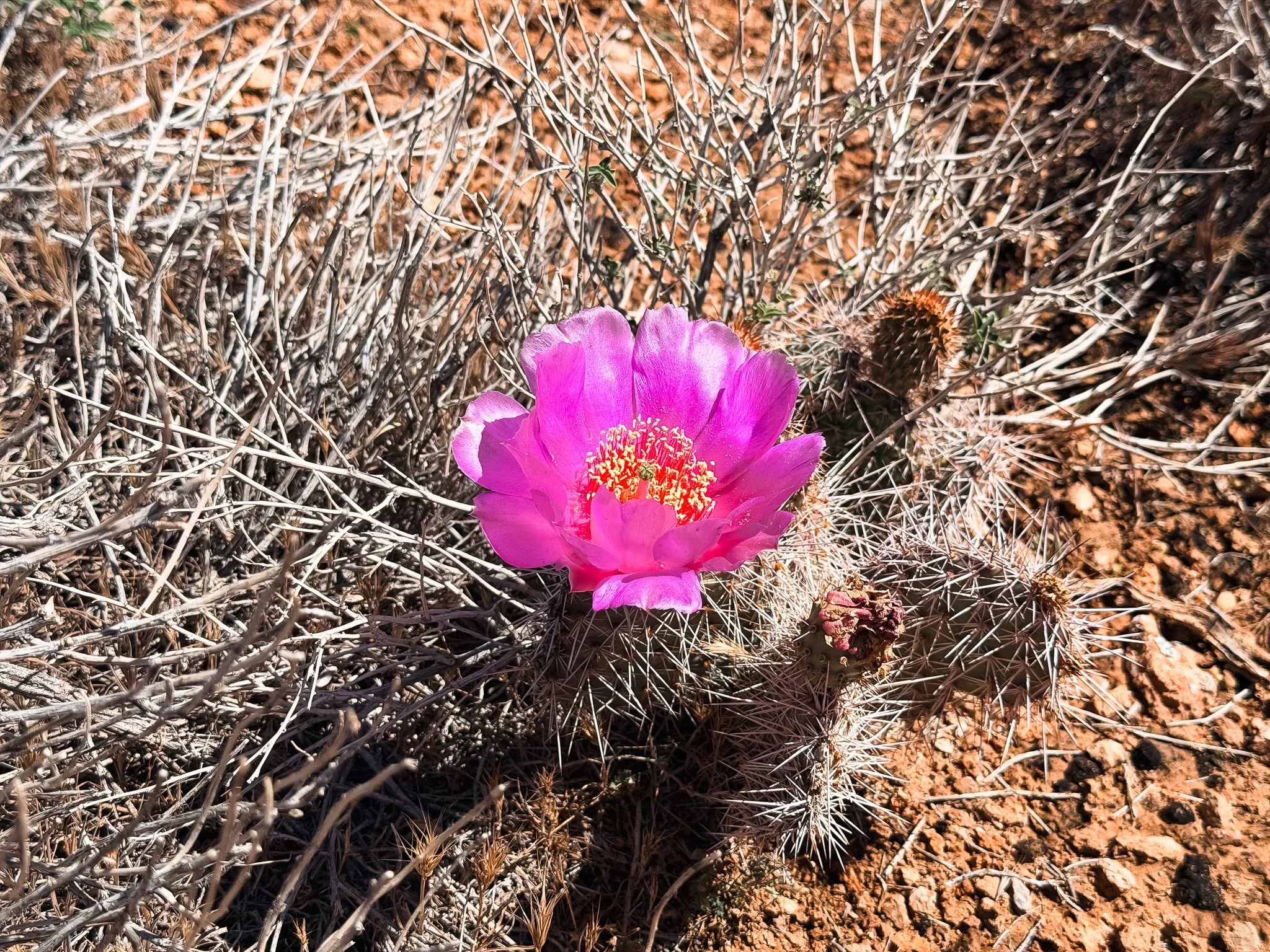
Bright magenta hedgehog cactus blooming along a dusty trail near Moab in spring.
One of the first cactus blooms that stopped me in my tracks was a bright magenta hedgehog cactus growing low in the dirt near trail edge.
The color almost didn’t look real. Against dry brush, sandstone, and dusty red soil, it looked like somebody had dropped a neon flower into the desert.
I started seeing hedgehog cactus in several places around Moab in spring, usually tucked low to the ground and easy to miss unless you slowed down.
Thankfully, I had my camera with me.
Claret Cup Cactus
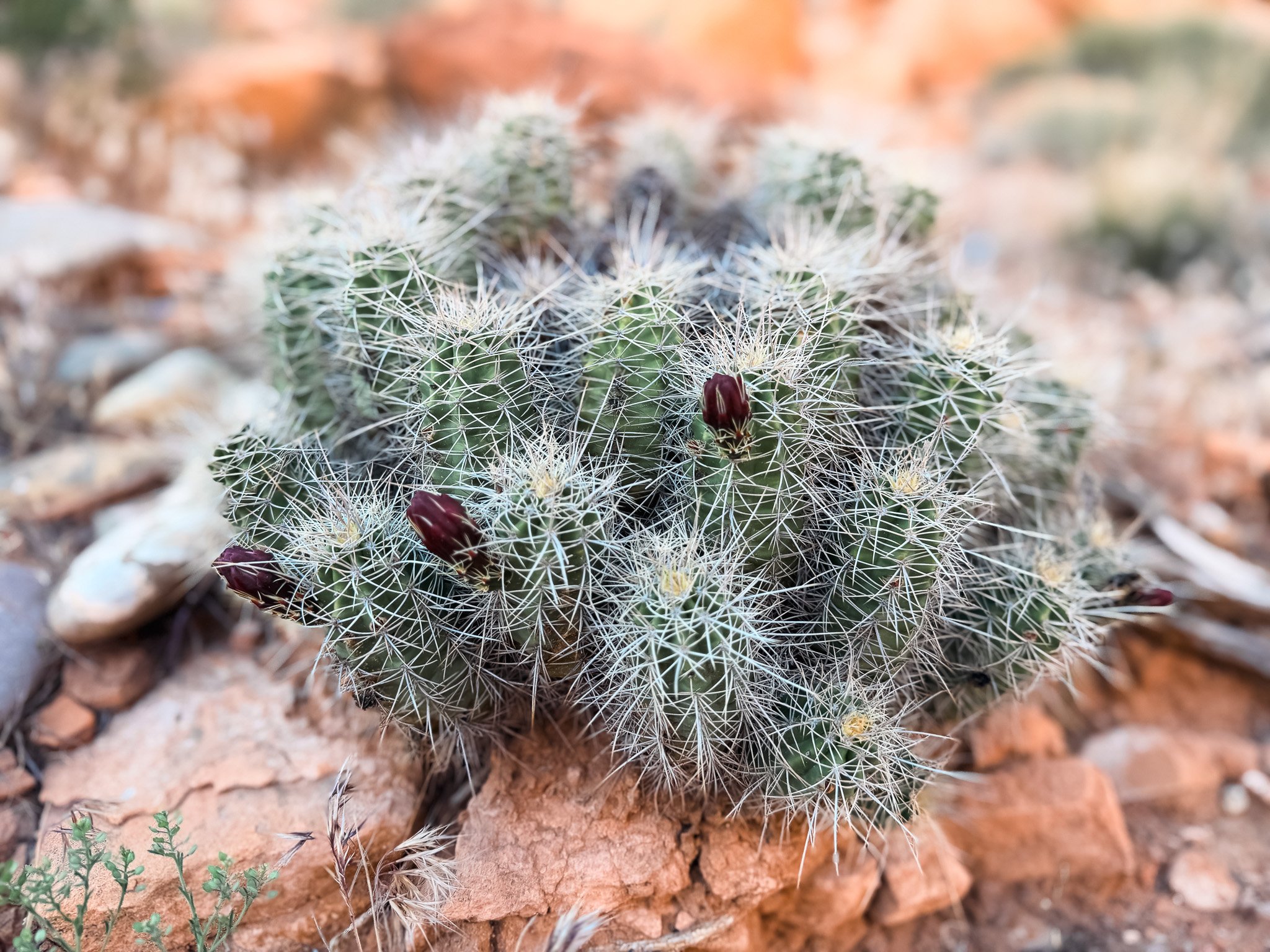
Claret cup cactus getting ready to bloom along a rocky trail in southern Utah.
The claret cup cactus may have been the most photogenic cactus I found in Utah.
Dense white spines covered the base, while bright red blooms opened toward the sun. Some were just starting to bud, while others were fully open and impossible to ignore.
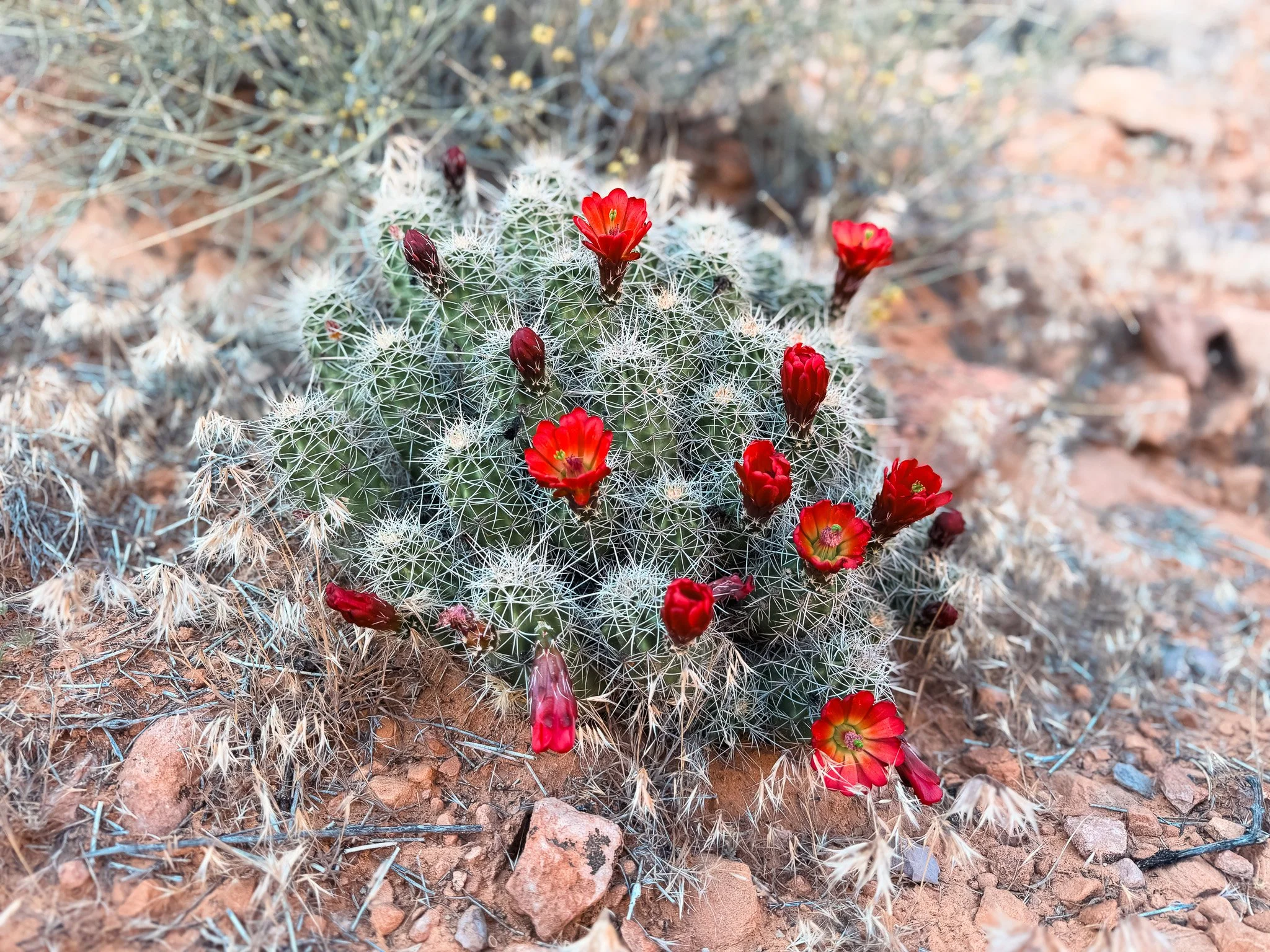
Claret cup cactus in full bloom, bright red flowers standing out against the desert floor.
I found clusters of them on exposed slopes and along trails where the morning light hit first. Once they start blooming, they almost glow against the desert floor.
It’s one of those plants that makes you stop hiking for a minute and just stare.
Prickly Pear Cactus
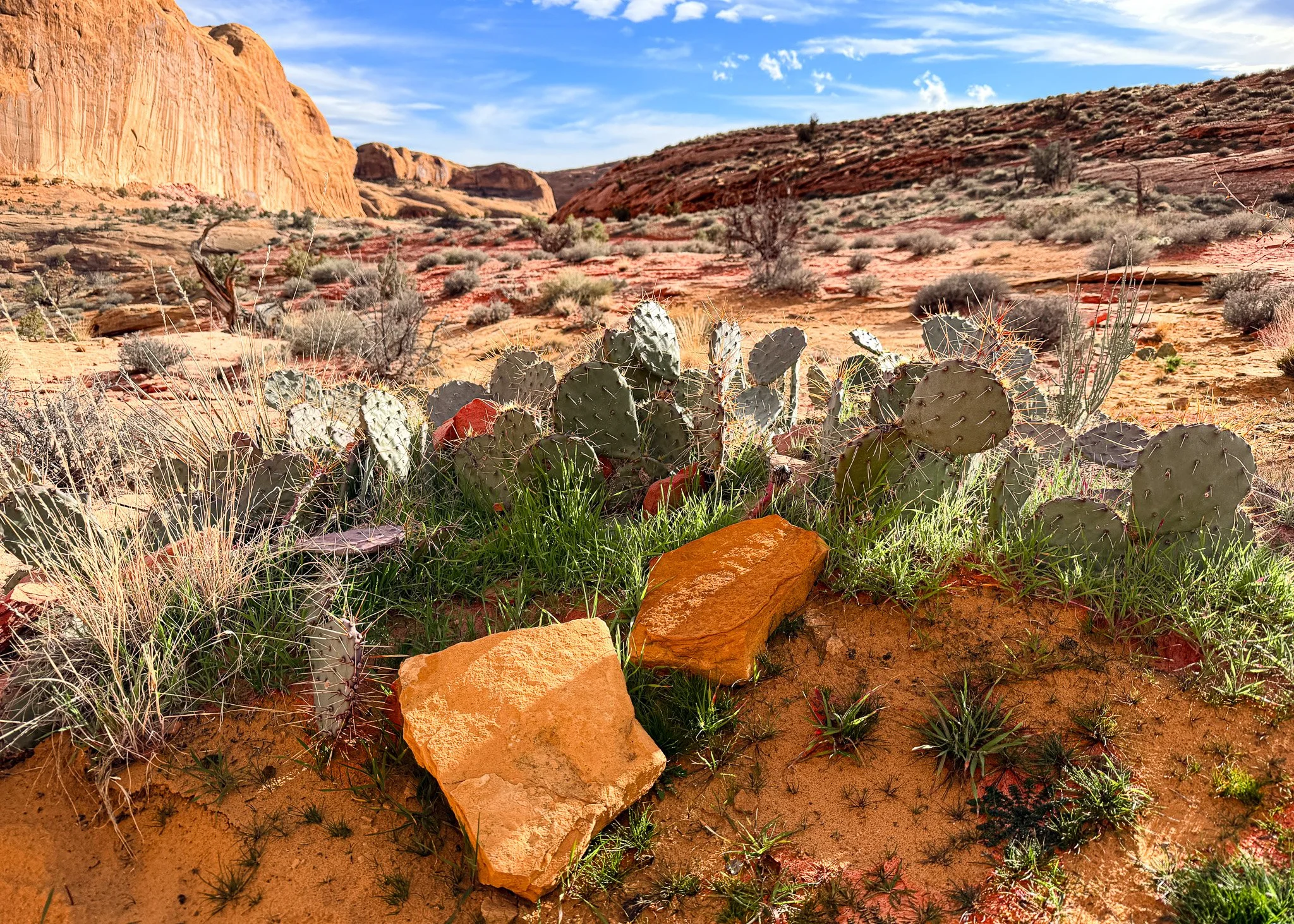
Prickly pear cactus catching the morning light in Utah’s red rock desert.
Prickly pear was another cactus I started seeing all over Utah once I knew what to look for.
Flat, paddle-shaped pads, long spines, and clusters growing low across sandy desert flats, canyon bottoms, and rocky trail edges. Some looked almost silver in the morning light. Others blended so well into the red dirt and sandstone that I almost walked right past them.
I found this patch while hiking through red rock country in Moab, with sandstone cliffs glowing in the distance and the desert just starting to wake up.
It was one of those moments that reminded me how much life is packed into places that can look empty from far away.
Wildflowers Growing Out of Rock
This might have surprised me more than anything.
I kept finding small yellow and white wildflowers growing directly out of sandstone cracks, sometimes with what looked like almost no soil at all. A little moisture, a little shade, maybe years of sand collecting in a tiny pocket—and somehow life found a way.
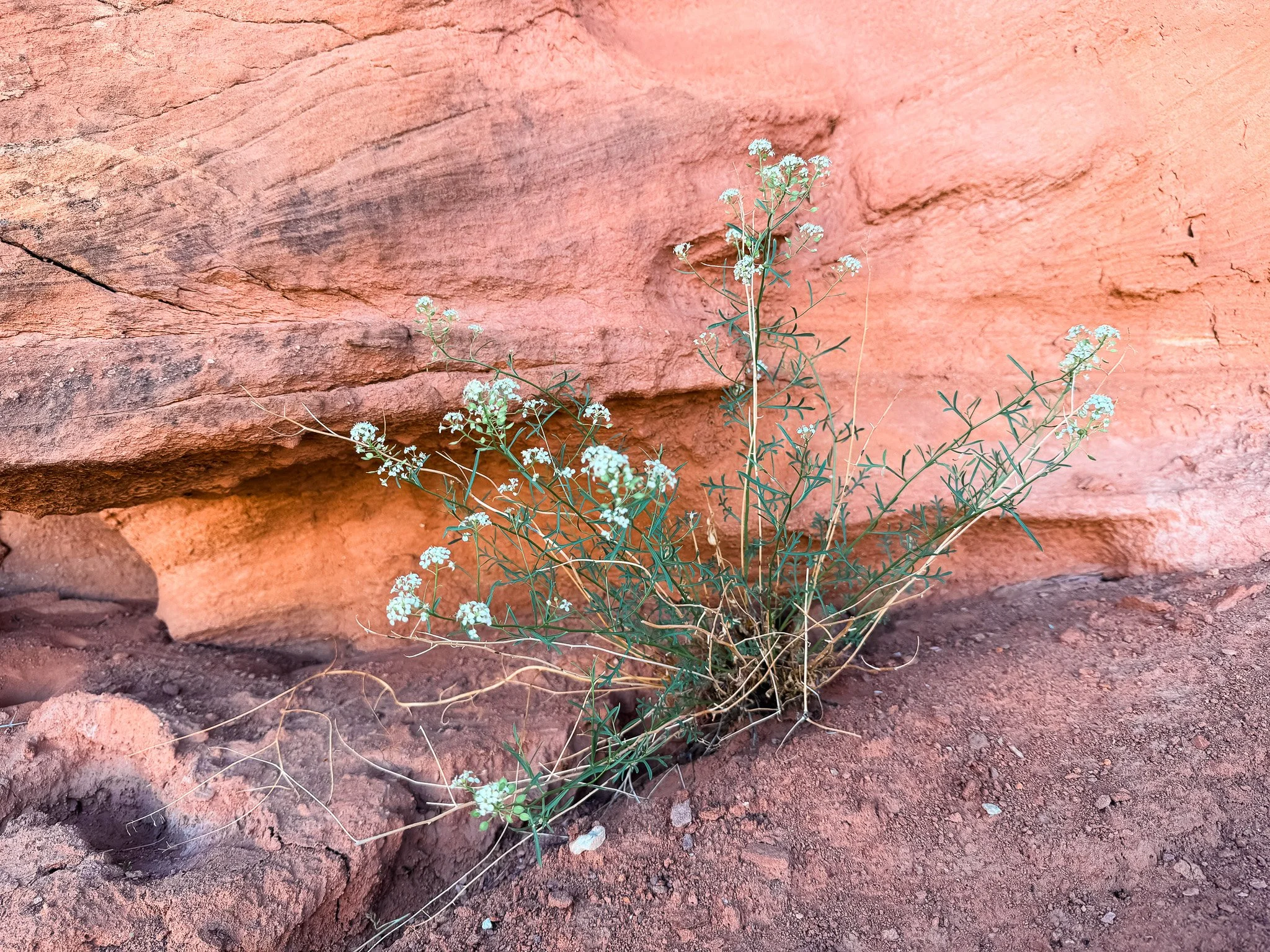
Wildflowers growing directly out of sandstone along a desert trail in Utah.
I saw this everywhere from canyon hikes to overlooks above the Colorado River.
It changed how I looked at the desert.
What first felt empty started feeling full of detail.
Desert Shrubs and Sagebrush
Not every plant in Utah announces itself with bright blooms. A lot of what shapes the desert lives lower to the ground—sagebrush, grasses, flowering shrubs, and small hardy plants built to survive wind, heat, and very little water.
I noticed them while hiking, but also while mountain biking. They lined the slickrock, filled open desert flats, and grew between rock shelves in places where the terrain looked almost impossible.
By spring, many of them were quietly blooming.
And if you slowed down long enough, you started noticing just how much color was hiding out there.
The Desert Isn’t Empty
Before spending a full spring in Utah, I mostly noticed the rock.
And honestly, it’s hard not to.
But after weeks of hiking, riding, and camping across the state, I started noticing the life growing between it all. The cactus blooms. The twisted junipers. The pinyons. The tiny flowers pushing out of sandstone cracks. The shrubs are holding on to dry soil along cliff edges.
That’s when Utah stopped feeling like just a landscape and started feeling like an ecosystem.
And once you start seeing that, you never really look at the desert the same way again.
Keep Exploring Utah
This post is part of my growing Utah field guide series.
Next up:
→ Utah Rock Formations: Arches, Hoodoos, Monoliths, Domes, and Desert Geology
→ Utah Reptiles, Bugs, and Desert Wildlife: What to Watch for on the Trail
Michele Underwood writes Overland Girl, where she shares firsthand travel experiences across the American West — from desert landscapes and national parks to small towns layered with history. Her work blends movement, place, and the stories that shape them.Some posts may include affiliate links to products or services she uses on the road. If you choose to purchase through those links, she may earn a small commission at no additional cost to you. It helps support continued travel and storytelling. She only links to items she personally uses or would use herself.