Butch Cassidy's Childhood Home in Utah: My Unexpected Stop


I wasn't looking for Butch Cassidy's childhood home when I came across it on my way back to Moab.

Words by Michele Underwood | Photos by Michele
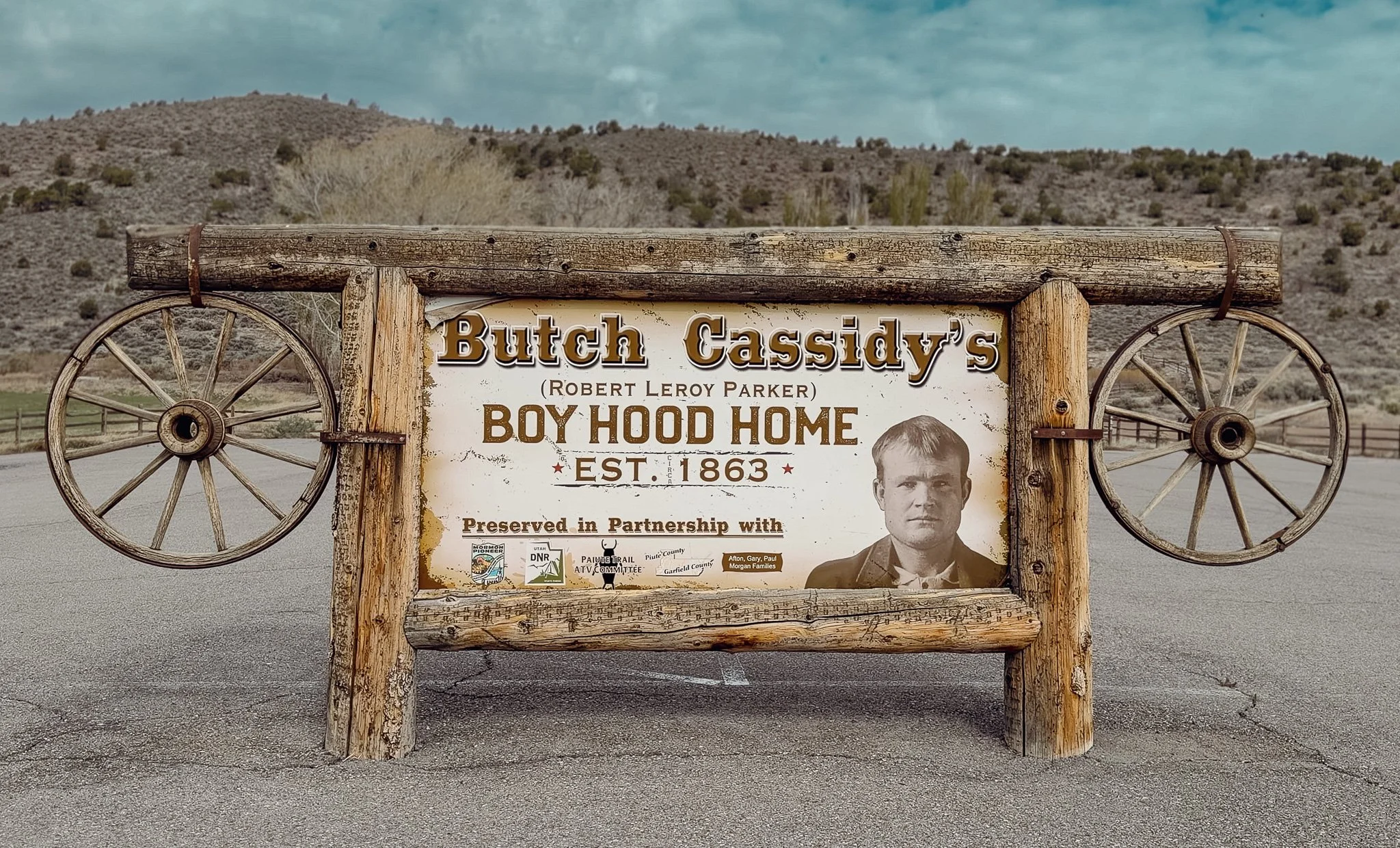

Butch Cassidy's Boyhood Home sign near Circleville, Utah, identifying Robert LeRoy Parker.

The roadside sign for Butch Cassidy's Boyhood Home is hard to miss once you pull into the site along Highway 89.

As I was driving down Highway 89 toward Moab, I had no idea Butch Cassidy's childhood home would literally be right off the road. I saw the little cabin as I was driving by and had to stop.

I knew who Butch Cassidy was, but I had no idea his childhood home was still standing in Utah. I definitely wasn't looking for it, which made finding it even cooler. His infamous legacy is written throughout Utah and Colorado, and I think it's really cool to see the places where these outlaws once roamed.

Once I stopped and started reading about the cabin, I wanted to know more about the person who lived here before he became Butch Cassidy. How did Robert LeRoy Parker go from growing up in this little cabin in Utah to becoming one of the most famous outlaws in the American West?


Where Is Butch Cassidy's Childhood Home?

Butch Cassidy's childhood home, also known as the Butch Cassidy Boyhood Home, sits along Highway 89 just south of Circleville, Utah. The cabin sits right off the highway, which is exactly how I found it.

It's an easy place to stop if you're already traveling through this part of Utah. You can pull off the highway, walk around the property, and see the cabin without making a big detour or turning it into an entire day.

That was part of what I liked about finding it. I wasn't looking for Butch Cassidy history that day. It was just suddenly there in front of me.


Before Butch Cassidy, He Was Robert LeRoy Parker

Before he became Butch Cassidy, he was Robert LeRoy Parker. He was born in Beaver, Utah, in 1866 to Maximillian and Ann Parker, English immigrants who had settled in Utah. Robert was the oldest of 13 children.

The Parker family eventually moved to the Circleville area, where Robert spent part of his teenage years on the family's ranch. The historic site dates his time here to roughly 1880 through 1884, when he would have been about 14 to 18 years old.

When you hear the name Butch Cassidy, it's easy to immediately think about bank robberies, train robberies, the Wild Bunch and the Sundance Kid. Standing at his childhood home made me think more about the person who existed before all of that.

At one point, he was simply Robert Parker, a kid growing up with a large family in rural Utah.


What Was Butch Cassidy Like Before He Became an Outlaw?

One of the things I found interesting when I started reading about Robert Parker was getting a glimpse of what he was apparently like before he became an outlaw.

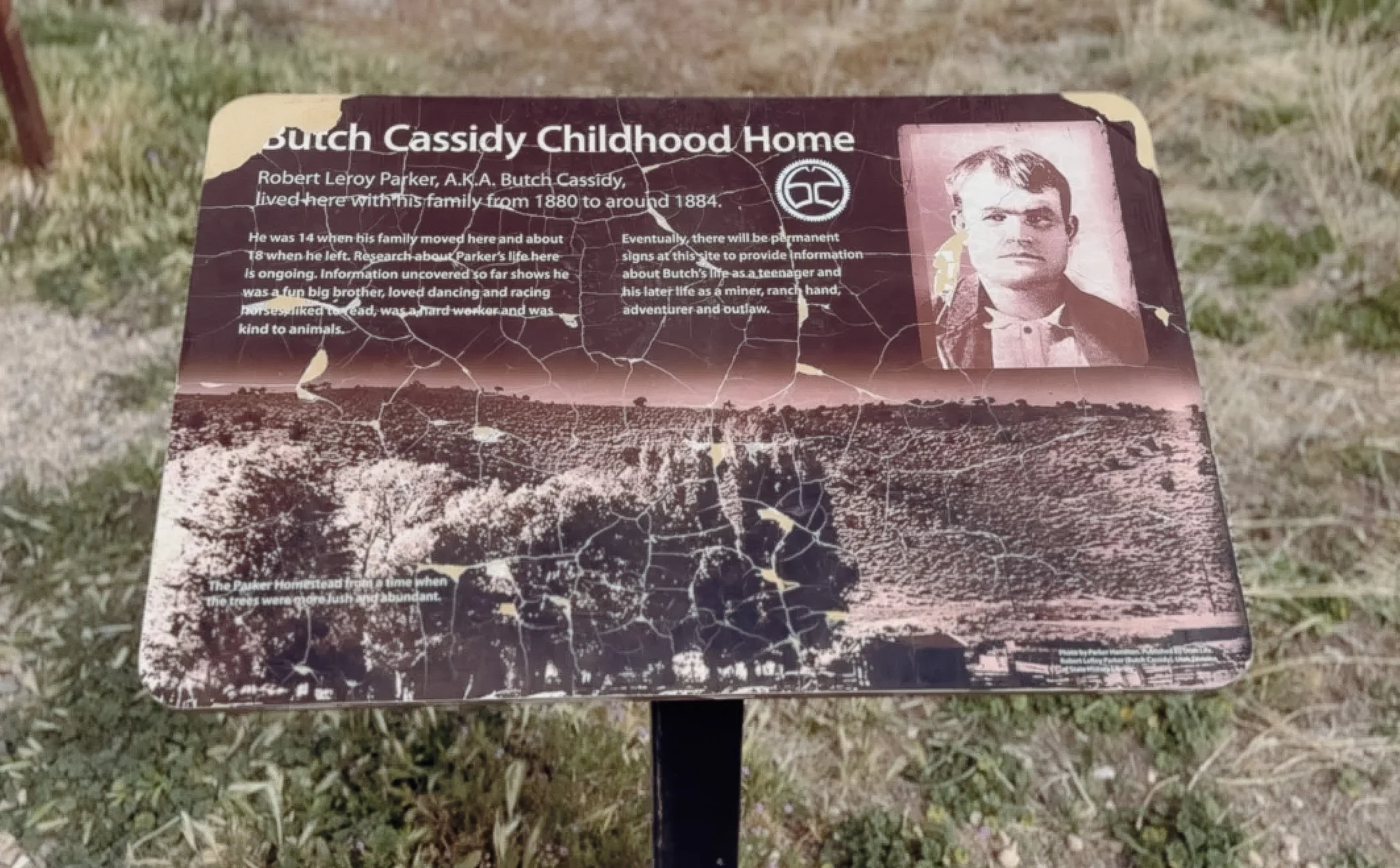
Historical information at the site describes him as a fun big brother who liked dancing, racing horses and reading. He was also remembered as a hard worker who was kind to animals.

Those are such ordinary details compared with the stories that would eventually surround Butch Cassidy, and I think that's what makes them interesting. It's easy for the outlaw to take over the entire story. Standing at the place where he spent part of his youth made me curious about who he was before that happened.


The Butch Cassidy Boyhood Home

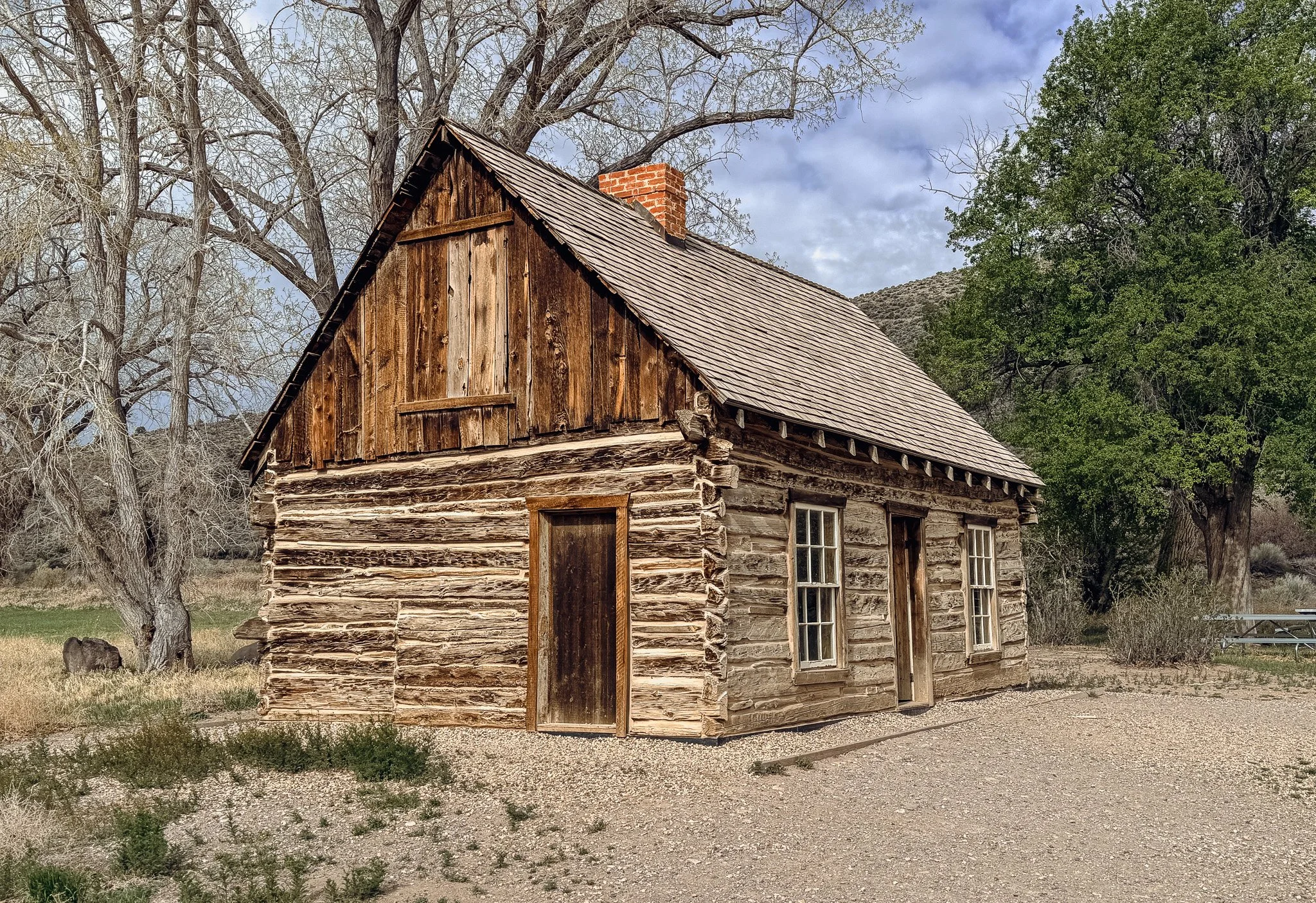
Butch Cassidy's historic log cabin boyhood home near Circleville, Utah.

Butch Cassidy's boyhood home near Circleville, Utah, where Robert LeRoy Parker lived with his family during part of his teenage years.

The cabin itself is small and simple. It's essentially a one-room wooden cabin, and seeing it in person gives you a very different picture of Butch Cassidy than the outlaw stories do.

This wasn't the home of a famous outlaw when the Parker family lived here. It was simply their home. Robert was a teenager living with his family, working around the ranch and growing up in a rural part of Utah.

The cabin deteriorated considerably over the years, but preservation efforts helped restore it. I'm glad they saved it because having the actual cabin there makes the history feel much closer. You aren't just reading a marker telling you Butch Cassidy once lived somewhere nearby. You're standing in front of the place itself.


How Did Robert Parker Become Butch Cassidy?

Interpretive sign at Butch Cassidy's childhood home describing Robert LeRoy Parker's life near Circleville, Utah.

An interpretive sign at the cabin shares more about Robert LeRoy Parker's teenage years here before he became Butch Cassidy.

Exactly how Robert Parker became Butch Cassidy gets a little less clear because different versions of the story have been repeated over the years.

As a young man, Parker left his family's home and worked as a cowboy and ranch hand. He became associated with a man named Mike Cassidy, and Robert eventually began using the surname Cassidy himself.

The "Butch" part of the name is generally connected to a period when he worked as a butcher, although accounts vary on exactly how and when the nickname became attached to him.

Somewhere along the way, Robert LeRoy Parker became Butch Cassidy, and his life began moving a long way from that little cabin outside Circleville.


From Circleville to Outlaw Country

Cassidy spent years moving around the West, working with horses and livestock while also becoming involved in cattle theft and eventually more serious crimes. By the late 1880s and into the 1890s, his name became increasingly connected with robberies across the West.

Utah remained an important part of that story. Robbers Roost, a rugged maze of canyons in southeastern Utah, became associated with Cassidy and other outlaws. The remote terrain gave them places to disappear and made it hard for law enforcement to follow.

I thought about that after finding the cabin because I was headed back toward Moab. I had stumbled onto a place from the beginning of Cassidy's story while traveling through the same larger Utah landscape that later became part of his outlaw legend.

It made me look at the country around me a little differently.


Butch Cassidy and the Wild Bunch

By the 1890s, Butch Cassidy had become closely associated with the group of outlaws known as the Wild Bunch. The group became notorious for bank and train robberies throughout the West.

Harry Longabaugh, better known as the Sundance Kid, became one of Cassidy's most famous partners. As law enforcement increased its efforts to capture them, Cassidy and Sundance eventually left the United States and traveled to South America.

It's quite a progression when you've just stood in front of that little cabin. Robert Parker's life had taken him from a family ranch near Circleville to becoming one of the most recognizable outlaw names in the American West.


What Happened to Butch Cassidy?

1880 U.S. Census display at Butch Cassidy's childhood home showing Robert LeRoy Parker and members of the Parker family.

One display at the site shows the 1880 U.S. Census record for the Parker family, including Robert LeRoy Parker.

The generally accepted account is that Butch Cassidy and the Sundance Kid died following a shootout in Bolivia in 1908. But like so much surrounding Butch Cassidy, the story doesn't end quite that neatly.

Cassidy's sister, Lula Parker Betenson, later claimed that her brother survived Bolivia and returned to the United States. She said he even visited the family years after he was supposedly killed. Other stories of Cassidy being seen alive continued for years.

Historians have debated those claims, and the evidence generally points toward Cassidy and Sundance dying in Bolivia. But the uncertainty became another part of the Butch Cassidy legend.

Even his death has a little mystery around it.


What Happened to Butch Cassidy's Childhood Home?

Close-up of the log construction and wooden roof of Butch Cassidy's boyhood home in Utah.

A closer look at the log cabin where Robert LeRoy Parker lived before he became known as Butch Cassidy.

The cabin near Circleville could easily have disappeared. Over the years it deteriorated, but preservation efforts helped save and restore the structure.

Utah has also taken steps to preserve the property as the Butch Cassidy State Monument, keeping the cabin and its connection to Robert Parker's early life from being lost.

What I like about the site is that the cabin is still the focus. You can walk around it, look inside and get a sense of how simple the Parker family's life here would have been.

For someone whose later life became so legendary, his beginnings were pretty modest.


What Will You See at Butch Cassidy's Boyhood Home?

The main thing to see is the cabin itself. It's a small, one-room log cabin where Robert LeRoy Parker lived with his family during part of his teenage years. You can walk around the cabin and look inside, which gives you a much better sense of how simply the Parker family lived here.

There are also interpretive signs around the site that tell more about Parker's early life and how the boy who lived here eventually became Butch Cassidy. I spent some time reading those after I stopped, and that's really what sent me down the rabbit hole of wanting to know more about him.

The site isn't large, so you don't need a lot of time. For me, the interesting part was seeing the actual cabin, reading about his life here and looking out at the landscape around it. When you think about where his life eventually took him, it's pretty wild to see where part of that story began.


Visiting Butch Cassidy's Childhood Home Today

This isn't a big attraction, and I liked that about it. I could pull off Highway 89, walk around the property, see the cabin and read about the history without turning it into an entire day.

The cabin was the reason to stop for me. Being able to see it in person, look inside and then look out at the surrounding Utah landscape made the history more interesting than simply reading about where Butch Cassidy grew up.

I also liked it because I hadn't planned any of this. I had been driving back toward Moab thinking about where I was headed next, and suddenly I was standing outside the childhood home of one of the most famous outlaws in the West.

Those unexpected places are often the ones I remember most.


Is Butch Cassidy's Childhood Home Worth Stopping For?

I think it is, especially if you're already traveling Highway 89 through this part of Utah. I wouldn't expect a large museum or something that takes hours to visit. It's a small historic site centered around the cabin where Robert LeRoy Parker spent part of his teenage years.

For me, that was enough. I got to see the place connected to the beginning of Butch Cassidy's story, learn something I didn't know and then continue on toward Moab.

I probably wouldn't have known it was there if I hadn't happened to see it from the road. Now I'm really glad I stopped.


Frequently Asked Questions About Butch Cassidy's Childhood Home

Where is Butch Cassidy's childhood home? Butch Cassidy's childhood home is along Highway 89 just south of Circleville, Utah. The cabin sits right off the highway, making it an easy stop if you're already traveling through this part of Utah.

Did Butch Cassidy really live in the cabin? Yes. Robert LeRoy Parker, who later became known as Butch Cassidy, lived here with his family during part of his teenage years. The historic site dates his time here to roughly 1880 through 1884.

Was Butch Cassidy born in Circleville, Utah? No. Robert LeRoy Parker was born in Beaver, Utah, in 1866. His family later moved to the Circleville area, where he spent part of his youth.

What was Butch Cassidy's real name? Butch Cassidy's real name was Robert LeRoy Parker. He later adopted the name Cassidy and became known as Butch Cassidy.

Can you visit Butch Cassidy's childhood home? Yes. The historic site along Highway 89 allows you to stop and see the cabin and learn about Robert Parker's early life.

Is Butch Cassidy's childhood home worth visiting? I think so, especially if you're already driving Highway 89. It doesn't take long to visit, and seeing the small cabin where Robert Parker lived before becoming Butch Cassidy gives you a different look at the person behind the outlaw story.


Michele Underwood writes Overland Girl, where she shares firsthand travel experiences across the American West — from desert landscapes and national parks to small towns layered with history. Her work blends movement, place, and the stories that shape them.
Some posts may include affiliate links to products or services she uses on the road. If you choose to purchase through those links, she may earn a small commission at no additional cost to you. It helps support continued travel and storytelling. She only links to items she personally uses or would use herself.
Next
Next

The Mining History Along the Million Dollar Highway: Ouray to Silverton