Appalachian Trail Series, Part 4: How People Actually Hike the A.T.
Words by Michele Underwood | Photos by Michele and other contributors
In Part 1 of this series, I looked at how the Appalachian Trail came to be. Part 2 focused on the modern trail—its start and end, the states it crosses, and how the route flows from Georgia to Maine. Part 3 explored the system behind the trail: the clubs, shelters, and organizations that maintain it.
This post zooms in on the most practical question of all: how people actually hike the Appalachian Trail.
Most hikers don’t set out to walk all 2,000-plus miles in one continuous push. The A.T. is built to support many different ways of being experienced, and that flexibility is part of what has kept it relevant for decades.
Thru-hiking the Appalachian Trail
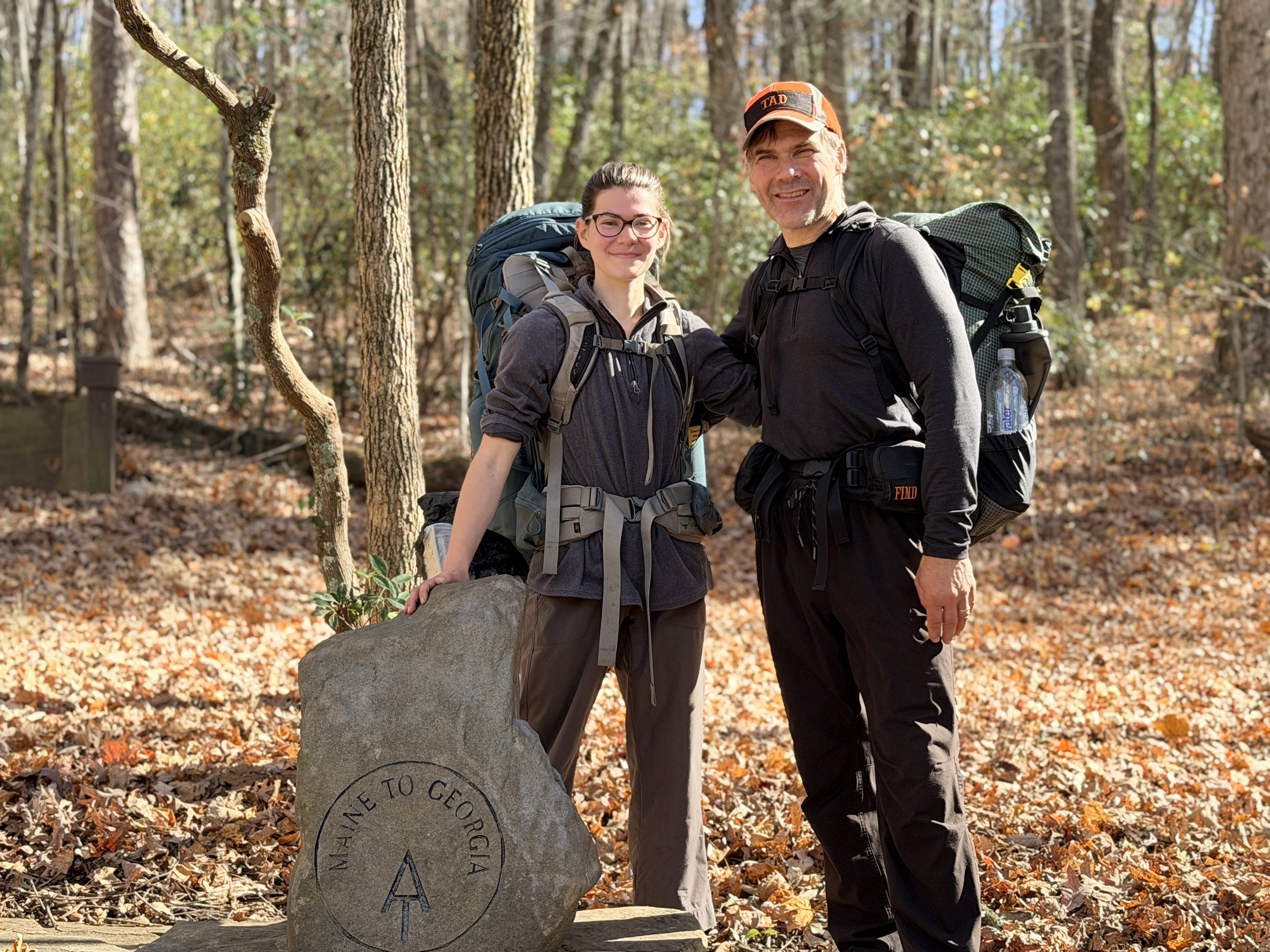
Father and daughter finishing their Appalachian Trail hike at the Maine-to-Georgia southern terminus marker. I met them as I was starting my hike — they were just coming off the trail after completing the full route.
A thru-hike means hiking the entire Appalachian Trail—typically within a single year.
Most thru-hikers travel northbound from Springer Mountain to Katahdin, starting in early spring and finishing in late summer or early fall. A smaller group hikes southbound, beginning in Maine and heading toward Georgia.
Thru-hiking usually involves:
Living on the trail for months at a time
Carrying everything needed between resupply points
Adjusting mileage based on terrain, weather, and energy
Letting the trail—not a strict schedule—set the pace
It’s a physical challenge, but it’s also a mental and logistical one. Weather delays, injuries, and reroutes are common, and flexibility matters as much as fitness.
Section hiking: breaking the trail into pieces
Section hiking divides the Appalachian Trail into manageable segments completed over multiple trips.
Some hikers work state by state. Others return year after year to hike 50- or 100-mile stretches. Over time, those pieces add up to a full trail completion. This is how I plan to hike the trail.
What’s important to know is that there are no official hiking sections defined for completing the Appalachian Trail. Instead, section hikers break the trail up in ways that make sense for their time, access, and goals.
Common ways hikers define their sections include:
By state: Hiking one state or a portion of a state at a time is the most common approach.
By region: Southern Appalachians, Mid-Atlantic, and New England are natural groupings for longer trips.
By access points: Planning trips between road crossings, trailheads, or trail towns.
By mileage goals: Returning each year to complete a set number of miles, regardless of boundaries.
Behind the scenes, the trail is divided into clearly defined sections for maintenance, with each stretch assigned to a local trail club. While these club sections aren’t official hiking milestones, they often align with logical breaks in terrain and access, and some hikers use them as planning guides.
Section hiking allows for:
Trips that fit around work, family, and seasons
Choosing regions based on weather or interest
Less pressure to maintain high daily mileage
For many people, this is the most realistic and sustainable way to experience the entire Appalachian Trail.
Short trips that still feel like the A.T.
Not every Appalachian Trail hike needs to be long.
Day hikes, overnight trips, and weekend sections make up a large share of A.T. use. These shorter trips still offer the same white blazes, shelters, and ridgeline walking that define the trail.
Common short-trip formats include:
Out-and-back hikes from road crossings
Shelter-to-shelter overnight trips
Point-to-point hikes anchored around trail towns
For many hikers, this is how the Appalachian Trail begins—and how it fits into real life over time.
Direction, timing, and pace
How you hike the Appalachian Trail depends heavily on when and where you start.
Spring brings crowds and unpredictable weather in the southern Appalachians. Summer opens up higher elevations in New England. Fall offers quieter trails and changing leaves but shorter daylight hours.
There’s no single correct pace. Some hikers move fast and light. Others prioritize camp time, recovery, and shorter days. The trail supports all of it.
What all Appalachian Trail hikes share
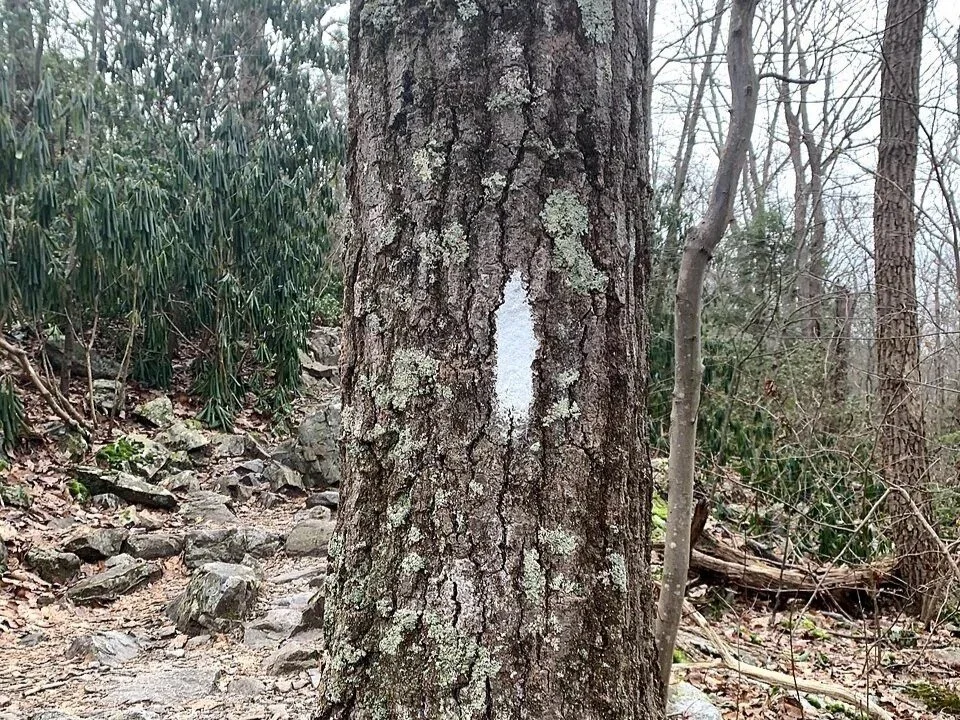
White blaze marking the Appalachian Trail along a rocky forest section.
No matter how far you go, some things stay the same:
You follow the same white blazes
You share shelters and campsites
You cross paths with hikers moving at very different speeds
That overlap—between thru-hikers, section hikers, and day hikers—is part of what gives the Appalachian Trail its unique character.
Why flexibility is part of the trail’s design
The Appalachian Trail isn’t defined by mileage alone.
Its accessibility defines it—how it allows people to share the same path for different reasons at various stages of life.
In the next and final part of this series, I’ll look at what it takes to plan your own Appalachian Trail hike—timing, logistics, and the mindset that matters more than how far you go.
Michele Underwood writes Overland Girl, where she shares gear she uses on trips — from the Northwoods of Wisconsin to the Ozarks. She values quality and craftsmanship in everything she buys, from outdoor gear to everyday clothes and furniture. Her choices may seem expensive to some, but she believes in buying less and buying better. Longevity matters, both in terms of function and style. Her couch is five years old and still sold at Design Within Reach — that’s the kind of timelessness she looks for.Some of the links in this review are affiliate links, which means she may earn a small commission if you buy through them. It doesn’t cost you anything extra, and it helps support her work. She only recommends gear she’d bring herself.