Hundreds of petroglyphs carved over centuries tell the story of Utah's past.
Words by Michele Underwood | Photos by Michele
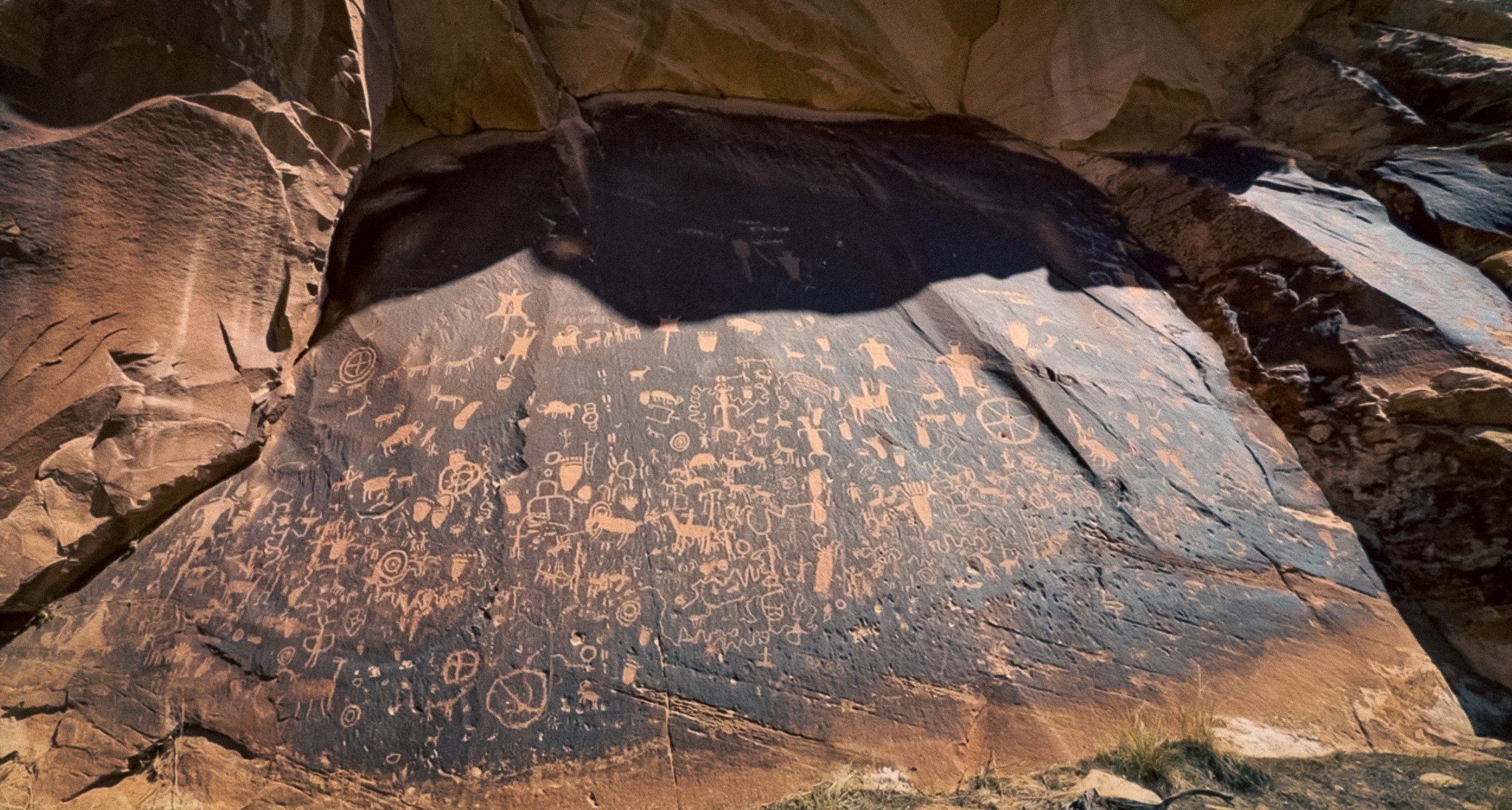
Newspaper Rock contains hundreds of petroglyphs carved into a sandstone panel along Utah State Route 211.
As I was driving down Utah State Route 211 toward the Needles District of Canyonlands National Park, I spotted a sign for Newspaper Rock.
I had heard about it before, but I didn't realize it was directly on the route. In fact, it's right beside the road, making it one of the easiest archaeological sites to visit in southeastern Utah.
What struck me immediately was the number of petroglyphs covering the panel. I had seen petroglyphs before, but never this many gathered in one place. The rock face is packed with carvings, and it's hard to know where to look first.
Then you start noticing the details.
A bighorn sheep. A footprint. Human figures. Symbols whose meanings have been lost to time. Every time your eyes move across the rock face, another carving appears.
Located along Utah State Route 211 in Bears Ears National Monument, Newspaper Rock sits directly on the route to the Needles District of Canyonlands National Park. The panel contains hundreds of petroglyphs carved over centuries by the people who traveled through this landscape long before modern roads existed.
Some of the oldest carvings are believed to be nearly 2,000 years old. The sandstone beneath them is even older. Formed from ancient sand dunes roughly 200 million years ago, the rock itself has witnessed an almost unimaginable span of time.
Standing in front of the panel feels a little like reading fragments of a story. You can recognize animals, people, and footprints, but the meaning behind many of the carvings remains open to interpretation.
What Is Newspaper Rock?
Newspaper Rock is a large sandstone panel covered with hundreds of petroglyphs carved by different groups of people over centuries.
The panel is one of the most significant rock art sites in the Southwest and contains one of the largest known collections of petroglyphs in the region. Rather than being created at one time, the carvings were added over generations, creating a visual record of the people who traveled through this area.
Today, visitors can view the panel from a short walkway and overlook, making it one of the most accessible archaeological sites in Utah.
Why Is It Called Newspaper Rock?
The site earned its name because the panel resembles a community bulletin board or newspaper.
Over centuries, different people added new carvings to the rock. Just as a newspaper records stories and events, the panel became a place where information, symbols, and stories were left behind for others to see.
While archaeologists have studied the site extensively, nobody knows exactly what every symbol means. Some images are easy to recognize. Others remain open to interpretation.
What You'll See on the Rock Face
One of the most impressive things about Newspaper Rock is the sheer number of carvings packed into a relatively small area.
As you study the panel, you'll spot:
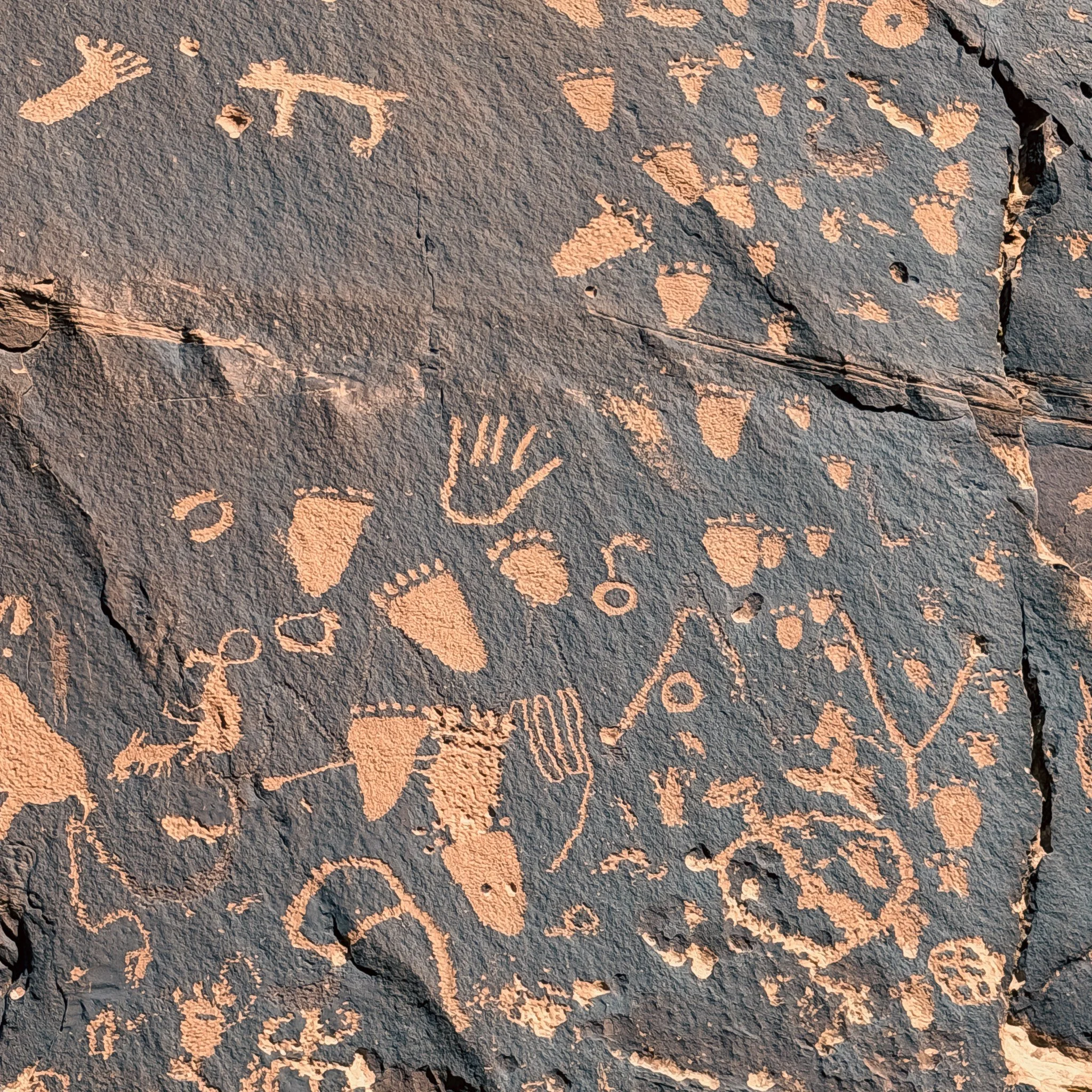
A closer look at some of the footprints, handprints, and symbols carved into Newspaper Rock.
Bighorn sheep
Human figures
Footprints
Deer and other animals
Hunting scenes
Geometric designs
Symbols whose meanings remain unknown
Horse and rider figures from later periods
The longer you stand there, the more carvings you notice. Images that blend into the dark desert varnish begin to appear, and details you missed at first become easier to spot.
Who Created the Petroglyphs?
The carvings at Newspaper Rock were not created by a single group of people.
Archaeologists believe the panel contains contributions from multiple cultures that lived in or traveled through the region over centuries. These include ancestral Puebloan peoples, Fremont groups, Ute people, and others who moved through southeastern Utah.
Some of the oldest carvings date back many centuries, while horse and rider images were added much later after horses were introduced to the Southwest by Europeans.
Together, the carvings create a timeline of human activity that spans generations.
Visiting Newspaper Rock
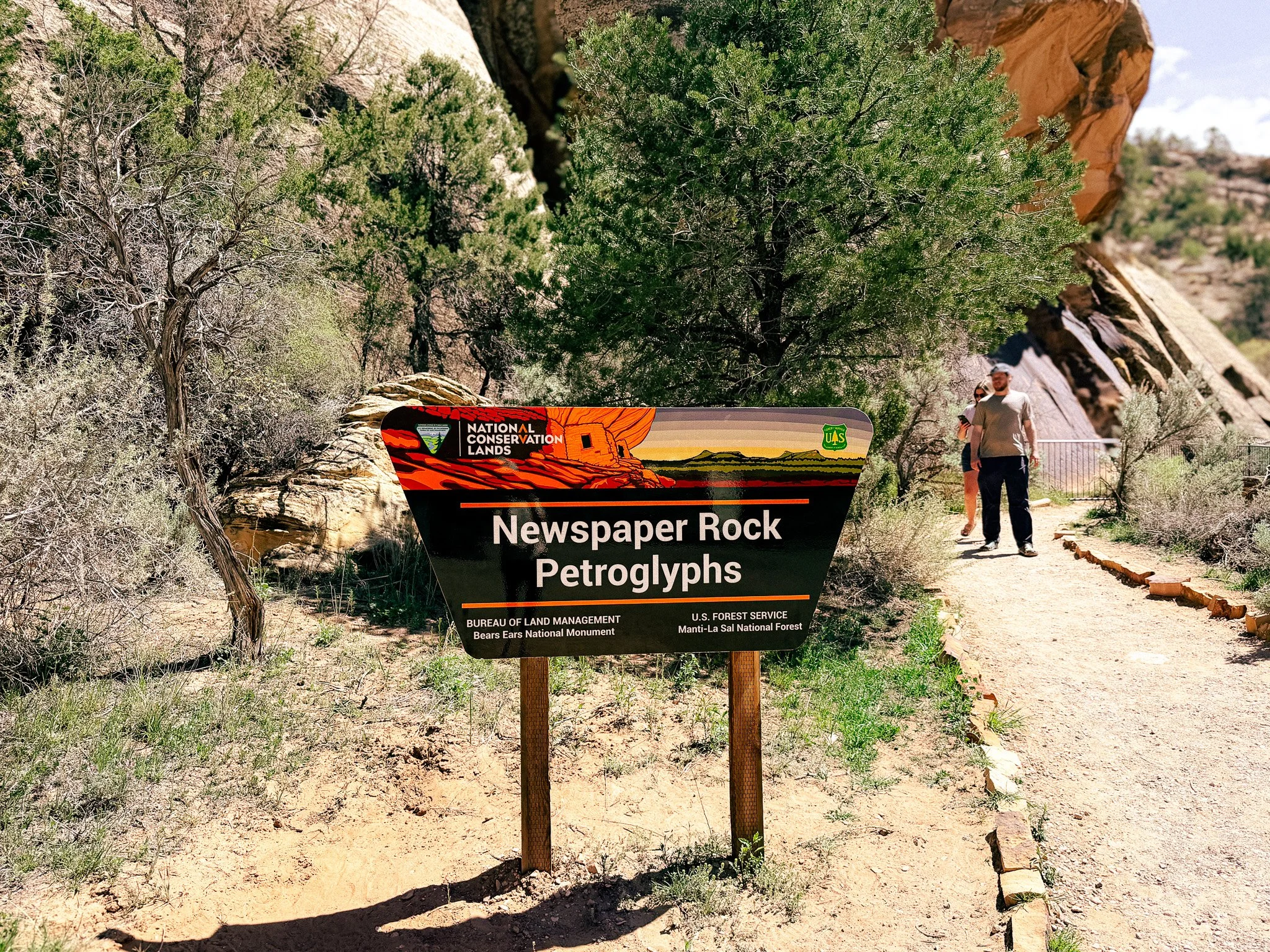
The Newspaper Rock trail leads visitors to one of the largest collections of petroglyphs in the Southwest.
One of the best things about Newspaper Rock is how easy it is to visit.
Unlike many archaeological sites that require a hike, Newspaper Rock sits directly along Utah State Route 211 between Indian Creek and the Needles District of Canyonlands.
A parking area and short paved walkway lead to an overlook where visitors can view the panel.
Location
📍 Newspaper Rock State Historic Monument
GPS: 38.0343, -109.5182Why Newspaper Rock Is Worth Stopping For
Many archaeological sites require you to imagine what life may have looked like hundreds or thousands of years ago.
At Newspaper Rock, the evidence is right in front of you.
The carvings remain visible on the same stone where they were originally created. Looking at the panel, it's easy to picture travelers stopping here centuries ago and adding another symbol to the growing collection.
We may never know exactly what every image means.
But that's part of what makes Newspaper Rock so fascinating. It's also fun to stand there and see how many carvings you can spot. Every time you look back at the panel, something new seems to appear.
It isn't just a collection of petroglyphs. It's a reminder that people have been traveling through this landscape, sharing stories, and leaving their mark long before any of us arrived.
Michele Underwood writes Overland Girl, where she shares firsthand travel experiences across the American West — from desert landscapes and national parks to small towns layered with history. Her work blends movement, place, and the stories that shape them.Some posts may include affiliate links to products or services she uses on the road. If you choose to purchase through those links, she may earn a small commission at no additional cost to you. It helps support continued travel and storytelling. She only links to items she personally uses or would use herself.