Driving the Million Dollar Highway: My Trip from Ouray to Silverton
What it was like driving one of Colorado's most famous mountain roads through the San Juan Mountains
Words by Michele Underwood | Photos by Michele
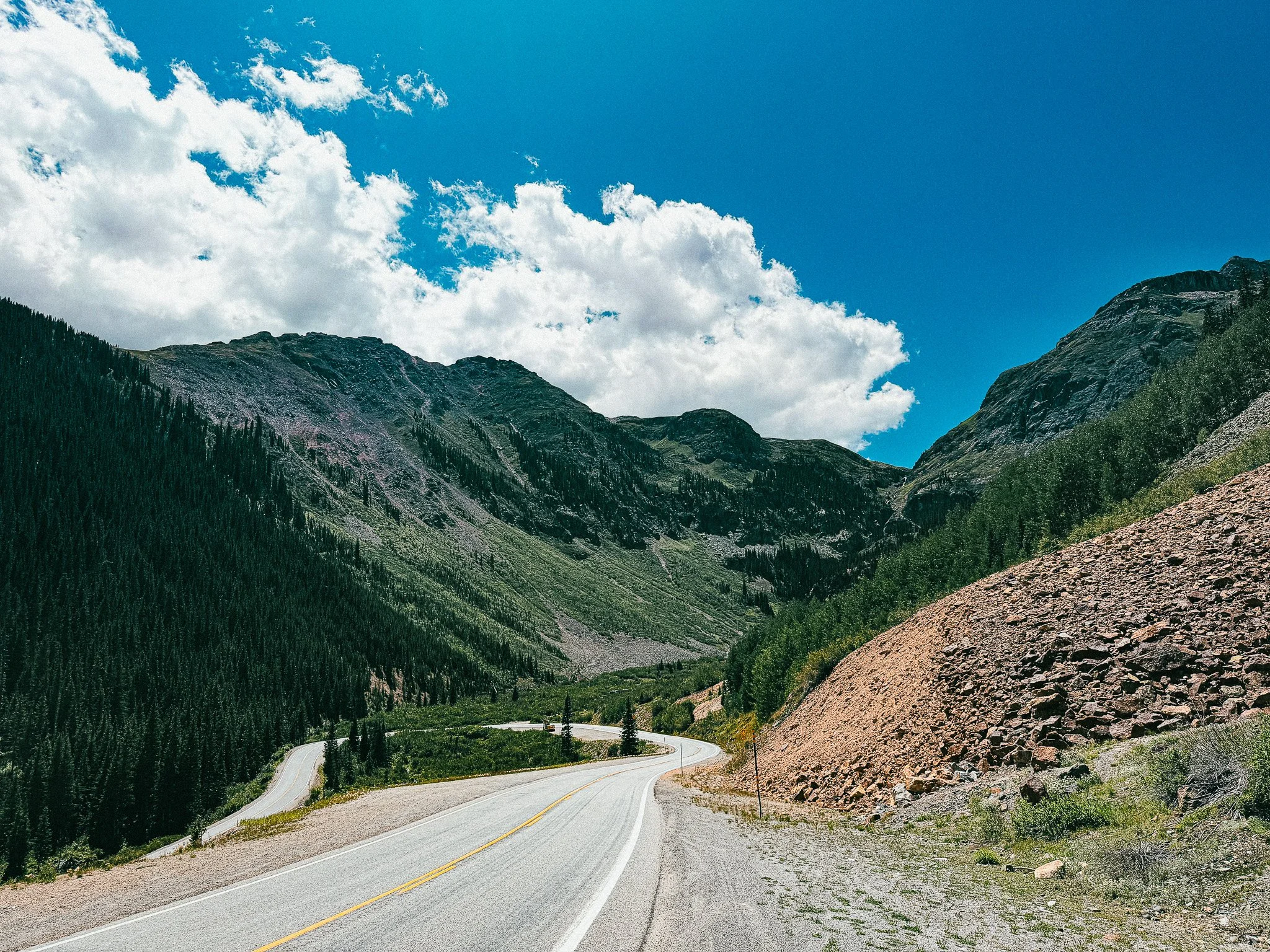
U.S. 550 climbing through the San Juan Mountains along the Million Dollar Highway.
I first heard about Colorado's Million Dollar Highway from Carl, a neighbor at Basecamp 500 and a retired long-time resident of the area. He told me about the steep drop-offs, sections without guardrails and its reputation as one of those mountain roads that can make people nervous before they even get there.
What I didn't know was how I would feel driving it myself, especially in my Sprinter. I also didn't realize how much mining history I would see along the way. Old mines, abandoned structures and remnants of mining towns are scattered throughout the route. It is a drive that takes you back in time.
After driving it, I understand why people talk about the exposure. There are definitely sections where I was very aware of the edge of the road and the size of my van. But I didn't find myself terrified for the entire drive, and that isn't what stood out to me most.
What I remember is how beautiful it was.
The road climbs out of Ouray and takes you high into the San Juan Mountains, past waterfalls, old mines, abandoned mining structures and mountains that turn shades of red, orange and yellow around Red Mountain Pass. Once I started noticing all of that, the Million Dollar Highway became much more interesting to me than simply being a road people describe as scary.
It is only about 25 miles from Ouray to Silverton, but there is a lot packed into those miles.
Why It's Called the Million Dollar Highway
Of course, I wanted to know where the name came from, and this is where things get a little murky. Several stories explain why it is called the Million Dollar Highway.
One says the road cost a million dollars to build. Another says the material removed during construction contained a million dollars' worth of gold and silver ore. I've also heard the much simpler explanation that the views are worth a million dollars.
Historical accounts don't completely settle the argument. A Colorado Highways article published in 1927 said the road was known as the Million Dollar Highway because the approximately 24-mile section between Ouray and Silverton cost nearly $1 million to construct. Visit Ouray tells another version — that three contractors working on highway improvements in the 1920s compared their bids and realized they totaled exactly $1 million, and one of them called it a million-dollar highway, and the name stuck.
So there may not be a perfectly clean answer. I like to think the name comes from the area's mining history and the value of the minerals in these mountains. I know that may not be the official story, but after driving through the old mining districts and seeing what remains along the route, I think it's a much cooler one.
If you want the full backstory — the mining history, Otto Mears, the early toll road, and how the route became the Million Dollar Highway — I dug into all of that separately in The History of the Million Dollar Highway.
Getting a Closer Look at the Mining Structures
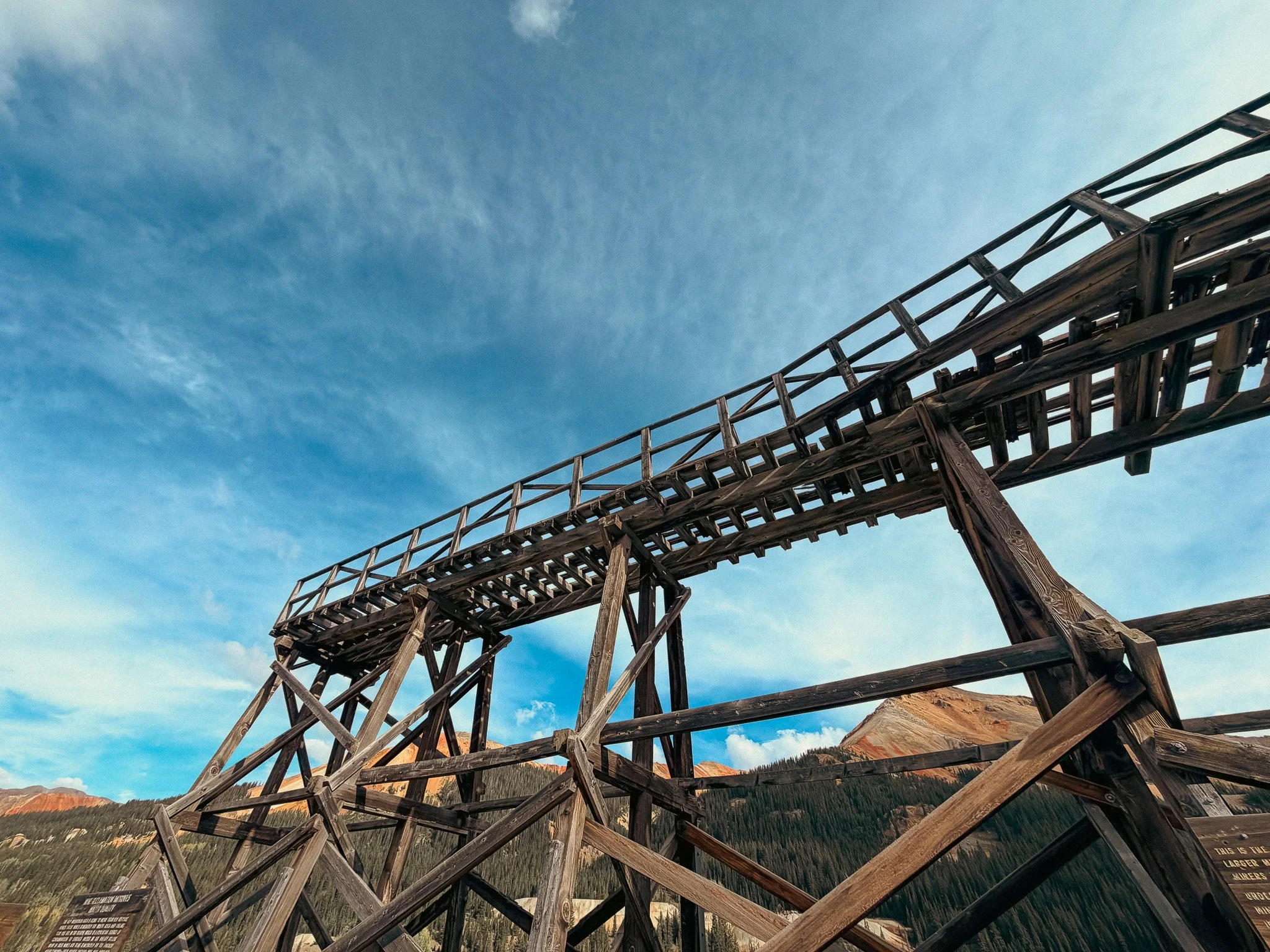
The old tram structure at the Yankee Girl Mine, one of the most recognizable mining landmarks along the Million Dollar Highway.
One of my favorite things about driving 550 between Ouray and Silverton is how many mining structures are still standing right along the route — you don't have to go looking for them, they're just there as you drive. But if you want to get even closer, you can hop off the highway onto dirt roads and ride right up to some of them. County Road 31 near Ouray is one option, and there are roads up around Red Mountain Pass that do the same thing. You can also drop into the ruins of Ironton itself, which is something I'd genuinely recommend if you have any extra time.
It's one thing to see these structures from the highway going by at 40 mph. It's a completely different thing to actually stand next to one.
Which Direction to Drive, and When
I drove the Million Dollar Highway both ways: first from Ouray to Silverton, then back from Silverton through Ouray on my way to Ridgway. I don't think one direction is necessarily better than the other.
There is one difference worth knowing. When you drive south from Ouray toward Silverton, you are on the outside lane through some of the most exposed sections of the road, which puts you closer to the drop. Driving north from Silverton toward Ouray puts you closer to the mountainside through those same sections, which may feel a little more comfortable if you are nervous about heights. For me, I wouldn't choose a direction based on that alone. The views are spectacular both ways, and you see the landscape differently depending on which direction you're traveling. It really comes down to where you're coming from and where you're headed next.
Timing matters more than direction, honestly. I drove it when the road was clear, which is how I'd want to experience it the first time. This is a high-elevation highway that crosses a pass above 11,000 feet, and conditions can change quickly — snow, ice, rockfall, avalanches, heavy rain, and debris can all affect U.S. 550. Summer and early fall are the times I'd choose if the goal is simply to enjoy the drive and scenery, and even then, I'd check road and weather conditions before leaving Ouray. Weather at Red Mountain Pass isn't necessarily going to match what you're seeing down in town.
Driving It in a Van, and Whether It's Actually Dangerous
I drove it in my Sprinter van without a problem, though I was aware of the size of my van on some of the narrower, more exposed sections. The road is regularly traveled by RVs, campers, trucks and trailers, so driving a larger vehicle isn't unusual — what matters more is whether you're comfortable driving that vehicle on a mountain road in general. If you already dislike driving a large RV on narrow roads or around steep drop-offs, this probably isn't going to be the place you suddenly start enjoying it. For me, my Sprinter was fine. I just drove at the speed that felt right for the road.
As for the road's reputation: the Million Dollar Highway is known as one of America's more dangerous mountain roads, and I understand where that comes from. There is exposure. There are steep drop-offs. There are areas without guardrails. Winter weather can be serious, and this is avalanche country. But I think the word "dangerous" can sometimes make the road sound more extreme than what someone will actually experience driving it on a clear summer day. I never felt like I was doing something reckless by being there — it's a paved U.S. highway. The bigger issue is treating it like the mountain road it is rather than driving it like an interstate. For me, that meant slowing down, watching the curves, giving other vehicles room, and keeping my attention on the road when the scenery was trying very hard to pull it somewhere else.
Is It Worth Driving?
After driving it myself, yes. And not because I can now say I drove some scary Colorado road — I would drive the Million Dollar Highway again because it is beautiful.
The road takes you from Ouray high into the San Juan Mountains, through old mining country, over Red Mountain Pass and eventually down into Silverton. In 25 miles, the landscape changes repeatedly — waterfalls, exposed cliffs, red mountains, abandoned mines, old mining settlements, and views that kept making me want to stop. Knowing the history made it even better. When I could see an old mining structure sitting high on the side of a mountain, I found myself wondering who had worked there, how they got there, and what it must have been like when these mountains were filled with active mines and small settlements.
That's what stayed with me after driving the Million Dollar Highway. Yes, parts of it have some serious exposure. But the exposure isn't the reason I'd tell someone to drive it. The road itself, the history, and the San Juan Mountains are.
I write Overland Girl, where I share firsthand travel experiences across the American West — from desert landscapes and national parks to small towns layered with history. My work blends movement, place, and the stories that shape them.Some posts may include affiliate links to products or services I use on the road. If you choose to purchase through those links, I may earn a small commission at no additional cost to you. It helps support continued travel and storytelling. I only link to items I personally use or would use myself.