The History of Ouray, Colorado: From the Ute People to a Mining Town
How a remote Ute homeland became a booming mining town—and how that history still shapes the Ouray you see today.
Words by Michele Underwood | Photos by Michele
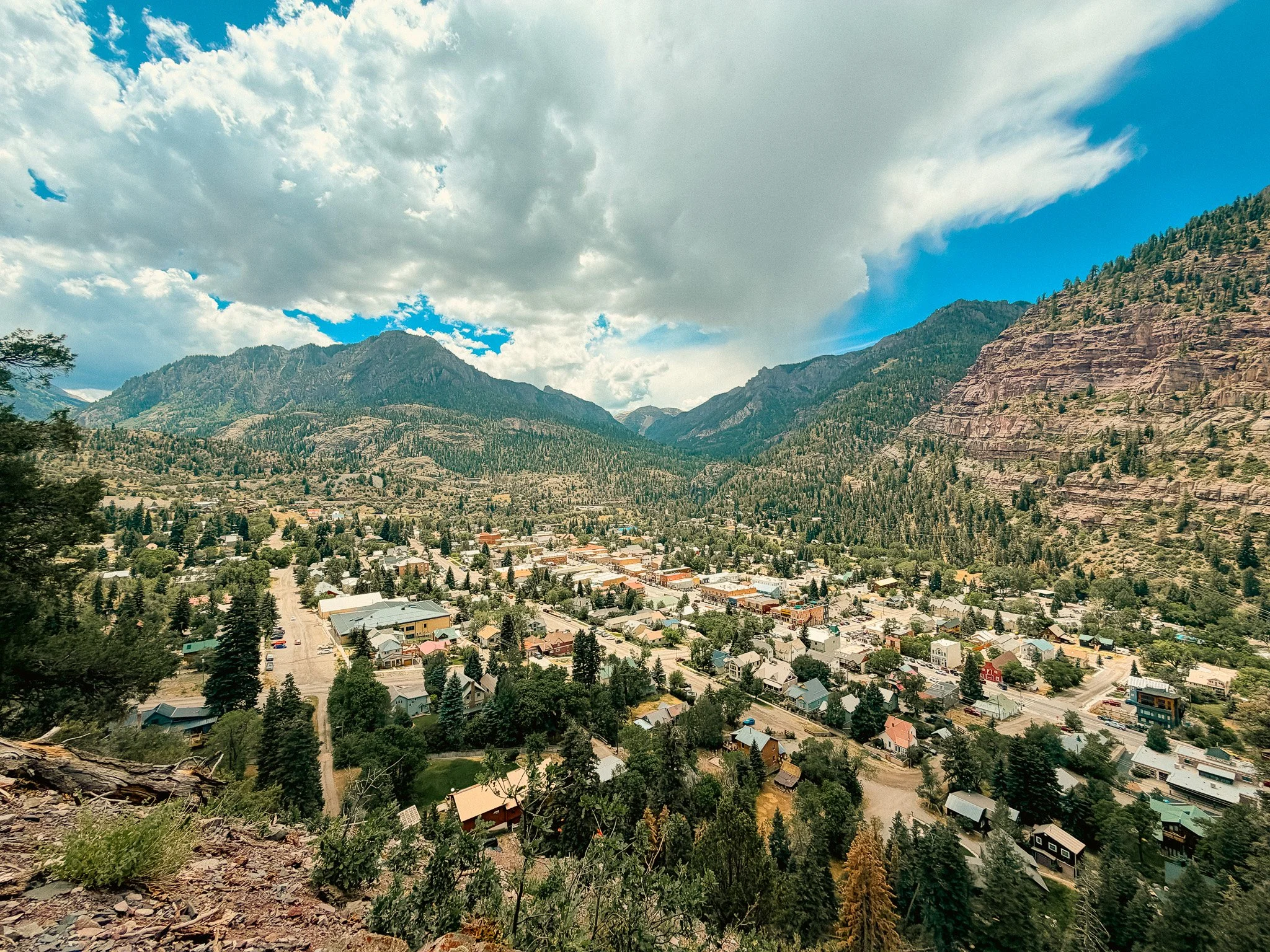
Looking down over Ouray and the mountains that surround the town.
When I first came into Ouray, one of the things I noticed was how much of the town's history is still right there in front of you. The mountains surrounding the town are scattered with remnants of old mines, and downtown is filled with buildings that date back to Ouray's mining years.
After spending time here, I wanted to know more about how Ouray ended up tucked into this small valley in the San Juan Mountains and why so much of its past has survived.
The story starts long before there was a town called Ouray.
The Ute People and the Arrival of Prospectors
Long before miners began coming into the San Juan Mountains, this was Ute territory. The Ute people lived throughout a large portion of what is now Colorado, including the mountains and valleys of the Western Slope. The natural hot springs around present-day Ouray were known and used by the Ute people long before they became an attraction for visitors.
The town would eventually be named for Chief Ouray, one of the most important Ute leaders of the 1800s. Ouray became a leader of the Utes around 1860 and was involved in negotiations with the United States government as increasing numbers of settlers and prospectors moved onto Ute lands. His wife, Chipeta, was also an important Ute figure and participated in efforts to maintain peace during an increasingly difficult period for their people.
That part of the history matters. The mining towns that appeared across the San Juans, including Ouray, were built on land that was Ute territory. Their growth came directly at the expense of the people who had lived in these mountains for generations.
Prospectors had been exploring the San Juan Mountains before Ouray existed, but the area around present-day Ouray began changing quickly in the 1870s as miners searched for gold and silver. In 1875, Augustus "Gus" Begole and John Eckles arrived in the area and became two of the central figures in establishing the settlement. Early mineral discoveries nearby helped draw more prospectors into the valley, and what was initially known as Uncompahgre City began to grow. The settlement soon became known as Ouray, after Chief Ouray, and the town was incorporated in 1876.
It is hard to imagine what this place would have looked like then. Today you drive into town on paved roads surrounded by houses, hotels, and businesses. In the 1870s, people were arriving in a remote mountain valley because of what they believed they could pull out of the mountains surrounding it.
Mining Builds Ouray
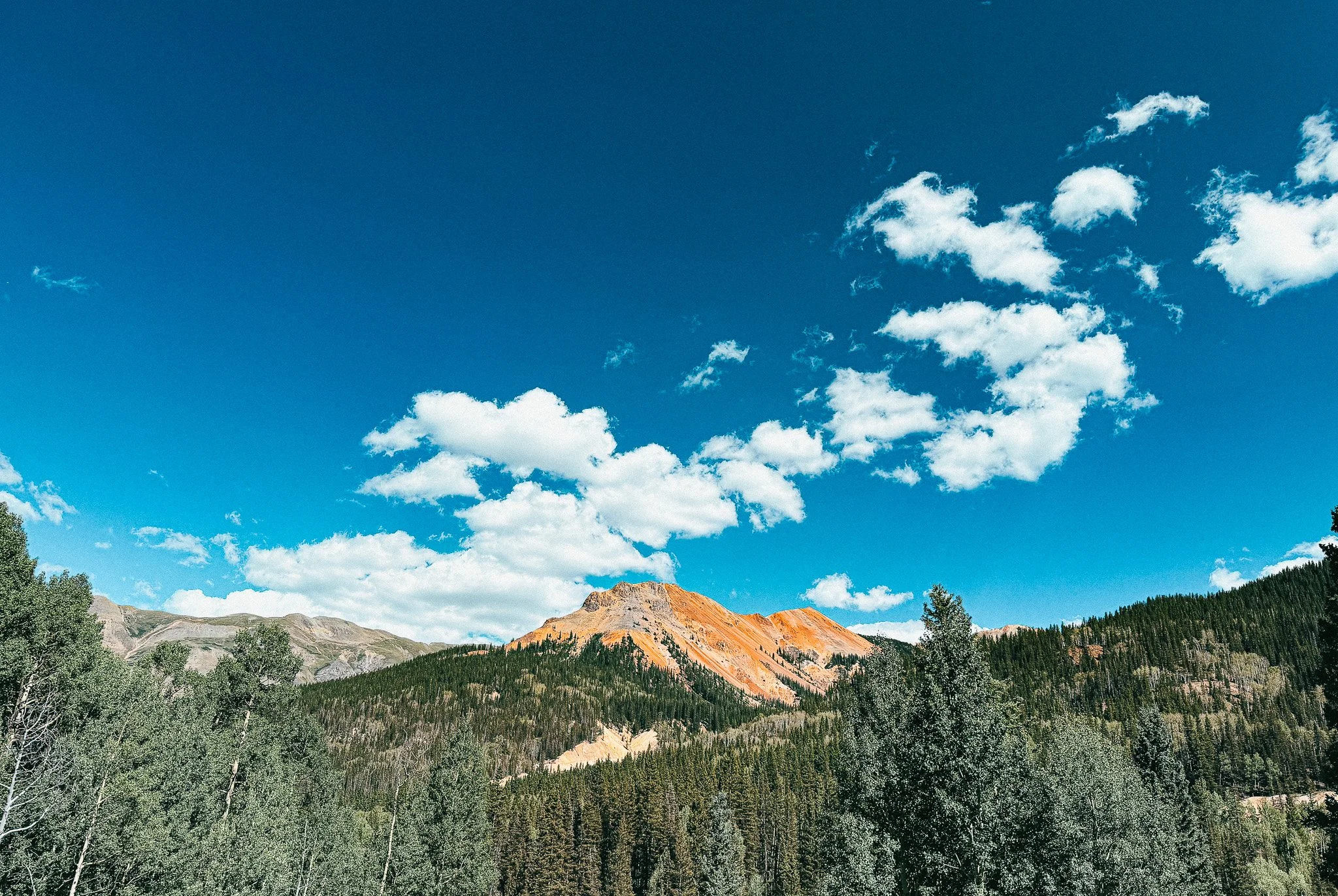
The colors around Red Mountain are one of my favorite parts of this area of the San Juans.
Mining is really what built the Ouray that you still see today.
Ouray became both a mining town and an important supply center for the mines scattered throughout the surrounding San Juan Mountains. Its location made it a place where miners could get equipment, food, and other supplies before heading farther into the mountains.
The discovery of rich silver deposits around Red Mountain in the early 1880s brought another major rush into the area. Mines and mining settlements spread through the mountains between Ouray and Silverton, including the Red Mountain Mining District that you still pass through when driving the Million Dollar Highway. Ouray prospered along with them.
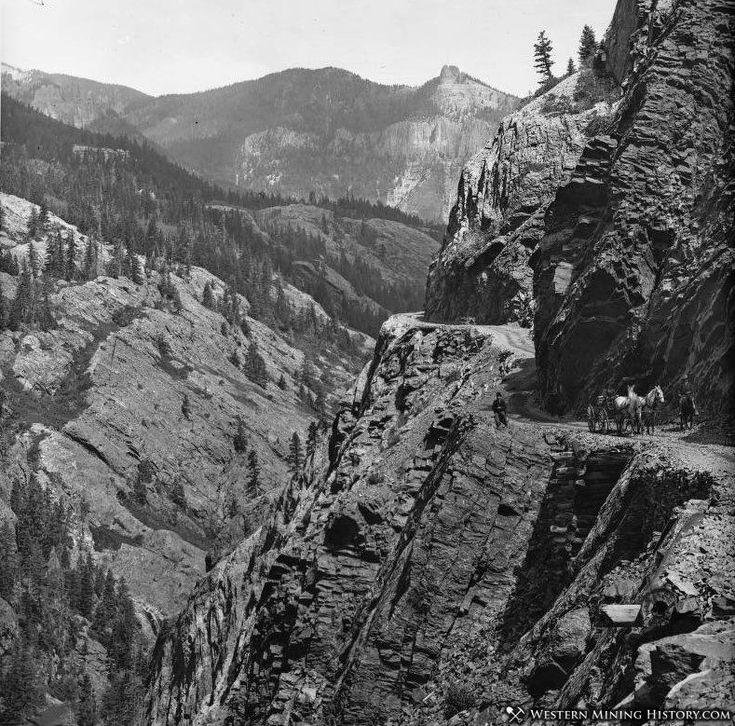
An early road through the mountains near Ouray, long before today's Million Dollar Highway.
The town's biggest period of mining-related growth stretched from the late 1800s into the early 1900s. Many of the buildings standing in downtown Ouray today were constructed during this period. That was something I appreciated more after learning the history. When you walk through downtown Ouray, you aren't looking at a town that was recreated later to look historic. A surprising amount of what you're seeing comes from the period when mining was driving this entire area.
Getting ore, equipment, and people through these mountains was a huge challenge. Before the railroad reached Ouray, much of that transportation depended on wagon roads through incredibly difficult terrain. That changed in 1887 when the Denver & Rio Grande Railroad completed its narrow-gauge branch to Ouray. The arrival of the railroad made it much easier to bring supplies into town and move ore out of the area. It also made Ouray more accessible to people who weren't coming here to mine, and tourism was already beginning to become part of Ouray's story.
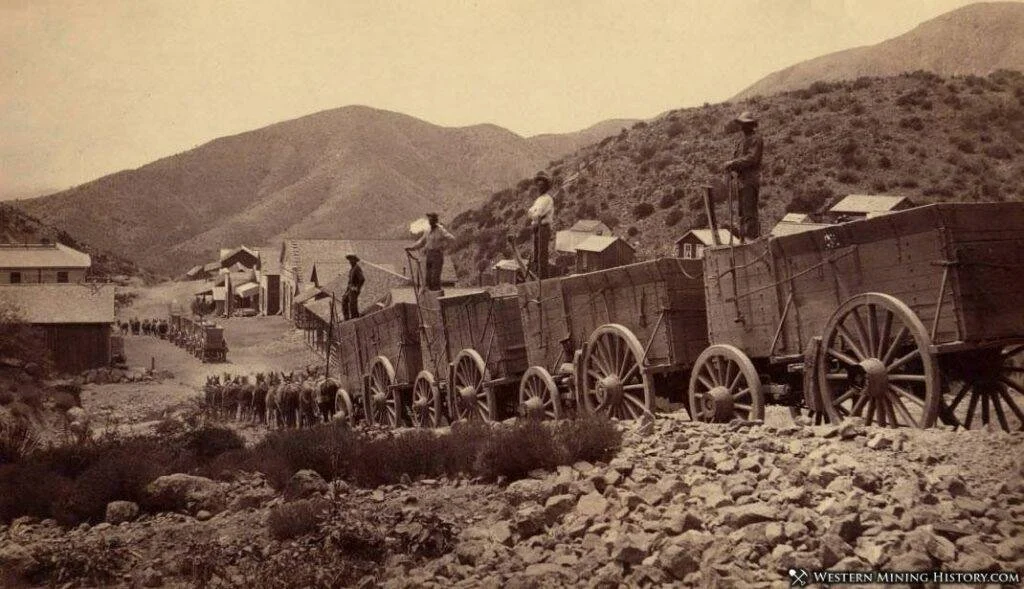
Ore wagons in the Ouray area during the region’s mining era.
By the late 1880s, Ouray had developed into much more than a collection of miners' cabins. The Beaumont Hotel opened in 1887, and the town eventually had an opera house, courthouse, businesses and substantial homes. Mining millionaire Thomas Walsh, who owned the nearby Camp Bird Mine, later helped fund the building that became Ouray City Hall and the Walsh Library.
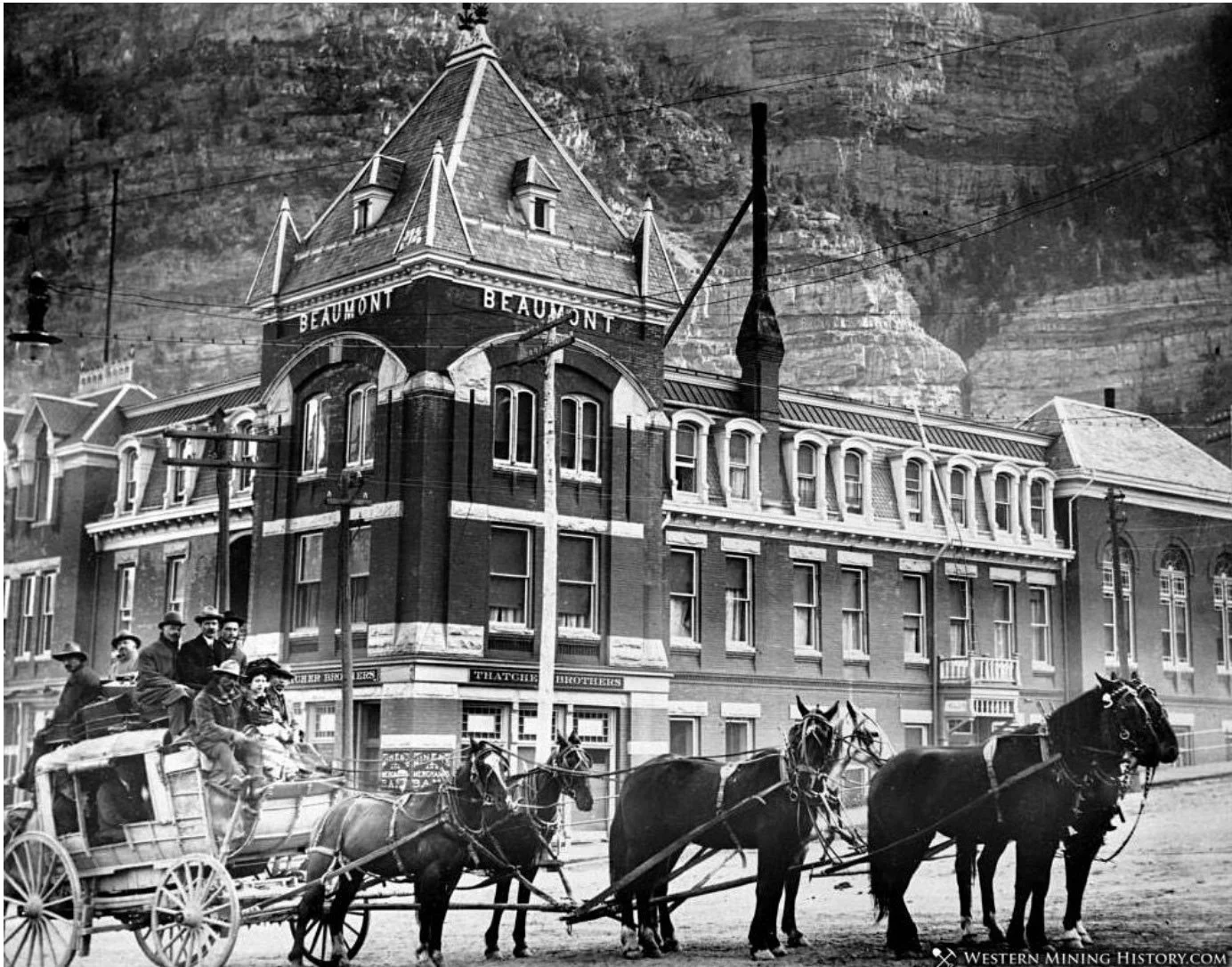
A horse-drawn stagecoach in front of Ouray’s Beaumont Hotel around 1890.
There was also a hospital. St. Joseph's Miners' Hospital was built in the 1880s and operated for decades. That building is now the Ouray County Museum, and visiting it was one of my favorite ways to understand this part of the town's history. Some of the old doctor's offices and medical setups are still there, along with equipment from when the building operated as a hospital. There is also a miniature walk-through mine inside the museum, along with exhibits covering mining, ranching, the railroad and everyday life in the area. Seeing all of that inside the old hospital made the history feel much less removed from the town outside.
The Hot Springs and the Decline of Mining
Mining may have built much of Ouray, but the hot springs gave people another reason to come here. The geothermal springs had been known to the Ute people long before the town existed. As Ouray developed, the springs became increasingly tied to recreation and tourism. That connection continues today with the Ouray Hot Springs Pool. The modern pool is very different from how people would have experienced these waters generations ago, but the geothermal water itself is part of a much older Ouray story.
Like many Colorado mining towns, Ouray eventually had to face what happened when mining was no longer enough to sustain the community. Mining declined during the early 20th century, and many settlements scattered through the surrounding mountains eventually disappeared. Some became the ghost towns and abandoned mining sites that you can still see around the San Juans today.
Ouray survived. Its location, hot springs, scenery and growing appeal to travelers gave the town something that many smaller mining settlements didn't have. Tourism became increasingly important, helping Ouray make the transition from a town dependent on mining into a destination people traveled to simply because they wanted to be here. The railroad eventually disappeared too. As automobiles became more common, passenger rail became less important, and the Ouray branch was ultimately abandoned. But much of the town the railroad once served remained.
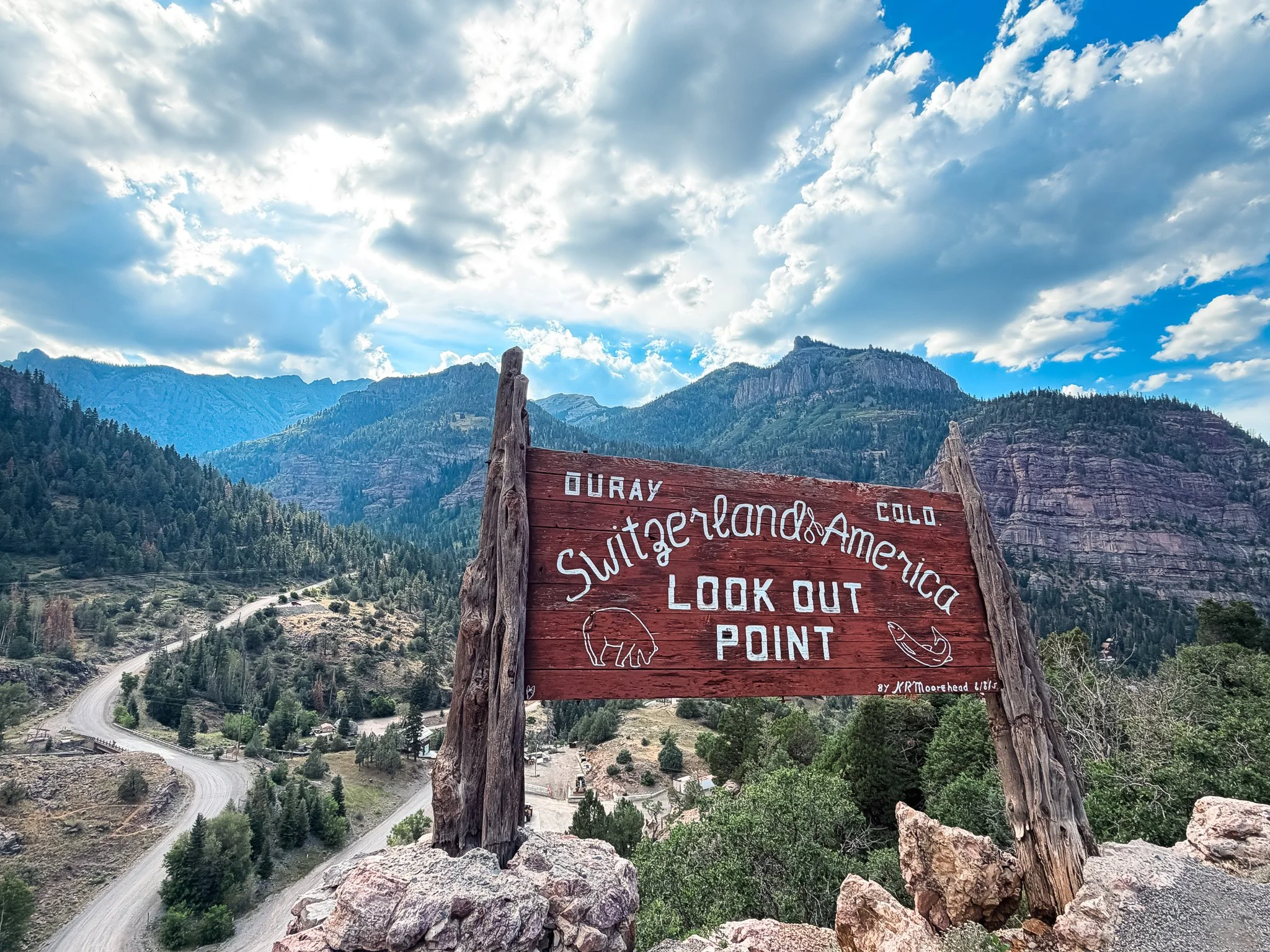
The Switzerland of America Lookout Point above Ouray.
Ouray is often called the "Switzerland of America," and once you see where the town sits, it isn't hard to understand the comparison. Ouray is tucked into a narrow valley surrounded by the steep peaks of the San Juan Mountains. As tourism grew, the nickname became a way to describe the dramatic alpine setting to travelers and promote Ouray as a destination beyond its mines. I think the nickname makes more sense once you're actually standing in town and looking up at the mountains rising almost immediately around it.
Why So Much of Historic Ouray Is Still Here
This may be the part of Ouray's history that I find most interesting.
Ouray didn't become a ghost town, and it also didn't lose all of its mining-era character as it changed. Much of the historic townsite survived. The Ouray Historic District encompasses much of the historic town and includes buildings from the period when Ouray was an important mining and supply center. The district was added to the National Register of Historic Places in 1983.
Once you know that, walking around Ouray feels a little different. The old hotel, courthouse, hospital, commercial buildings, and houses aren't isolated historic sites surrounded by a newer city. They make up much of the town itself. Then you look beyond downtown and see the mountains where the mines were located, and the connection between the two is pretty easy to understand.
That's what I liked about learning the history while I was here. You don't have to work very hard to find it. A lot of Ouray's story is still sitting right where it happened.
I'm Michele, and I write Overland Girl, where I share firsthand travel experiences across the American West — from desert landscapes and national parks to small towns layered with history like Ouray. My work blends movement, place, and the stories that shape them.Some posts may include affiliate links to products or services I use on the road. If you choose to purchase through those links, I may earn a small commission at no additional cost to you. It helps support continued travel and storytelling. I only link to items I personally use or would use myself.