Blue miles on Peaks 7 & 9, easy Gondola/parking starts, and when I add Peak 6 if the wind is calm.
Words by Michele Underwood | Photos by Michele, too.
Park City is my favorite, but Breck is where I get a lot of blue laps in. I visited last March with my friend, Kelly, and her two teens—it was a blast. As a newish intermediate, the blue runs felt approachable, so I could focus on improving. By the end, I was skiing a few more challenging lines than I expected and left more confident. Breck can feel big at first, but once the layout clicks—Peaks 7 and 9 for blues, Peak 6 on calm days—you’ve got variety without the stress.
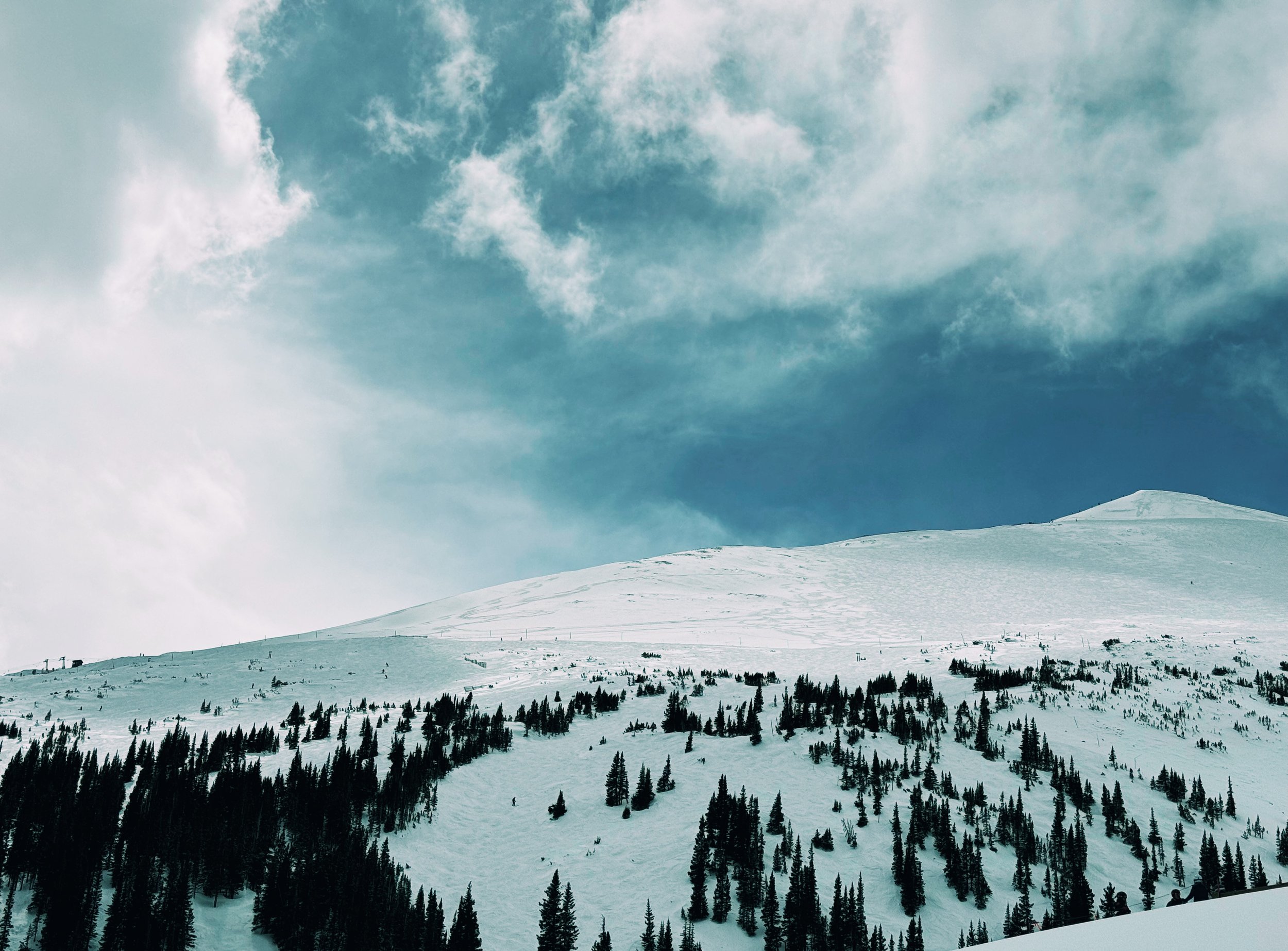
Looking up Peak 7 at Breckenridge—wide open snow and a big winter sky.
Breckenridge Mountain Layout: Peaks 6–10 (Quick Orientation)
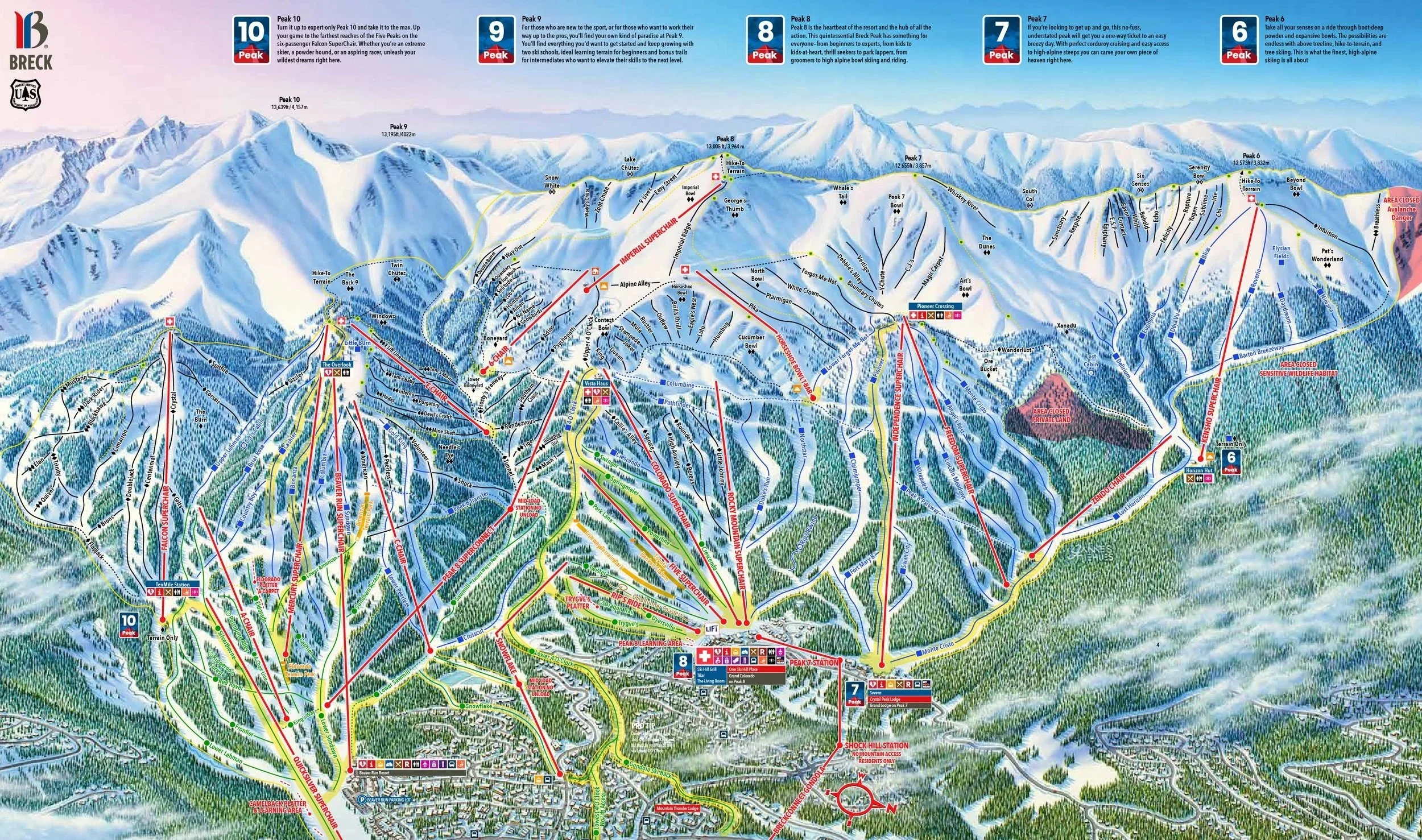
Breckenridge trail map — Peaks 6–10 at a glance.
Breckenridge is laid out across five numbered peaks—6 through 10—along the Tenmile Range. When I say “Peak 7” or “Peak 9,” I mean that zone (its lifts + runs + base).
Peak 7: long, rolling blues that are easy to link.
Peak 9: gentler at the bottom; true blues higher off Mercury/Beaver Run.
Peak 6: above treeline—fun on calm, clear spells.
Peak 8: hub area with a mix of terrain.
Peak 10: leans advanced.
Most people start via the BreckConnect Gondola from town to Peaks 7/8, or park by Peak 9 and load there.
Breckenridge for Intermediates: At a Glance
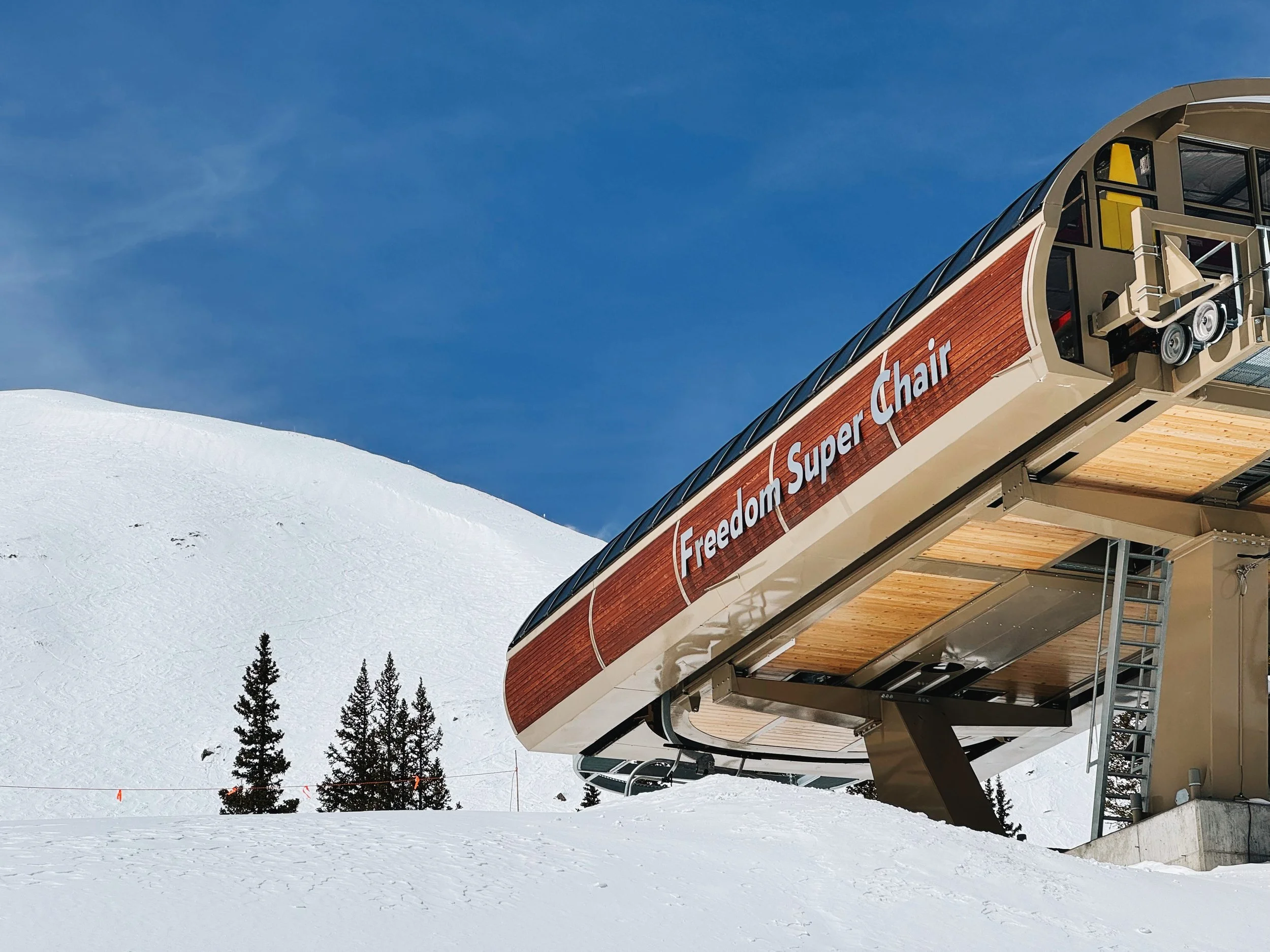
Freedom SuperChair at Breckenridge on a bluebird day.
Where I ski most: Peak 7 (Independence/Freedom SuperChairs) and Peak 9 (Mercury/Beaver Run/C-Chair).
Add on a calm day: Peak 6 via Kensho for above-tree-line blues and big views.
Start points: Park in the North/South Gondola structures and ride BreckConnect to Peaks 7/8, or start at Peak 9 lots.
Altitude: Base is around 9,600 ft—hydrate and ease in on day one.
Where I Start at Breckenridge (Peaks 7 & 9)
Peak 7 is my warm-up and “stay here if it’s good” zone—clean, rolling blues I can link without overthinking.
Peak 9 is my “ease in and build up” start—gentle at the base with step-up blues higher off Mercury and Beaver Run. That split—7 for blue laps, 9 for progression—fits how the mountain skis.
The Best Blue Runs at Breckenridge
Breck has a ton of blues. These are the ones that skied the best for me—friendly, usually groomed. I skied them all; the ones I repeat are in the next section.
Claimjumper (Peak 8)
Wide and mellow—good for settling in and linking turns. Access from Colorado or Rocky Mountain SuperChairs; also a clean connector between Peaks 7↔8.
Pioneer → Swan City (Peak 7)
Rollers and early-morning corduroy. From Independence SuperChair, drop Pioneer, then merge onto Swan City for a long, flowy lap.
Monte Cristo (Peak 7)
Easygoing blue that winds back toward the Peak 7 base. Access from Independence SuperChair.
Lincoln Meadows (Peak 7)
Mellow and scenic. From Monte Cristo, look for Lincoln Meadows on skier’s left. It can get busier later—it’s a common exit from Peak 6.
Lehman (Peak 9)
Long, forgiving finish when legs are getting tired. Lap it off Beaver Run or Mercury SuperChairs. (Upper Lehman is blue; lower becomes green near the base.)
Briar Rose (Peak 9)
Usually quieter than Cashier/Bonanza, with light trees. From Mercury, drop in near the lift line; it opens to skier’s right.
Note on Peak 10 – Cimarron
I keep Cimarron out of the “best blues” list because it’s a black. Fun and faster when you’re ready—ride Falcon—but I treat it as a later-in-the-trip option, ideally when it’s groomed.
Ski Kit 2026: What I Use All Season
Skis, boots, helmet, and layers that work in Utah, Colorado, and the Midwest.
My Favorite Blue Runs at Breckenridge (and Why)
These are my favorite blue runs at Breckenridge and why they work for me. When I want easy confidence, I stick to comfort laps; when I’m ready to push a little, I have a couple of next-steps.
Pioneer → Swan City (early) — fresh corduroy and easy rhythm.
Monte Cristo — long, smooth feel where I can work on clean turns.
Lehman (late) — gentle, flowing finish when legs are getting tired.
Briar Rose — quieter Peak 9 lap with light trees.
Cimarron (when I’m ready for steeper) — one or two laps if conditions line up.
Beginner to Intermediate at Breckenridge (What I’d Tell a Friend)
If you’re moving up from greens, this is the order I’d do it—same way I eased in on my first Breck trip.
Start lower on Peak 9 to get your legs under you.
Move up to Beaver Run/Mercury blues when you feel ready.
Shift to Peak 7 for a full pod of friendly intermediates—easy half-day here.
Add Peak 6 only when wind is calm and visibility is good.
Breckenridge Altitude Tips (9,600 ft Base)
Breck’s base is about 9,600 ft. I sip water all day, take a mellow first hour, and save Peak 6 for when I feel good. If a headache hits, I drop elevation (down the mountain or into town), hydrate, and slow down.
Best Time to Ski Breckenridge
Mid-winter into early spring is solid. March is typically one of the snowiest months, and the longer light helps. Mid-week is quieter.
Breckenridge 1–2 Day Intermediate Plan
Day 1 (acclimate): Gondola → Peak 9 lower-mountain warm-ups → step up to Mercury/Beaver Run blues → late-day Peak 7 if legs feel good.
Day 2 (blue feast): Peak 7 laps all morning off Independence/Freedom → lunch → add Peak 6 if weather allows; if not, keep stacking Peak 7/9.
Breckenridge Intermediate FAQs
Is Breckenridge good for intermediates?
Yes—Peak 7 is built for blue laps, Peak 9 mixes beginner at the base with lots of intermediate higher up, and Peak 6 adds above-tree-line blues when weather allows.
Which blue runs should I try first?
On Peak 7: Pioneer, Swan City, Monte Cristo. On Peak 9: Bonanza and Cashier; add Briar Rose when you want a bit more pitch without crowds.
Where should I park for the quickest start?
North/South Gondola structures (ride BreckConnect to Peaks 7/8). If you want a Peak 9 day, start on the Peak-9-side lots. Free/cheaper option: Airport Road or Ice Rink with shuttle.
When’s the best month for snow?
Mid-winter through March. March is usually among the snowiest months at Breck.
Final Take: Breckenridge for Intermediates
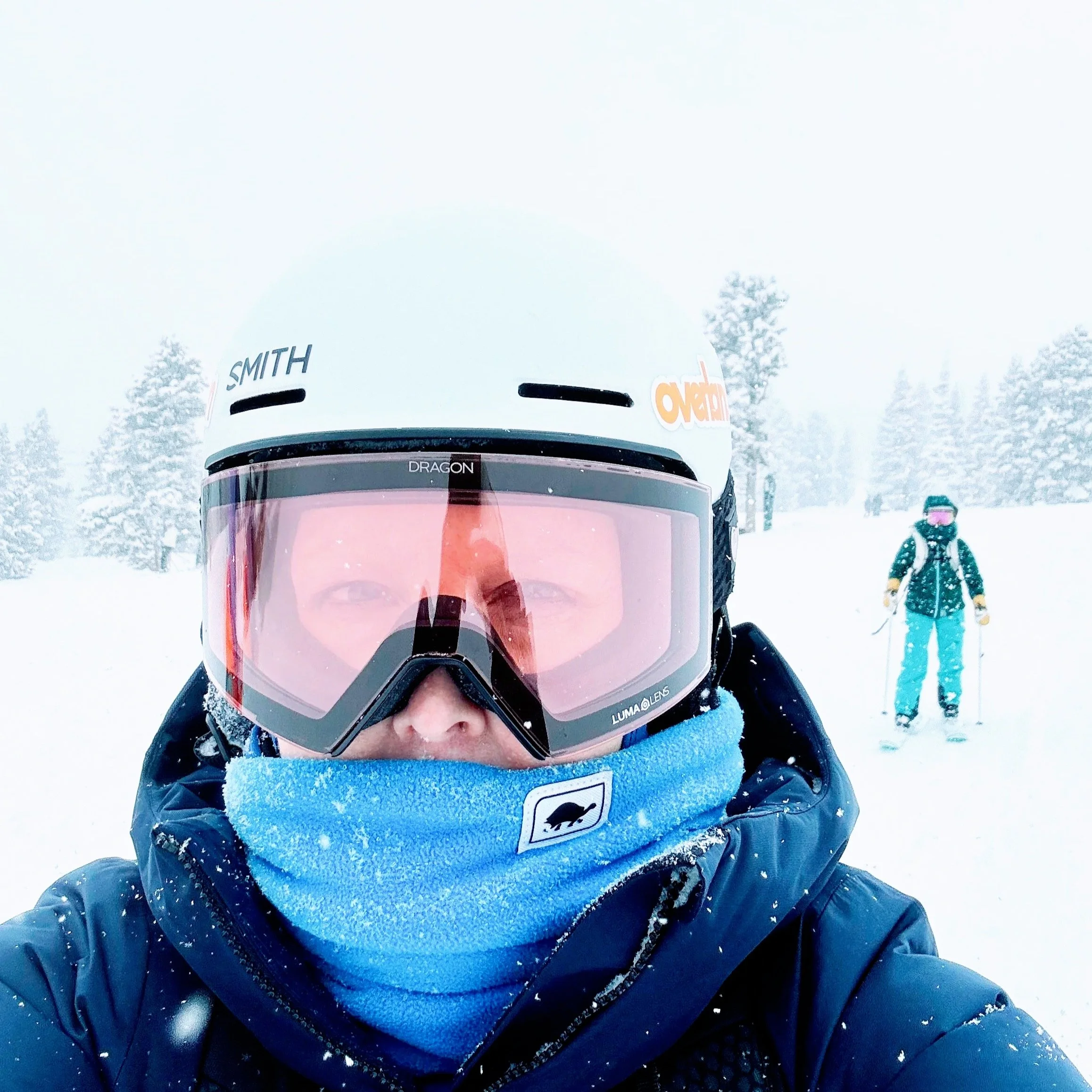
Peak 9, Breckenridge — snowing hard and perfect for a low-light lens day.
If you’re an intermediate (or moving up from greens), Breck is easy to love. I start on Peak 9 to get the legs going, then spend most of my time on Peak 7 linking smooth blue laps. On calmer, clearer days, I’ll add Peak 6 for the above‑treeline feel. The BreckConnect Gondola garages make Peaks 7/8 simple, and the Peak 9 lots are great when that’s your plan. If it’s snowing hard or the light is flat, I stay in the trees on 7/9 for better contrast and save Peak 6 for another window.
If you follow that flow—9 to warm up, 7 for the main day, 6 when weather allows—you get variety without the stress. That’s why Breck works for me.
See My Ski Kit 2026
Michele Underwood writes Overland Girl, where she shares gear she uses on real trips—from the Northwoods of Wisconsin to the Ozarks. She values quality and craftsmanship in everything she buys—from outdoor gear to everyday clothes and furniture. Her choices may seem expensive to some, but she believes in buying less and buying better. Longevity matters, both in terms of function and style. Her couch is five years old and still sold at Design Within Reach—that's the kind of timelessness she looks for. Some of the links in this review are affiliate links, which means she may earn a small commission if you buy through them. It doesn’t cost you anything extra, and it helps support her work. She only recommends gear she’d bring herself.