Park City’s Silver‑Mining History on the Slopes: What You Can See While You Ski
Mining artifacts on the trails, a free history tour,
and where to spot the good stuff.
Words by Michele Underwood | Photos by Michele, too.
I went to Park City for a ski trip and kept seeing historical artifacts scattered throughout the mountain—old shafts, buildings, ore bins, and tramway towers. Park City began as a silver‑mining boomtown in the late 1800s, and you can still see that story on today’s ski runs. This is the short version of how it went from mines to a ski town and where to look when you ski the Park City Mountain Village side.
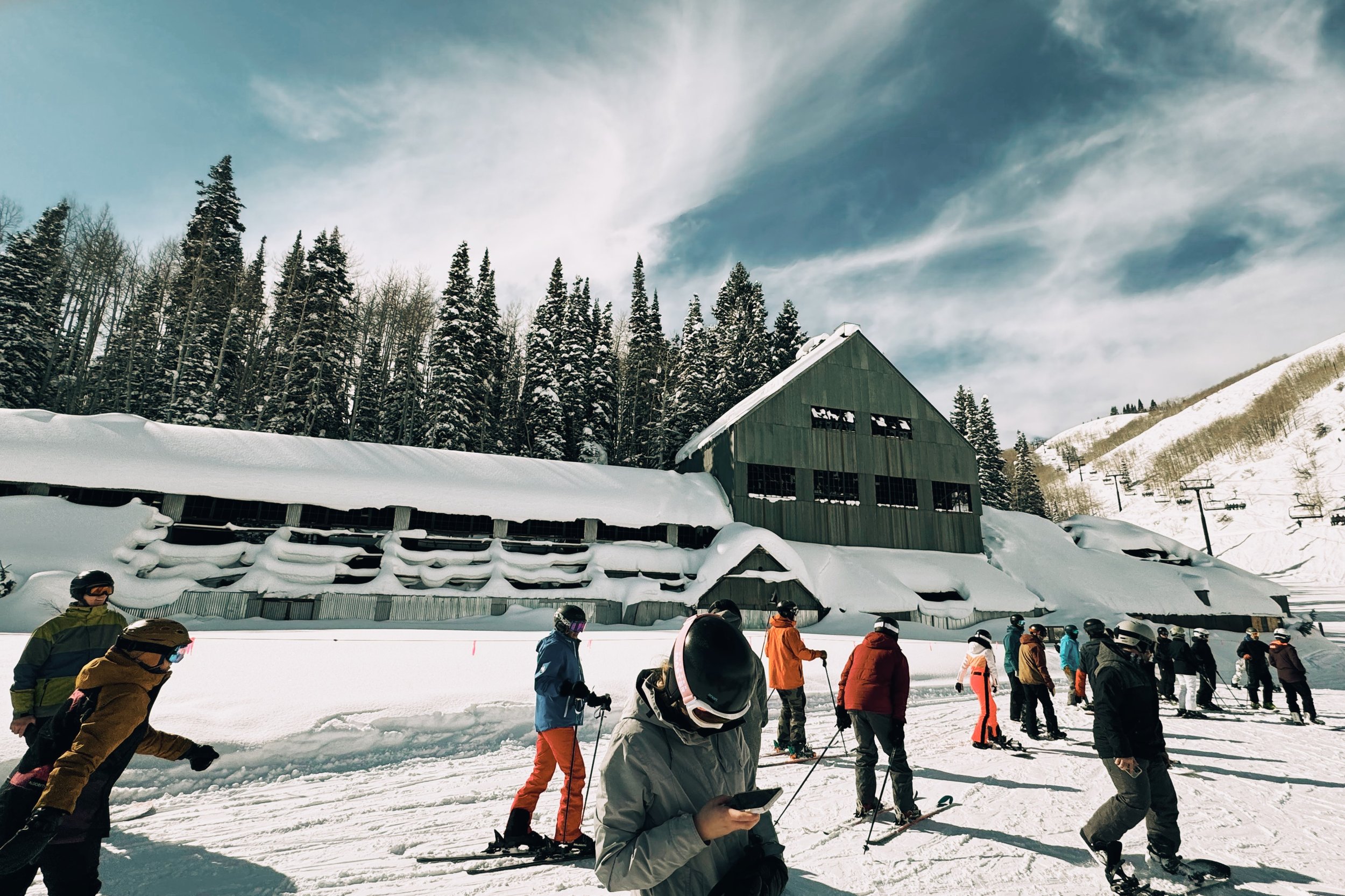
Silver King Mill by Bonanza at Park City Mountain—snow-stacked roof with skiers moving past.
Park City History at a Glance
From silver to skiing: Silver was found in the late 1800s; the boom built the town. When mining faded, skiing took over (Park City Mountain opened in 1963).
Artifacts on snow: mills, ore bins, and old tramway towers (specifics below).
Free on‑mountain tour: Silver to Slopes — for intermediate skiers; guides point out landmarks and share the backstory.
Main Street ties it together: Historic buildings from the mining era are still in use; the Park City Museum on Main is an easy stop.
How Park City Started: The Silver‑Mining Boom
In 1868, soldiers in the area found silver. Word spread, miners arrived, and Park City boomed. The hills produced silver, lead, and zinc. Wealth built the town fast—hotels, bars, homes—and many buildings you see today date to that rush. It wasn’t all smooth: fires, price swings, and the eventual decline of mining hit hard.
What to Look For On the Mountain
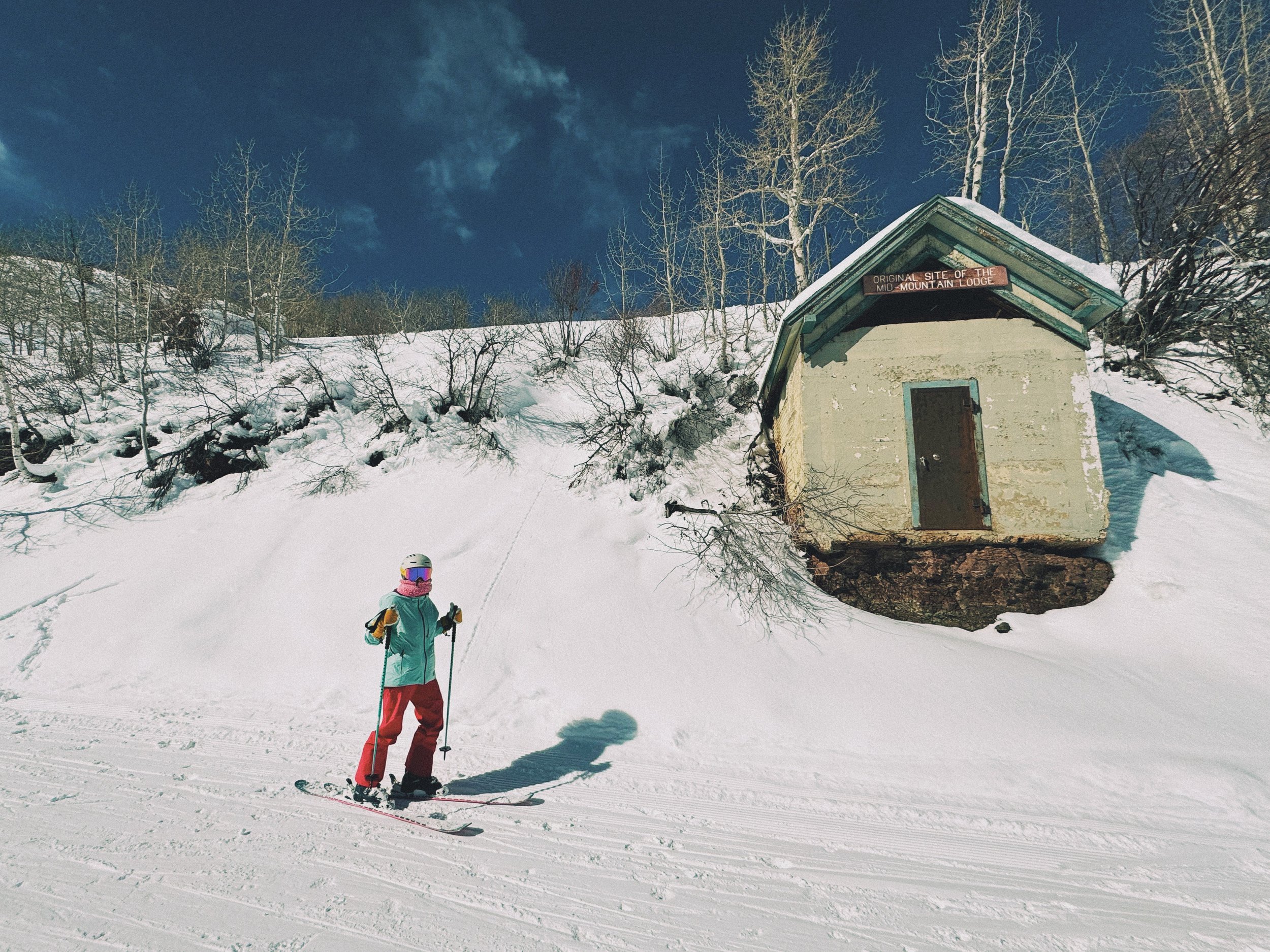
Mining-era outbuilding beside the run at Park City Mountain—little relic on the hillside you’ll ski right past.
Silver King Mill / Headframe — the big historic complex near the base by Bonanza; stabilization work has focused on the Silver King headframe in recent years.
King Con Ore Bin — on the Claimjumper run; last remaining piece of the King Con Mine (restored in 2022).
Tramway Towers — look right from Crescent; remnants of aerial tramways that moved ore year‑round.
Thaynes Mine Headframe — near the base of the Thaynes chair; another major structure undergoing stabilization.
California‑Comstock Mill — ruins visible in the upper‑mountain zone by Keystone/Jupiter runs.
Silver Star Boiler Room & Coal Hopper — at Silver Star (Three Kings Road) near the base area; easy to view on foot.
Note: Visibility changes with snow coverage and current operations. Many sites are fenced or roped for safety—view from marked areas and lifts. And operations change; some landmarks are roped off: respect signs and ropes.
Take the Free Tour
The Silver to Slopes Historic Mining Tour runs on the Park City side and is aimed at intermediate skiers. Guides connect the dots between what you’re seeing on trail and how the town worked when ore—not skis—ran the place. If you like context, it’s worth the time.
From Mines to Mountain Town
As mining faded, Park City pivoted. Treasure Mountains Resort opened in 1963 (today’s Park City Mountain Resort). Old mining routes and rail beds helped with lift and trail alignments. Skiing stuck, and the town grew into a winter destination.
Main Street: A Historic Saloon
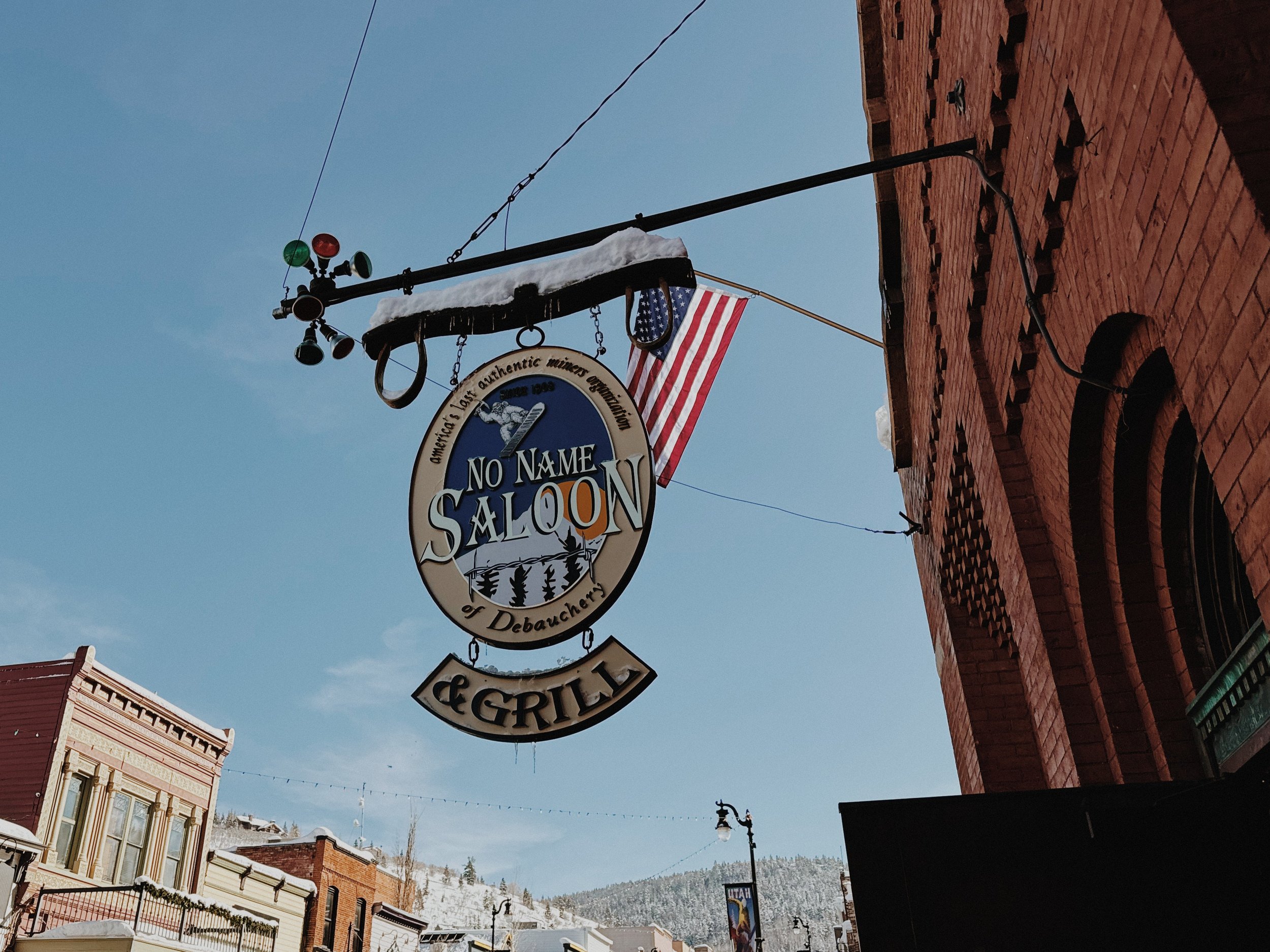
No Name Saloon sign hanging over Park City’s Main Street on a clear winter day.
If you want a spot that nods to the mining days, head to No Name Saloon at 447 Main Street. It lives in a historic 1905 Spanish Colonial Revival building that’s worn a lot of hats—mercantile, phone company, pool hall—and later the Alamo bar before becoming today’s locals’ hangout. It’s not a museum piece; it still feels like an Old Town saloon. Grab a drink, peek at the old photos, and imagine the miners who filled places like this a century ago.
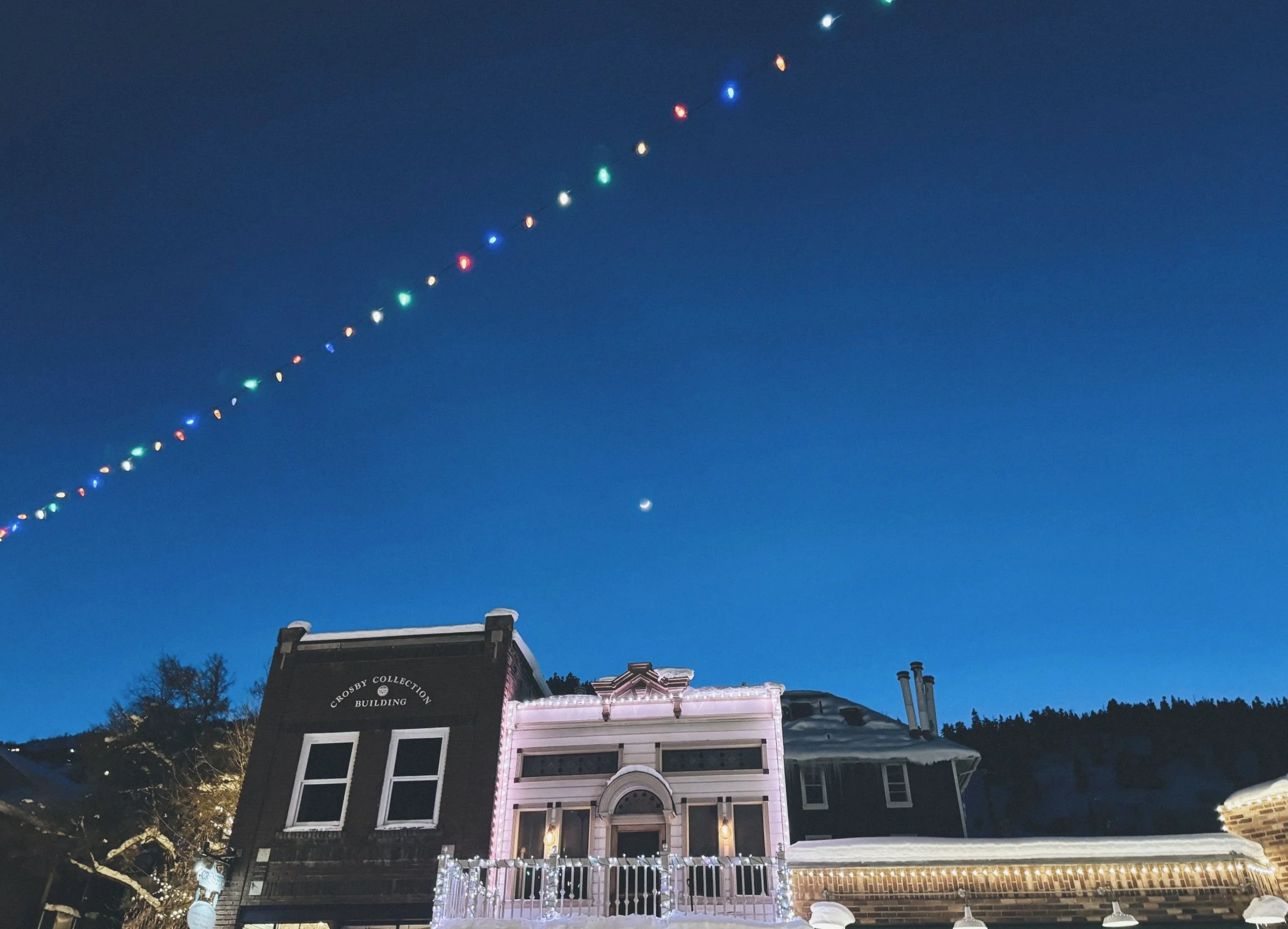
Main Street at dusk—string lights over historic storefronts under a deep blue winter sky.
One Easy History Loop (Ski Day)
Park at China Bridge (Old Town).
Walk across to Atticus for coffee by Town Lift. (great coffee and cool vibe)
Ride Town Lift. On that first ride, you’ll start seeing the history—old tramway towers lining the hillside. Several lift lines trace the routes those ore towers once served.
From the top, ski toward Crescent/Bonanza for good views of Silver King and more towers.
If the Silver to Slopes tour is running, jump on it when you see the sign.
Finish by riding Town Lift back to Main Street, or ski to Mountain Village and shuttle/Uber back to your car.
Good to Know
For Old Town and Town Lift, park at China Bridge. Most landmarks are visible from greens and blues—or even from the lift—so you don’t need expert terrain. Snow and operations change what’s visible, and many sites are fenced for safety, so take photos from marked pull‑offs and lifts.
Final Take
If you like history, Park City lets you ski through it. Spot Silver King, King Con, and the tram towers, ride the free Silver to Slopes tour, then finish via Town Lift on Main Street.
FAQ’s
Can beginners see the artifacts?
Yes—many are visible from greens/blues or lifts. You don’t have to ski expert terrain.
Is anything open to walk through?
No—assume structures are closed. View from marked areas only.
Official Info (quick links)
Silver to Slopes Historic Mining Tour — Park City Mountain (official)
Historic Park City - Main Street
More Park City Guides & Videos
Michele Underwood writes Overland Girl, where she shares gear she uses on real trips—from the Northwoods of Wisconsin to the Ozarks. She values quality and craftsmanship in everything she buys—from outdoor gear to everyday clothes and furniture. Her choices may seem expensive to some, but she believes in buying less and buying better. Longevity matters, both in terms of function and style. Her couch is five years old and still sold at Design Within Reach—that's the kind of timelessness she looks for. Some of the links in this review are affiliate links, which means she may earn a small commission if you buy through them. It doesn’t cost you anything extra, and it helps support her work. She only recommends gear she’d bring herself.