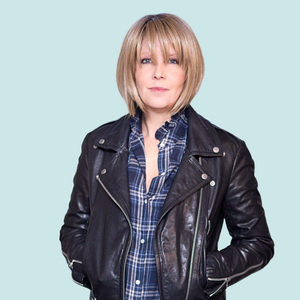
How a stop at a mountain gear shop in Ouray, Colorado, introduced me to a British outdoor brand with a great origin story.
Words by Michele Underwood | Photos by Rab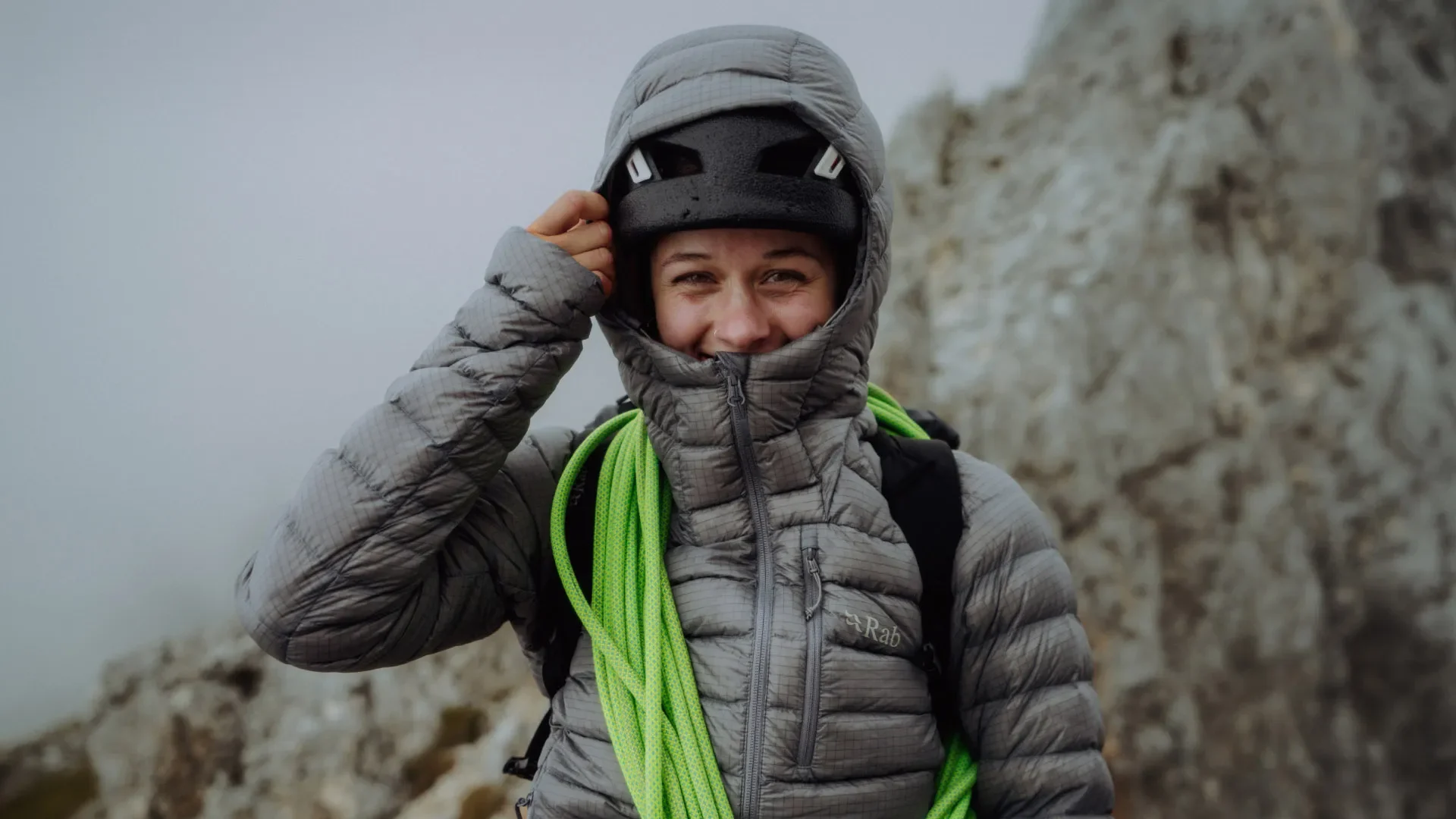
Rab climbing gearI've always been curious about outdoor brands I haven't come across before, especially when I find them tucked into small mountain-town gear shops.
While I was in Ouray, Colorado, I stopped into Ouray Mountain Sports and came across a brand called Rab. I'd never heard of it.
Ouray is a big destination for hiking and ice climbing, so I figured Rab might be a brand that specialized in technical mountain gear. I started doing a little research.
Turns out, Rab has quite a story.
What started with a climber sewing sleeping bags in his attic has grown into a company known for technical mountain clothing and equipment. And the more I learned about its history, the more I wanted to know.
Here's what I discovered about Rab, and why I think it's an outdoor brand worth knowing.
Editor's Note: Rab is a new brand partner of Overland Girl. I first discovered the company at Ouray Mountain Sports before our partnership began. Rab is sending me its Women's Microlight Down Jacket to test, and I'll share my experience in a separate review once I've spent time wearing it.
Rab: From Buenos Aires to a Sheffield Attic
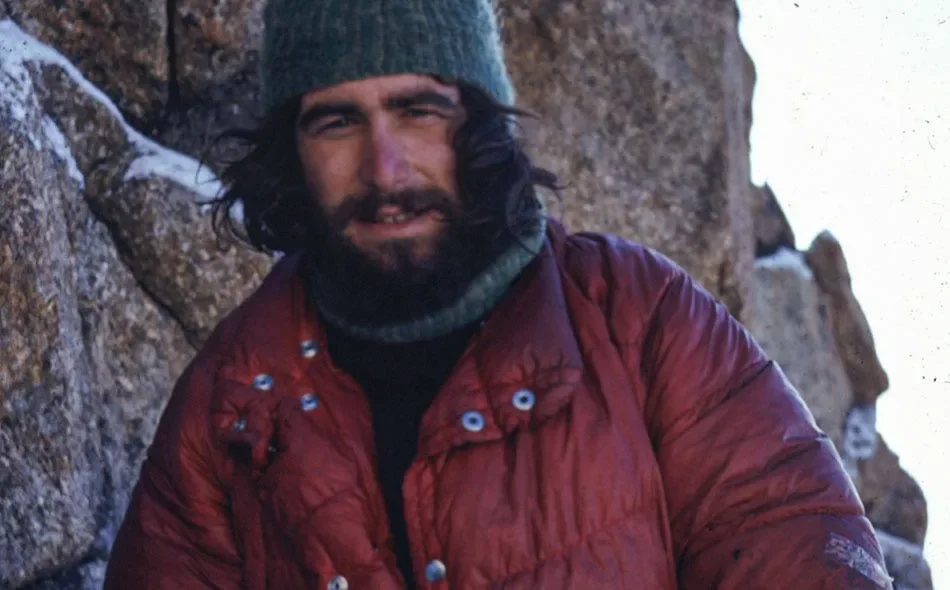
Rab CarringtonRab's story starts in 1973 with Scottish climber Rab Carrington. He was headed to Patagonia for a climbing expedition when he got stuck in Buenos Aires, Argentina. A dock strike back in the UK had held up his climbing gear, and the money he'd saved for the trip was running out.
So he went to work for his friend Hector Vieytes, an Argentine climber who made down sleeping bags. Over several months there, Vieytes taught him the craft. It was a skill that would eventually lead to an outdoor equipment company bearing Carrington's name.
In 1981, Carrington began making sleeping bags in the attic of his home in Sheffield, England. He didn't come into the business from a manufacturing background. He was a climber who had spent years in the mountains and understood what gear needed to do when conditions turned difficult.
His sleeping bags caught on with the local climbing community, and demand grew enough that he eventually moved production out of his attic and into a factory.
I love stories like this. Someone heads off on an adventure, things don't go according to plan, and years later, that detour becomes the beginning of something much bigger.
And to think it all started because his gear got stuck at the docks.
Rab spent the following decades building a reputation for technical sleeping bags and mountain equipment. In 2003, Carrington retired and passed ownership to Equip Outdoor Technologies, which has continued growing the brand internationally.
Today, Rab is known for much more than sleeping bags, but its climbing heritage is still a big part of who the company is.
What Makes Rab Different?
One of the things I noticed while researching Rab is how closely the company has stayed connected to climbing and mountaineering.
Rab was built around technical mountain gear rather than outdoor fashion. The focus is on clothing and equipment that can handle mountain conditions, whether that's a cold morning on a hiking trail, a technical climb, or an expedition where staying warm and dry matters.
Rab makes waterproof shells, insulated jackets, fleece layers, technical pants, and mountain equipment. Depending on the product and what it's built for, the brand uses fabrics and insulation like Pertex, GORE-TEX, and both down and synthetic fill.
And while the company began by making gear for climbers, you certainly don't need to be a mountaineer to appreciate good mountain clothing.
I spend a lot of time hiking in places where the weather can change fast, especially in Colorado. A sunny morning can turn into a cold, windy afternoon before you know it. Having the right layers makes a difference, whether you're climbing a mountain or heading out for a day hike.
That's one reason I wanted to learn more about what Rab makes.
Rab's Down Jackets and Mountain Clothing
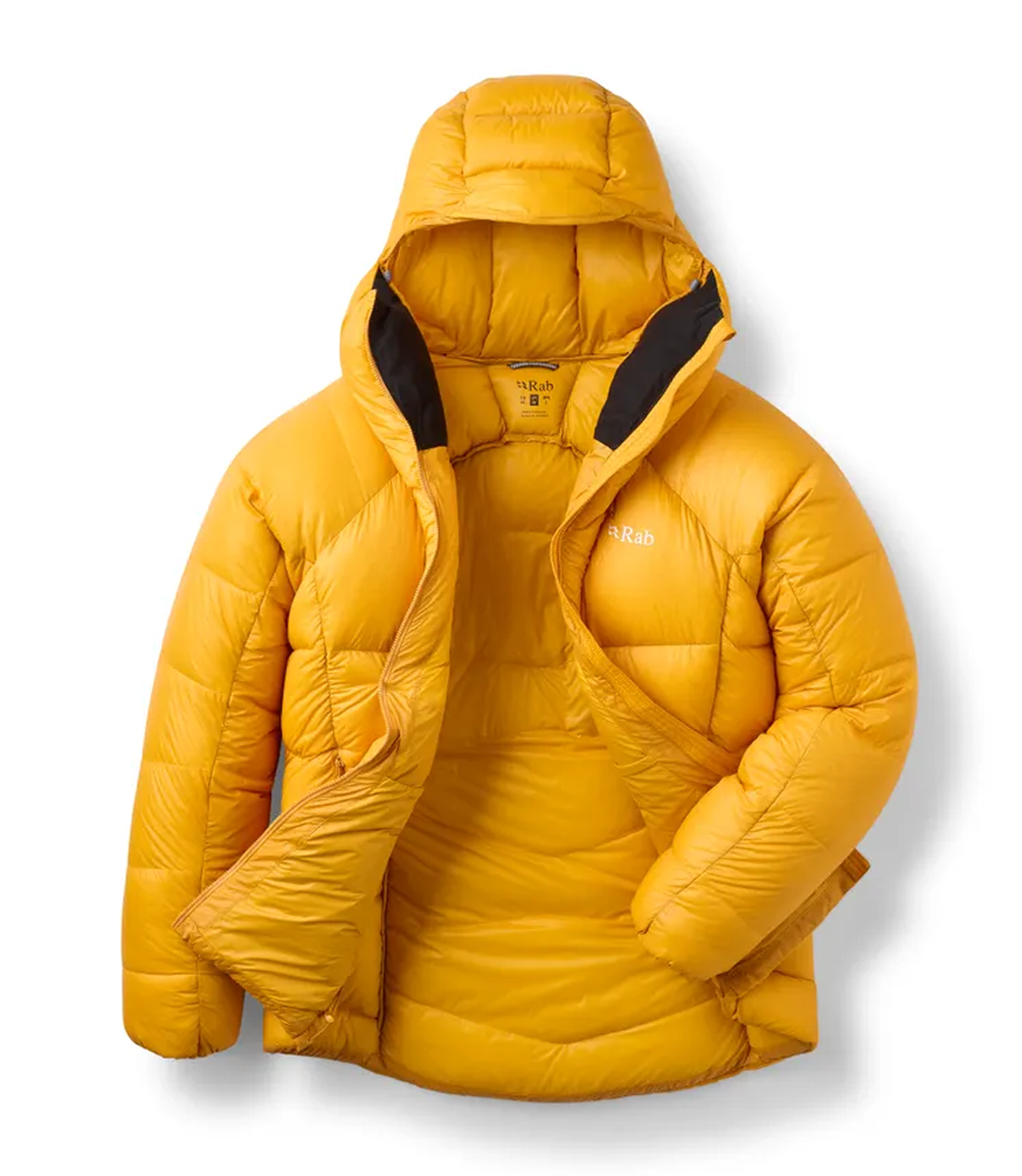
Rab Mythic Ultra Hoody
One of Rab's best-known collections is Microlight, a line of lightweight, packable down jackets. Insulation has been part of the company's story since those first sleeping bags, and today Rab makes everything from lightweight layers for hiking and everyday wear to heavier pieces built for demanding winter conditions.
Rab's Women's Microlight Down Jacket is the piece I'll be testing. It's designed to give you warmth without the bulk of a heavy winter coat, using recycled 700-fill down and a lightweight recycled Pertex Quantum outer fabric.
I'm curious to see how it fits into my own layering system, especially for hiking and spending time outside when the temperatures drop. I'll get into fit, comfort, warmth, and performance once I've had the chance to wear it.
Beyond down jackets, Rab has an extensive lineup of mountain clothing.
Its waterproof shells are built for wet and windy conditions, while its fleece and technical midlayers help manage warmth during more active days. The company also makes hiking and climbing pants, sleeping bags, backpacks, and other equipment.
What I appreciate about the range is that there's a clear distinction between gear made for different activities. A lightweight jacket for an active hike isn't necessarily the jacket you'd want while standing around camp on a freezing evening.
Knowing what a piece is designed for matters just as much as the brand name on the label.
A Brand That Wants You to Repair Your Gear
This is another part of Rab's story that caught my attention.
Rab runs a Service Centre where customers can send eligible clothing and equipment to be professionally washed and repaired. It handles everything from fixing torn fabric and replacing parts like zippers and buckles to cleaning down jackets, sleeping bags, and waterproof shells.
And this isn't a recent add-on. Rab has been repairing gear for around 40 years, and some of the people who worked alongside Rab Carrington in the early days are still part of the Service Centre team.
I like that.
Outdoor gear can be expensive, especially technical jackets and equipment designed for tough conditions. And when I find something I love wearing, I'd much rather repair it than replace it because of a broken zipper or a tear.
Rab also runs a down collect-and-recycle scheme through its UK headquarters in Alfreton, Derbyshire. Worn-out down products, including jackets, sleeping bags, and duvets, are collected so the insulation can be recovered, cleaned, and processed for reuse. The program launched in 2021 in partnership with Italian down recycler Minardi Plume.
Of course, making new clothing still has an environmental impact, and no repair program erases that. But giving gear a longer life and recovering materials from worn-out products are meaningful steps.
I think it's worth paying attention to companies that consider what happens to their products after they've been sold.
Second Stitch: Giving Old Gear a Little Character
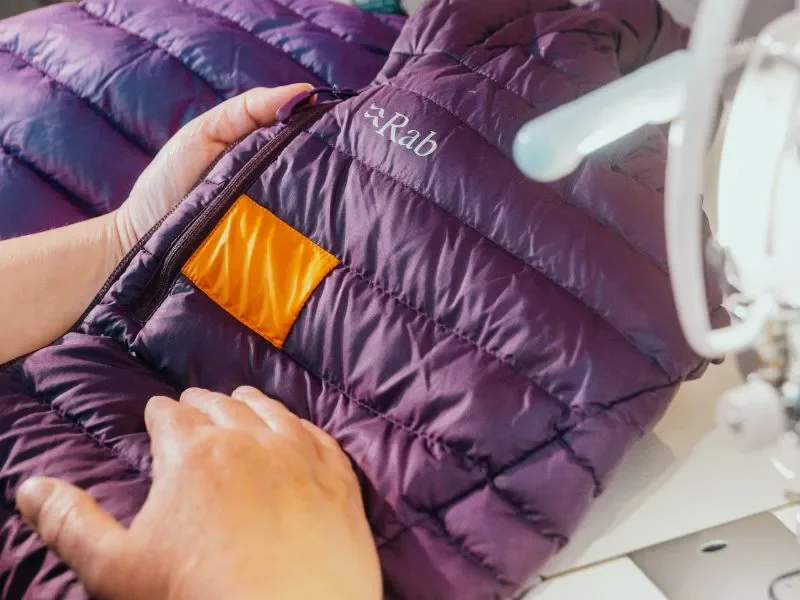
Rab Second StitchRab also has a repair option called Second Stitch, and I love the idea behind this one.
With its standard repair service, Rab tries to match the original fabric and appearance as closely as possible. Second Stitch takes a different approach. It uses leftover fabric roll ends, offcuts, and reused materials to repair damaged gear, often with contrasting colors.
Instead of hiding the repair, it becomes part of the design.
A jacket might come back with a patch in a completely different color, or a sleeping bag might have a replacement panel that doesn't match the original. Each repaired piece is a little different, and Rab adds a Second Stitch badge to identify it.
I think that's such a fun approach to repairing outdoor gear. A tear doesn't have to mean the end of a jacket, and the repair doesn't have to be something you hide. It can become part of the story of where that piece of gear has been.
Second Stitch is available for eligible Rab jackets, sleeping bags, backpacks, and more.
Discover Rab
What I find most interesting about Rab isn't any one jacket or piece of gear. It's how the company came to be and how that history still shapes what it makes today.
Rab Carrington wasn't trying to build a global outdoor brand when he learned to sew sleeping bags in Argentina. Years later, he was making them in his attic in Sheffield. Today, the company he founded makes mountain equipment used around the world.
I certainly wasn't expecting to discover all of this when I walked into Ouray Mountain Sports. That's part of what makes finding unfamiliar outdoor brands so much fun for me.
I'm looking forward to putting the Women's Microlight Down Jacket to the test and sharing my experience in a separate gear review, including what I like and anything I think could be better. Until then, if Rab is a brand you haven't heard of before, take a look at its story and the gear it makes.
This article is part of my Outdoor Brands You Might Not Know, But You Should series, where I share outdoor companies that catch my attention through their products, history, design, and the people behind them.I'm Michele, and I write Overland Girl, where I share firsthand travel experiences across the American West — from desert landscapes and national parks to small towns layered with history like Ouray. My work blends movement, place, and the stories that shape them.Some posts may include affiliate links to products or services I use on the road. If you choose to purchase through those links, I may earn a small commission at no additional cost to you. It helps support continued travel and storytelling. I only link to items I personally use or would use myself.