Best Fall Hiking Trails in the U.S.
Where to find peak color, crisp air, and quieter trails this fall
Words by Michele Underwood | Photos by Unsplash talent
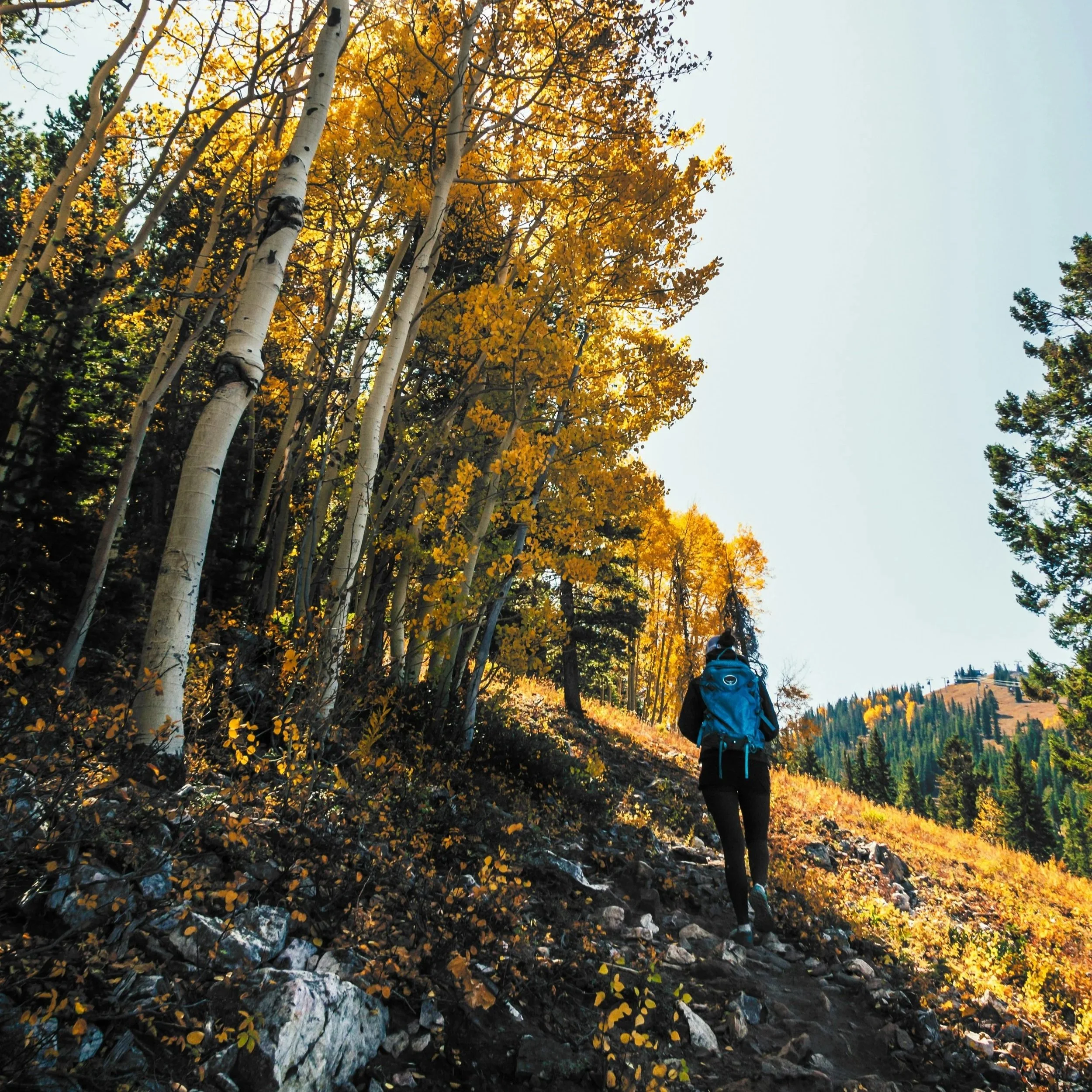
Girl hiking in aspens. Photo by Jamie Fenn.
Fall is the sweet spot for hiking—cool mornings, fewer bugs, and forests that look like someone turned the saturation all the way up. Below are research-backed regions and routes on my "someday" list for fall color across the U.S.—from larch country in the Northwest to hardwood glory in the East. I haven’t hiked every trail here yet; think of this as a wish list curated from maps, ranger notes, foliage trackers, and trusted friends. Mix and match based on your travel plans and the timing of local peak color.
Frequently Asked Questions (FAQs)
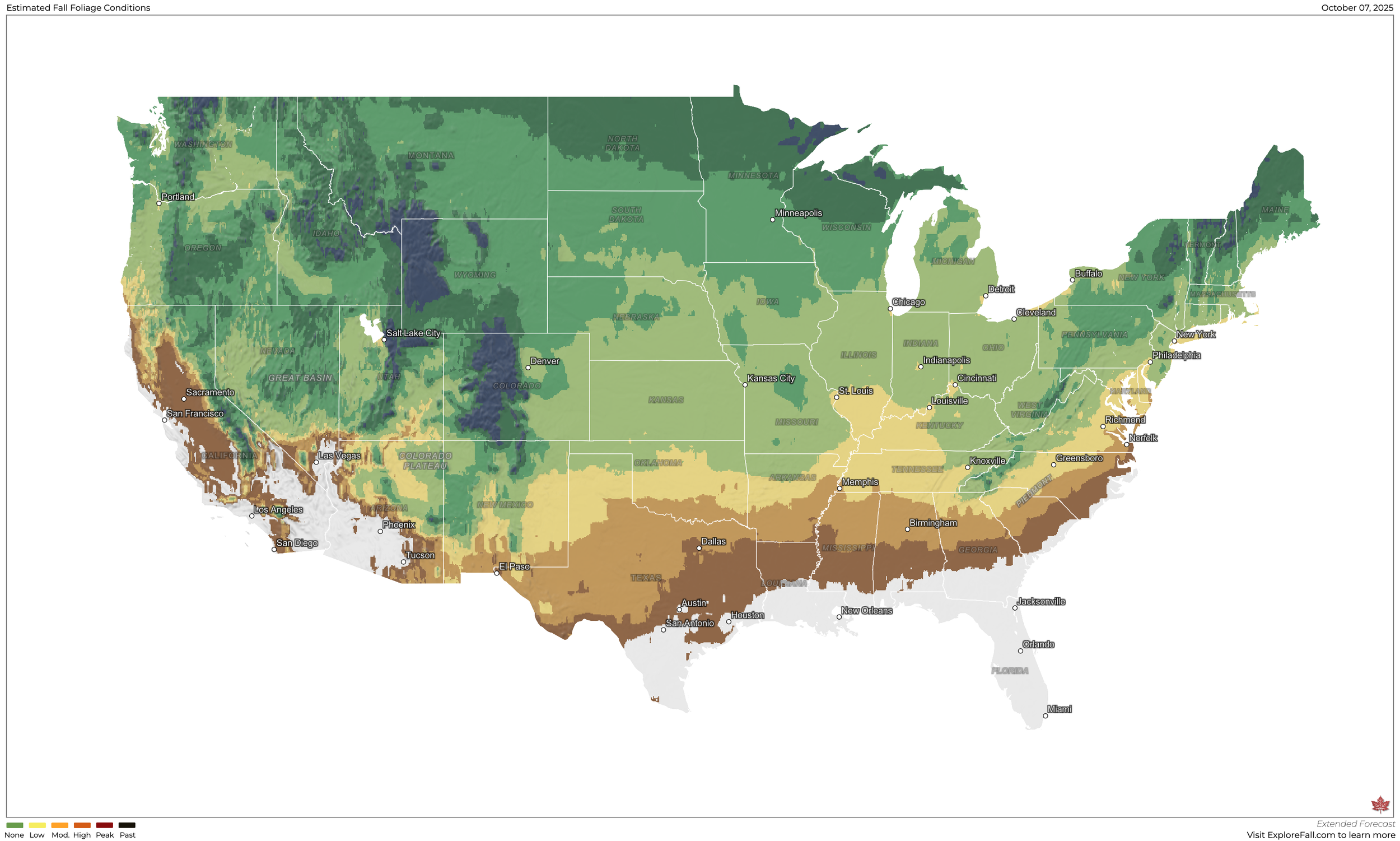
Live U.S. fall foliage map by month — via ExploreFall.
What makes a trail great for fall hiking?
Cooler temps, vibrant foliage (aspens, maples, oaks, larches), and shoulder-season crowds. Waterfalls also pop after early-season rains.
When is peak color?
It depends on latitude and elevation—Rockies and New England high country: mid–late September into early October; Mid-Atlantic and lower elevations: mid–late October; Pacific Northwest coasts and the Deep South: late October into November. Local tourism sites and foliage trackers help you time it.
See the live U.S. fall foliage map →
Are these hikes beginner-friendly?
Most entries include an easier and a more challenging option. If you’re new, start with the shorter route and watch daylight—fall sunsets come fast.
1. White Mountains, New Hampshire — Franconia Ridge (or Artist’s Bluff)
Classic color: fiery maples and birches in full blaze across the Presidential and Franconia ranges.
Trail (challenging): Franconia Ridge Loop via Falling Waters & Old Bridle Path (~8.6 mi, strenuous). 360º views of a rolling red-and-gold sea. Go clockwise for safer footing on descent.
Trail (easy): Artist’s Bluff/Bald Mountain (~1.5 mi). Postcard views without the big commitment.
The best time is late September to early October.
2. Adirondack High Peaks, New York — Cascade & Porter (or Mount Jo)
Classic color: endless hardwoods with mirror-lake reflections.
Trail (moderate): Cascade & Porter (~6.2 mi). Granite summits over a patchwork of red and gold.
Trail (easy): Mount Jo (~2.1 mi) from Heart Lake for a big payoff in a small package.
Best time: late September to early October (varies by elevation).
3. Green Mountains, Vermont — Stowe Pinnacle (or Sterling Pond)
Classic color: maple-dominant forests and covered-bridge country vibes.
Trail (moderate): Stowe Pinnacle (~3.7 mi). A compact climb to sweeping valley views.
Trail (easy): Sterling Pond (~2.3 mi) and loop the pond if you have time.
The best time is late September to early October.
4. Shenandoah National Park, Virginia — Stony Man (or Old Rag)
Classic color: Blue Ridge waves under copper and crimson.
Trail (easy/moderate): Stony Man (~1.6–3 mi depending on approach). Huge views with minimal effort.
Trail (challenging): Old Rag Loop (~9.5 mi) for rock scrambles and 360º vistas (check ticketing/permits).
The best time is mid to late October.
5. Great Smoky Mountains, TN/NC — Alum Cave (or Andrews Bald)
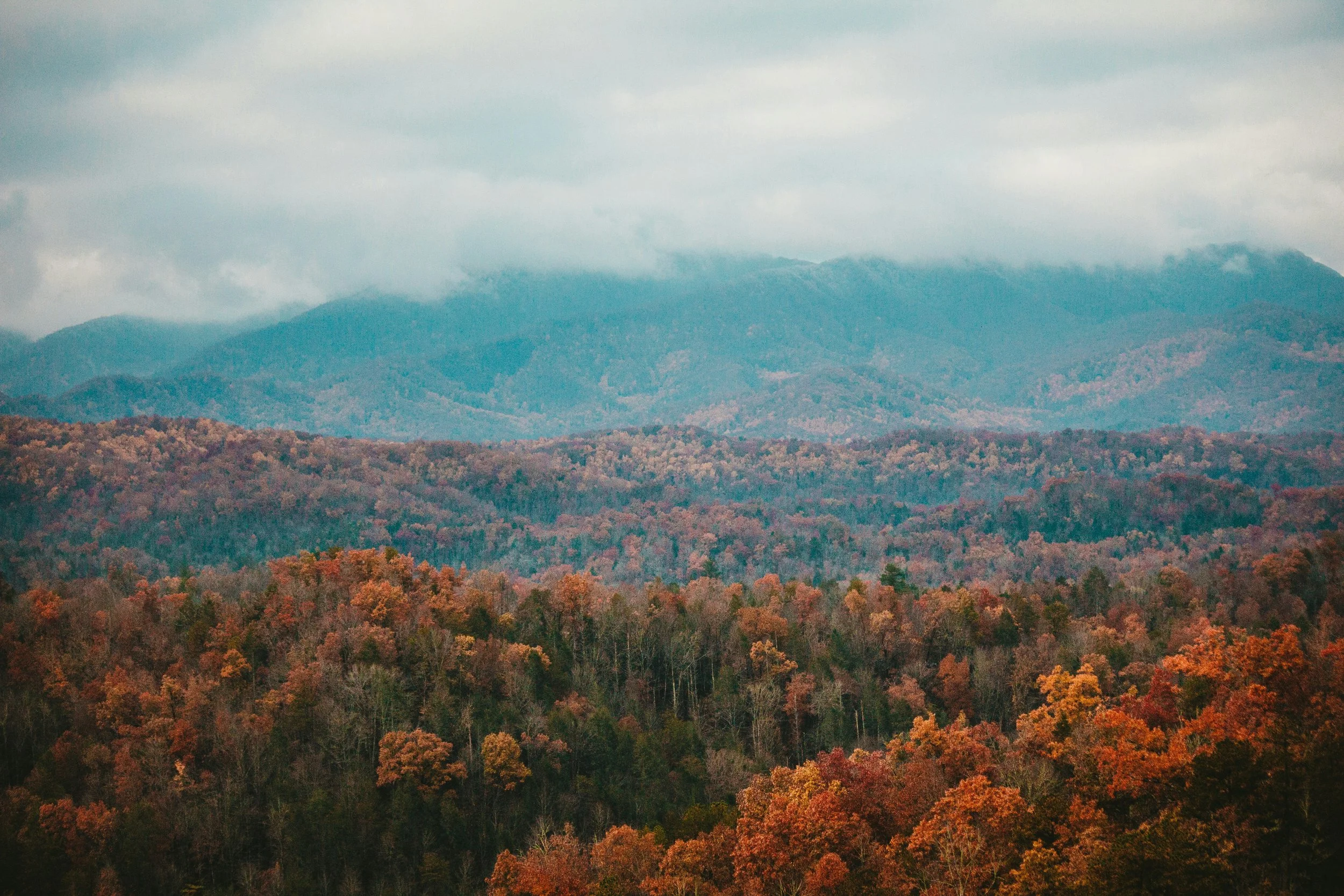
Autumn hardwood forest rolling toward the Great Smoky Mountains under low clouds. Photo by sean-foster
Classic color: layer-cake foliage—peaks change first, valleys last.
Trail (moderate/challenging): Alum Cave to Inspiration Point (~4.6 mi) or continue toward Mount LeConte: Arch rock, stone stairs, big views.
Trail (easy/moderate): Forney Ridge to Andrews Bald (~3.6 mi). High-country meadows with long-range lookouts.
The best time is from mid-October (higher ridges) to early November (lower valleys).
6. Maroon Bells, Colorado — Scenic Loop (or Crater Lake)
Classic color: quaking aspens that glow neon gold under fresh dustings of snow.
Trail (easy): Maroon Lake Scenic Loop (~1 mi). All killer, no filler.
Trail (moderate): Crater Lake (~3.6 mi). Aspen-lined approach to a rocky basin.
The best time is typically mid to late September. (Check shuttle/parking rules.)
7. North Cascades, Washington — Blue Lake (or Maple Pass)
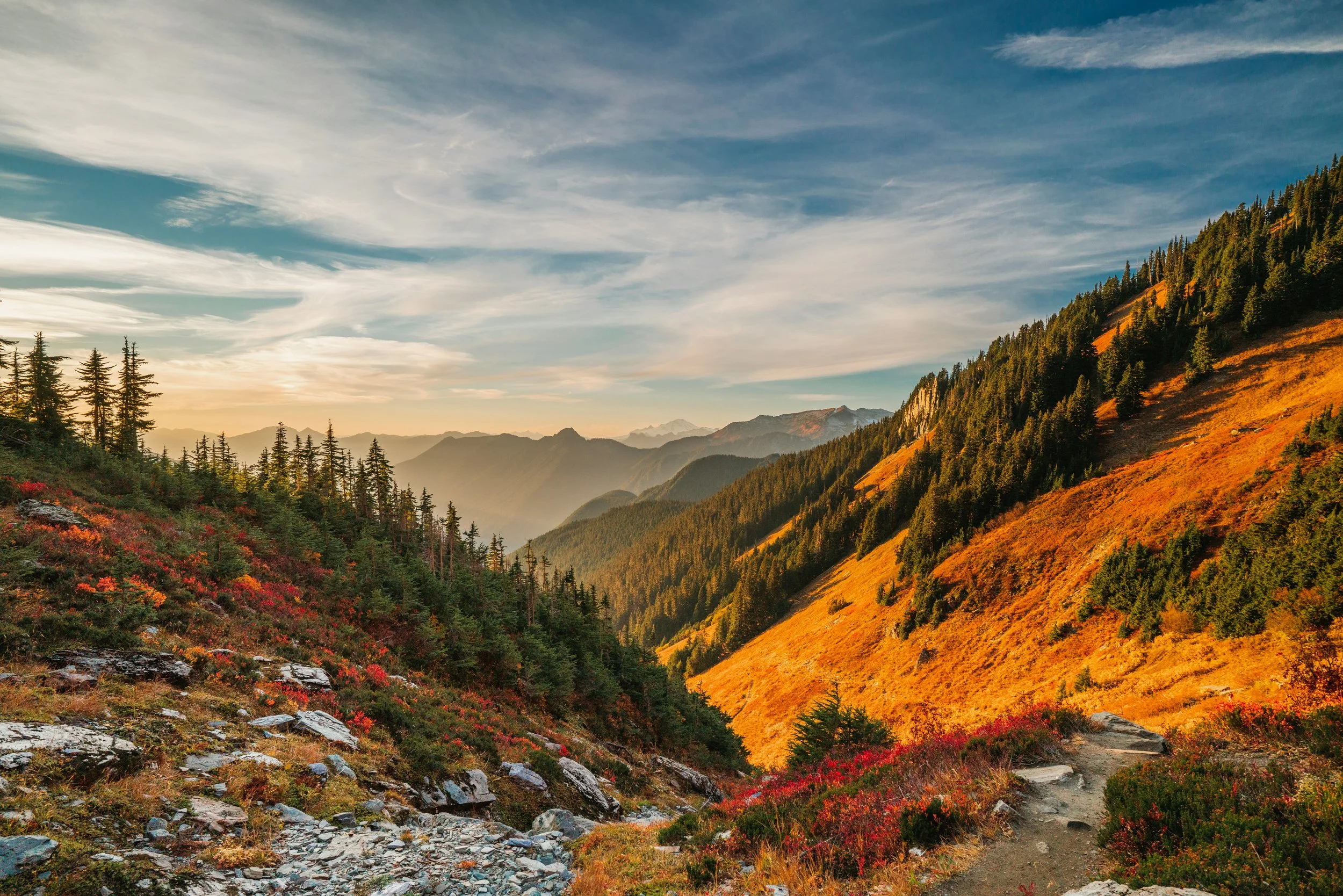
North Cascades in peak fall color near Mount Baker—golden larches and evergreens at sunset. Photo by Toan Chu.
Classic color: golden larches set against teal water and granite.
Trail (easy/moderate): Blue Lake (~4.6 mi). Larch fireworks without the big vert.
Trail (challenging): Maple Pass Loop (~7.2 mi). One of the West’s best fall circuits.
Best time: late September to early October (larch season can be brief).
8. Columbia River Gorge, Oregon — Wahkeena–Multnomah Loop (or Latourell)
Classic color: mossy amphitheaters, roaring falls, and vine-maple flames.
Trail (moderate): Wahkeena–Multnomah Loop (~5 mi). Waterfall-to-waterfall classic.
Trail (easy): Latourell Falls (~2.4 mi loop or shorter out-and-back).
The best time is from October to early November.
9. Porcupine Mountains, Michigan — Escarpment Trail (or Summit Peak)
Classic color: Lake Superior blues and endless hardwood forests.
Trail (moderate): Escarpment Trail (~4–8 mi out-and-back). Ridgeline views you’ll remember all winter.
Trail (easy): Summit Peak Observation Tower (~1 mi). Quick walk, huge panorama.
The best time is late September to early October.
10. Zion & Bryce Canyon, Utah — Watchman (or Navajo/Queens)
Classic color: cottonwoods turning gold against rust-red canyon walls.
Trail (moderate): Watchman Trail (~3.3 mi) above Springdale’s cottonwoods.
Trail (moderate): Navajo Loop/Queens Garden in Bryce (~2.9 mi). Hoodoos + fall light = magic.
Best time: October (cooler temps, bright cottonwoods).
Essential Gear for Fall Hiking
Layers are everything. Start cool, add layers as you climb: a breathable base, a light fleece or synthetic puffy, and a packable rain shell.
Hands & head. Lightweight gloves and a warm beanie earn their space.
Footwear. Grippy, broken-in hikers or trail runners? Consider wool socks to keep your toes warm. I wear Mammut’s Aenergy Hike Low Women’s Hiking Shoe. You can read my review of these shoes at Review: Mammut Aenergy Hike Low Women’s Hiking Shoe
Lighting. Shorter days mean a headlamp lives in the pack, even for “quick” hikes.
Hydration + electrolytes. Cooler air still dehydrates—carry water and a salty mix if you sweat a lot. I use LMNT in my water. I love the Watermelon flavor.
Navigation. Trailforks
Pro Tip: Use Trailforks (Go Offline)
Trailforks is my planning and on-trail safety net. With a Trailforks+ membership, you can download entire areas for offline use, so your phone’s GPS dot still works when cell service drops. That matters when you’re in deep valleys or high country with spotty coverage.
Safety & Seasonal Notes
Check closures. Some roads and high passes close early after storms; verify before you go.
Watch the weather. Fall swings fast—carry a warm layer and rain shell even if the forecast looks friendly.
Leave No Trace. Stay on trail, pack out everything, and give wildlife space (it’s rut season in many places).
Take a Hike
I hope this roundup gives you a nudge to chase some color this season. Pick a region, pack a warm layer and a thermos, and enjoy the crisp, leafy soundtrack underfoot.
Read More Hiking Gear & Guides
Michele Underwood writes Overland Girl, where she shares Shop My Camp Kit—a curated collection of the gear she actually uses on real trips, from the Northwoods of Wisconsin to the Ozarks. She values quality and craftsmanship in everything she buys—from outdoor gear to everyday clothes and furniture. Her choices may seem expensive to some, but she believes in buying less and buying better. Longevity matters, both in terms of function and style. Her couch is five years old and still sold at Design Within Reach—that's the kind of timelessness she looks for. Some of the links in this review are affiliate links, which means she may earn a small commission if you buy through them. It doesn’t cost you anything extra, and it helps support her work. She only recommends gear she’d bring herself.