How to Stay Warm Sleeping in a Van: The Blanket I Always Pack
Winter in Fruita feels frigid once the sun sets. Late winter in Moab can swing from sunny during the day to near-freezing overnight — and with cloud coverage and wind, it can turn chilly fast. Spring exploring southern Utah means warm afternoons followed by cold desert nights.
That’s the reality of van camping in the West.
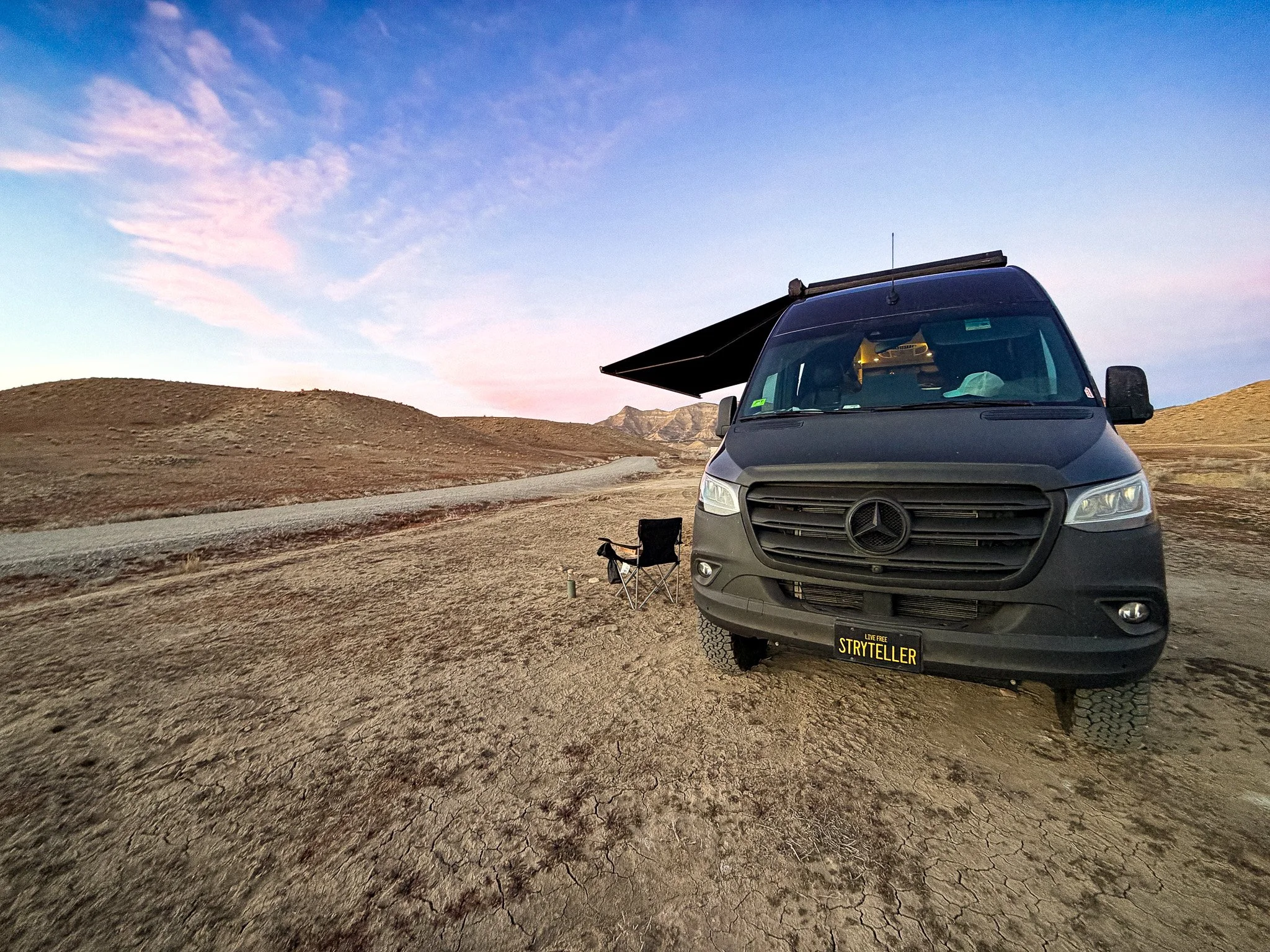
My van parked for the night at dispersed camping near the 18 Road trails in Fruita, Colorado. Evenings out here are quiet, wide open, and perfect for settling in after a day of riding.
Metal walls bring in the cold. Windows let it move in fast. No matter how weather-ready a van is built to be, it’s still metal and glass.
Heat escapes upward. And if your sleep layers aren’t intentional, you’ll wake up at 3 a.m. cold and trying to fix it half-asleep.
After enough cold nights in Fruita, late winter swings in Moab, and spring wind across southern Utah, I stopped guessing and started paying attention to what actually worked.
At first, I tried using what I use at home — Parachute bedding. I started with a velvet quilt, thinking it would make the van feel more like a real bed. It didn’t hold heat the way I expected.
Then I added my regular-size Rumpl fleece blanket under the quilt. It was incredibly soft, but layered that way, it felt like too much without solving the overnight cold.
So I purchased the larger Rumpl Fleece Puffy Blanket. In a van, less is more. Bedding stacks up quickly, and if a layer doesn’t serve a purpose, it doesn’t stay.
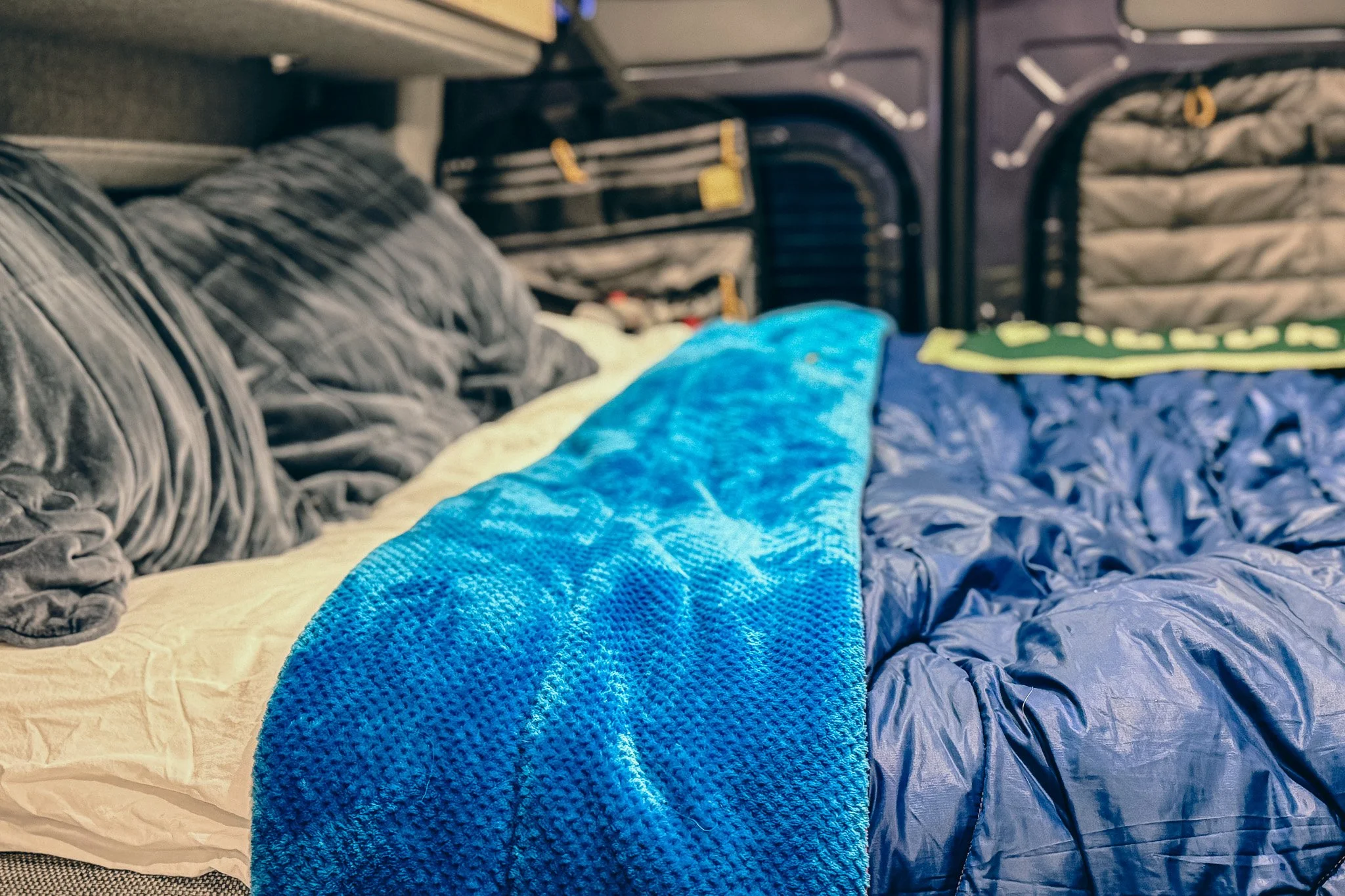
Rumpl blanket on the bed inside my van—an easy layer that adds warmth without the bulk of another sleeping bag.
That was enough.
The one layer that consistently made the difference was the Rumpl Fleece Puffy Blanket.
Why Fleece Makes the Difference
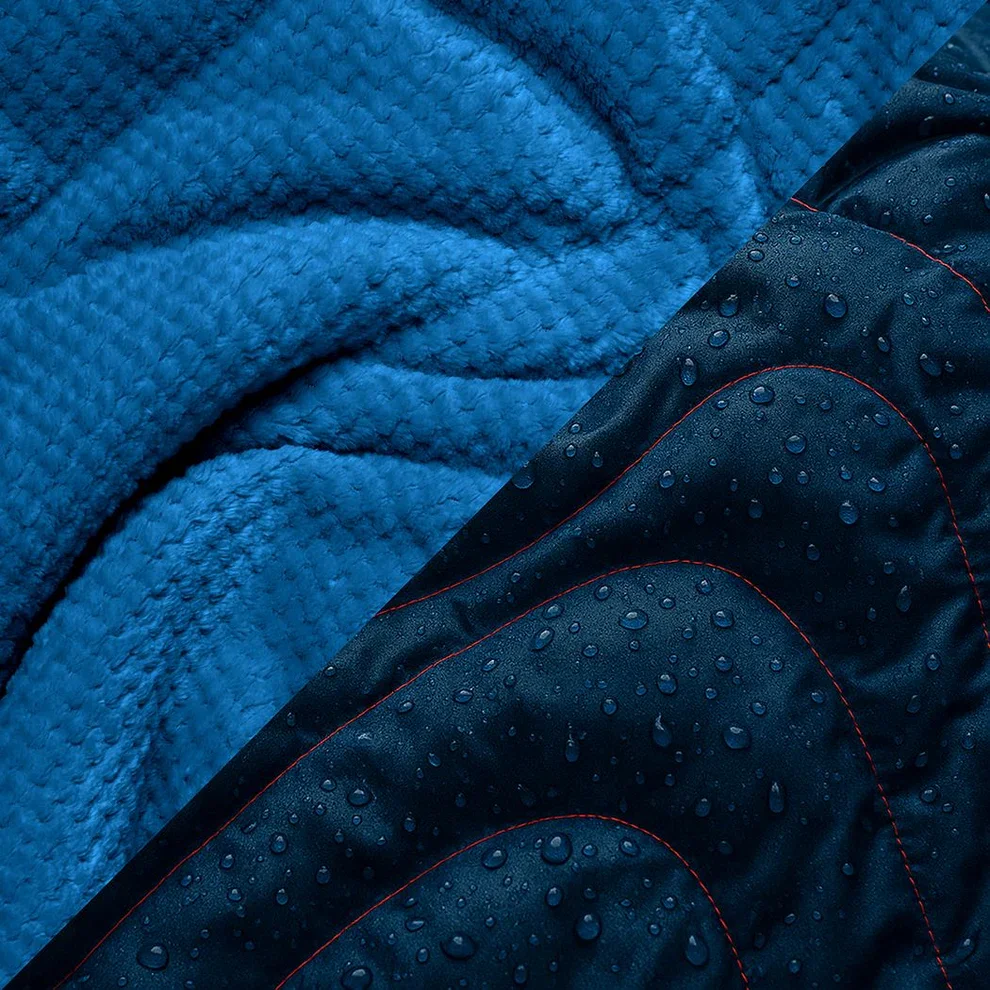
The Rumpl blanket combines a soft fleece interior with a water-resistant shell, making it useful both inside the van and outside at camp.
Standard puffy blankets are insulated, but in my experience, the smooth outer shell doesn’t hold warmth against your body the same way fleece does.
With the fleece side directly on me, the blanket feels warmer faster. During shoulder-season desert camping — when temperatures drop into the 30s after a mild day — that immediate warmth is noticeable.
It’s not about adding more bulk. It’s about how the layer feels and performs once you’re still.
When This Blanket Makes the Most Sense
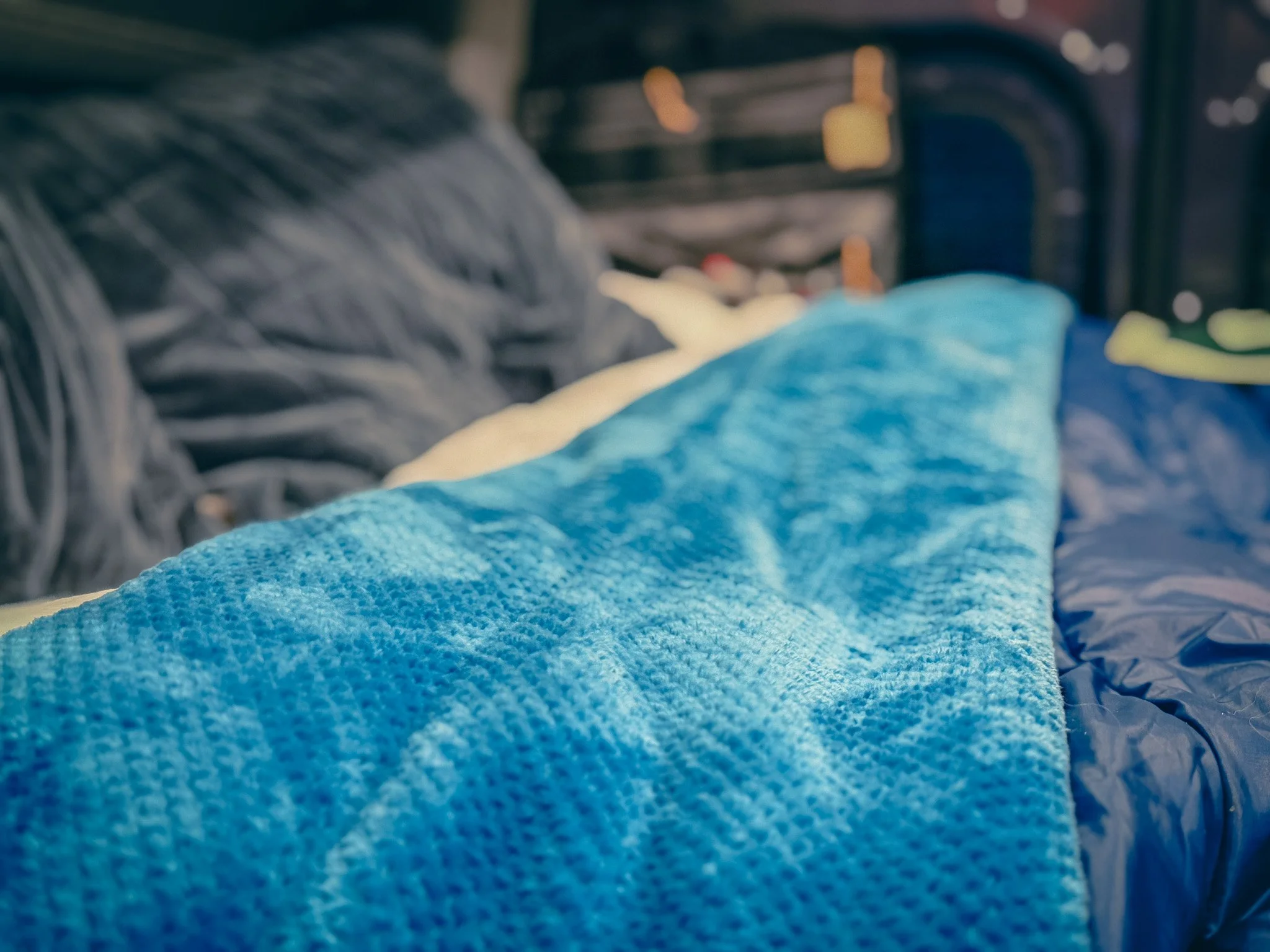
A Rumpl blanket layered on the van bed for extra warmth during cold nights on the road.
This blanket makes the most sense anytime warmth and comfort both matter.
Cold winter nights in a van.
Chilly spring evenings when temperatures drop faster than expected.
Sitting outside in your camp chair after the sun goes down.
The fleece side is incredibly soft, which makes it feel more like real bedding than camping gear. That comfort matters at the end of a long day.
And because the fleece traps warmth quickly, it performs well when temperatures dip into the 30s or low 40s — without needing to pile on extra layers.
It’s warm. It’s comfortable. It’s earned its place in my van.
Final Take
Cold-season van travel is some of my favorite travel — fewer crowds, crisp mornings, clear skies.
But temperatures drop fast once the sun disappears.
After trying what I use at home and testing different combinations, the Rumpl Fleece Puffy Blanket is the one layer that stayed in my van.
If a layer doesn’t serve a purpose, it doesn’t stay. There’s no room for the unnecessary in a van.
This one stays.
Read my full Rumpl Fleece Puffy Review, Rumpl Fleece Puffy Blanket Review: The Warmest Rumpl Blanket I Own.
Frequently Asked Questions
How do you stay warm sleeping in a van?
I layer my bedding and always bring a warm blanket. The Rumpl Original Puffy Blanket has kept me comfortable on spring, fall, and winter camping trips.
Is a Rumpl blanket warm enough for van camping?
For me, yes. It's become one of the blankets I reach for on almost every trip because it's warm without being bulky.
What is the best blanket for sleeping in a van?
I've tried a few options, but I keep coming back to the Rumpl Original Puffy Blanket because it's warm, lightweight, and easy to pack.
Can you use a Rumpl blanket year-round?
Yes. I use mine in spring, fall, and winter. On cooler summer nights, it's also nice to have if temperatures drop.
Michele Underwood writes Overland Girl, where she shares the gear she uses on real trips—from the Northwoods of Wisconsin to desert rides in the West. She values quality and craftsmanship and believes in buying less, but buying better. The gear she recommends is gear she uses herself.
Some links on Overland Girl may be affiliate links. If you purchase through them, Michele may earn a small commission at no extra cost to you.