Snow Peak Gear Review: The Camping Gear I Keep Using
Why I Keep
Coming Back to Snow Peak
Words by Michele Underwood | Photos by Michele and Snow Peak
Why Snow Peak?
I don’t own every Snow Peak product. But the gear I do use has been tested on a lot of camping trips—packed into the Jeep or a friend’s SUV, pitched in the dark in the Northwoods of Wisconsin, cooked on after long days, and still holding up. I keep coming back to Snow Peak because of its design, quality, and simplicity. It’s not the cheapest, but it’s gear that works.
This isn’t a brand overview. It’s a review of what I actually use, what I skipped, and what might join my kit next.
Tents I’ve Used (And Still Use)
01 Snow Peak Alpha Breeze Tent
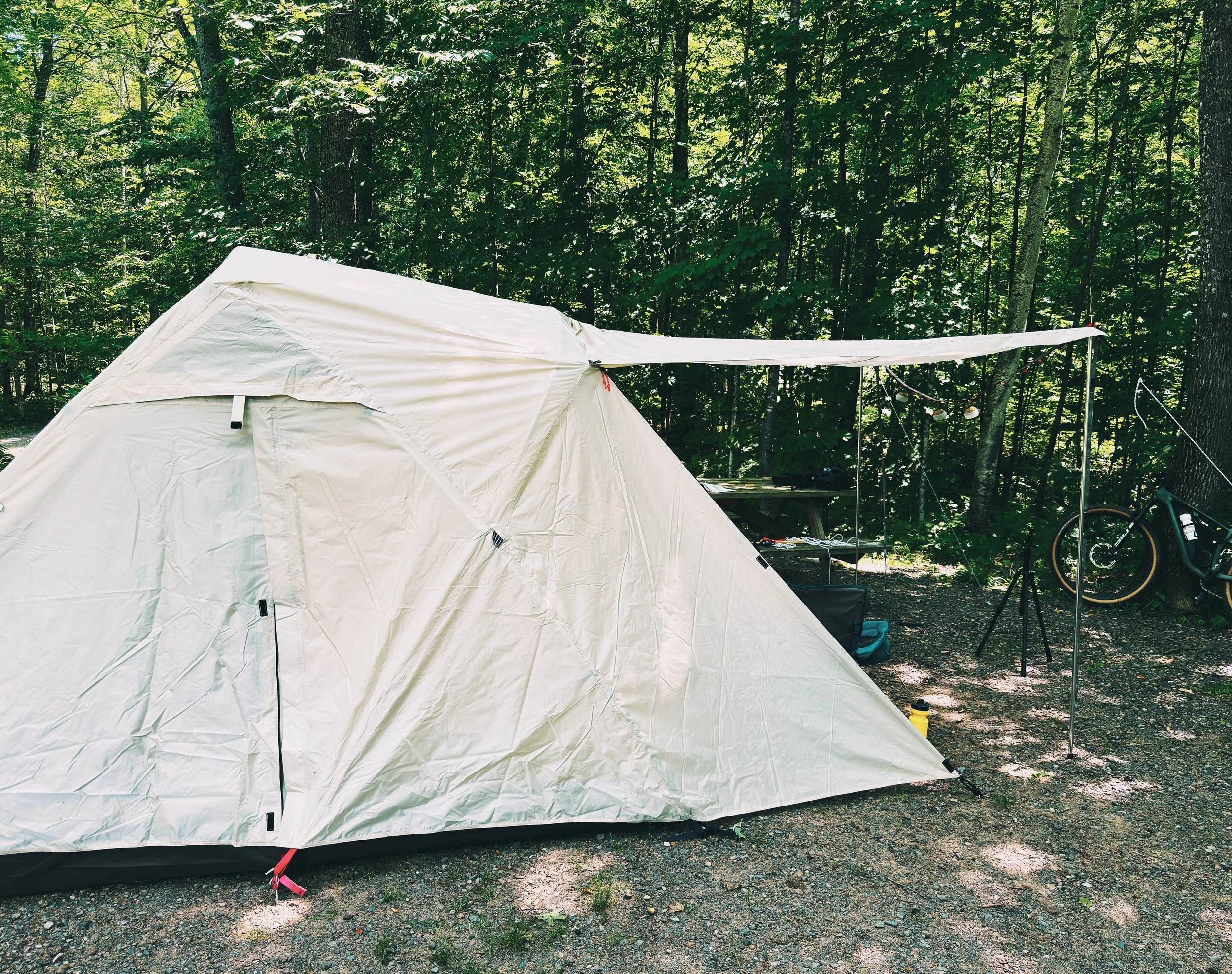
My Snow Peak Alpha Breeze Tent set up in the Northwoods—vestibule out, camp dialed, and space to settle in.
This is the one I bring for longer camping trips when I want space and stability. It’s tall enough to stand in (I’m 5'5") and roomy enough for a small table and gear storage. It’s not a solo tent—it’s a proper 3–4 person shelter—but I like the extra space to spread out.
I’ve pitched it a few times in the Northwoods of Wisconsin. The front vestibule is one of my favorite features—great for shade, morning coffee, or just hanging out with a book in a camp chair. Airflow is excellent, even in humidity, and the mesh keeps the bugs out without feeling closed in.
Quick take: Easy to pitch, well-built, great ventilation. If you like extra room at camp, this is a solid upgrade.
02 Snow Peak Amenity Dome Small (Ivory)
Perfect for weekends or solo trips. It’s compact, quick to set up, and low-profile enough to disappear into most campgrounds: no standing room inside, but plenty of comfort and weather protection.
Quick take: Lightweight, efficient, and simple. I grab it when I want to travel light but stay dry.
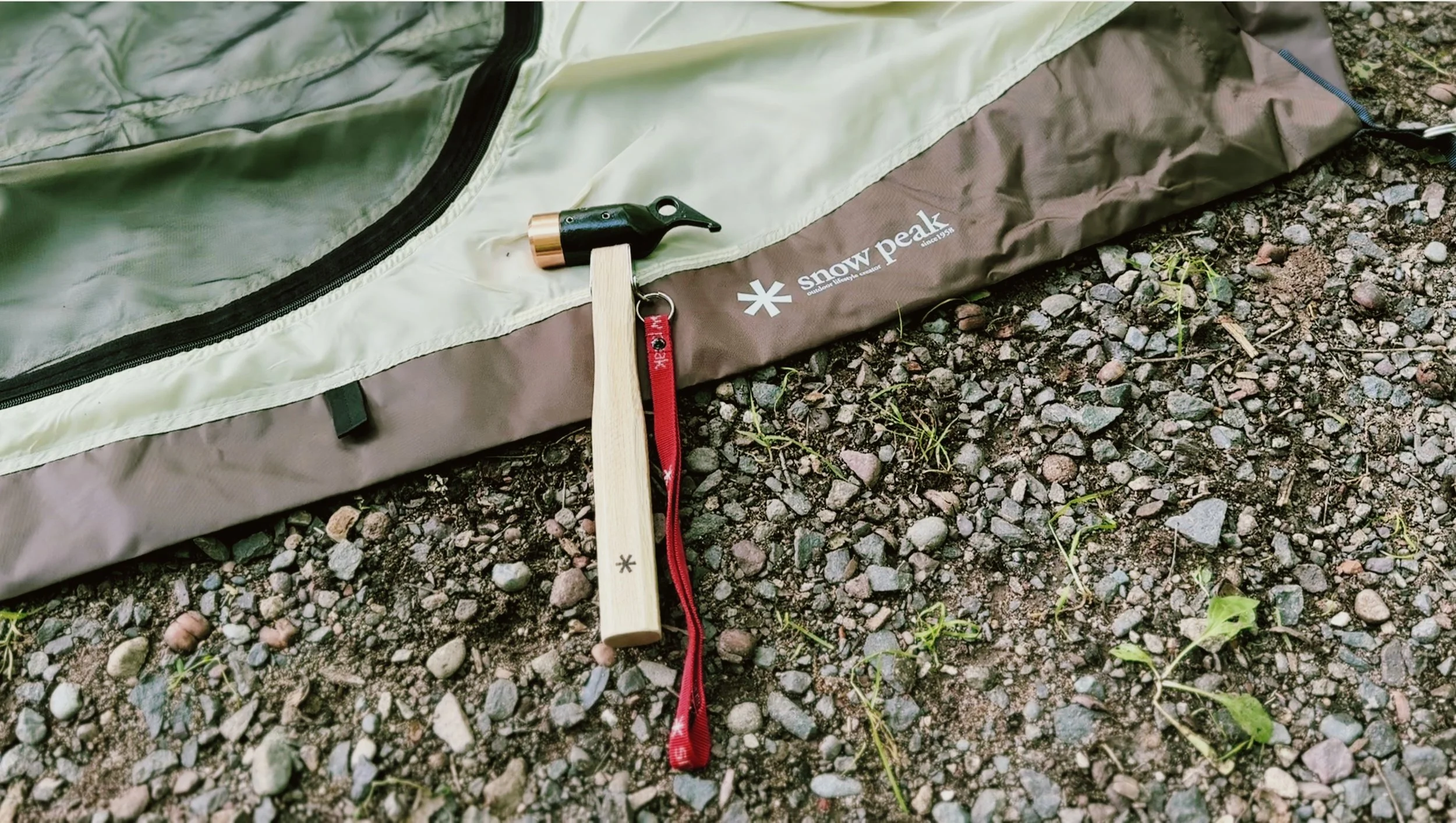
The Snow Peak Copper Head Peg Hammer—one of those simple pieces that ends up coming on every trip.
Pro tip: I use the Snow Peak Copper Head Peg Hammer to drive in tent stakes, but I’ve used it for other things around camp too. It’s technically made for tents, but it’s heavy, simple, and just works. I didn’t think I’d care about a hammer—but this one is really well made, and now I bring it on every trip.
Snow Peak Cookware, Lighting, and Camp Accessories I Use
The bigger gear gets the attention, but it’s the smaller pieces that end up becoming part of the routine. These are the things that get used every day at camp—the ones that don’t get swapped out or left behind.
Snow Peak Titanium Mugs
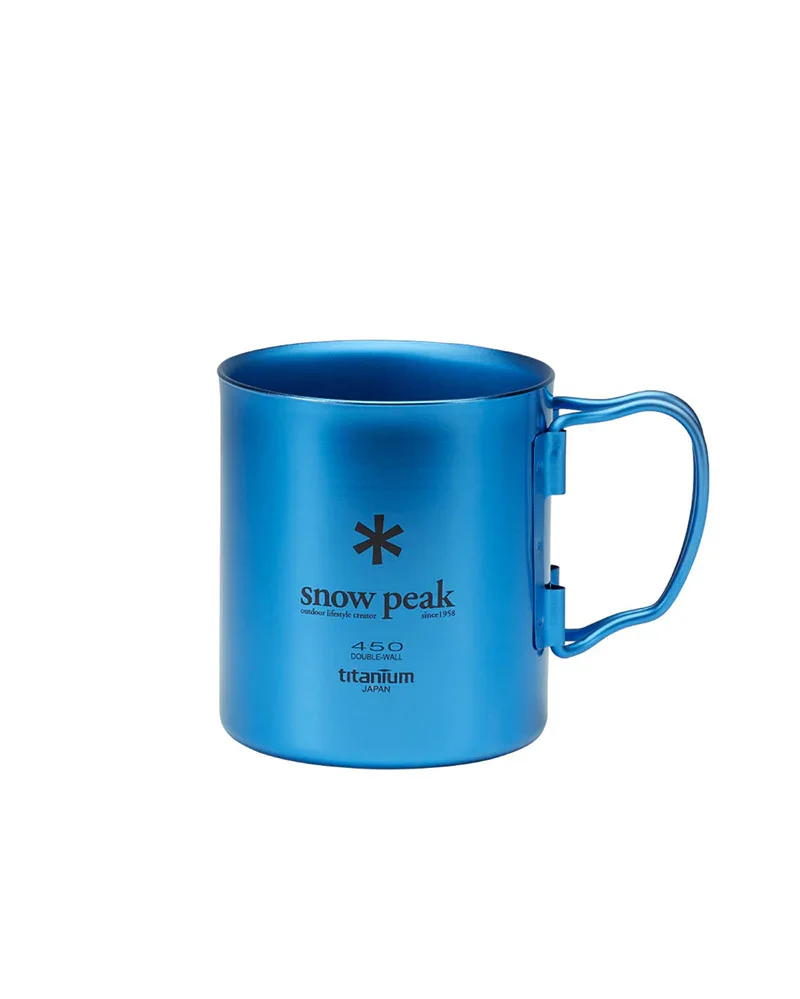
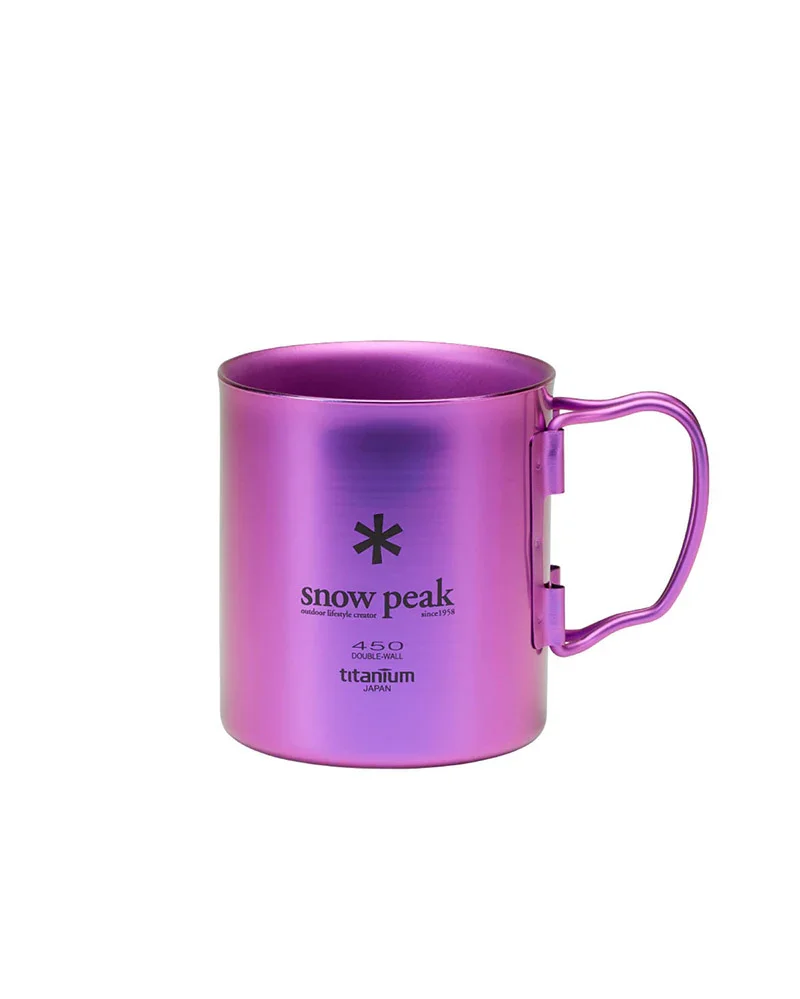
I have a few Snow Peak titanium mugs: blue, purple, green, and a regular one. They’re lightweight, easy to pack, and simple in the best way. No coatings, no extra features—just a clean design that holds up over time. They move between the van, camp, and home without much thought, which says a lot about how often they get used.
Quick take: Lightweight, durable, and always in rotation.
Snow Peak GigaPower Stove
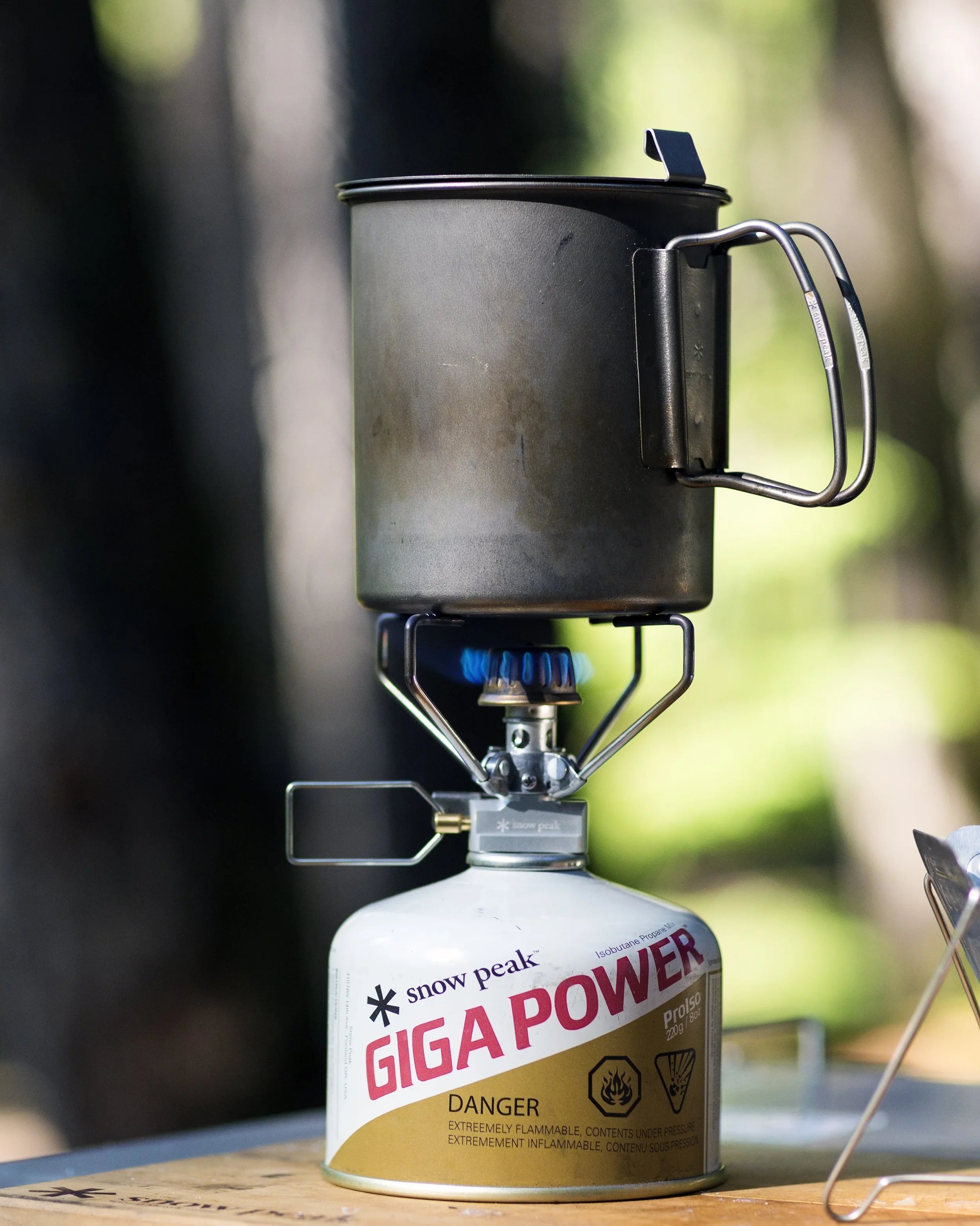
Heating water in the Snow Peak Trek 700 Titanium on the Snow Peak GigaPower Stove—a simple setup I use all the time at camp.
The Snow Peak GigaPower Stove is what I reach for when I want something quick and simple. It handles morning coffee, small meals after a ride, and anything that doesn’t need a full setup. It’s compact, easy to pack, and lights fast, and it’s never been something I’ve had to think about once it’s in the kit.
Quick take: Small, reliable, and easy to use.
Snow Peak Rechargeable Mini Hozuki Light
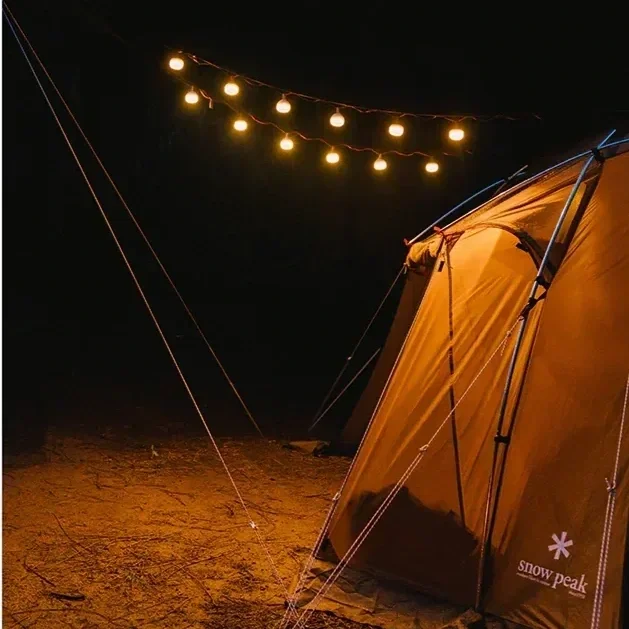
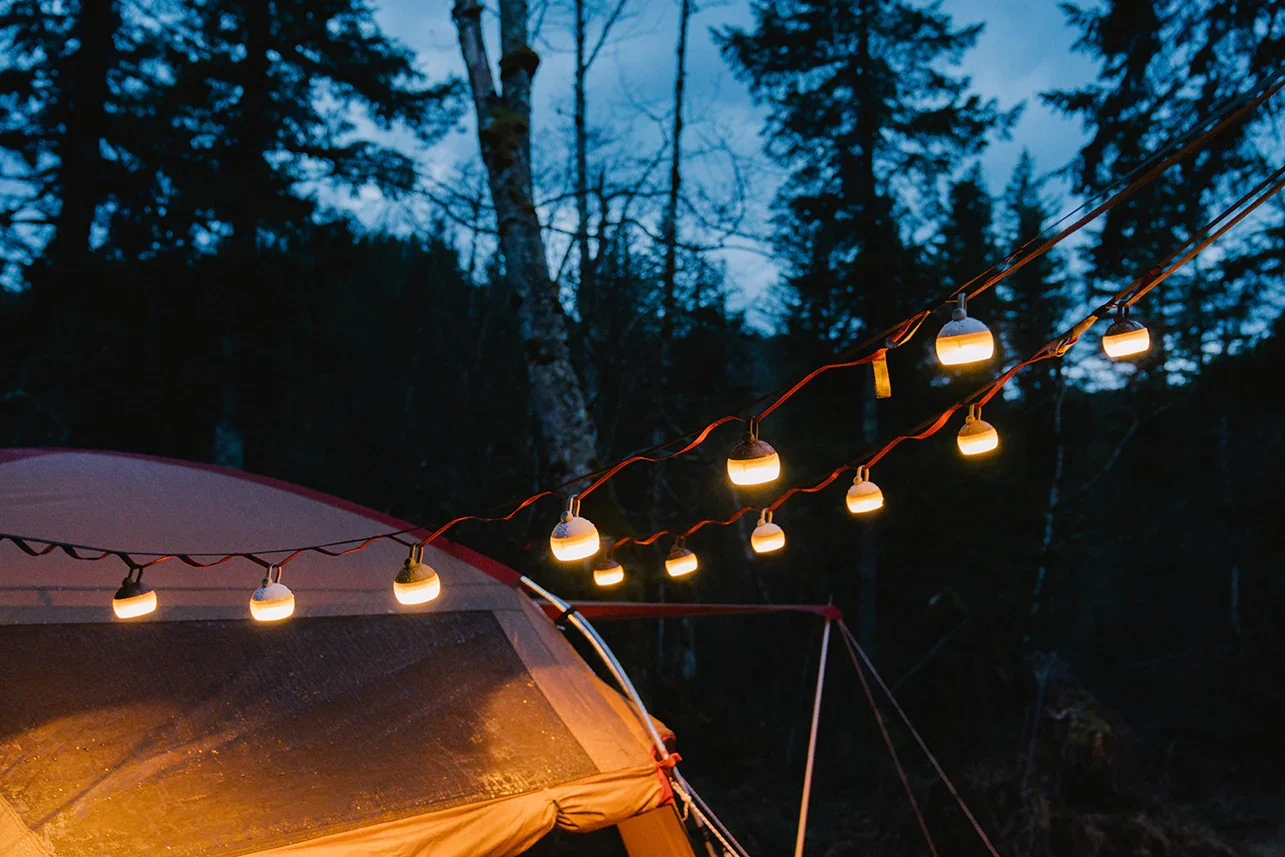
Camp at night with Snow Peak Mini Hozuki lights—soft glow, simple setup, and a completely different feel once the sun goes down.
The Snow Peak Mini Hozuki is one of my favorite pieces in my camp setup. The light is soft and warm, not harsh like a lot of camp lighting, and it works just as well inside the tent as it does clipped in the van or hanging around camp. It’s also one of those pieces that looks as good as it functions, which is something I always notice.
Quick take: Warm light, thoughtful design, and more versatile than it looks.
Snow Peak Titanium Plates, Bowls, and Utensils
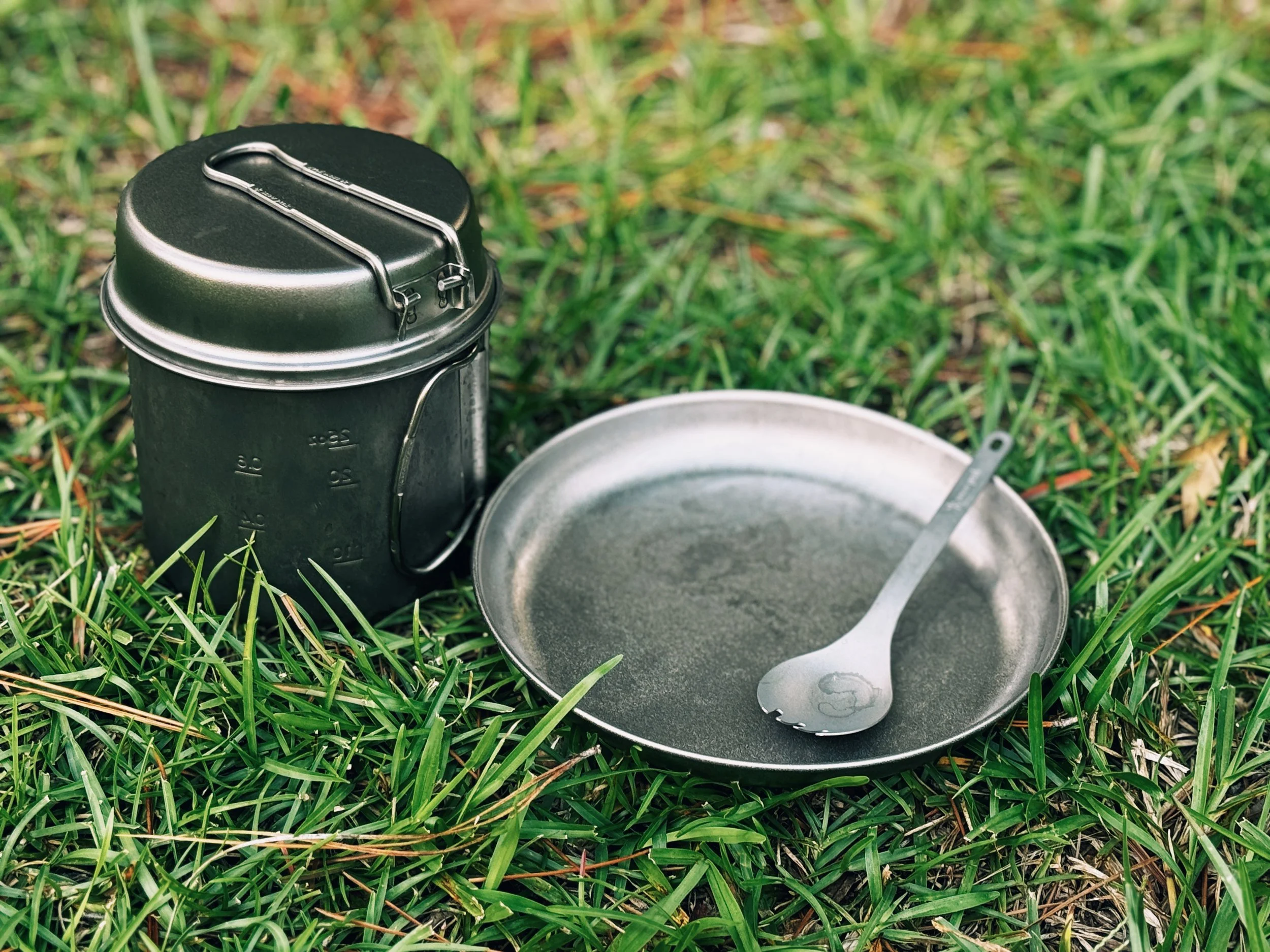
Snow Peak titanium tableware in use—simple, lightweight pieces that end up coming on every trip.
I also use a mix of titanium plates, bowls, and utensils from Snow Peak—sporks, forks, and a knife that all live in my camp kit.
This is the stuff that ends up getting used every single day. Coffee turns into breakfast. Breakfast turns into something quick after a ride. And it all gets reused without much thought.
Titanium keeps everything lightweight and easy to pack, but what I notice more is how simple it all feels. No coatings to worry about. Nothing fragile. It just holds up.
It’s not the kind of gear you think about once you have it—which is kind of the point.
Quick take: Durable, minimal, and part of my everyday setup at camp.
What I Skip (For Now)
I don’t own everything from Snow Peak, and I don’t think you need to. Some of their larger kitchen systems and furniture setups are well-designed, but they’re more than I need for how I camp right now. My setup leans toward simple, easy-to-pack, and that’s where these pieces fit best.
That could change over time, but for now, I stick to the gear I know I’ll use every trip.
Why Snow Peak Costs More
Snow Peak is one of the more expensive brands in camping, and that’s something that comes up a lot.
There’s more behind that than just materials. The way the gear is designed, how it’s made, and how it’s meant to be used all play a role. It’s not always obvious at first, especially when you can find similar-looking pieces for less.
I broke that down in more detail here: → Why Snow Peak Is So Expensive
What Makes Snow Peak Different
There’s a lot of good camping gear out there, but what stands out with Snow Peak is the consistency. The design feels intentional, and the materials seem meant to last. Nothing feels overbuilt or overdesigned—it just works, and it keeps working.
That’s what keeps it in my kit.
Final Thoughts
If the goal is to find the cheapest gear, this isn’t it. But if the focus is on design, durability, and buying pieces that hold up over time, Snow Peak makes more sense.
Not everything they make is necessary, but the pieces that get used regularly tend to earn their place.
Frequently Asked Questions
Is Snow Peak camping gear worth it?
I think so. It's expensive, but the quality, thoughtful design, and longevity have kept me coming back to the brand.
What is the best Snow Peak gear to start with?
I recommend starting with something you'll use on every camping trip, like a titanium mug, spork, lantern, or stove.
Is Snow Peak gear made in Japan?
Some products are still made in Japan, while others are manufactured in different countries. It depends on the product.
Why do I keep buying Snow Peak gear?
Because it works well, lasts for years, and makes camping more enjoyable. I don't buy everything Snow Peak makes, but the pieces I own have earned a permanent place in my camp setup.
Michele Underwood writes Overland Girl, where she shares the gear she uses on real trips—from the Northwoods of Wisconsin to desert rides in the West. She values quality and craftsmanship and believes in buying less, but buying better. The gear she recommends is gear she uses herself.Some links on Overland Girl may be affiliate links. If you purchase through them, Michele may earn a small commission at no extra cost to you.