Why HOWL Campfires Caught My Attention
The propane campfire technology that made me take a closer look at HOWL.
WordsbyMichele Underwood | Photos by Howl Campfires.
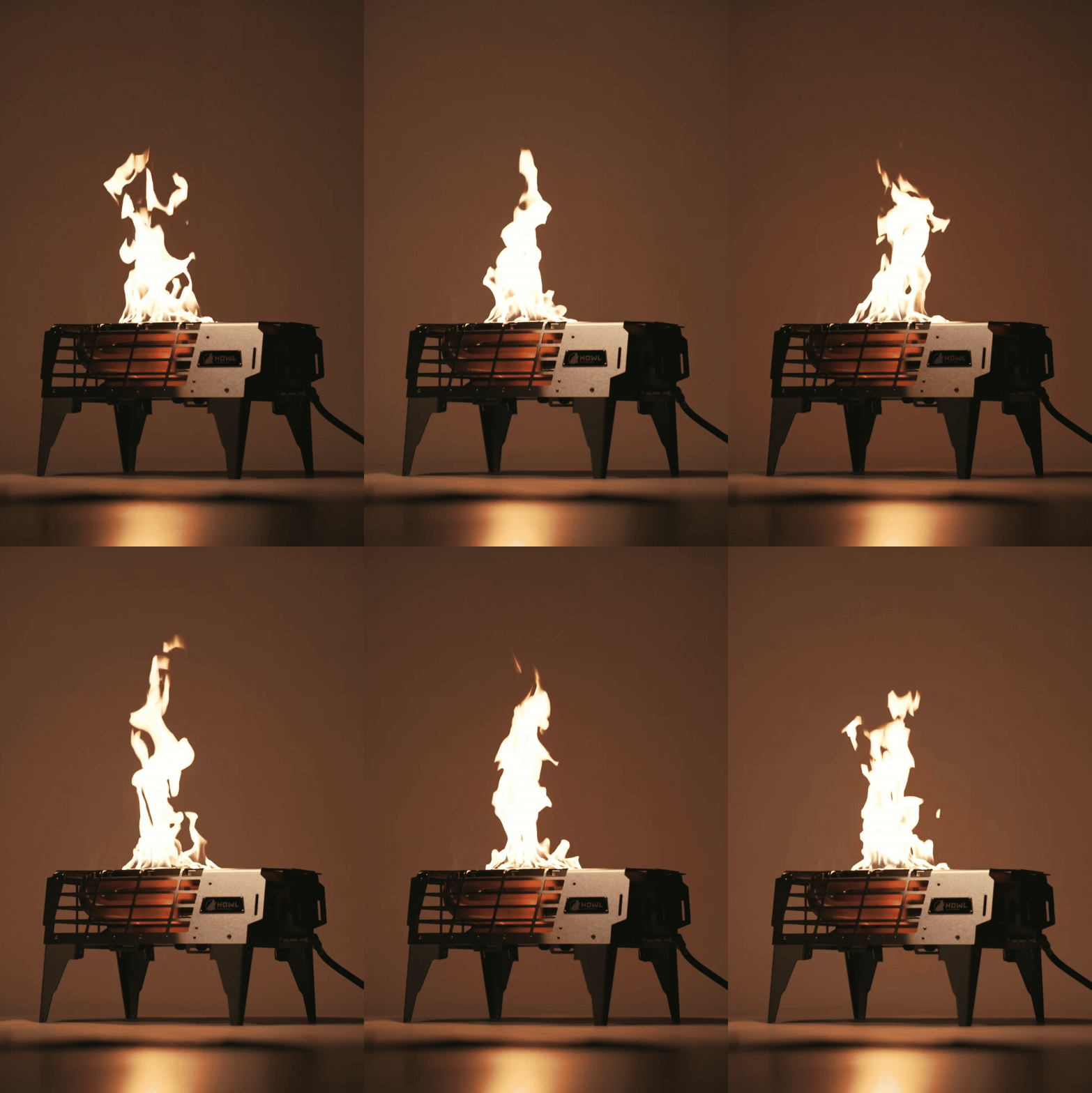
Howl R4 in studio with the flame running at full height.
Why Howl’s Design Stands Apart
Most propane fire pits are built for patios. Howl isn’t. Their design centers on cold-weather camping, burn-ban rules, and real heat you can feel outside. This is a quick breakdown of the tech so you can decide if Howl makes sense before diving into the full review.
I don't own a Howl Campfire yet, so this isn't based on firsthand use. What caught my attention is how differently Howl approaches propane fire—especially the separation between visible flame and radiant heat.
“Mission: build tools that keep the forest and the fire alive. Burn bans are becoming the norm, but camping without a fire is lame. Howl exists to give you a real campfire experience—even when only propane is allowed.”
The Tech Behind Howl’s Heat
One mission. Two game-changing technologies.
Howl sums up their design as a single mission—keep the forest and the fire alive—and two core technologies that make it work:
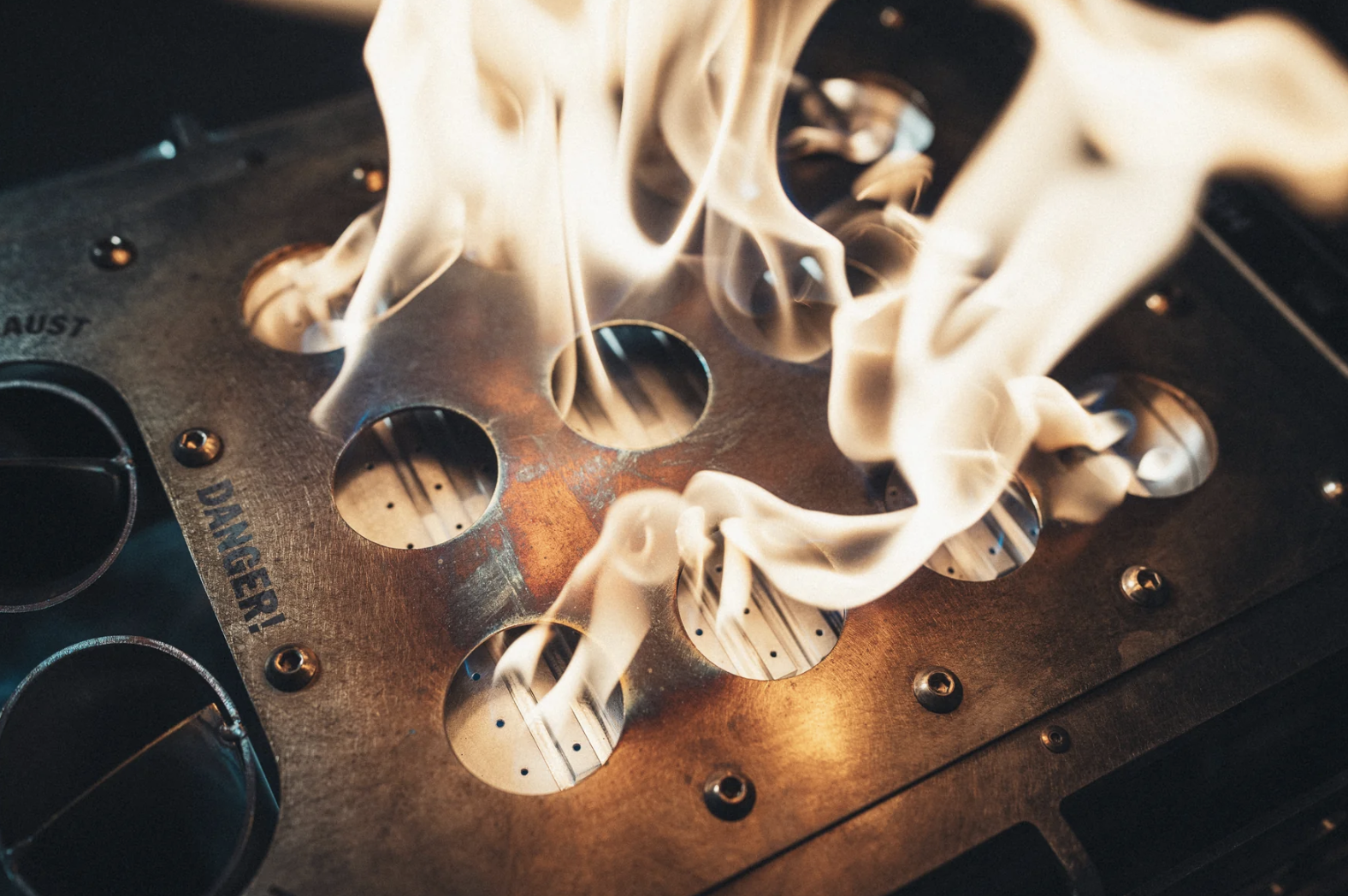
Top-down view of the Howl burner system with flames moving across the plate.
BarCoal® – Their radiant heat system, engineered to run hotter than typical propane fire pits, so you actually feel the warmth in cold weather.
A-Flame® – Their ultra-efficient visible flame, tuned to give you that campfire look while using less fuel than a standard burner.
Under the hood, Howl splits heat and flame into two separate systems—this is the big difference:
A-Flame burner: The visible flame (ambience + light).
BarCoal radiant tubes: The real heat source (like glowing coals, not just a flame).
Together they give you:
Actual warmth in cold weather.
A flame that isn’t just for looks.
Better control than any wood fire.
Faster start/stop with zero ash.
When you turn the valve off, it’s out. No guessing, no smoldering.
The Two Howl Campfires
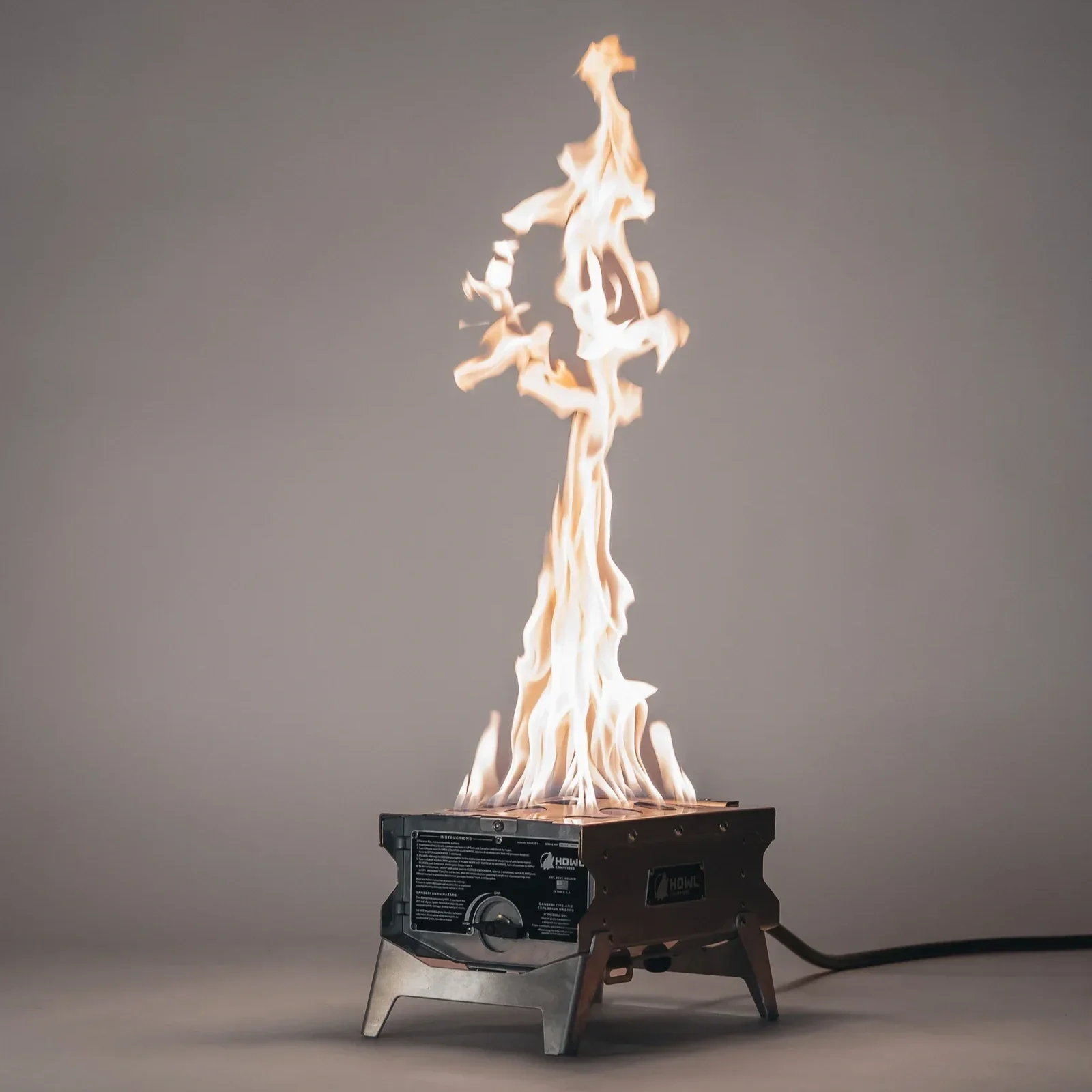
Howl R1 in A-Flame mode during studio testing.
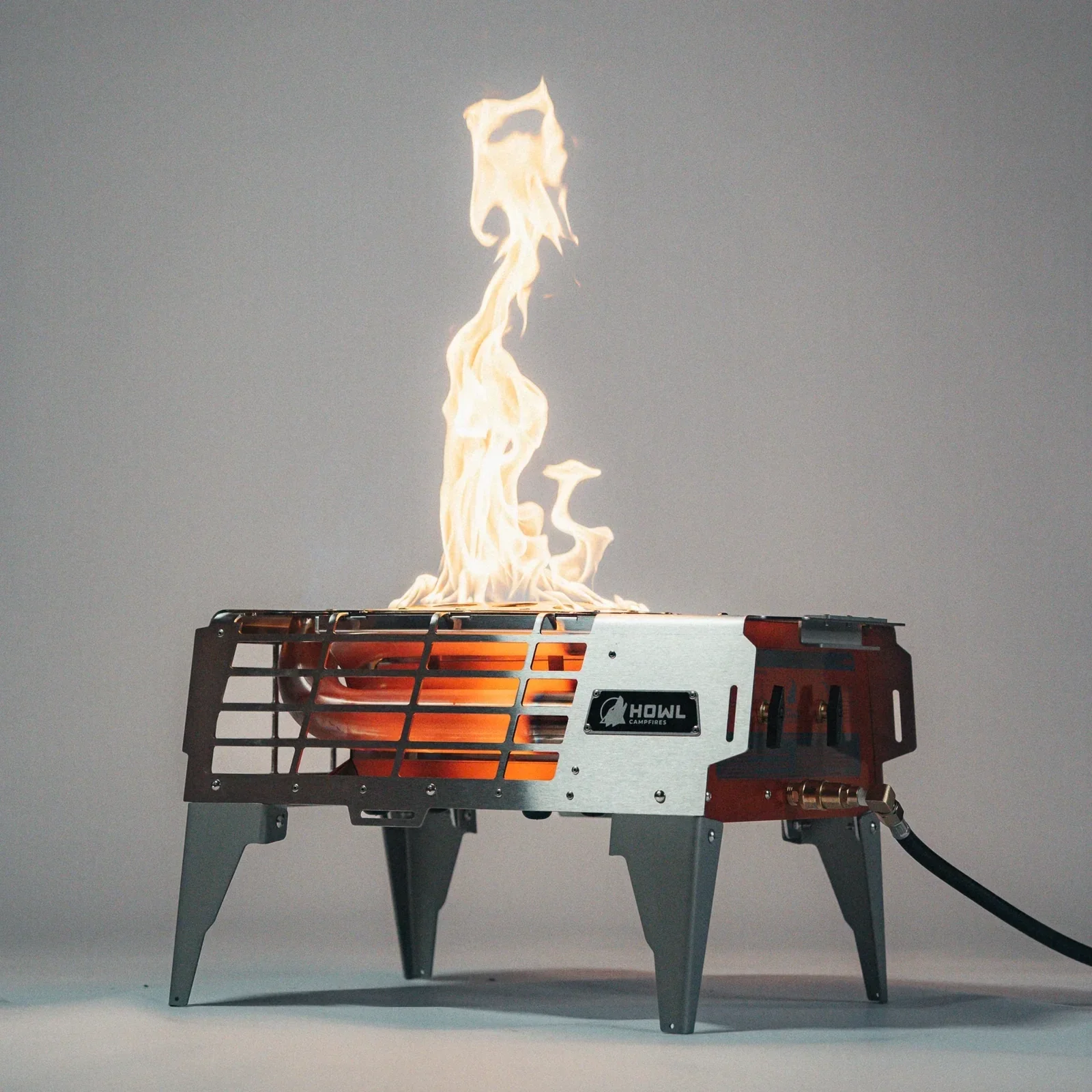
Howl R4 MKII showing the BarCoal radiant tubes glowing under flame.
Howl R1: Compact, packable propane campfire sized for small rigs, patios, and two–four people at camp.
Howl R4 MKII: Larger, higher-output model built for groups, basecamps, and true cold-weather nights.
Why This Matters Outdoors
Works in the wind better than a wood fire.
Radiant heat reaches your legs and layers.
No sparks, rolling logs, or collapsing wood piles.
No leftover ash or fire ring cleanup.
Often allowed when wood fires are banned (always check local rules).
It’s built for conditions that most campers actually face.
The Three Modes That Change the Experience
01. Lantern Mode
Soft flame, minimal heat. Good for warm nights or early coffee.
02. Campfire Mode
Flame + radiant heat together. This is the “real campfire” mode.
03. Stargazing Mode
Heat without the bright flame. Great for dark-sky sites.
These modes are why Howl feels more like equipment than a patio toy.
Who Will Benefit Most
Campers who go out in shoulder seasons or winter
Vanlifers and overlanders who want reliable heat
Anyone tired of smoky clothes and dealing with ash
People camping in places with strict fire restrictions
If you think of warmth as essential comfort, not just ambience, Howl makes sense.
Where to Go Next
Read the full Howl Campfires Review: Howl Campfires Review: Premium Propane Fire Pit for Cold-Weather Camping, for performance and model picks.
Check the Outdoor brands you might not know, but you should — Howl Campfires feature for the brand story.
Visit Howl Campfires to compare specs and shop their lineup.
This guide gives you the “why.” The review will help you choose between the R1 and the R4.
Frequently Asked Questions
What makes HOWL Campfires different from other propane fire pits? HOWL separates visible flame from heat. Its A-Flame system creates the flame, while the R4 MKII uses BarCoal radiant heaters designed to provide the kind of radiant warmth you get from glowing coals.
What is BarCoal? BarCoal is HOWL's radiant heat technology. Instead of relying only on hot air from a propane flame, the system produces infrared radiant heat you can feel directly.
What is the difference between the HOWL R1 and R4 MKII? The R1 is the smaller, more portable option designed for mild-season use. The R4 MKII adds BarCoal radiant heaters and is designed for colder conditions when you need more heat.
Can you use a HOWL Campfire during a fire ban? It depends on the restrictions where you're camping. Propane fires may be allowed when wood fires are prohibited, but you should always check current local fire restrictions before using one.
Can you cook on a HOWL Campfire? HOWL does not certify or recommend its campfires for cooking. They're designed as outdoor gas fire appliances, so you'll still need a separate camp stove for cooking.
Michele Underwood writes Overland Girl, where she shares gear she uses on real trips—from the Northwoods of Wisconsin to the Ozarks. She values quality and craftsmanship in everything she buys—from outdoor gear to everyday clothes and furniture. Her choices may seem expensive to some, but she believes in buying less and buying better. Longevity matters, both in terms of function and style.

Some of the links in this review are affiliate links, which means she may earn a small commission if you buy through them. It doesn’t cost you anything extra, and it helps support her work. She only recommends gear she’d bring herself.