HOWL Campfires Guide: R1 vs R4 for Cold-Weather Camping
A closer look at the HOWL R1 and R4, how the technology works, and which model makes sense for different types of camping.
Words by Michele Underwood | Photos by Howl Campfires.
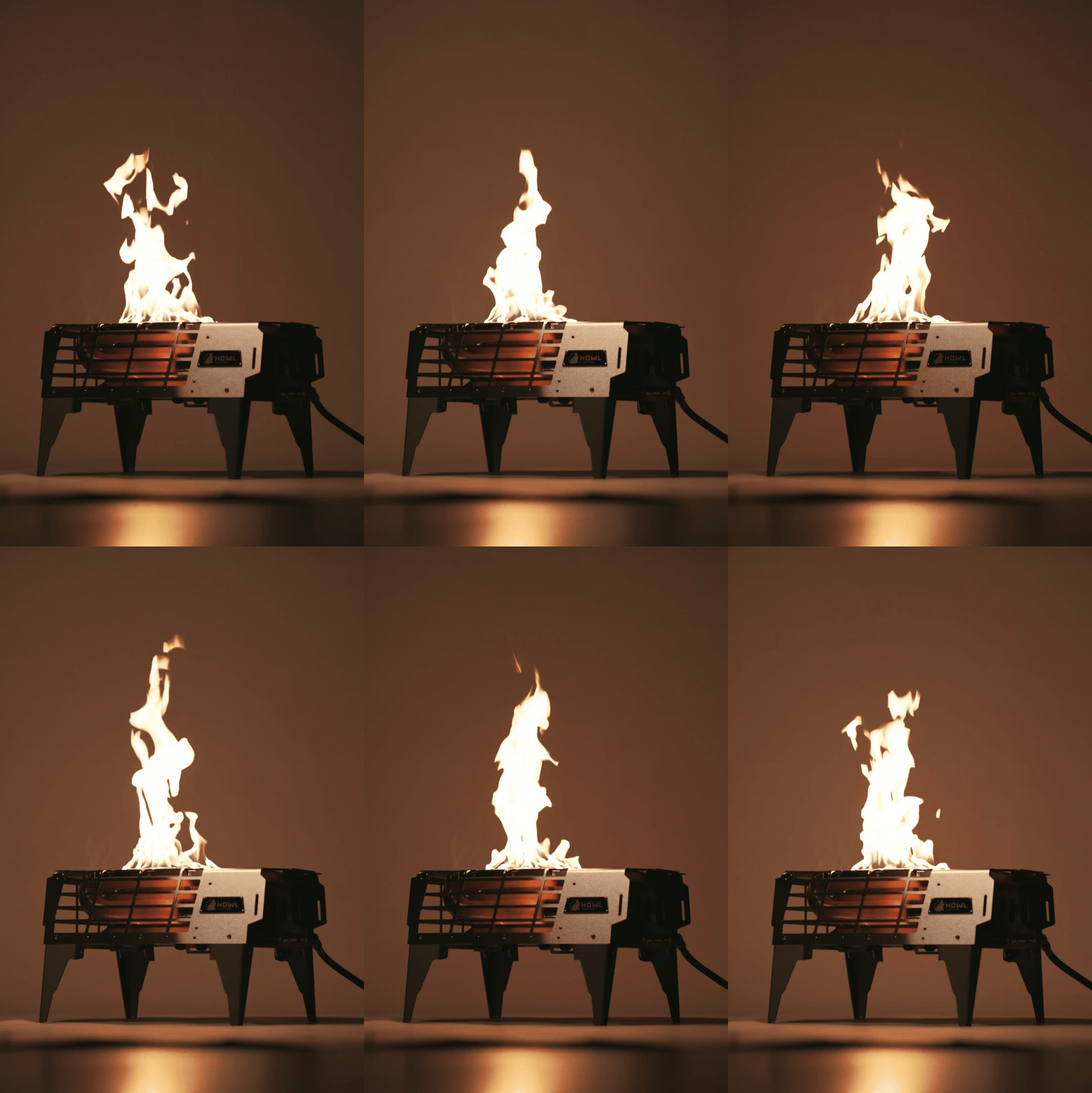
Howl R4 in studio with the flame running at full height.
Overview
If you camp in the shoulder seasons or all winter, a good fire becomes non-negotiable. The problem is that traditional wood fires come with a lot of baggage—smoke in your face, sketchy fire rings, and growing restrictions on open flames. Howl Campfires is one of the few brands trying to rethink the campfire from the ground up with a propane-based system built for real heat, clean burn, and better control.
I haven’t added a Howl unit to my kit yet, so this isn’t a hands-on field test. Instead, it’s a research-based overview pulling from Howl’s own technical details and third-party reviews—focused on cold-weather use, the three modes, and how the two models are positioned for real-life camping.
About Howl Campfires
Howl Campfires started with a simple tension: people still want to gather around a fire, but our forests and weather don’t always make that safe or responsible. Instead of building another patio fire table, Howl focused on a camp-first propane fire—something portable, durable, and hot enough to stand in for a real wood campfire.
Every unit is designed and built in Colorado by a small team of engineers and designers. The heart of the system combines:
An A-Flame burner for the visible flame and ambiance.
BarCoal radiant tubes that act like glowing coals, throwing deep, even heat.
The result is a fire that you can turn on with a valve, dial up or down depending on the mode, and shut off completely when you’re done—no ash, no smoldering coals, no guessing if it’s really out.
If you camp where burn bans are common or you’re tired of smoky clothes, Howl aims to be a cleaner, safer alternative that still feels like a real campfire.
HOWL R1 vs R4: What’s the Difference?
Howl currently has two core models that share the same design language but behave differently at camp.
Howl R1: Compact, Packable, and Van-Friendly
The Howl R1 is the smaller of the two—a compact, rectangular unit that’s easy to tuck into a van garage, truck bed, or small gear closet.
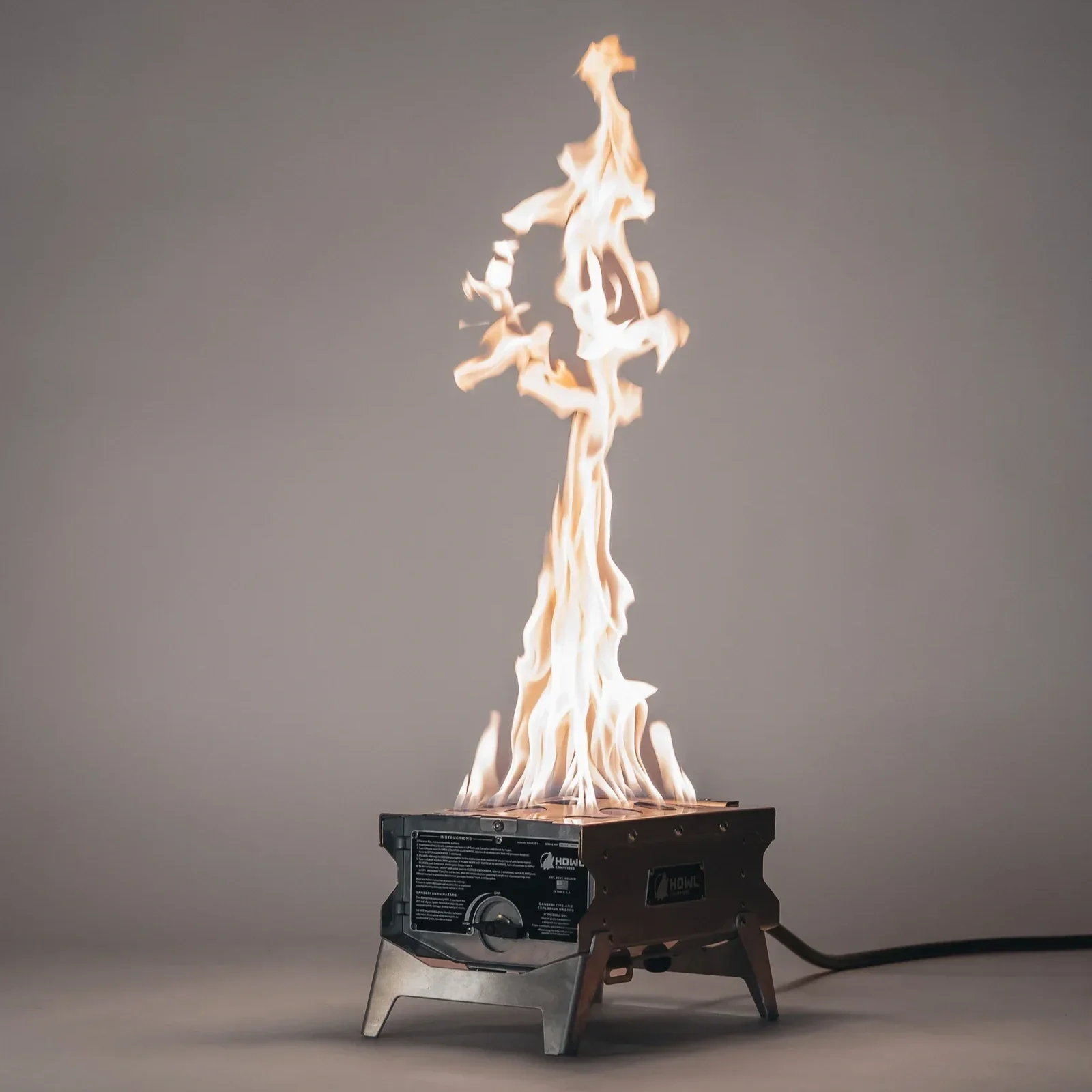
Compact Howl R1 propane fire pit with a tall, clean flame.
Quick Specs (R1)
Size: Small, rectangular footprint that fits easily in a van or truck bed.
Weight: Light enough to move with one hand.
Fuel: Standard propane tank (with hose and regulator).
Output: Built for small groups and shoulder-season chill, not huge crowds.
Best Use Cases
Two to four people at camp.
Vanlife and car camping where space matters.
Driveway and patio hangs where you don’t want a massive fire pit.
If your setup is minimalist but you still want a real flame and noticeable heat, the R1 makes sense. It feels more like a “take-it-anywhere campfire box” than a piece of permanent patio furniture.
Howl R4 MKII: Big Heat for Groups and Winter Camp
The Howl R4 MKII is the larger, high-output system. It pairs the A-Flame burner with dual BarCoal radiant tubes on a larger body, delivering more heat, greater coverage, and more presence at camp.
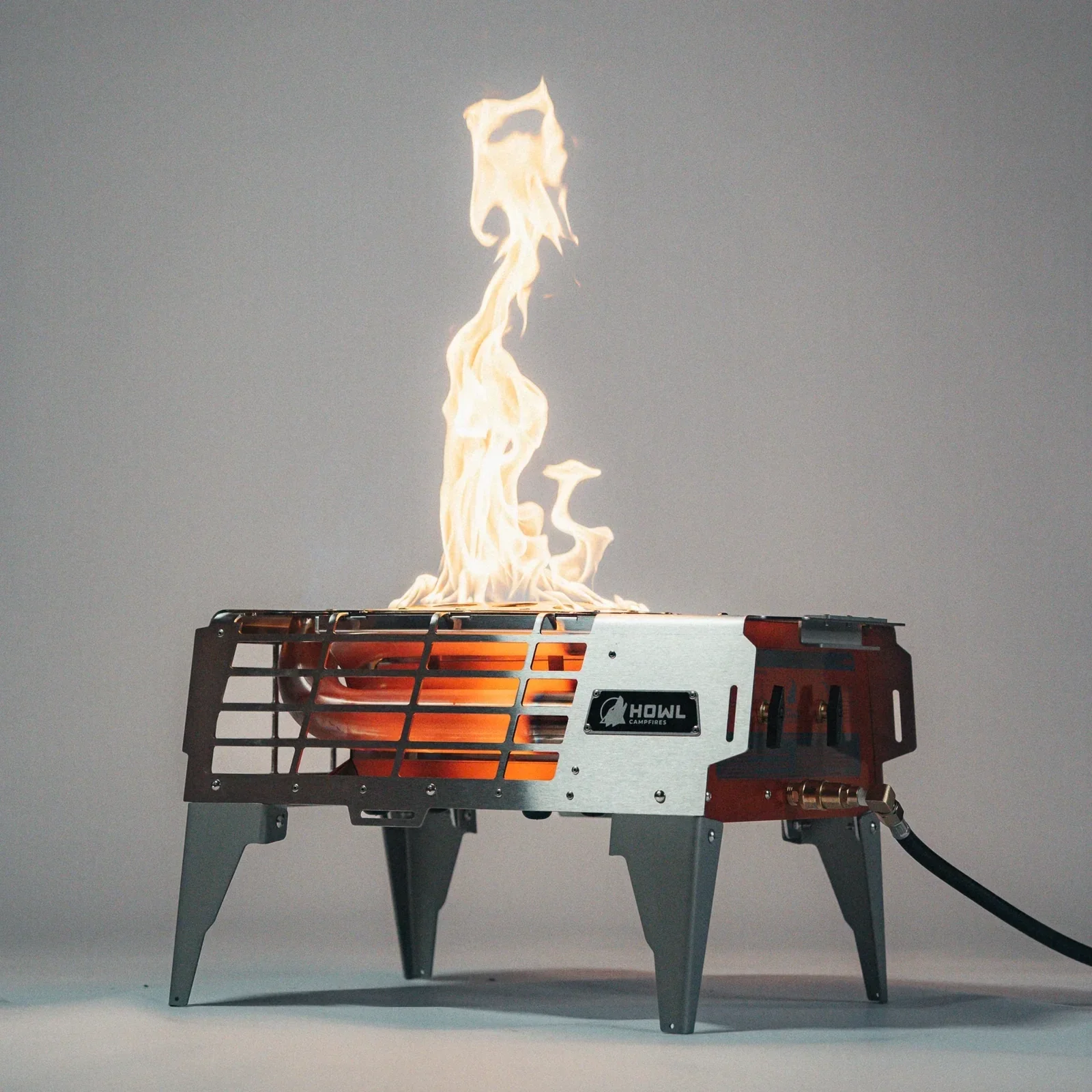
Howl R4 M4II showing its BarCoal radiant tube and flame.
Quick Specs (R4)
Size: Bigger footprint with taller legs and more surface area.
Weight: Substantially heavier than the R1—you’ll likely carry it with two hands.
Fuel: Standard propane tank with a higher overall draw at full output.
Output: Marketed for real cold, group sites, and four-season camping.
Best Use Cases
Group campsites with four or more people.
Basecamps, cabins, and long weekends in one spot.
Actual winter camping when you care more about heat than saving a few pounds.
If you think of the R1 as the “everywhere campfire,” the R4 is the basecamp heater. It feels closer to sitting in front of a big, healthy wood fire—just without the wood.
How the Three HOWL Campfire Modes Work
Both the R1 and R4 share the same three operating modes. On paper, they’re simple, but in the field they make a big difference.
Lantern Mode
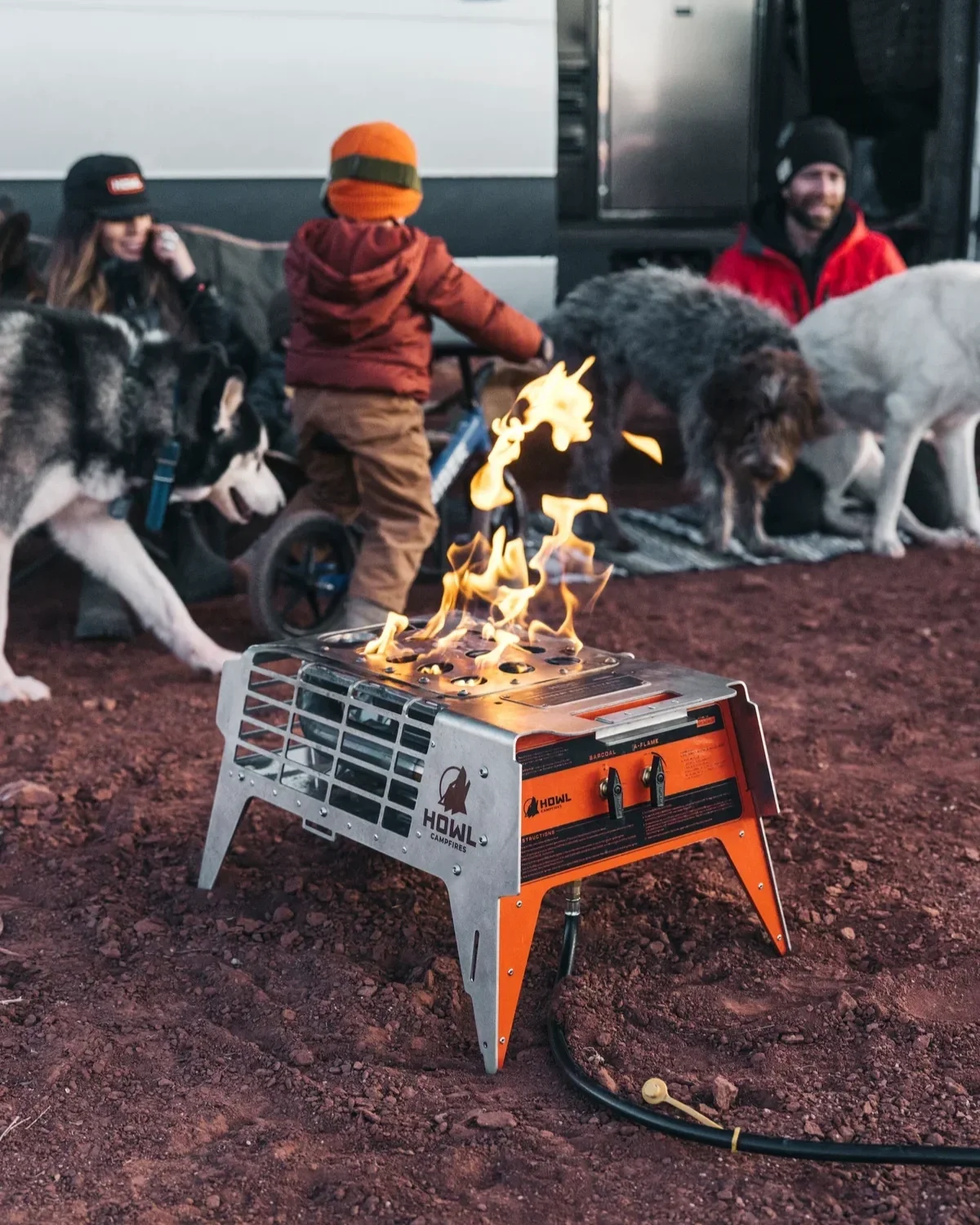
Howl R1 running at a family and dog-friendly campsite.
In Lantern Mode, only the top A-Flame burner is running. You get a gentle, flickering flame with minimal heat output.
Best for:
Perfect for warm nights when you want the vibe of a fire without roasting.
Great for early mornings with coffee or late-night wind-down time.
More about ambiance than serious warmth.
Campfire Mode
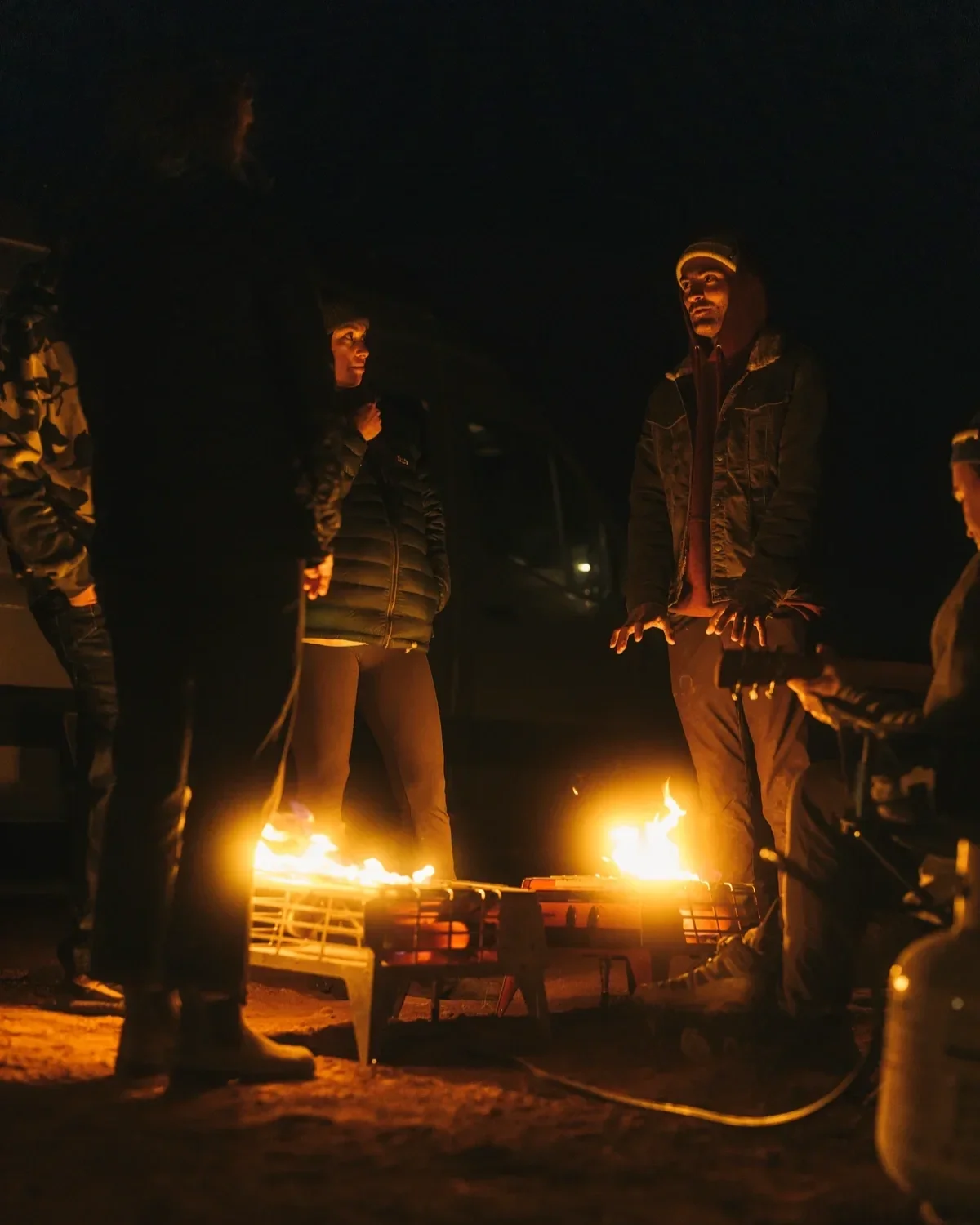
Campfire Mode runs the A-Flame and the BarCoal radiant tubes together. This is where Howl feels most like a traditional campfire.
Best for:
Strong visible flame plus deep, radiant heat.
The setting you’ll live in for cold-weather camping and shoulder seasons.
Stargazing Mode

Stargazing with a Howl Campfire under the Milky Way.
In Stargazing Mode, the radiant tubes carry the load while the visible flame is reduced.
Best for:
Enough heat to stay comfortable without a bright flame.
Ideal for dark-sky sites, quiet nights, and when you want your eyes to adjust to the stars.
For cold-weather use, most reviewers highlight Campfire Mode as the primary setting, with Stargazing Mode as a nice way to keep some warmth without a bright flame once everyone is already settled in.
Setup and Pack-Down
One of the biggest advantages of a propane campfire is how fast you can go from "packed" to "warm."
Setup Routine
Pull the unit out and set it on stable, level ground.
Connect the hose and regulator to your propane tank.
Open the valve slowly, light the burner, and adjust the flame.
Owners and reviewers describe setup as roughly a two- to three-minute process once you’re familiar, which makes it easy to light for a quick hour in the evening or a short coffee session in the morning.
Pack-Down
Turn off the valve and let the flame go out completely.
Allow the body to cool fully before moving or stowing.
Disconnect the hose, coil it, and store it with the unit.
Compared with managing the coals, ash, and cleanup of a wood fire, the HOWL's pack-down process is much simpler.
Heat, Flame, and Cold-Weather Performance
This is the part that interests me most: how much heat do the R1 and R4 produce, and how close are they to the warmth of a wood fire?
Heat Output
The R1 throws enough heat for a small group in shoulder-season temps. You’ll want to sit reasonably close on truly cold nights, but it does a solid job taking the edge off.
The R4 is HOWL's four-season model and uses two BarCoal radiant heaters along with the A-Flame burner. HOWL positions it as the higher-heat option for cold-weather camping.
Flame Quality
Both models nail the flame aesthetics in Campfire Mode: tall enough to feel like a real fire, structured enough not to feel like a gas grill. Lantern Mode gives you that softer, candle-like effect, and Stargazing Mode is pleasantly low-key.
Wind and Weather
Because the burners and tubes are enclosed, Howl handles wind better than a traditional open campfire. The flame will move, but it doesn’t suddenly die or throw sparks sideways the way a wood fire can.
If you regularly camp in exposed sites or high-country trailheads, that stability is a big plus.
Safety and Where You Can Use It
Howl Campfires were created with forest safety in mind, but it’s still real fire and propane.
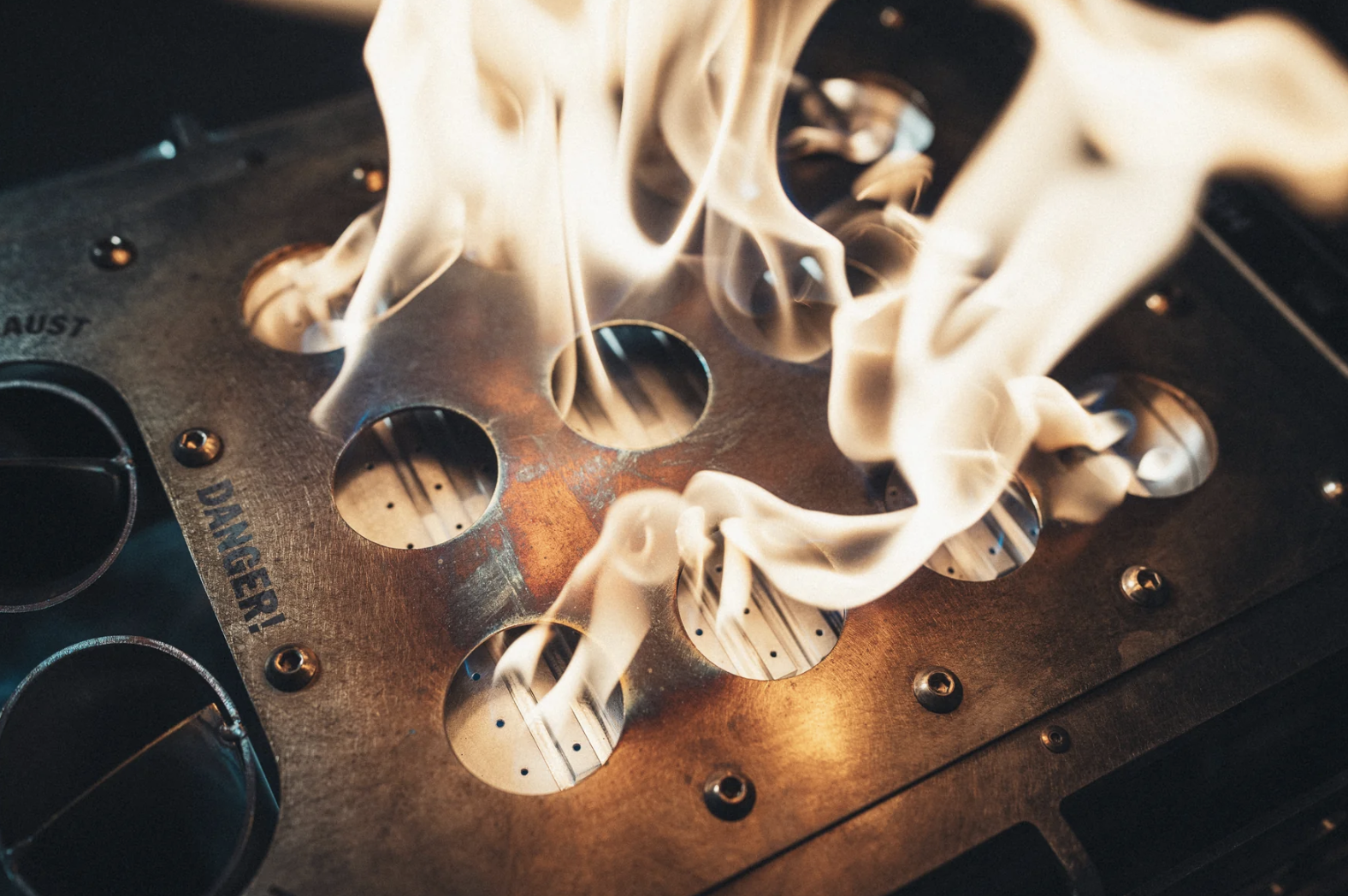
Howl burner plate with the flame pattern in full view.
What feels safer than wood:
No rolling logs or collapsing log piles.
Very few stray sparks compared to a wood fire.
A true off switch—close the valve and the flame is gone.
What still requires judgment:
Clear space around and above the unit.
Solid footing (no wobbly table tops or soft, sloping ground).
Distance from tents, awnings, dry grass, and vehicles.
Many land managers treat propane campfires differently from wood fires and will sometimes allow propane when wood fires are banned. But rules vary, and conditions change fast. Always check current regulations wherever you’re camping and treat a Howl like any other heat source—with respect.
Who Howl Campfires Are For
A Howl setup isn’t for every camper. Here’s who will benefit the most:
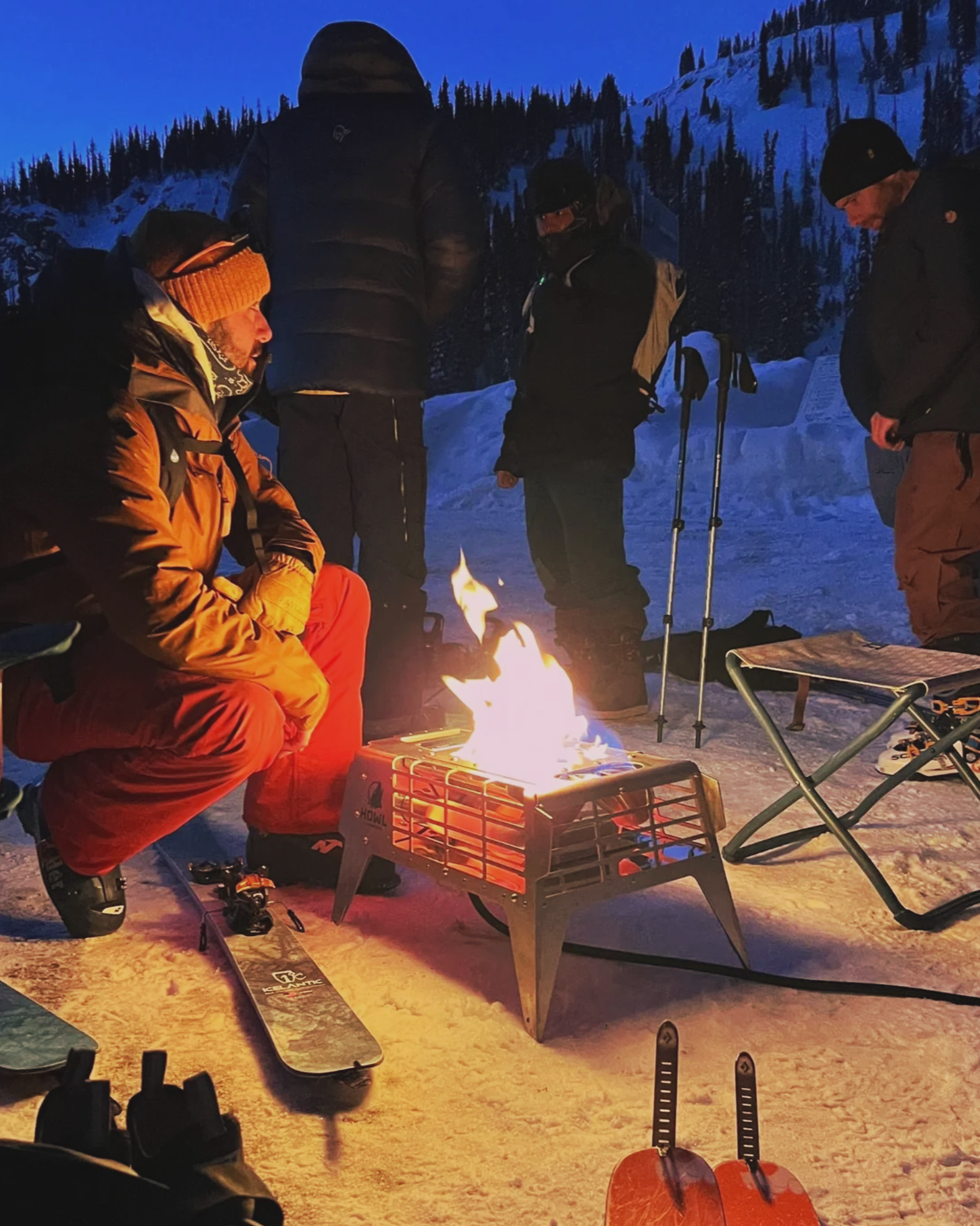
Apres-ski warmth from a Howl Campfire in the lot.
Great fit if:
You camp in the shoulder seasons or all winter and need reliable heat.
You drive to camp (van, SUV, truck) and have room for a dedicated fire unit.
You hate smoky clothes, watery eyes, and having to constantly move your chair to escape the smoke.
You often camp where wood is scarce, wet, or heavily regulated.
Maybe not for you if:
You’re backpacking or bikepacking (it’s too heavy and bulky).
You only camp a couple of warm weekends a year.
You love the ritual of collecting wood, building a fire, and tending coals.
If you think of a fire as critical comfort infrastructure instead of just ambience, Howl starts to make a lot of sense.
Things to Know Before You Buy
Before you add a Howl to your kit, keep these factors in mind:
Cost: These are premium pieces of gear priced more like a serious stove or heater than a big-box fire pit. You’re paying for design, build quality, and performance.
Fuel Use: Running on propane means you need to plan tank size and burn time, especially for longer trips. Cold nights plus Campfire Mode will burn through more fuel.
Weight and Storage: The R1 is compact but still a solid metal unit; the R4 is noticeably heavier and bulkier. Make sure your rig and storage system can handle it.
Intended Use: If you mostly camp in warm weather, you may not get the full value. If you’re regularly out in the cold, that’s where Howl shines.
Final Thoughts
For me, the R1 interests me most because I have to think about how much space it takes up in my van. The R4 is tempting for the additional radiant heat, especially for winter camping, but it's also larger and more expensive. That's the trade-off I'd have to decide between before buying one.
And if anyone wants to donate one to Overland Girl so I can put it through a proper winter test, well, that would be nice.
Frequently Asked Questions
What is the difference between the HOWL R1 and R4? The R1 is the smaller, more portable model designed for milder conditions and smaller groups. The R4 MKII is HOWL's four-season model and adds two BarCoal radiant heaters for substantially more heat.
Does the HOWL R1 have BarCoal radiant heat? No. The R1 uses HOWL's A-Flame burner. If you specifically want HOWL's BarCoal radiant heat technology, that's where the R4 MKII comes in.
What are the three modes on a HOWL Campfire? On the R4 MKII, Lantern Mode uses the A-Flame for visible firelight, Campfire Mode combines the A-Flame and BarCoal for light and radiant heat, and Stargazing Mode uses BarCoal without the bright visible flame.
Can you use a HOWL Campfire during a burn ban? Propane appliances may be permitted when wood fires aren't, but restrictions vary by location and conditions. Always check the current regulations where you're camping before using one.
Which HOWL Campfire would I choose for van life? I'm most interested in the R1 because storage space matters in my van. The R4 offers more radiant heat for cold-weather camping, but I'd have to decide whether that additional heat is worth the extra size and cost for the way I travel.
Michele Underwood writes Overland Girl, where she shares gear she uses on real trips—from the Northwoods of Wisconsin to the Ozarks. She values quality and craftsmanship in everything she buys—from outdoor gear to everyday clothes and furniture. Her choices may seem expensive to some, but she believes in buying less and buying better. Longevity matters, both in terms of function and style.

Some of the links in this review are affiliate links, which means she may earn a small commission if you buy through them. It doesn’t cost you anything extra, and it helps support her work. She only recommends gear she’d bring herself.