Mammut Stoney HS Hooded Jacket Review: The Ski Shell I Wear All Winter
Words by Michele Underwood | Photos by Michele and courtesy of Mammut
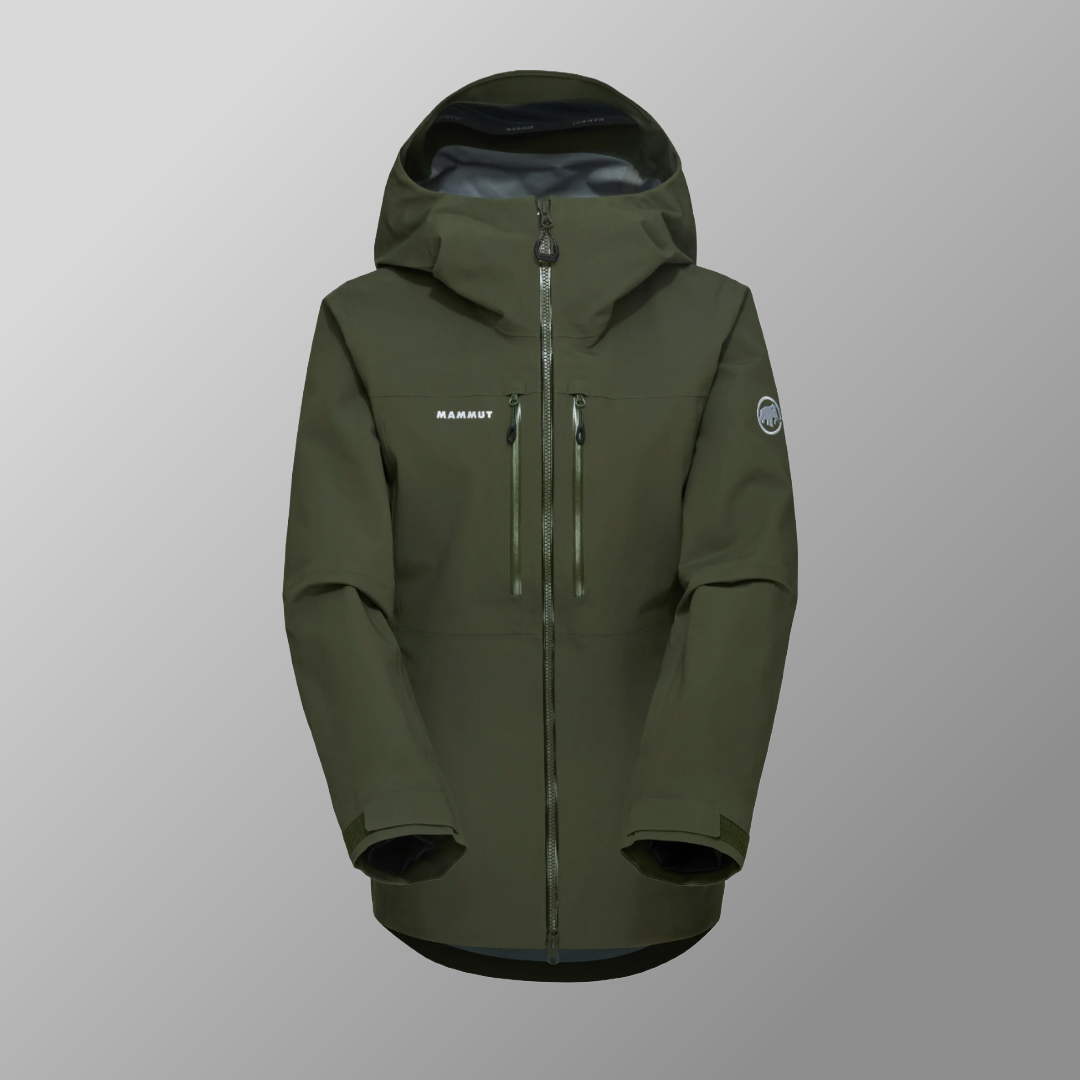
My new Moss colorway in the Stoney HS Hooded Jacket.
The Stoney HS Hooded Jacket has been in my rotation for years. I used an older version in orange—or tangerine, I can’t remember the exact color name—for multiple seasons, and now I’m in the newer Moss colorway in a Medium. The updates are noticeable, mostly in fit and material feel. Still, the jacket’s overall identity remains the same: a well-crafted waterproof shell built for cold, snowy mountain days with a clean look and reliable performance.
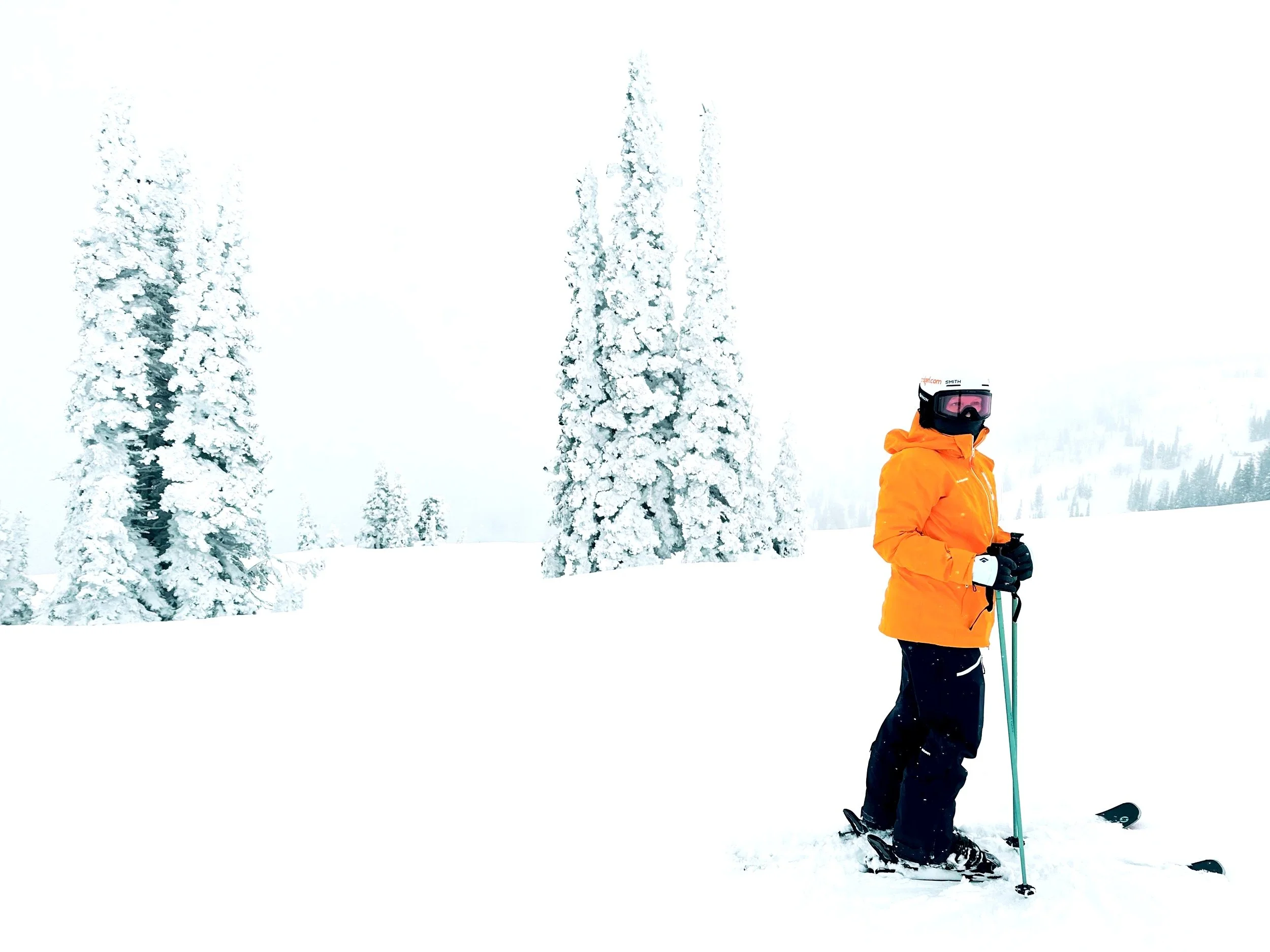
Wearing my older orange Stoney jacket and pants at Powder Mountain in Utah.
Why the Stoney HS Hooded Jacket Works on Snow Days
The Stoney HS sits in that middle ground between a lightweight shell and a heavy winter jacket. It’s built for people who want a dependable outer layer for skiing on storm days, colder temperatures, and variable snow conditions—without adding insulation or bulk. You pick your layers underneath; the Stoney HS handles the weather on top.
What stands out:
Excellent protection in snow and wind
Durable outer fabric without stiffness
Longer hem for added coverage
Pockets that work well with packs and chairlifts
Helmet-compatible hood
Reliable performance in changing winter conditions
It’s the kind of jacket you can put on and trust for the day.
Stoney HS Hooded Jacket Fit & Sizing
The Moss Medium fits great—true to size with enough room for a midlayer or light puffy underneath. I love the color too. I was eyeing this color last year, and when they had their Black Friday sale, I made the purchase.
The cut has a slightly tailored shape through the torso but still moves well. After wearing both a Large (older version) and a Medium (current version), the difference is clear:
The Medium offers a clean fit through the upper body
The hem tapers slightly, so sizing up helps if you want more room through the hips or plan to layer heavily
In short:
True to size, but consider sizing up for extra hem room or bulkier midlayers.
Stoney HS Jacket Specs
Feature        Stoney HS Hooded Jacket Women                          |
-------------  ------------------------------------------------------ |
Waterproofing  Mammut DRYtechnology™ Pro                              |
Breathability  High — built for cold, active days                     |
Insulation     None (shell layer)                                     |
Weight         Durable mid-weight shell                               |
Hood           Helmet-compatible, adjustable                          |
Pockets        Two hand pockets, internal storage, sleeve pass pocket |
Hem            Adjustable with extended coverage                      |
Intended Use   Resort skiing, backcountry layering, snowy conditions  |
What I Like
Durable fabric with a smooth feel
Hood that actually works with a helmet
Zippers that stay smooth even in ice and snow
Plenty of venting options when things heat up
Enough room to layer without feeling bulky
Reliable in stormy, snowy weather
Updated fit feels cleaner than older versions
What I’d Change
Slight taper at the hem means some people will prefer sizing up
Not ultralight—this jacket prioritizes durability
Seasonal colors rotate quickly
Who Does This Jacket Fit Best
This jacket is a strong match for people who:
Ski in cold, snowy climates
Want a durable shell that blocks wind and snow
Prefer choosing their own insulation layers
Need a hood that fits over a helmet
Like longer coverage at the waist and hips
If your winter system is base layer → midlayer → shell, this jacket fits perfectly.
Price
Mammut Stoney HS Hooded Jacket: $350–$450
(Seasonal colors and older versions vary.)
Take a look at the Stoney HS Hooded Jacket
Frequently Asked Questions
Is the Mammut Stoney HS Hooded Jacket worth it?
I think so. It's kept me comfortable in cold, snowy conditions and has become my go-to ski shell.
Is the Mammut Stoney HS Hooded Jacket waterproof?
Yes. The waterproof shell keeps snow and moisture out while remaining breathable enough for long days on the mountain.
Does the Mammut Stoney HS Hooded Jacket fit true to size?
I found it to fit true to size with enough room for layers underneath without feeling bulky.
What type of skiing is the Mammut Stoney HS Hooded Jacket best for?
I use it primarily for resort skiing in Colorado, especially on cold days, storm days, and whenever the weather turns snowy.
Michele Underwood writes Overland Girl, where she shares the gear she uses on real trips—from the Northwoods of Wisconsin to desert rides in the West. She values quality and craftsmanship and believes in buying less, but buying better. The gear she recommends is gear she uses herself.Some links on Overland Girl may be affiliate links. If you purchase through them, Michele may earn a small commission at no extra cost to you.