Outdoor brands you might not know, but you should — RUX.
Modular gear storage that makes
packing faster and camp life less chaotic
Words by Michele Underwood | Photos by Rux.
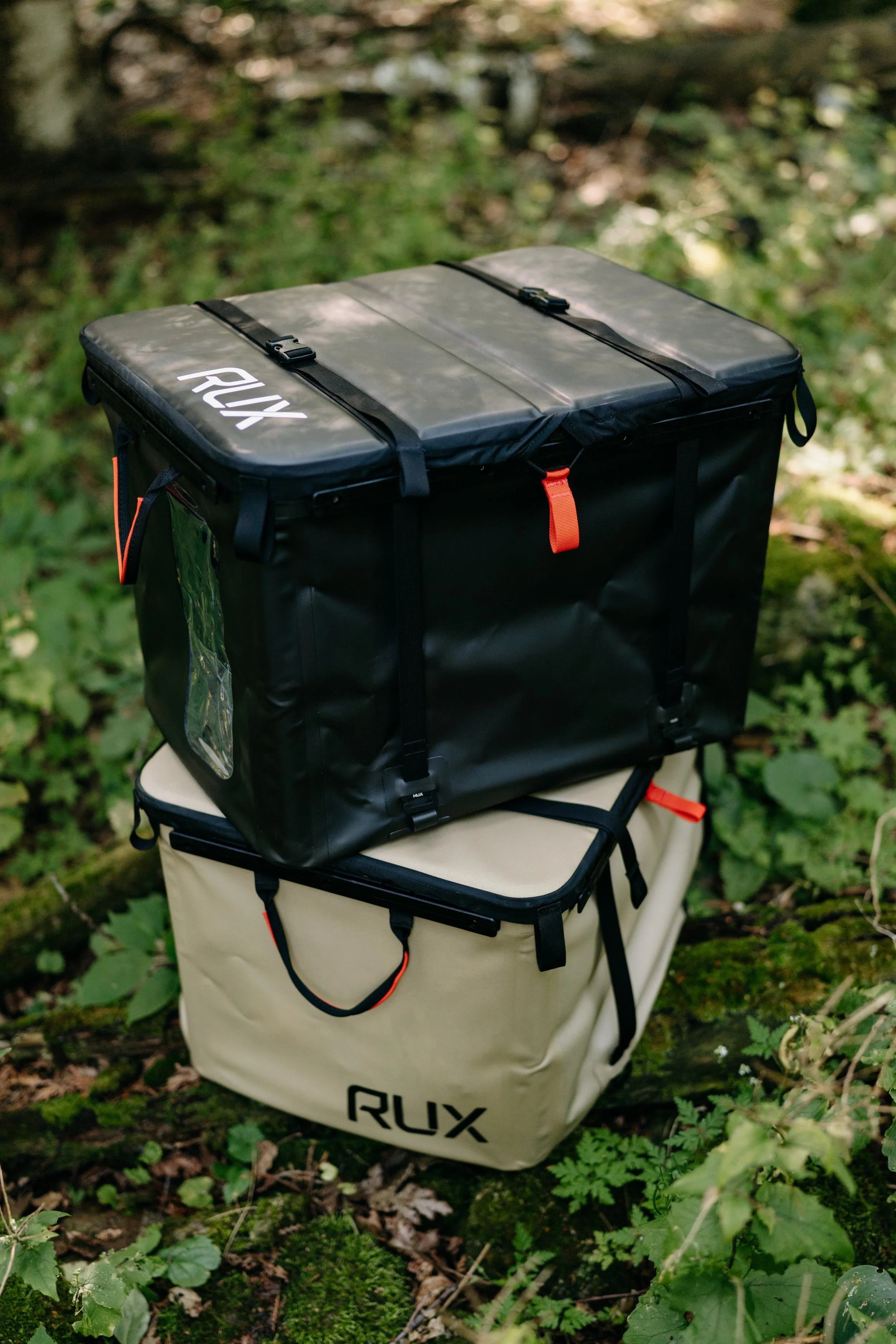
Stacked RUX 70L gear boxes—black and tan—ready to haul camp and trail gear into the woods.
I love quality, well-made products. Working in advertising as a creative, from the giant agencies to the boutiques, has given me a unique perspective. It's not always about the big names you know; sometimes, it's the ones you don't that capture your eye.
Now, stepping away from agency life with Overland Girl, I'm spotlighting the brands that ignite my passion and confidence. With my creative roots and a career that's crossed paths with both the well-known and the obscure, I'm excited to share the brands that stand out—not just for their products but for their stories, commitment, and undeniable spirit. This blog is part of a series where I highlight some of the most unique and inspiring outdoor brands.
Let’s dive into the world of these hidden gems, exploring what makes them tick and, perhaps, finding the one that speaks to you. You might already know these brands; if so, that’s great: Mammut, Black Crows, Wild Rye, Stio, Snow Peak, Dragon Alliance, Big Agnes, Mountain Gazette, Wild Sam, HipCamp, Rumpl, and Rovr Coolers.
Today, I’m excited to focus on RUX, a Squamish, BC–based brand building a modular storage system around a collapsible gear box and its components—a system designed to make hauling and organizing gear faster, cleaner, and less chaotic.
RUX: From Garage Frustration to Gear System
RUX’s story starts in a garage in British Columbia. Founder Andre Charland was staring at the familiar pile of plastic totes, duffels, and truck boxes—repacking gear over and over when he’d rather already be at the cabin or trailhead. That pain point kicked off the idea for a better way to store and move gear.
He teamed up with:
Tony Richardson, an elite alpinist and industrial designer with experience designing climbing and military gear at Arc’teryx.
Trina, whose background in color, materials, and sourcing helped turn early sketches into something real.
Jamie Bond, a storyteller and busy dad who understood how much time and energy gets burned just wrangling family gear.
Founded on the west coast of BC in 2019, the team launched RUX through crowdfunding in 2020 with a clear mission: create an agile, integrated system for managing and moving outdoor gear—so more time is spent outside, not packing in the driveway.
The Mission: Tight gear, loose plans
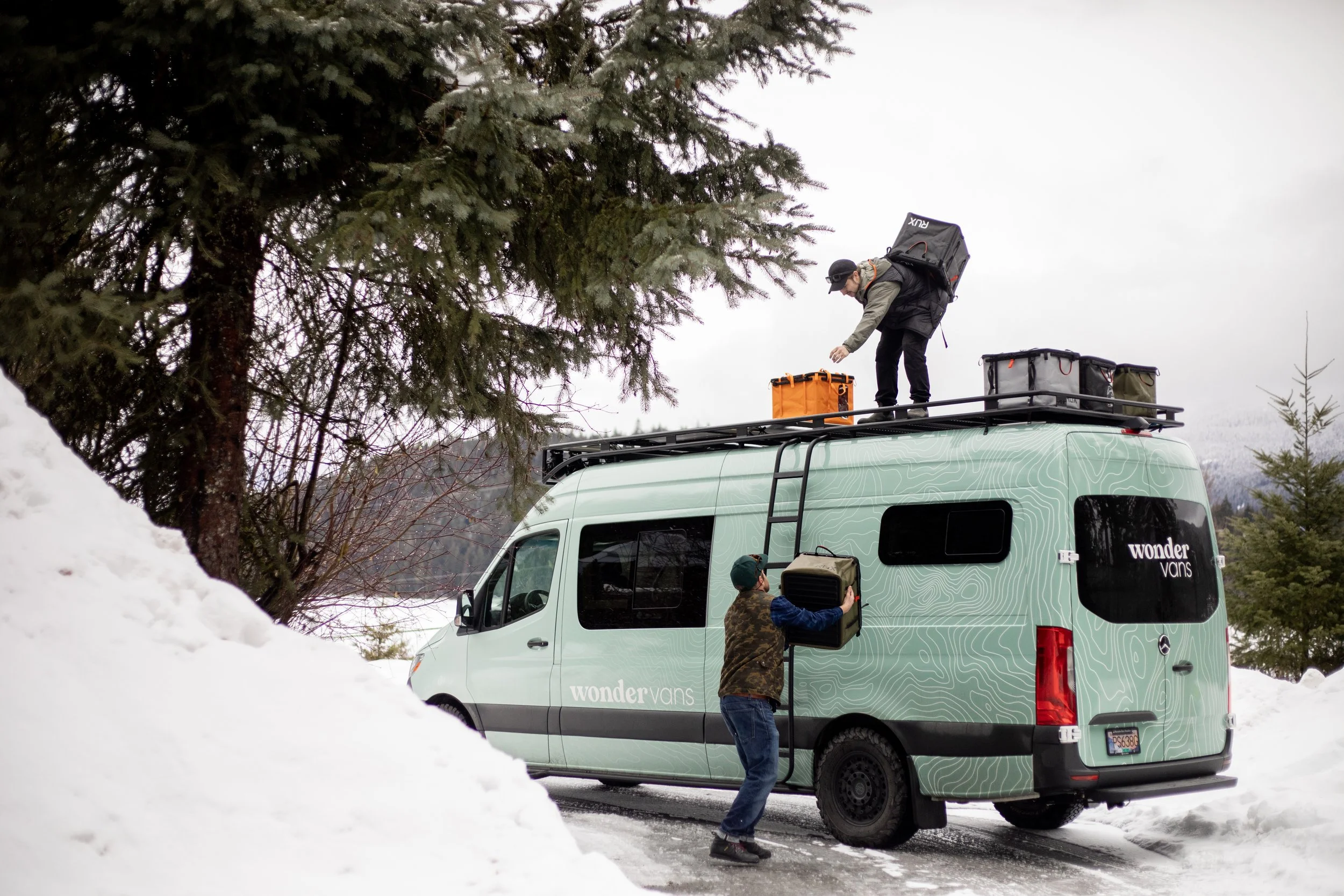
Loading RUX gear boxes onto a Wonder Vans Sprinter at a snowy trailhead—turning the roof rack into extra storage.
RUX revolves around a simple idea: if gear is easier to move and manage, it’s easier to say yes to last-minute trips.
Instead of one-off products, RUX is built as a system:
A collapsible gearbox as the foundation
Components that mount, organize, and protect what’s inside
Configurations that shift from van to truck, boat, cabin, or garage without starting from scratch every time
The goal isn’t to replace every bin or bag—it’s to cover the high-use spots where structure, quick access, and flexibility matter most.
The RUX 70L: Box, bag, and bin in one
At the heart of the system is the RUX 70L gear box—a soft-sided container that packs like a bin but carries like a bag. It’s built around a square footprint with a rigid rim so it stays open when you’re loading or grabbing layers.
Key design details:
Rugged, weather-resistant shell: High-tenacity nylon with a TPU coating for abrasion resistance, water resistance, and UV durability.
Structured but collapsible: Corner stays and a reinforced base keep the box upright when in use, yet it folds nearly flat for off-season storage or tucking under a seat.
Wide, rigid opening: The top rim holds its shape so you’re not wrestling a floppy duffel while you dig for gear.
Tri-fold lid options: A stowable lid flips open for fast access and can double as a seat pad or changing mat; a Press Seal Lid adds extra protection on dusty or wet travel days.
Multiple carry modes: Handles and straps let the 70L carry as a tote, duffel, or backpack.
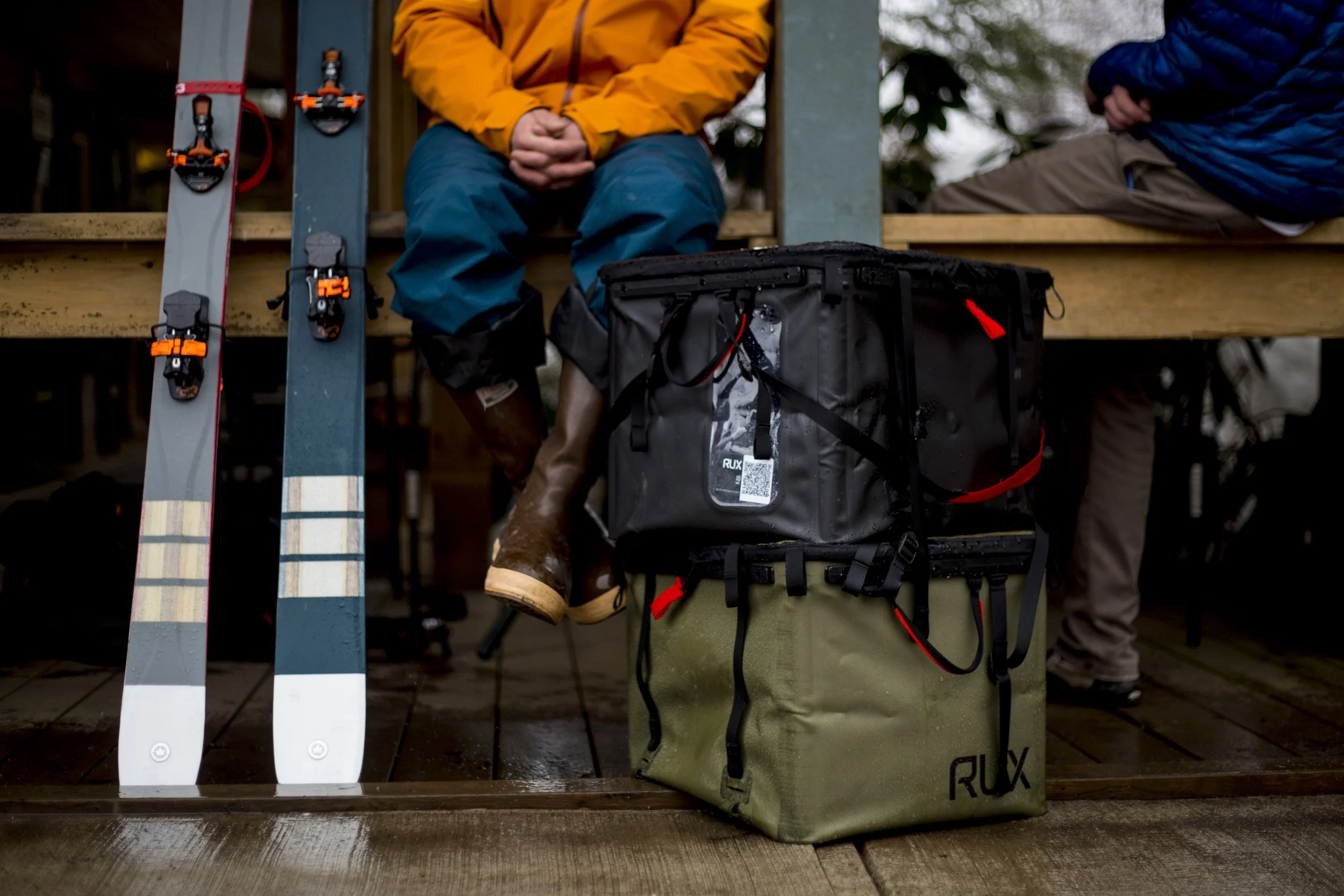
RUX boxes pulling double duty as ski-trip gear haulers, stacked on a wet lodge deck after a stormy day on snow.
Components that make RUX a system
What turns RUX from a single bin into a full system is the component lineup. Accessories are designed to clip in, hang off, or nest inside the 70L so it can shift between roles without a re-pack.
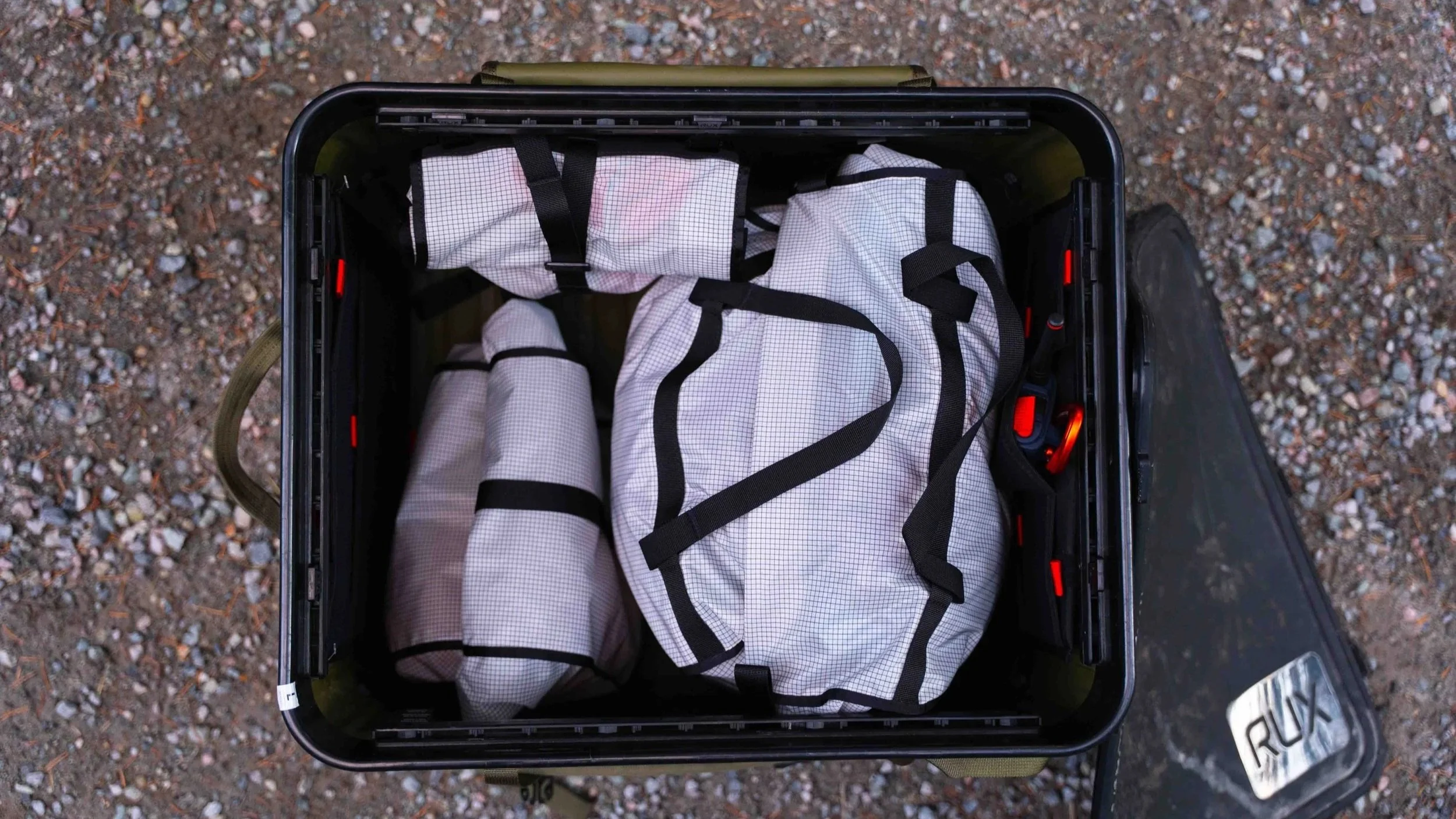
Inside the RUX 70L: packing cubes and soft bags dialed in so camp gear stays organized and easy to grab.
Core pieces include:
Utility Rails & Utility Hooks
Rails and hooks let the 70L hang from a van wall, L-track, or garage panel, keeping it off the floor but still easy to reach. In a van, that means more usable floor space and a cleaner walk-through—precisely the kind of setup I talk through in my full RUX 70L review for van life, RUX 70L Review for Van Life: Clothing Storage.Press Seal Lid
A low-profile lid that adds a tighter seal for long, dusty roads or damp conditions—especially useful for camping and overlanding setups.Packing System & RUX Bag
Soft bags and inserts that drop into the box, clipped to the rim so smaller items don’t sink to the bottom. RUX’s mesh packing system and 25L RUX Bag are built to nest inside the 70L or work on their own, from grocery runs to campsite kitchens.
Together, these pieces make RUX more than a single container—it becomes a modular closet, haul bag, and storage cube that can be rearranged trip to trip.
Materials and build: Made for hard use
RUX leans heavily into materials that can handle real abuse:
Fabric & coating – The 70L uses heavy-duty, TPU-coated nylon with RF-welded seams to keep out weather and resist scuffs, scrapes, and UV damage.
Reinforced base – A padded, reinforced bottom helps protect contents and keeps the box feeling structured, whether it’s on a van floor or in a truck bed.
Hardware – Lash points, buckles, and straps are designed to withstand repeated mounting on racks, rails, and tie-downs without stretching or sagging over time.
The emphasis is on gear that lives in that middle space: highly weather-resistant and rugged enough for daily use, without the full weight or bulk of hard plastic cases.
How people use RUX: Camping, bikes, overlanding, and water
RUX designs the system to be flexible across different pursuits rather than tied to one niche. Common use cases include:
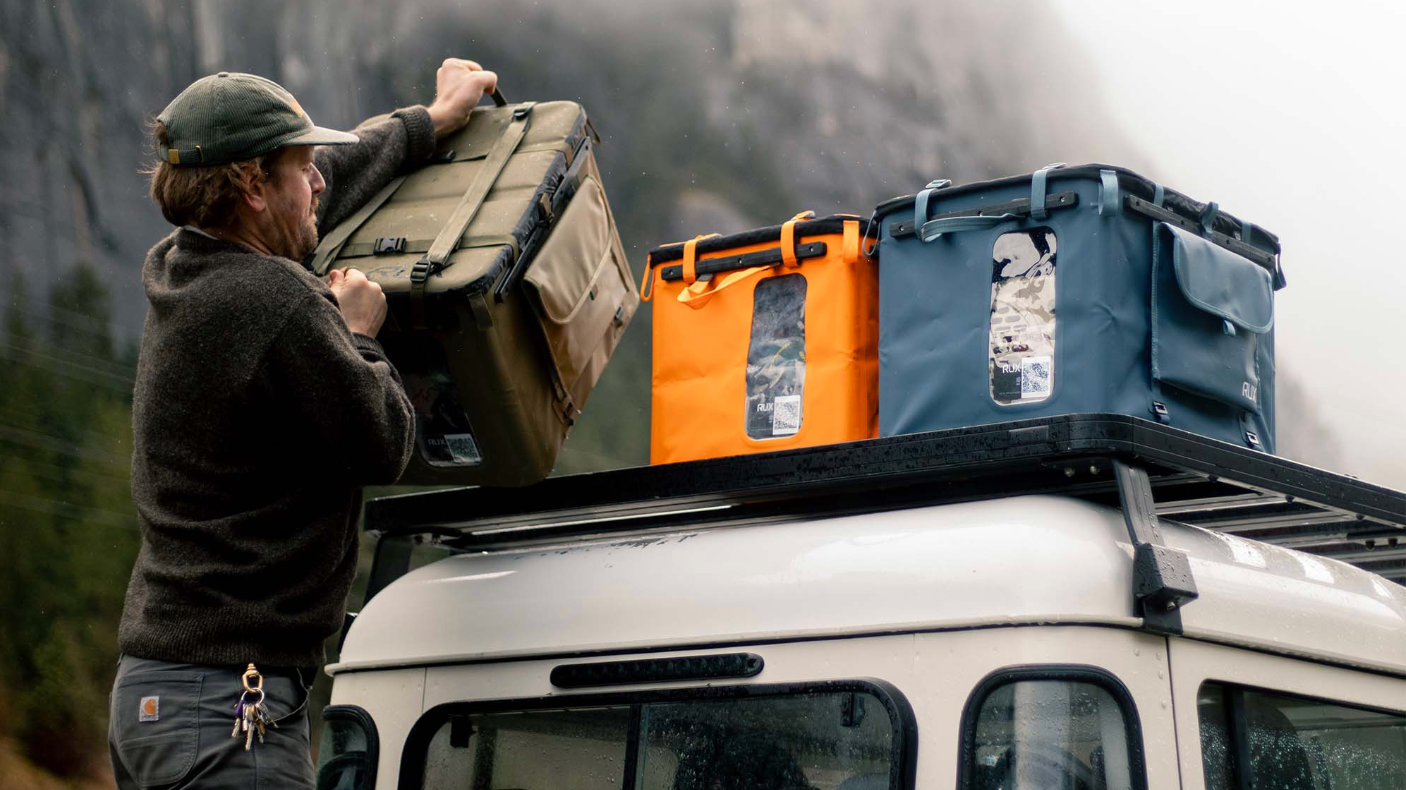
RUX boxes lined up on the roof rack, getting loaded for a wet, mountain road trip in classic overland style.
Camping
Use the 70L as a camp “hub” for kitchen gear, lighting, or soft goods. At camp, it stays open so everything is visible; on travel days, it closes and mounts in the vehicle.Mountain biking
One bin can hold helmets, shoes, pads, tools, and post-ride layers. Soft inserts keep small pieces—gloves, socks, chamois—organized rather than rolling around in the car or trailer.Overlanding and van life
The square footprint plays well with L-track and wall systems. Boxes can hang off the floor, sit on shelves, or be mounted across the back doors. You can see it in a real-world layout in my full RUX 70L review for van life, RUX 70L Review for Van Life: Clothing Storage.Marine and waterfront
Weather-resistant fabric and lash points make the 70L a fit for boat decks, docks, or lake houses, where gear is exposed to moisture, UV, and frequent loading/unloading.
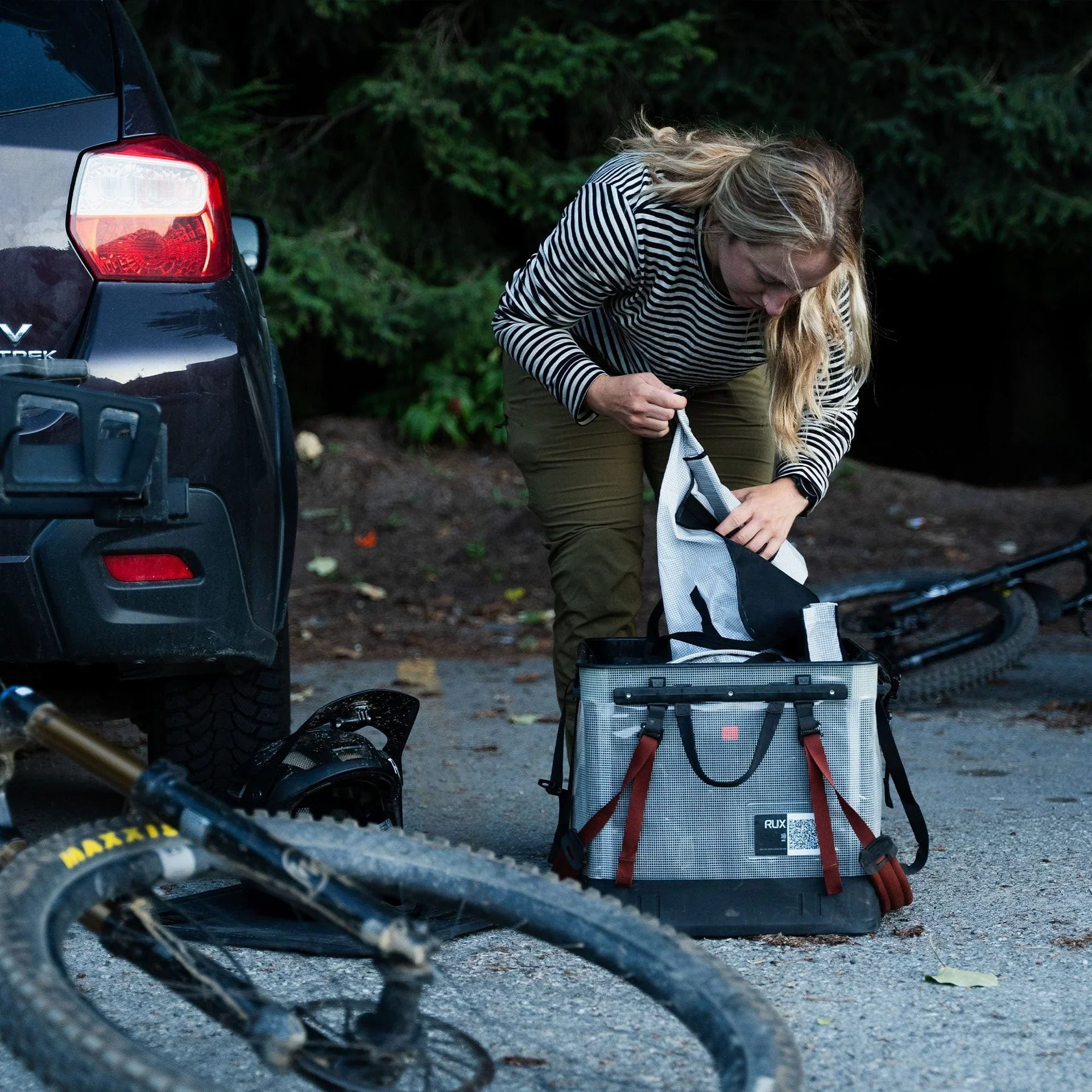
Post-ride reset at the trailhead, loading muddy bike gear into a RUX bag beside the car.
In short: RUX is built for any situation where gear moves between home, vehicle, and basecamp regularly—and needs to stay relatively tidy through all of it.
Lifetime guarantee and support
RUX offers a lifetime guarantee on its own products, backing the system for the long haul. The brand leans toward repair, replacement, or support rather than disposable use, aligning with how many outdoor users approach gear: buy fewer things that last.
That guarantee, combined with a modular design, means components can be replaced or upgraded over time without rebuilding a whole storage system from scratch.
How RUX compares to traditional storage
If you’ve used hard cases, plastic totes, and duffels, RUX sits in the middle of that spectrum:
Hard cases (Pelican/YETI-style)
Best for impact protection, locking, and airline or roof-rack abuse
Heavy, rigid, and usually living on the floor
Plastic totes
Affordable and easy to find
Contents mix quickly, no clean hanging option, and they don’t collapse
Waterproof duffels
Great for overflow and odd-shaped items
Low structure—expect to dig for what you need
RUX system
Designed to hang cleanly, stay open when in use, and collapse flat when not needed
Carries like a bag but organizes like a bin
Built around accessories that scale from one box to a full wall of storage
That combination—structure plus flexibility—is what makes RUX feel different from traditional “just a tote” storage.
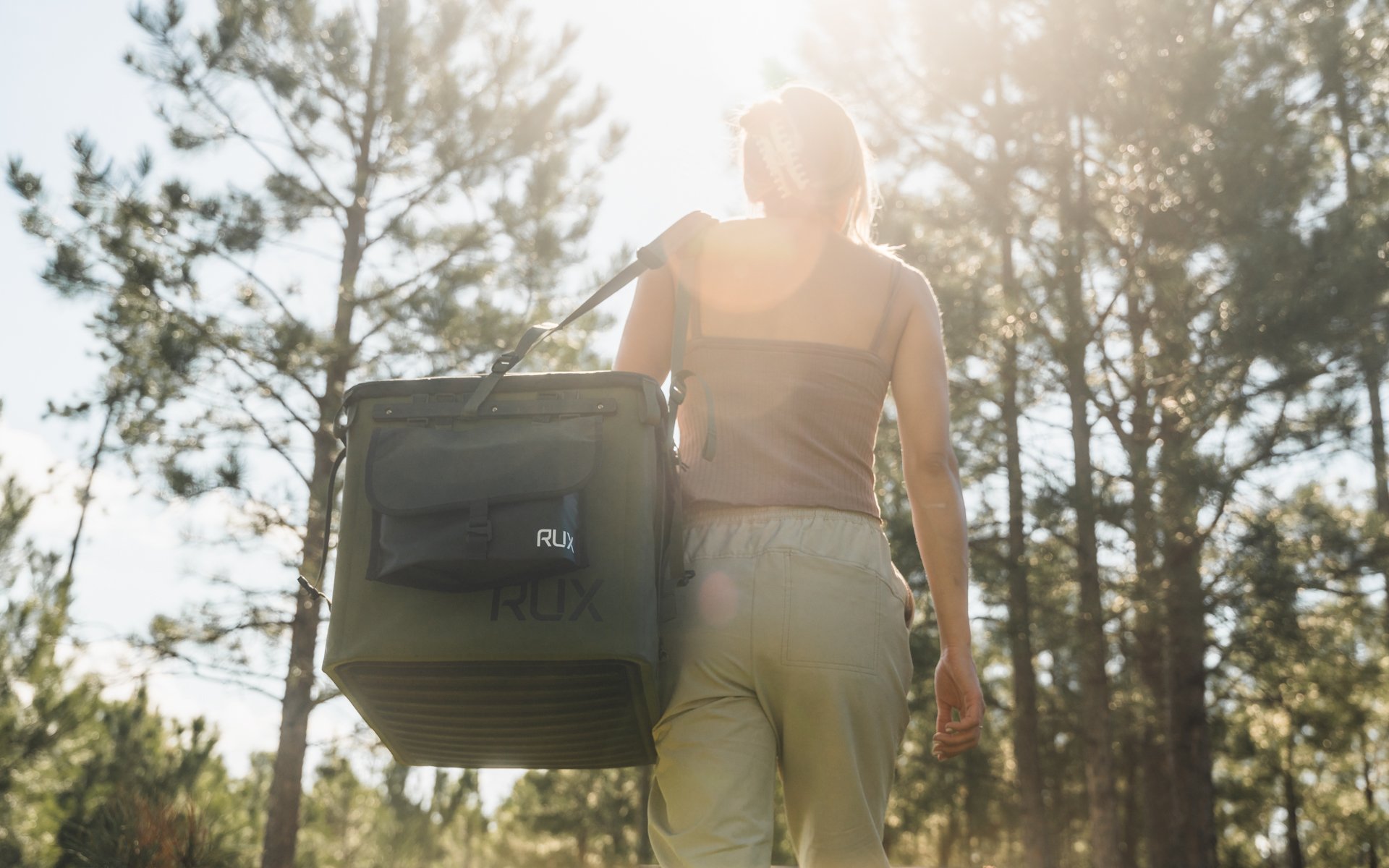
Carrying a RUX box into camp—shoulder strap on, evening light coming through the pines.
Where RUX fits in your kit
RUX works best when you think of it as a core organizer rather than a single miracle bin:
One or two 70Ls as the main “closet” or gear hub
Packing inserts for the small items that usually get lost
Rails and hooks for off-floor mounting in vans, garages, or trailers
From there, it plays alongside hard cases, roof boxes, and duffels, covering the everyday access zones where you want speed, visibility, and order.
If you want to go deeper on the brand, materials, and value, this RUX series on Overland Girl is a good next stop:
Is RUX Worth It? – Brand review: materials, warranty, and when the system makes sense for the price.
RUX 70L Review for Van Life – How the 70L works as a removable closet in a van build.
RUX 70L vs. YETI GoBox & Pelican – Comparisons with hard cases and other storage options.
You can then head to RUX’s site to explore the 70L, 40L, Packing System, and bundles, and start building a setup that fits your own version of life outside.
Check out more in this series.
If you like finding under-the-radar gear brands, check out more outdoor brands you might not know, but you should.
Michele Underwood writes Overland Girl, where she shares gear she uses on real trips—from the Northwoods of Wisconsin to the Ozarks. She values quality and craftsmanship in everything she buys—from outdoor gear to everyday clothes and furniture. Her choices may seem expensive to some, but she believes in buying less and buying better. Longevity matters, both in terms of function and style. Her couch is five years old and still sold at Design Within Reach—that's the kind of timelessness she looks for. Some of the links in this review are affiliate links, which means she may earn a small commission if you buy through them. It doesn’t cost you anything extra, and it helps support her work. She only recommends gear she’d bring herself.